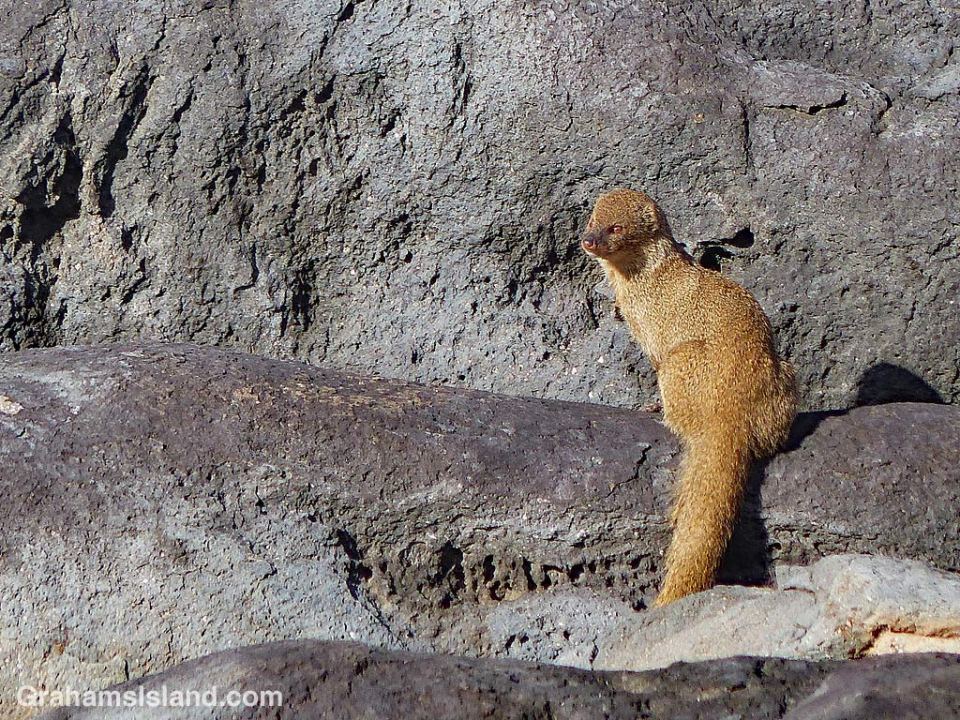
A small Asian mongoose suns itself on rocks along the shoreline. The mongoose can be found in most places on the island with the exception of the higher elevations.

A small Asian mongoose suns itself on rocks along the shoreline. The mongoose can be found in most places on the island with the exception of the higher elevations.

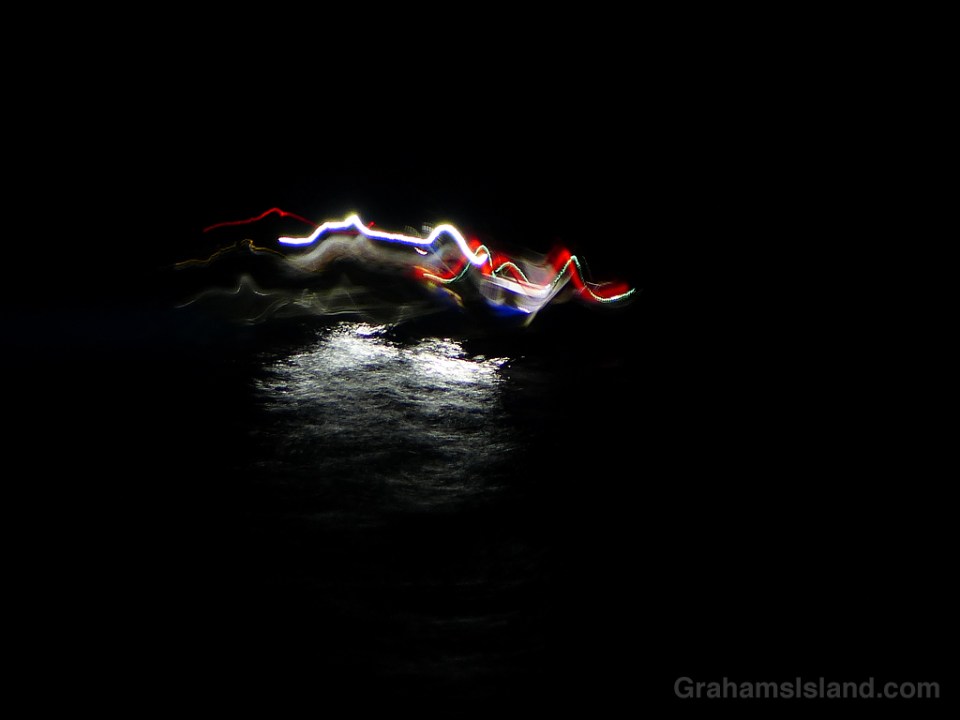
When I went out to see the last lunar eclipse, I noticed these lights bobbing in the ocean just off the coast. My guess is that they belonged to people spear fishing, or possibly in kayaks or a small boat. Regardless, I liked the abstract patterns the lights made.
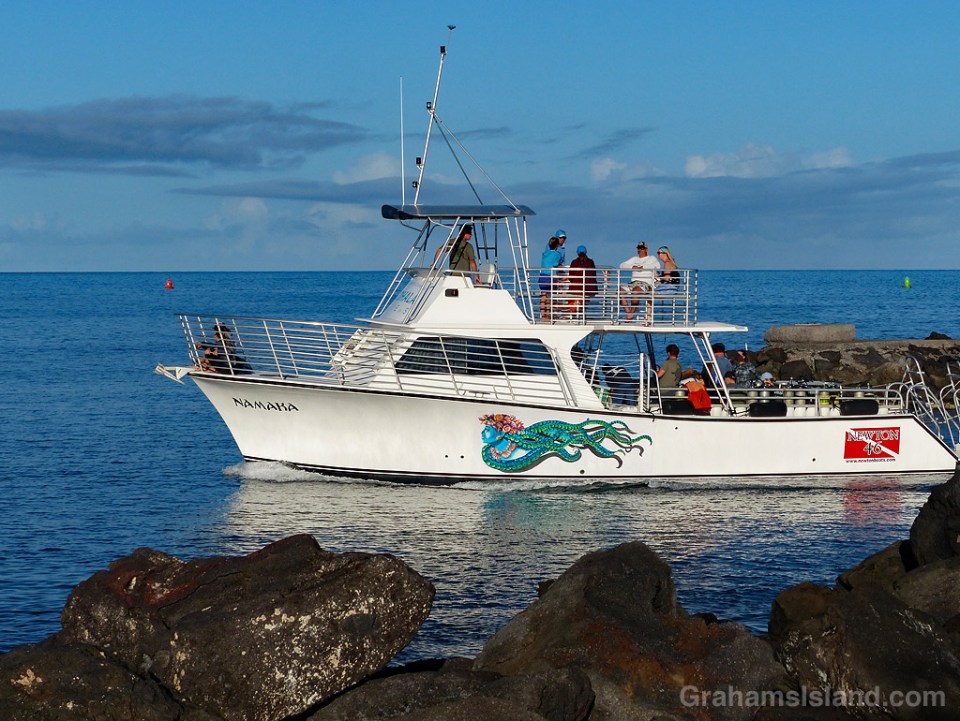
The Kohala Divers boat, Namaka, heads out of Kawaihae harbor for an early morning dive session. The boat is also used for whale watching cruises.
For more information about Kohala Divers, go to kohaladivers.com.

 It’s been a while since I was last at Pohoiki, also known as Isaac Hale Beach Park. One reason for this is that it’s about as far away from where I live as is possible on the island. But back in July 2016, I went down there at an ungodly hour to board a boat and go see lava flowing into the ocean. I wrote about that trip here and here. At the park were restrooms, picnic tables, and a boat launch ramp protected by a small breakwater.
Last year, Pohoiki was in the news because it was where the flow from the 2018 Kilauea eruption finally ground to a halt, about 100 yards short of the boat ramp. A few days ago, I decided to revisit the park and see the changes that had taken place.
Driving into the park, the cooled lava flow could be seen, stretching down the side of the grassy picnic area (bottom photo). But what I really wanted to see was the boat ramp and the black sand beach at the bottom of the park. They did not disappoint.
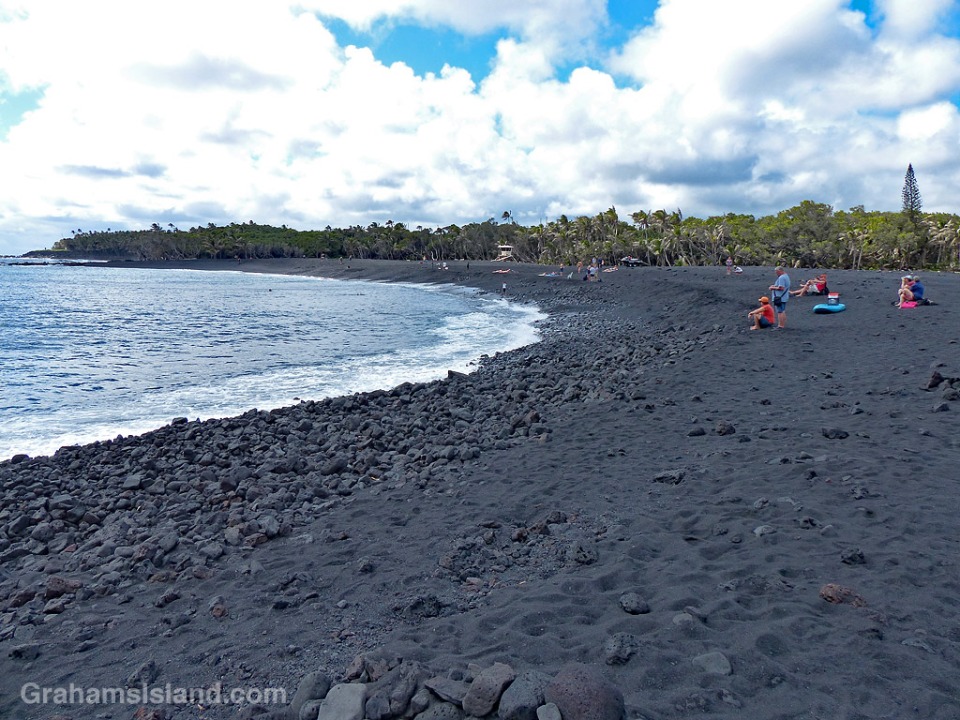
The boat ramp, previously used to launch quite large boats, including the lava tour catamaran of 2016, now leads to a small lagoon (top photo). (Note the signs on the left of the photo.) This lagoon is perfect for swimming or sailing model boats, but as a boat launch ramp it has one big drawback. There’s now a long, deep, curve of black sand separating the ramp from the ocean (photo below). This beach began forming during the eruption, but I was surprised by how substantial it was. It’s rocky in places and the sand is quite coarse, but it is unquestionably a beach and it looks like it’s here to stay.
An indication of the beach’s substance can be seen in the second photo. The red triangle on a pole marked the end of the breakwater. Now it’s deep in sand. The breakwater is still there, but almost entirely buried.
The beach was formed by lava pouring into the ocean. Some of it solidified into large chunks, but a lot was quickly broken into smaller pieces and fine sand. (In the postings about my 2016 trip, one of the photos shows a black sand beach forming at the base of the flow.) A good deal of this sand was carried a short way down the coast to form this new beach.
I don’t have a good photo of the park before these changes, but the local newspaper has an aerial view here that shows the features I’ve mentioned. In that photo, the boat ramp, breakwater, and rocky shore can be seen at the bottom. Top left is the restrooms building that is also top left in the bottom photo here. The paths and picnic tables can also be seen.
I’d expect that on my next visit, all these new features that I’ve mentioned will still be there, but there is one caveat. If there’s a new eruption in this area, then everything could change. It’s one of the facts of life of living near an active volcano.
Posted in response to this week’s Friendly Friday challenge on the theme of ‘Revisited.’ See more responses here. Tomorrow, I’ll post a few more photos in response to the Sunday Stills photo challenge.

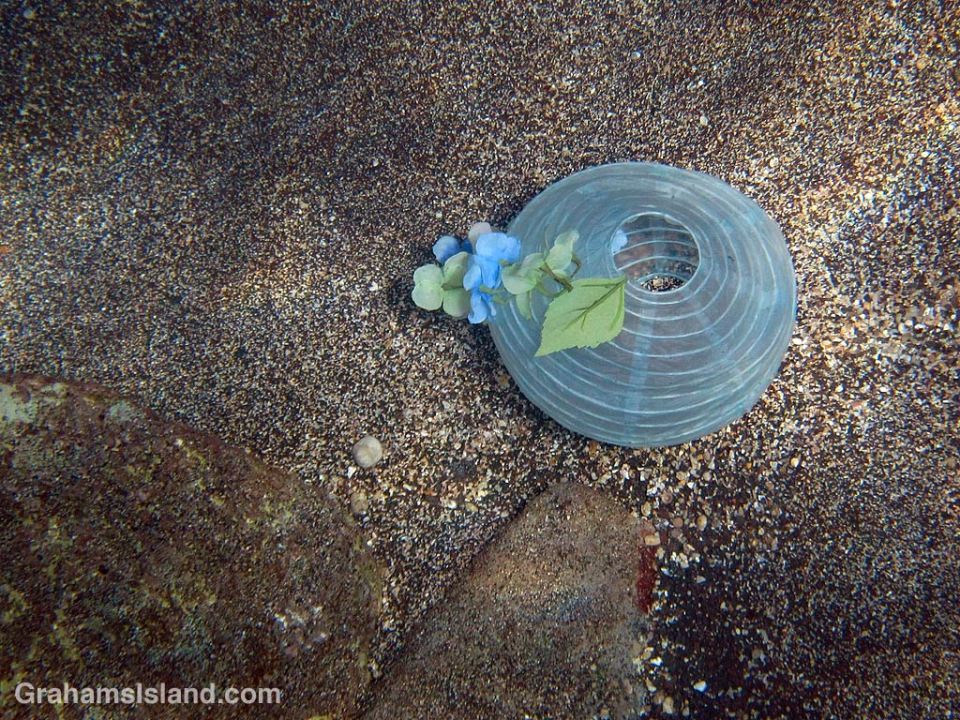
This photo makes it look like someone has placed this delicate shade on a beach. In fact, I found it in 10 feet of water in an area that is often buffeted by large swells, making it’s perfect appearance all the more unlikely. How or why the shade got there is unknown, but for me, that adds to the mystery of the scene.
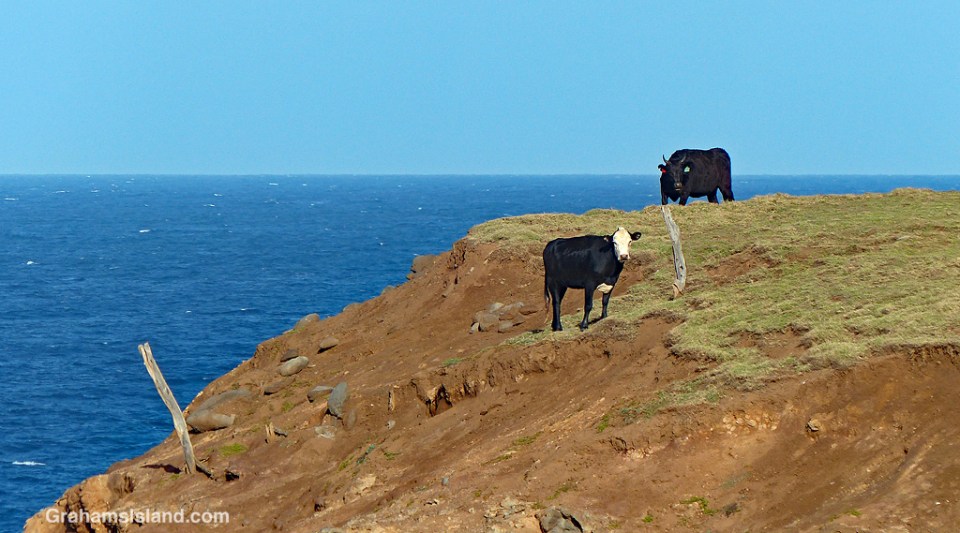
I used to live in the same town as Jim Whittaker, the first American to reach the summit of Mount Everest. He duly published an autobiography titled, ‘A Life on the Edge.’ As someone who lives close to the flat center surrounded by fluffy pillows, I use that phrase as a punchline for many things.
“I think I might have another cookie.” “Ooo, life on the edge.”
“I bought new shorts that are a slightly different tan shade than my previous pair.” “Life on the edge.”
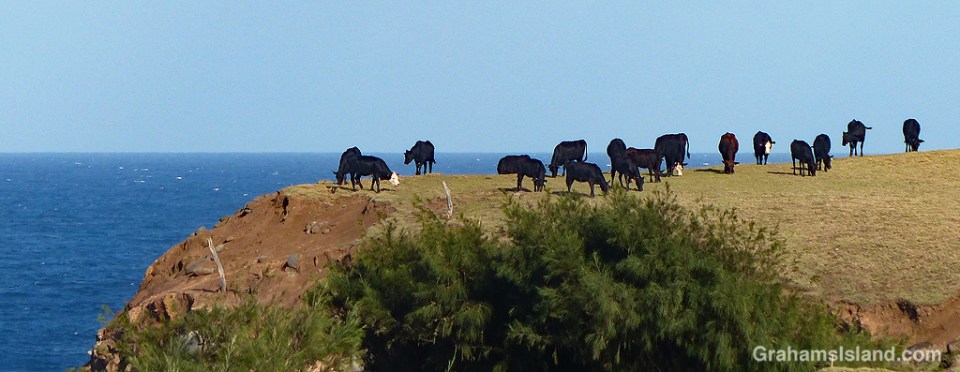
You get the idea, which has nothing to do with anything really except that, on this day, the cattle in these photos really were living life on the edge.

On a recent swim, the water was churned up with lots of particles floating about and poor visibility. But I was taken with how the sun sent swirling shafts of light down toward deeper water.
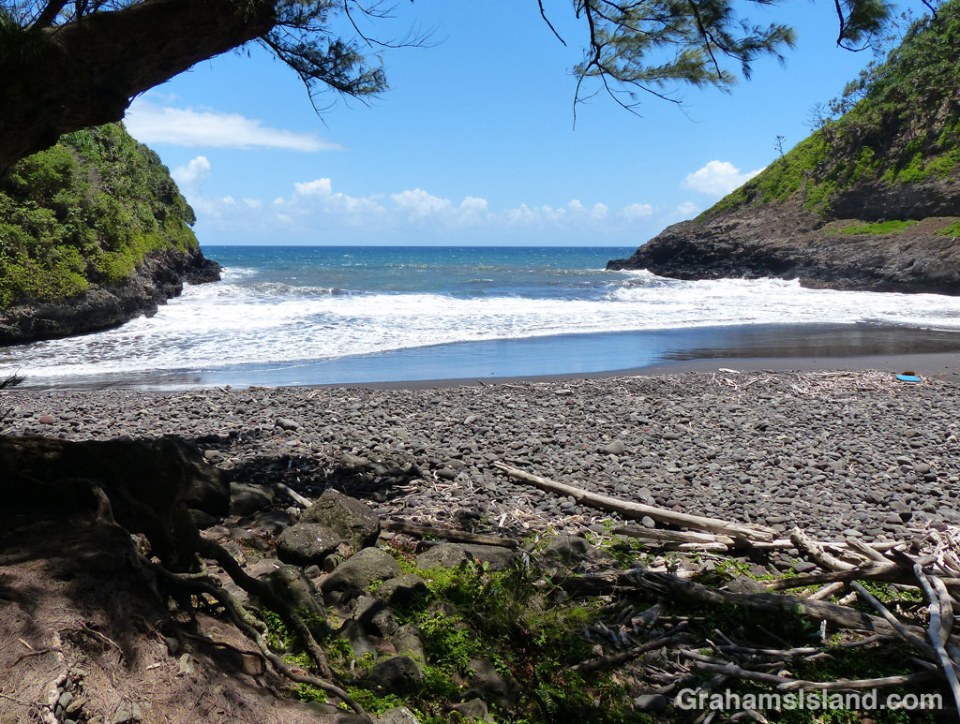
At the end of Highway 270, on the northern tip of the island, is Pololu Valley. There’s a trail down to the beach there and, at the other end of the beach, another trail leading up to a bench that overlooks Honokāne Nui valley.
Not far beyond the bench, the trail was destroyed by an earthquake in 2006. It’s still possible to descend to the valley, but the trail goes straight down a steep slope and ropes are in place to make this possible. There are no guarantees that these ropes are in good condition and the slope certainly isn’t. If you do descend this section, the trail passes through varied vegetation and ultimately leads down to a rocky beach at the mouth of Honokāne Nui valley.
Beyond Honokāne Nui, there’s another trail that continues over the next hill and down into Honokāne Iki valley. That valley opens up to this beautiful little bay, which is quite protected and, at low tide, has a nice sandy beach. Be aware though that this is private land and in use on a regular basis.
 Graham's Island