This week’s Sunday Stills challenge theme is ‘December Chill.’ (See more offerings here.)
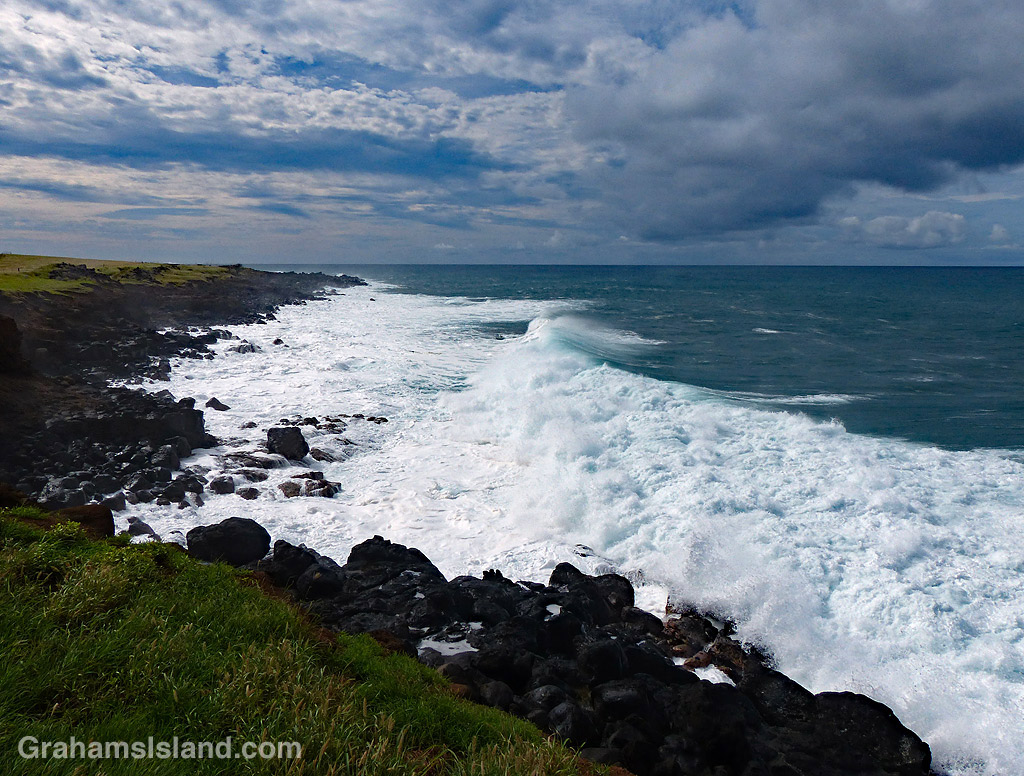
Since I haven’t been to the chilly areas of the island recently, up on Mauna Kea or Mauna Loa, I’ve gone for a scene that at least looks chilly. Low, scudding clouds and high surf, driven by brisk trade winds make for a chilly scene, though the truth is I was almost certainly wearing shorts and a t-shirt when I took the photo.
This week’s Friendly Friday challenge theme is ‘Future.’ (See more responses here.) Since this is Snow’s last time hosting the Friendly Friday challenge I thought I’d offer a personal interpretation of the theme.
Here is one of the beaches at Kekaha Kai Park. What does this have to do with ‘future?’ Well I hope such blue-green water, white sand, palm trees and sun are somewhere in your none-too-distant future, Snow. Thanks for hosting the challenge.
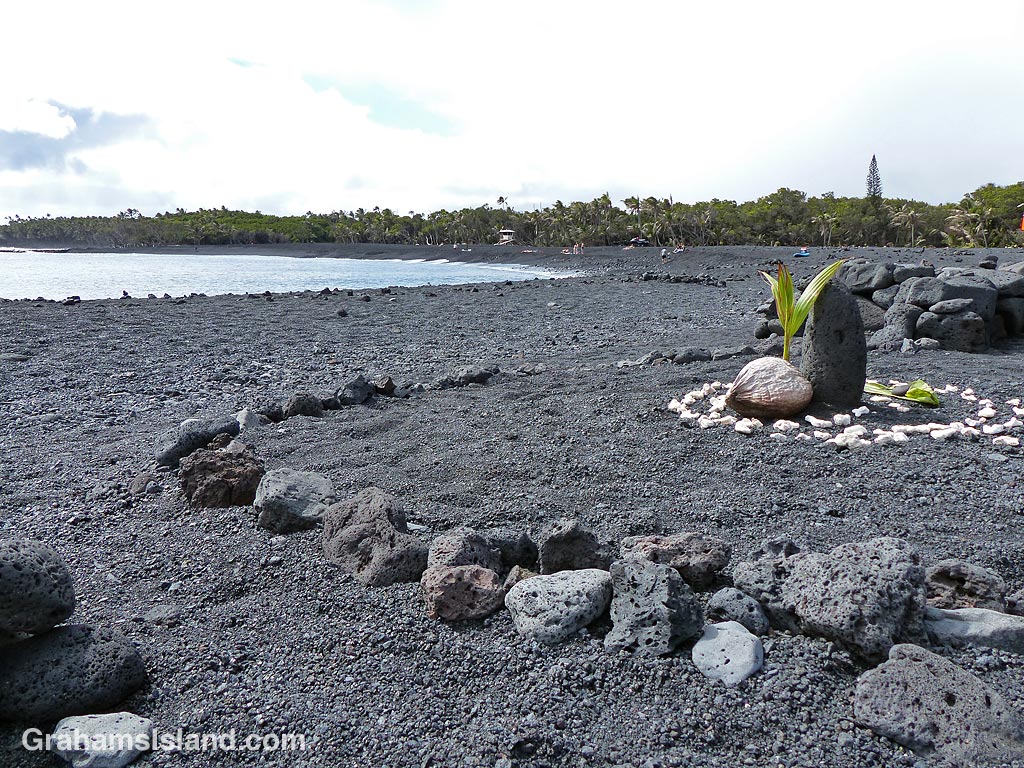
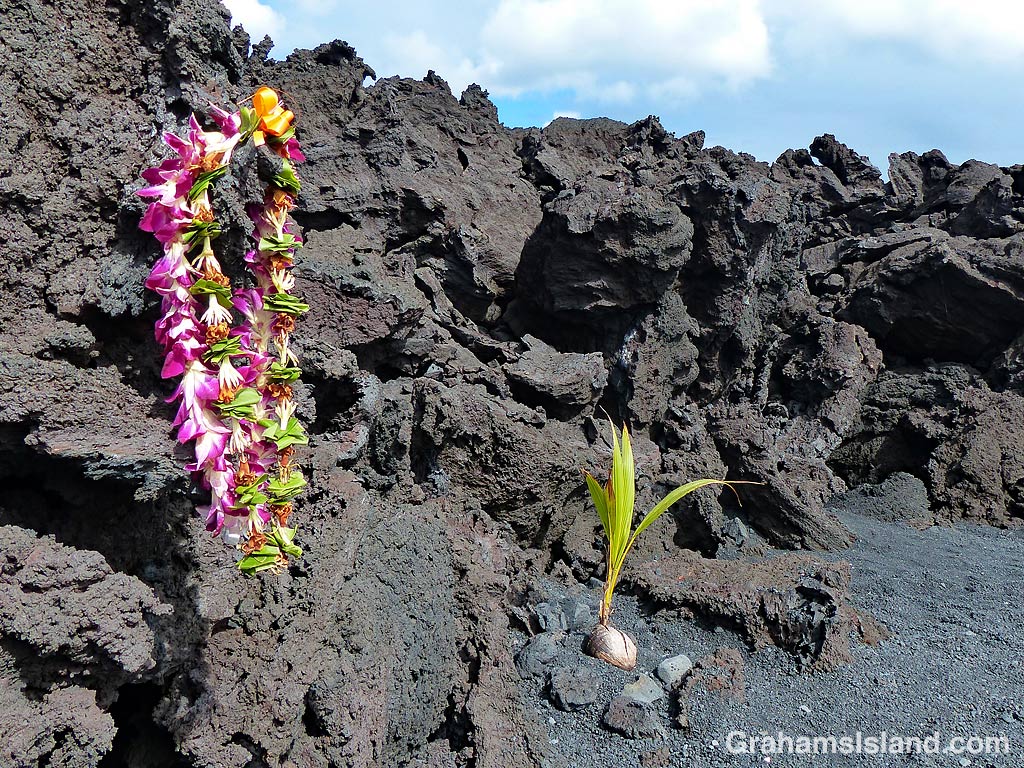
The Big Island’s newest black sand beach, at Pohoiki, was formed during last year’s eruption of Kilauea Volcano. Soon after its formation, offerings appeared at the beach and coconuts were planted.
For coconut planting, all that’s required is to plunk an unhusked coconut on the beach and wait. The coconut will sprout, as in these photos, but it can still be moved after it has sprouted as its roots are mostly fairly shallow. It’s tolerant of salinity, but likes regular rainfall, both of which are features of this location.
In several years, this somewhat stark black sand beach will become another scenic palm-lined tropical beach. That’s assuming the volcano doesn’t send another flow in this direction, in which case it might look more like the background of the bottom two photos.
This Pacific golden plover seemed unimpressed by the surfers going back and forth in the bay behind it. Instead, it focused on tidying its plumage and making sure everything was in order.
This week’s Friendly Friday challenge theme is ‘Dramatic.’ See more responses here.
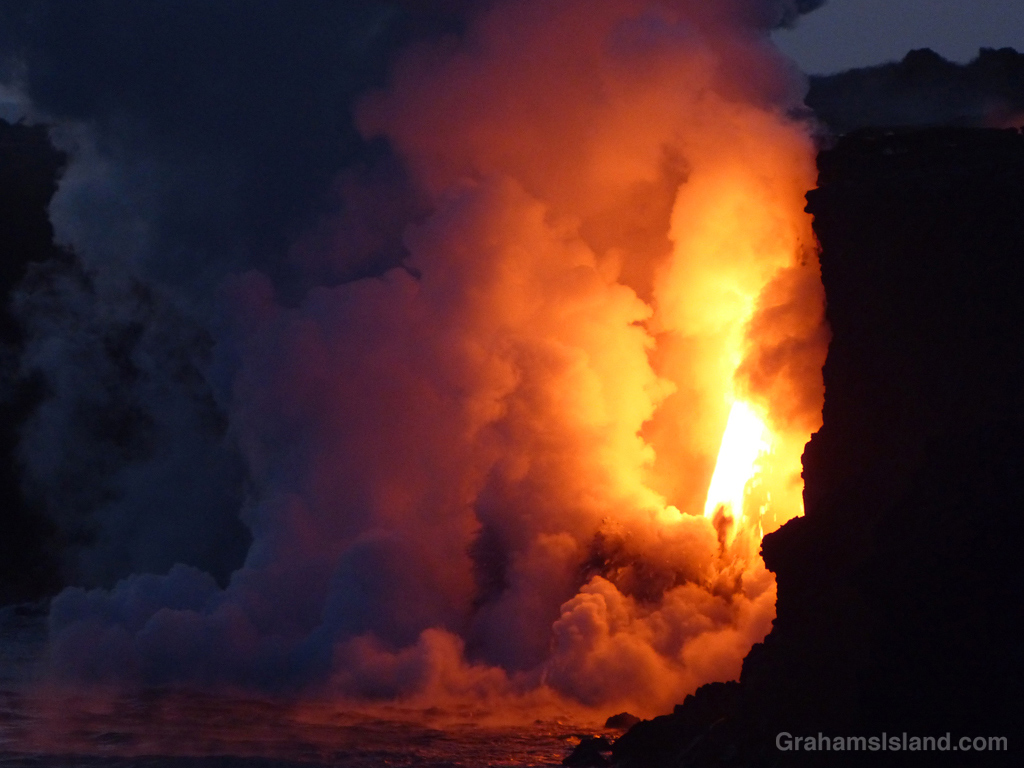
I’ve opted for a dip into the archives for this challenge. Two years ago, lava from Kilauea Volcano’s Pu’u O’o vent reached the ocean, tumbling down a cliff into the water. One day, the cliff collapsed, leaving the lava shooting out of a hole high up in the new cliff. This was called the firehose of lava because that’s what it looked like.
I first learned about it when I saw a video of the lava firehose on one of the news channels. What impressed me was that it was really hard to to see that it was a video. The flow was so strong and so consistent that it looked like a photograph. It was only by looking closely at the edges of the firehose that I could make out spatters of moving lava.
I headed down to the volcano, to take at look at this phenomenon, the day after I saw the video and was duly impressed by the dramatic scene. It was well worth the trip and well worth my quick visit. The following day another cliff collapse moved the firehose back and out of sight from the observation areas.
These are two photos from that visit. More photos can be seen in previous posts here, here, here, and here.
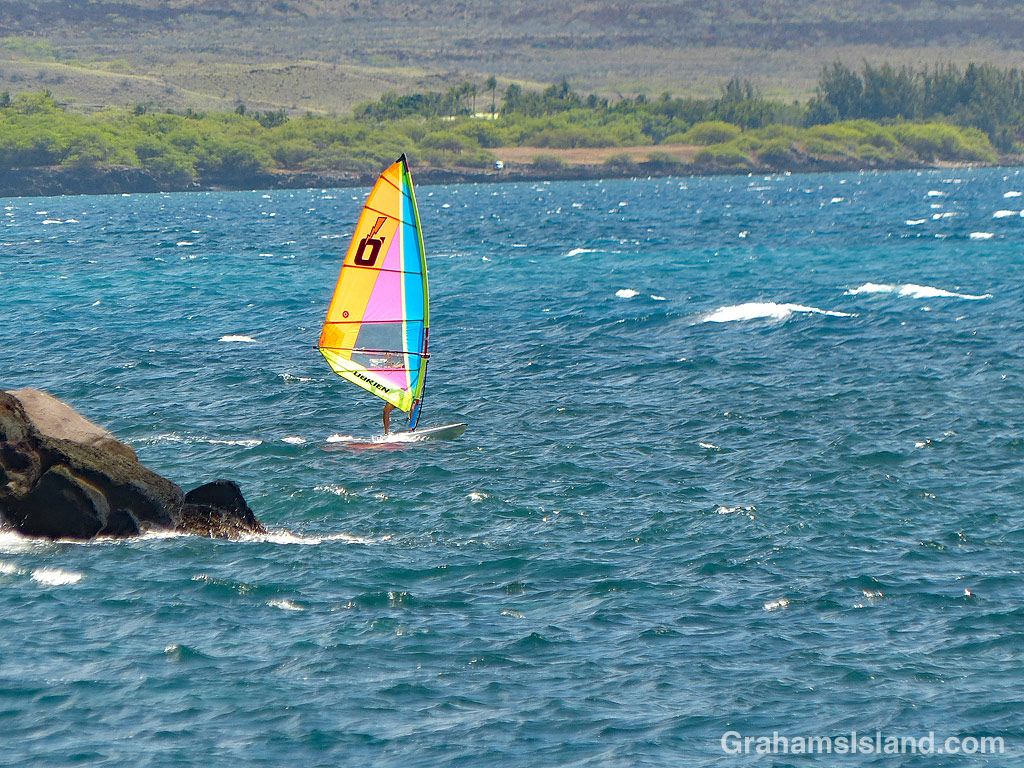
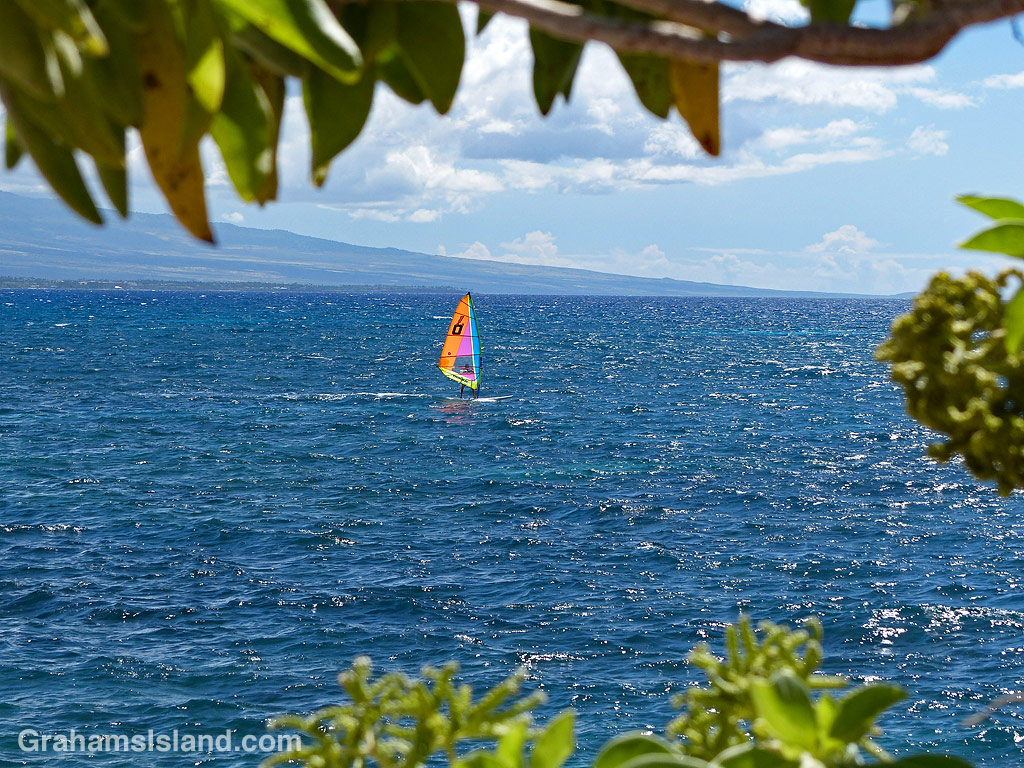
For whatever reason, I don’t see a lot of windsurfers in the waters around the Big Island. This is a bit surprising as there’s lots of water and the wind blows with a good deal of enthusiasm. Perhaps it’s just that most people favor surfing or paddle boarding.
Whatever the reason, I thought I should get photos of this windsurfer working his way along the coast near Kawaihae, since it might be a while before I see the like again.
Posted in response to this week’s Friendly Friday challenge on the theme of ‘Moving.’ See more responses here.
This week’s Friendly Friday challenge theme is ‘Secrets.’ See more responses here.
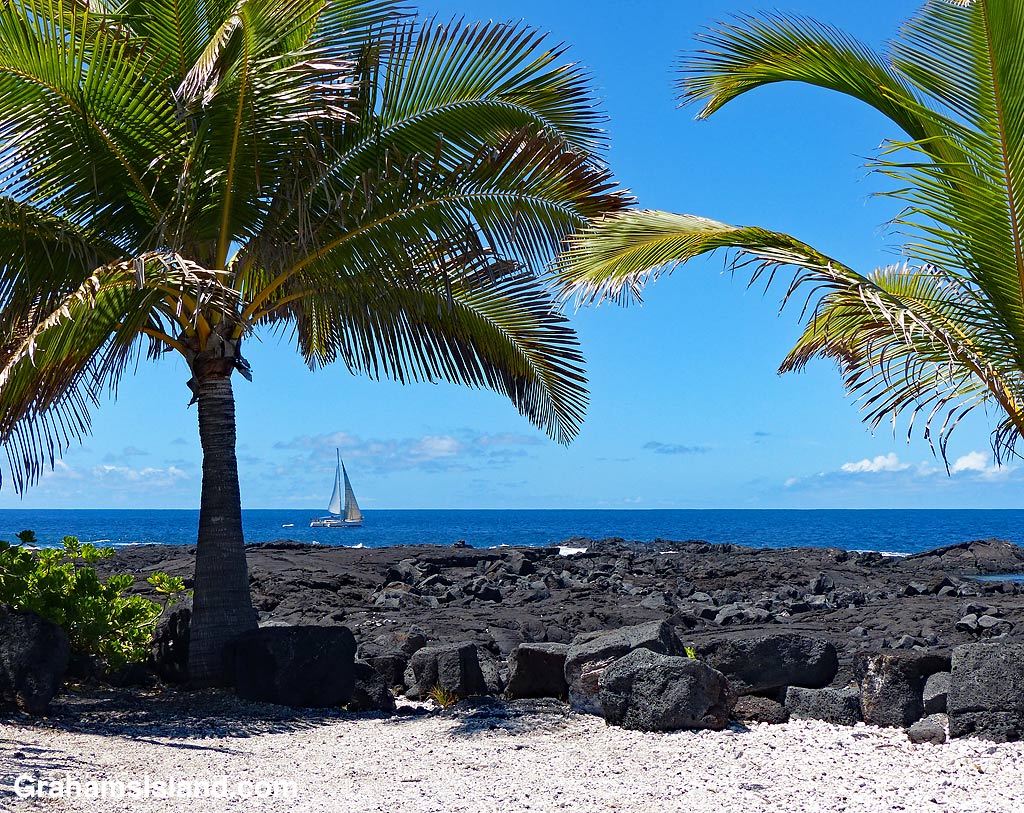
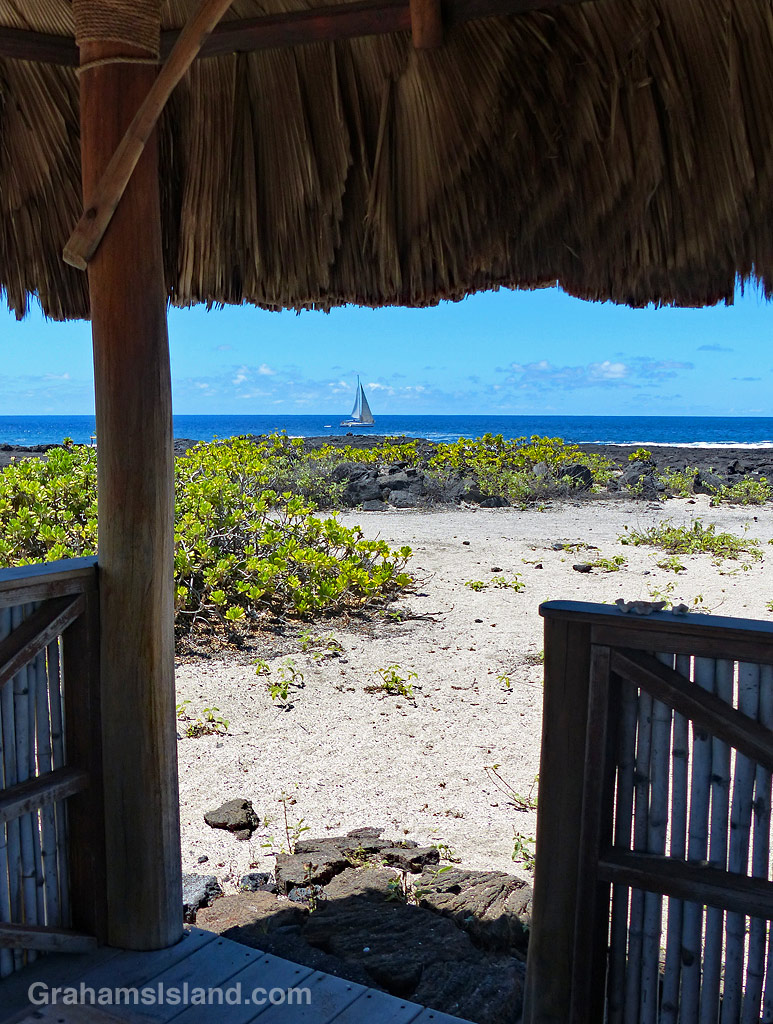
Here are a couple of secretive glimpses of a sailboat heading north along the Kona coast. I used to sail for a good many years until I sold my last boat, a twelve-foot San Fransisco Bay Pelican. In that boat, I used to putter around the bay for the fun of it, but I also took it on longer journeys. Before that, I used to have a bigger sailboat and also crewed on the boats of others.
While I like bay sailing, what I really enjoyed was sailing somewhere, not just the activity, but the passage making – navigation, nights spent in the open ocean under the stars.
The boat in these photos could do that, though I’m not sure I could anymore – too used to my creature comforts these days.
Kohanaiki Park is just south of Kona Airport, so its tranquility is often disrupted by planes passing overhead. Here, a Southwest Airlines jet curls away shortly after takeoff, passing over one of the sparsely occupied beaches in the park.