A few days ago I did another hike up Pu’u Wa’awa’a, a large cinder cone north of Kona. I planned the hike to coincide with one of the days of latest sunrise here, just after 7 a.m.. My idea was to arrive at the trailhead at 6 a.m., when the gate opens, and head up as quickly as I could in order to get the best shot at early morning light from the summit. This meant getting up by 4 a.m. and setting out by 5 a.m.
Defying all historical precedents, I was there five minutes early. The new automated gates opened before me and in no time I was hotfooting up the trail, flashlight in hand, in order to avoid breaking an ankle in the one of the many potholes in the old road that makes up the first part of the trail.
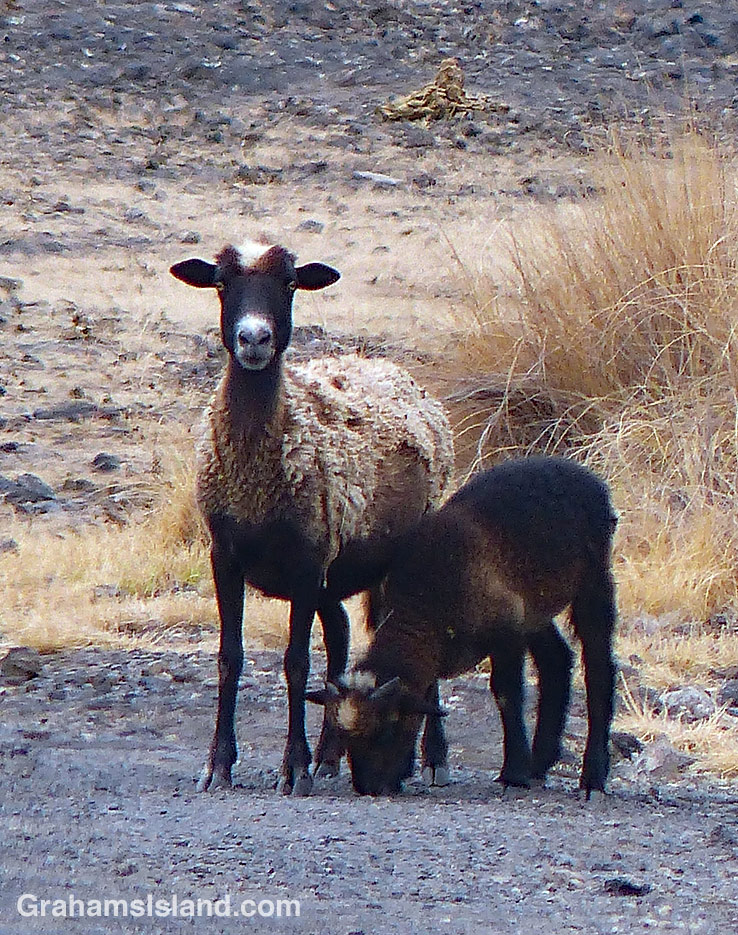
One advantage of hiking in the dark is that I didn’t stop every five minutes to take a photo of a goat or bug. Still, an hour into the hike, as the light improved, I couldn’t help but pause when I spotted a large wild pig excavating – no other word for it – a large hole in the hillside in the search for worms and the like (alas the photos weren’t great – not enough light).
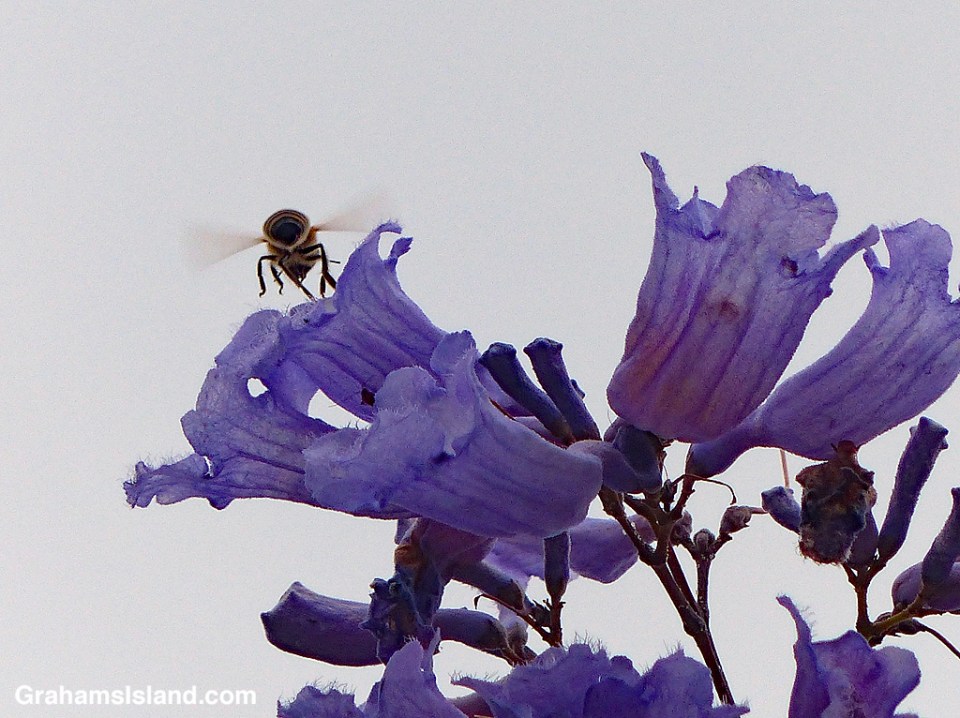
By 7:30 a.m. I reached the top of the climb. I already knew I wasn’t going to get the hoped-for blaze of early morning sun – too many clouds from the get-go – but this photo shows the moody light that greeted me. I considered this a worthy consolation prize. And then there was the fact that I had the summit to myself for 90 minutes, and the mamane trees on the west side were in bloom and attracting Hawaii ‘amakihi and hordes of bees (look for several dozen photos of these in the near future!).
For more information about Pu’u Wa’awa’a and its trails, go to puuwaawaa.org.

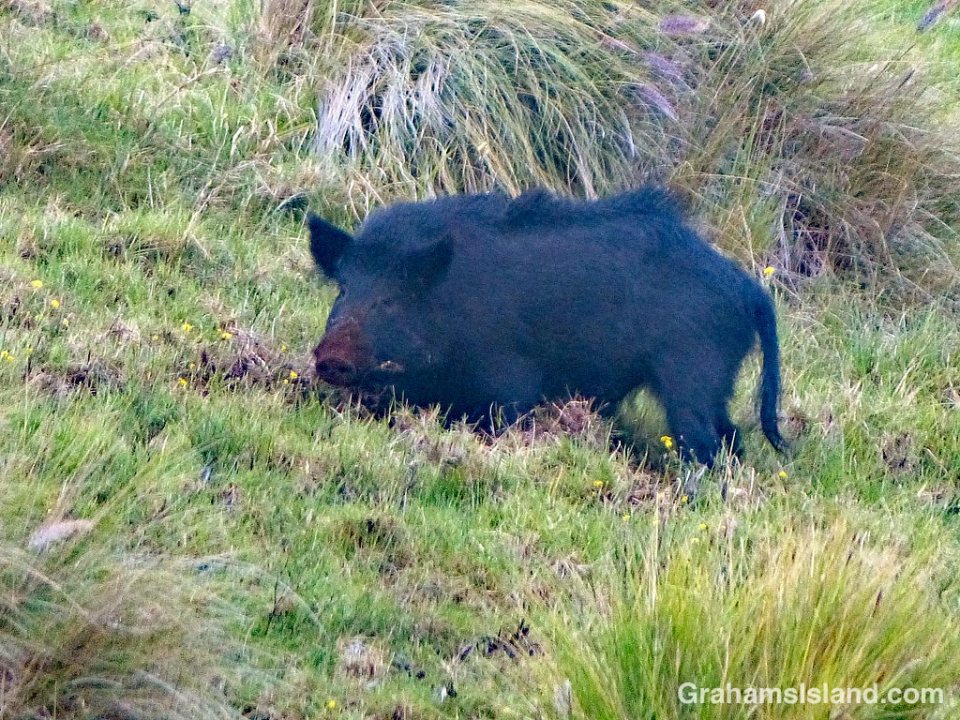
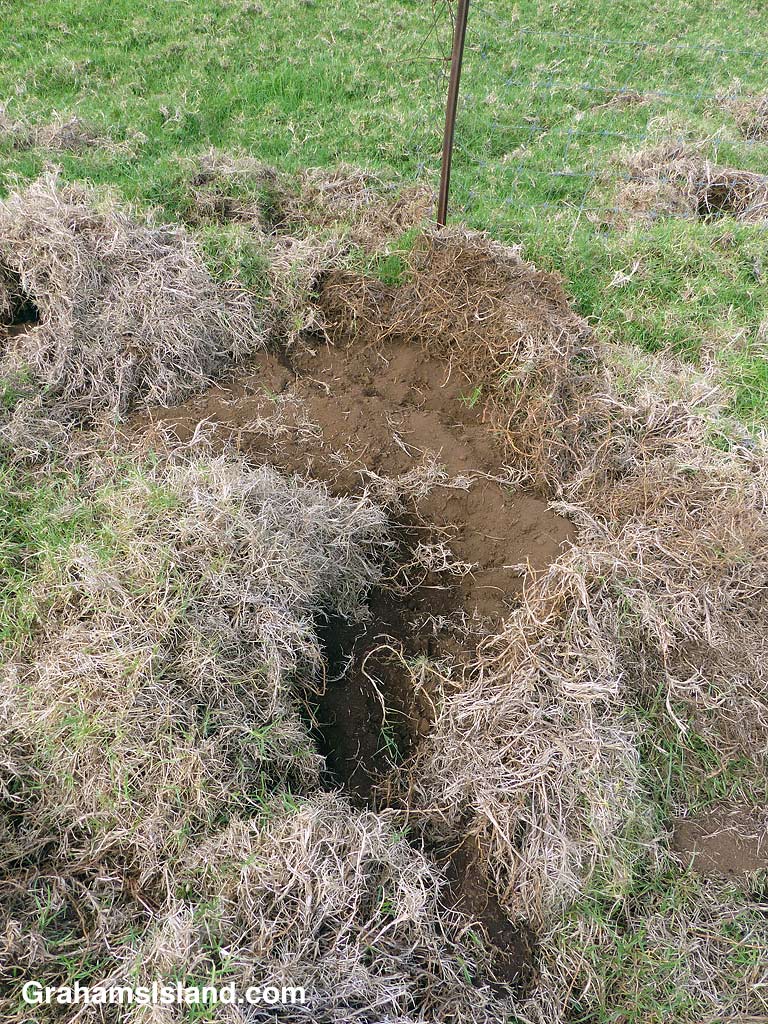 On an early morning hike at Pu’u Wa’awa’a, I saw this wild pig on the hillside above me. It was busy rooting around in the dirt, hence the brown snout. Wild pigs can do an enormous amount of damage in their foraging. The photo at right shows one of many areas alongside the trail that has been dug up by pigs. These areas are susceptible to erosion when it rains.
 A final response to the last edition of the WordPress photo challenge with a theme of ‘