
A photo taken while snorkeling, looking up toward the light. This one doesn’t look a whole lot different in black and white.


A photo taken while snorkeling, looking up toward the light. This one doesn’t look a whole lot different in black and white.

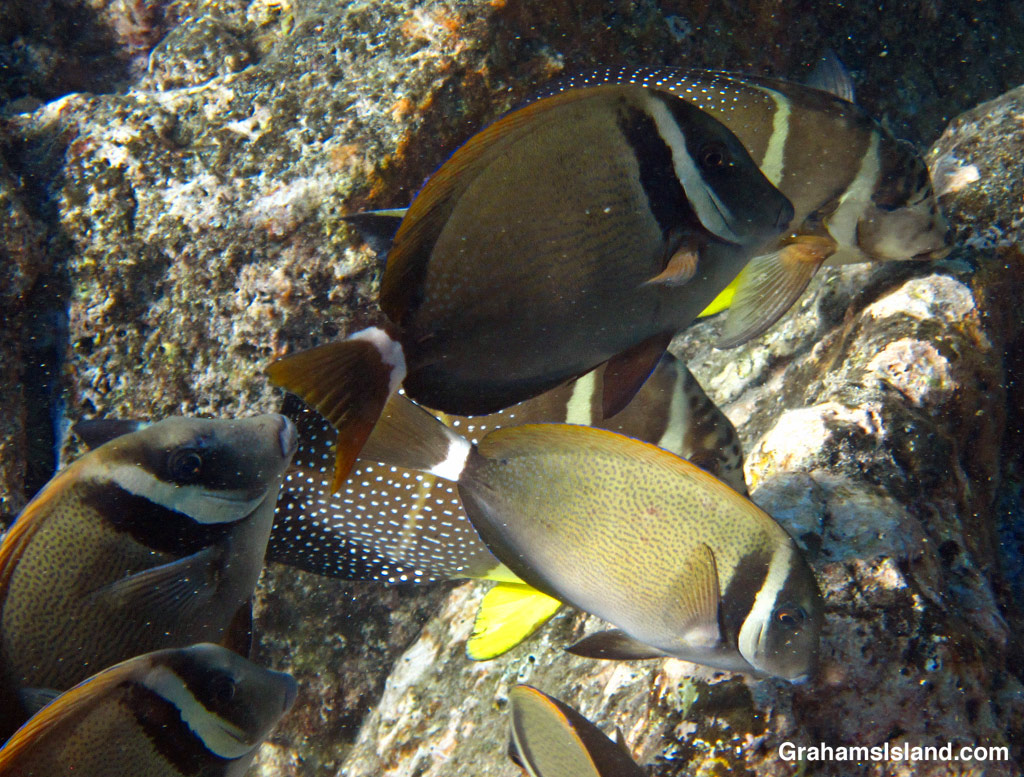
Schools of Whitebar Surgeonfishes are fairly common where I snorkel most. They cruise around rocky areas, feeding on algae. Often they can be seen with other reef fish such as Convict Tangs or Whitespotted Surgeonfish, seen in the background of the lower photo.
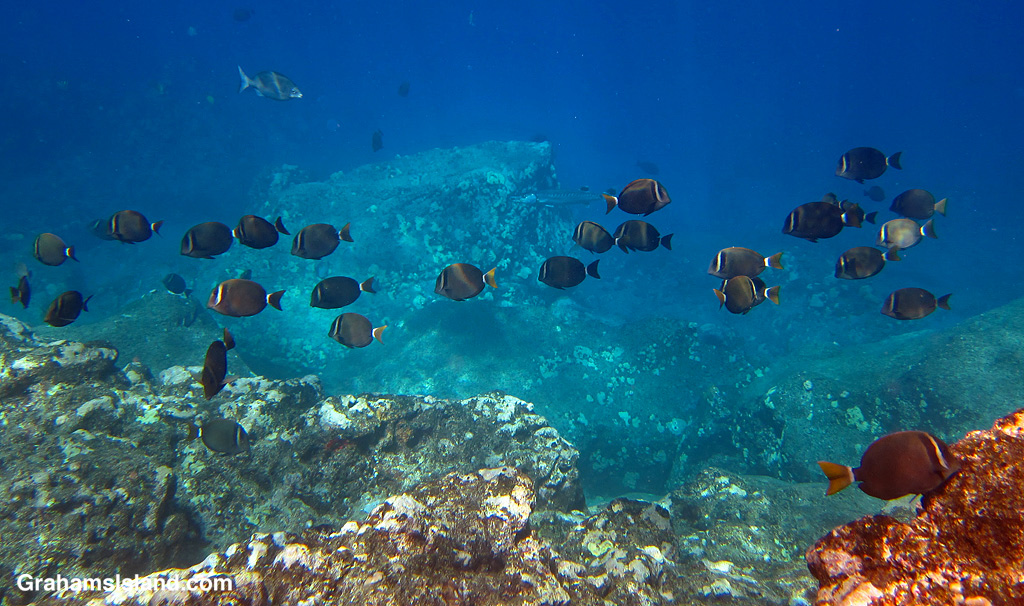
On the coast where I snorkel, there’s a spot known locally as Viper Rock. This is where a very large Viper Moray Eel used to reside in a recess in the rock. I haven’t seen him lately, but it’s also a good spot for a variety of fish so I go down there regularly.
On this day, I approached the rock from the shore side and noticed these Whitebar Surgeonfishes swimming by. Then I noticed the Great Barracuda that can be seen in the background against the edge of the farther rocky outcropping. A few moments later I saw another one, and then a third.
It appeared that the barracuda ohana that frequents that area was around in force. Rather than cross to the other side of the ridge by Viper Rock, where the barracudas were, I returned the way I came. A couple of barracudas looked like they might follow, but quickly lost interest. Their interest in people appears to be related solely to the possibility that those people will snag some fish which the barracudas will then hope to steal.

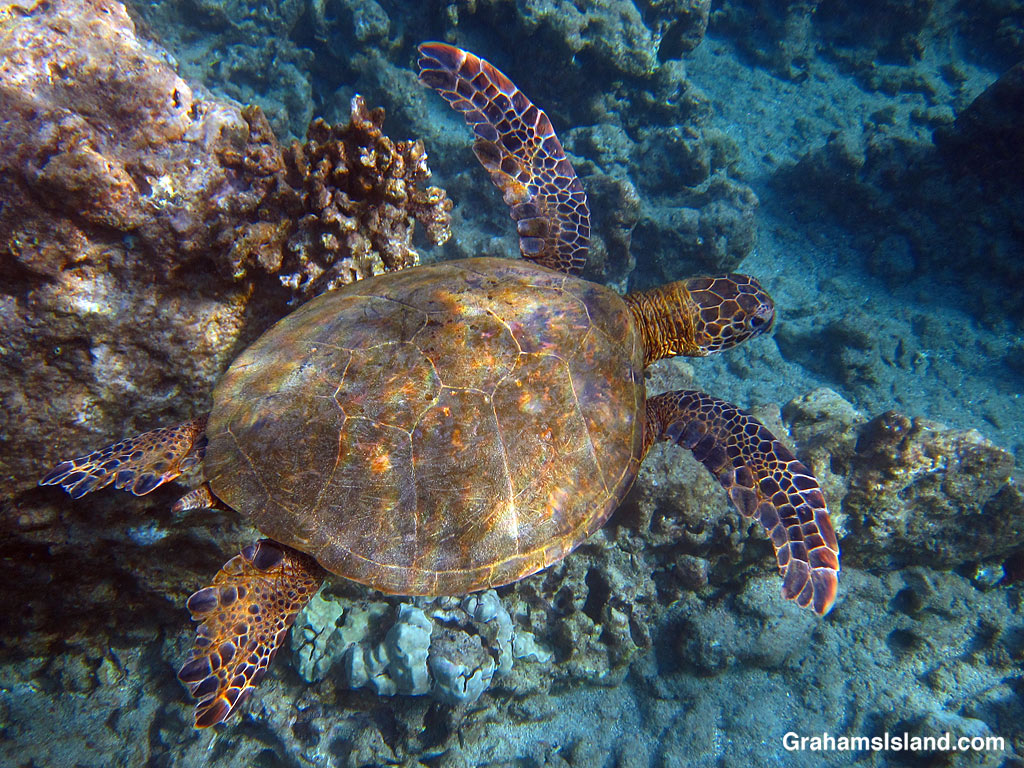
The current Friendly Friday challenge theme is ‘Green.’ See more responses here. These photos are from a recent encounter with an Hawaiian Green Sea Turtle.
I was snorkeling over a shallow area when this turtle rose up from the deeper water beyond. I reached the edge of the shallows at about the same time as the turtle which slipped below me, between me and the rocks, before disappearing in the direction I’d come from.
Adult turtles mostly eat algae and sea grasses, which turns their fat green, hence the name.
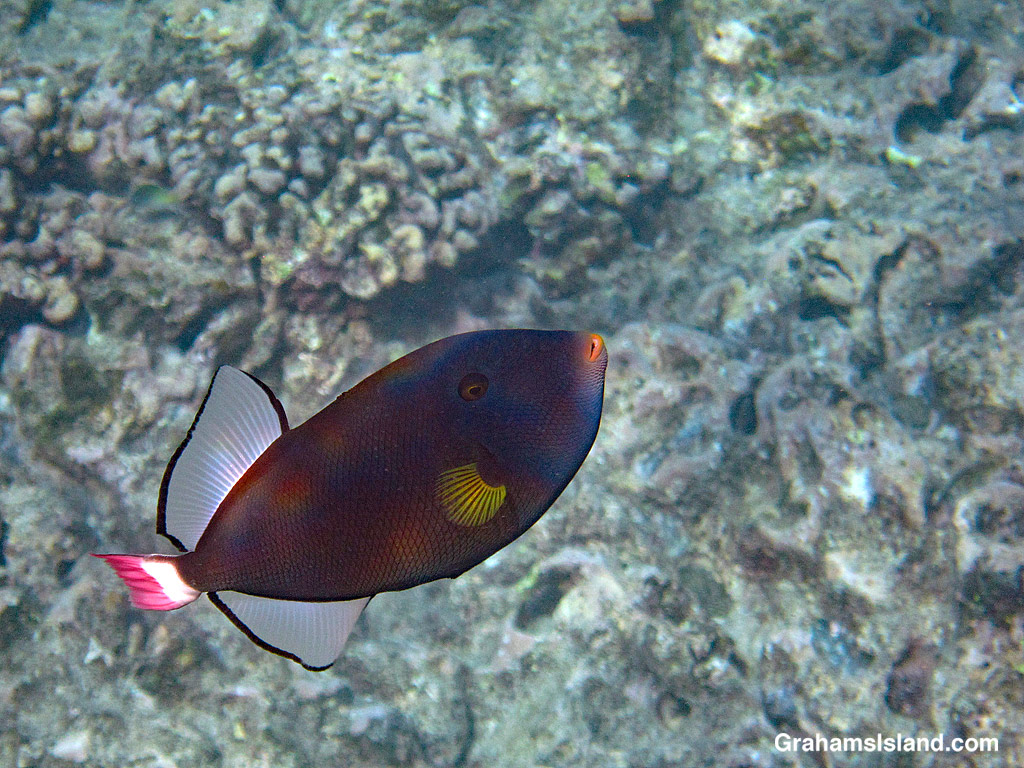
This week’s Sunday Stills Monthly Color Challenge is ‘Pink.’ See more responses here.
The top photo is an appropriately named Pinktail Triggerfish. Below, we have a Gold Dust Day Gecko cleaning the windows, a pink hibiscus fronting an orange tree, and an Hawaiian Stilt with an itch.


Milletseed Butterflyfishes are quite common, at least where I swim, but I think they’re one of the prettiest butterflyfishes around.


A couple of mornings ago, I was about to get in the water when I noticed something out in the bay. After a few moments, I realized they were dolphins, and they didn’t appear to be in a hurry to get anywhere. Often, dolphins zip up or down the coast and, even if I’m out there when they go by, it’s a fleeting encounter.
But when they move slowly, as they were on this day, there’s a fair chance they might hang around. So I jumped in and swam out in the general direction of where they were heading, hoping to cross paths. Each time I popped up to try and locate them, they were still there. Soon I saw the first one and then they were all around me.
After several minutes they headed back the way they came, but still in no great hurry. I followed at my own pace. There’s no way I could keep up with them and I knew my main chance of seeing them again was if they turned back my way. This they duly did.
The dolphins remained in the bay for half an hour or more, going back and forth. A few leapt out of the water as spinners do, but under water they twisted and turned and just seemed to be having a good time. It was nice to see several youngsters among them. Eventually, they took off in the direction they’d been going when I first saw them and I swam back to shore.
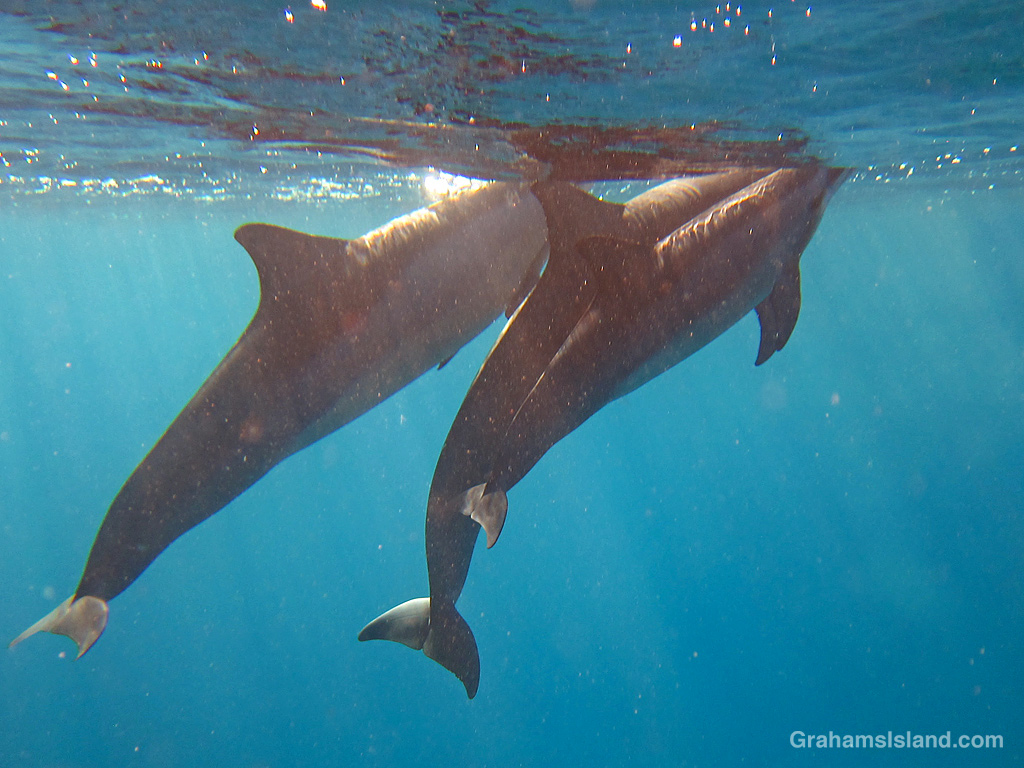
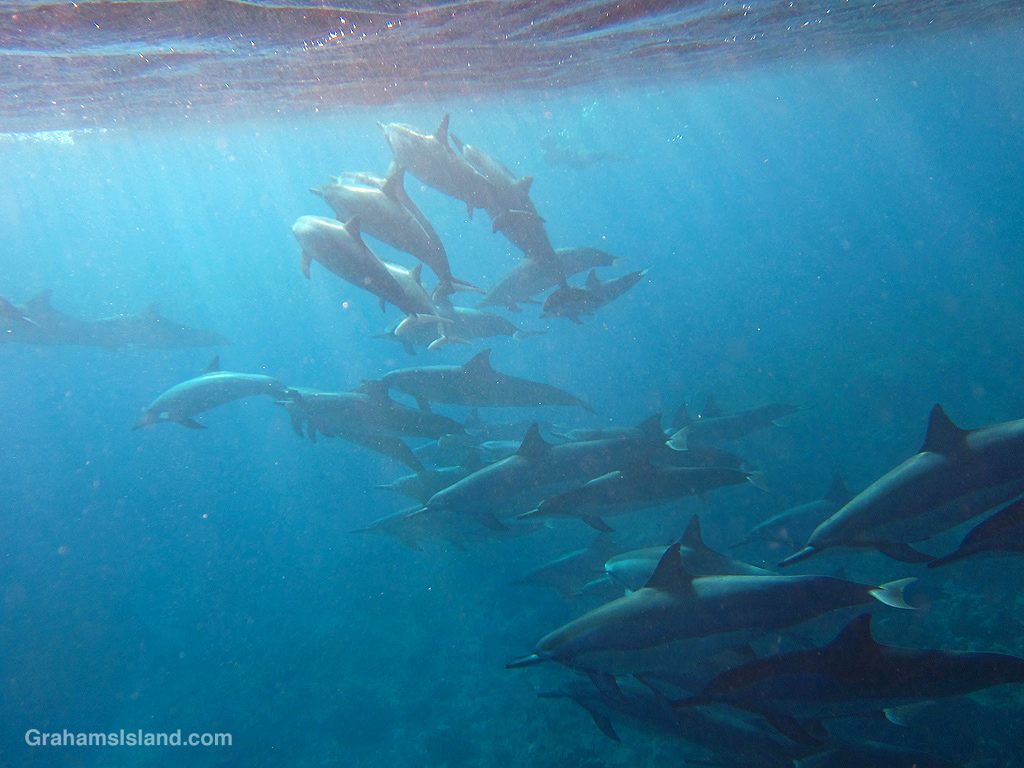
These are some of the photos I took during the encounter. I had one photo with 45 or so dolphins in it and I know I didn’t capture all of them. I think there were probably 50 or 60 dolphins in the pod, possibly more. It’s only the fourth time I’ve encountered a pod that size and it’s a wonderful experience that will never got old.


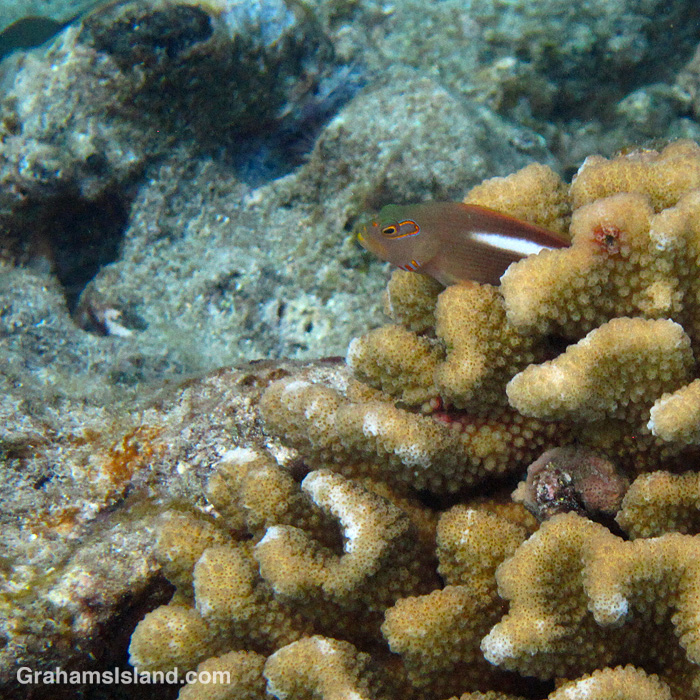

Arc-eye Hawkfishes come in two color variations. The top photo shows one that is reddish tan with a white stripe on the side. The bottom photo shows a fish that is a darker brown with no white stripe.
According to my fish book, John P. Hoover’s The Ultimate Guide to Hawaiian Reef Fishes, Sea Turtles, Dolphins, Whales, and Seals, the white stripe coloring is most common in deeper water where the coral is spaced farther apart. In shallower water, where the coral colonies are closer together, the darker coloring predominates. However, both these photos were taken in shallow water so it’s not an either/or situation.
 Graham's Island