Tag Archives: Snorkeling

Swimming with a manta ray

First sight of the manta ray coming toward me.
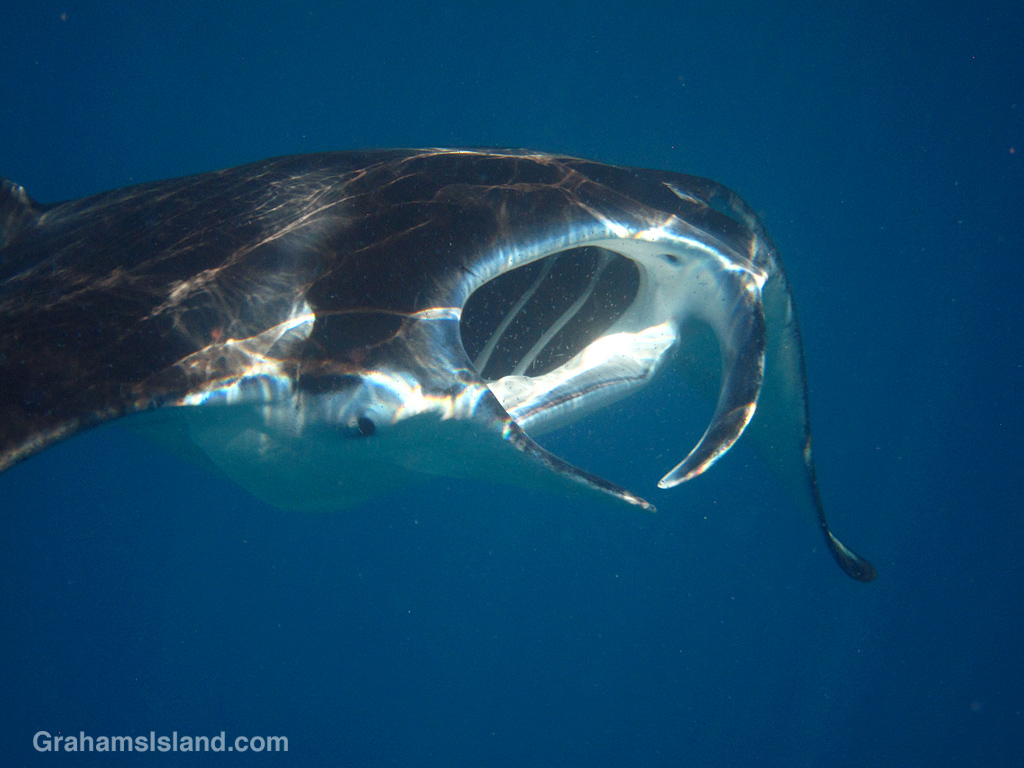
Sliding by to one side, showing an eye and its cephalic fins, while it catches the light.
Dipping lower in the water, its upper markings clearly visible.
Heading away over the coral.

My usual posts feature a single photo or perhaps two or three, but today I wanted to give an idea of a recent encounter I had in the water with this manta ray. The photos are a sequence, top to bottom, from the time I first saw it, to it fading from sight into deeper water, about a 10 minute period. The ray swam quite slowly during that time, allowing me to keep up with it.

There are two kinds of manta rays. M. birostris, also known at the ocean manta, is the larger of the two species with a wingspan of 20 feet or more. The manta in these photos is M. alfredi, or reef manta, with a wingspan of 18 feet or less. This one was probably around 12 feet across.

Starting to turn.
Crossing below me.
Coming back up over some coral.
Out of the way, little fish.
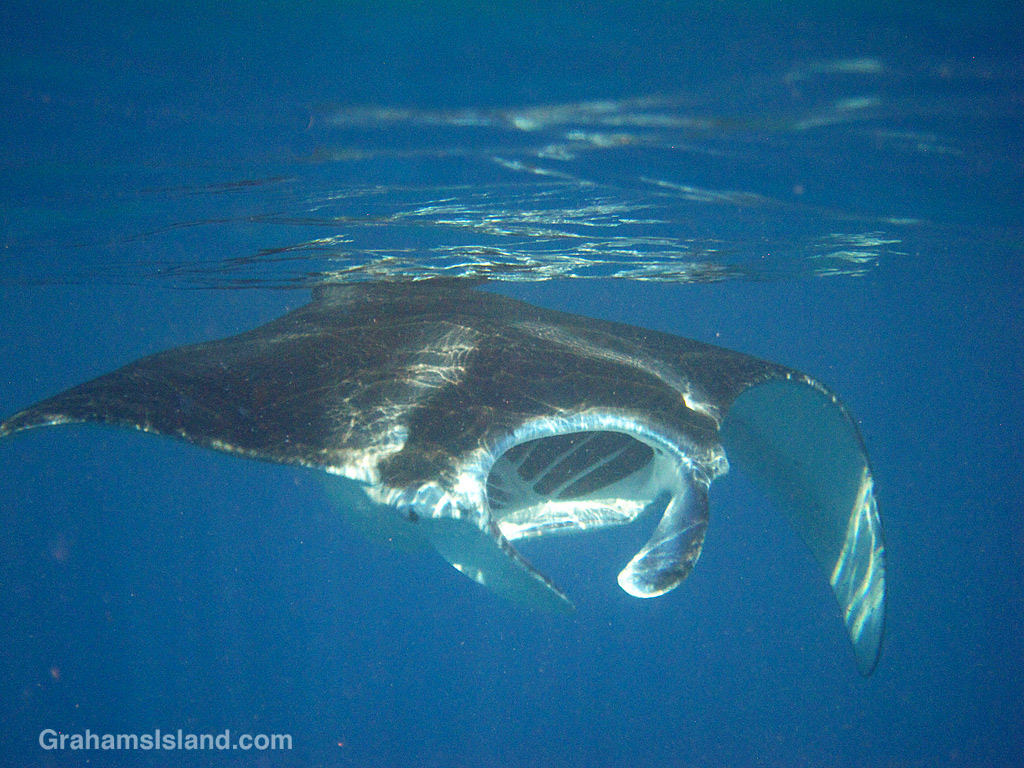
Heading my way, mouth open, but mantas aren’t menacing.
Time to say goodbye.

Eagle ray juvenile

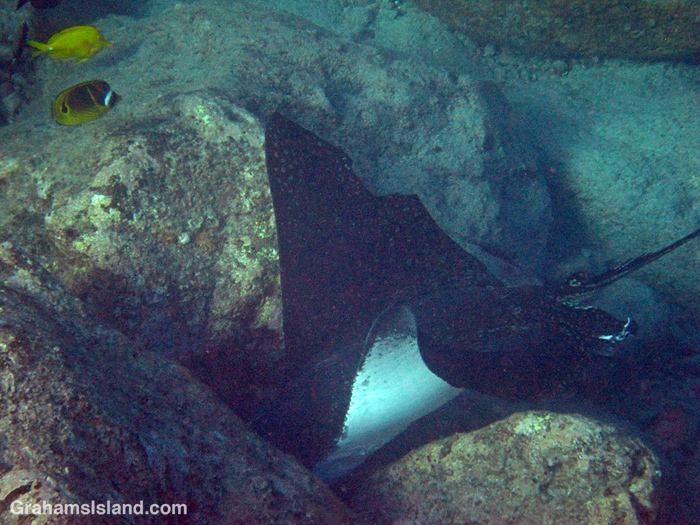
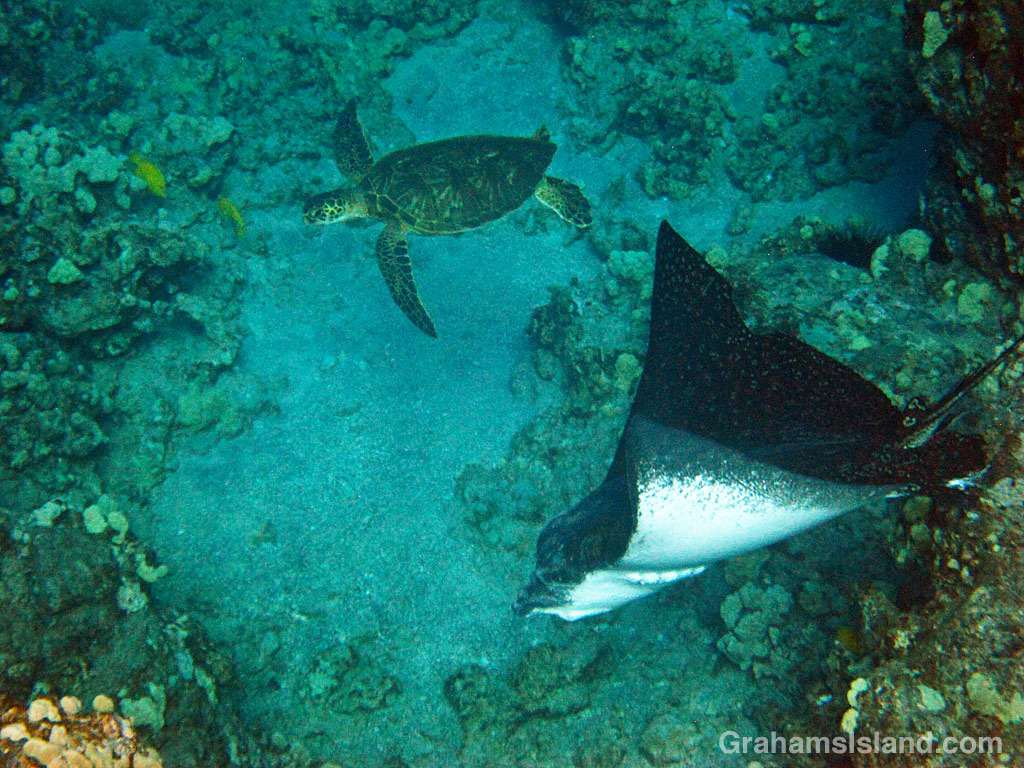
On a recent snorkeling expedition I was lucky to notice this eagle ray sliding by below in some hazy water. It’s the smallest eagle ray I’ve seen, with a wingspan of about a foot-and-a-half. Adults can have a wingspan of up to ten feet though the ones I see are mostly in the five to six feet range.

One nice thing to see was that this little ray was in perfect condition with nary a mark on it. Some of the bigger ones look like they have been in the wars.

Divers down

It’s always a bit strange to come across divers when I’m snorkeling. For starters, there’s the stream of bubbles. Then there’s these large creatures with splashes of color and shiny tanks.

I’m not sure these two even knew I was floating above them. I took my photos and left them to their explorations.

Rainbow chubs

On a recent swim I saw these two fish passing by. They looked like chubs, but not ones I’d seen before. I snapped a quick photo, not expecting it to be great, but hoping it would help me identify the fish. I need not have worried.

After they passed, they made a series of approaches and retreats. They appeared as curious about me as I was about them, which is something of a characteristic of chubs. Eventually, they moved away and I carried on, catching up to two others I had been swimming with. I asked them if they’d seen these fish and they said no.

I was describing what they looked like when the two of them showed up again. Once more they looped around, checking out these new people before finally heading south, not to be seen again.

When I got home it was easy to identify them as rainbow chubs, also known as blue-stripe chubs, with their distinctive blue markings. What was interesting is that their home is the Eastern Pacific, from Ecuador north to California. But some can get carried over to the Central and Western Pacific. As such, they’re rare in Hawaii, so this is one of those fish I might never see again. A matter of being in the right place at the right time.

In my attempts to identify what I see in the water, I use John P. Hoover’s book The Ultimate Guide to Hawaiian Reef Fishes, Sea Turtles, Dolphins, Whales, and Seals. His website is hawaiisfishes.com.

A manta moment

On a recent snorkel, this large manta ray made an appearance. It cruised around close to the coral outcroppings before heading north. I don’t chase mantas, or any other fish really, as most anything in the water can leave me behind at any time it wants to.