
On Saturday, my wife and I got going early and went snorkeling. There was some swell rolling in and the visibility wasn’t great, but that had been the case the day before and we’d been pleasantly surprised to find that it was much clearer farther out. So we swam out, angling to the north.
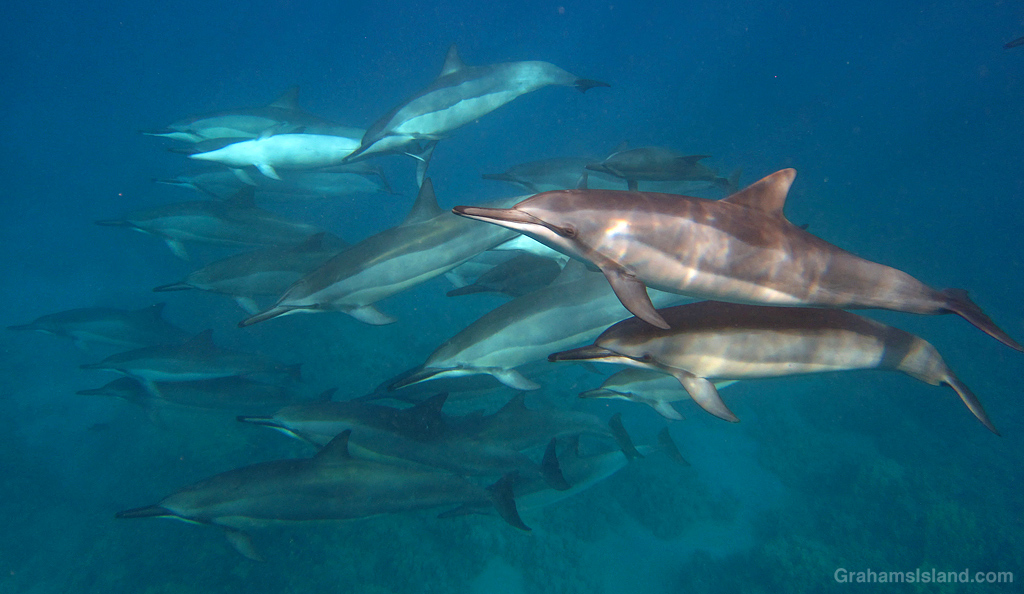
Suddenly, I saw something coming past me from the other direction. I pointed to it and turned to my wife, only to see her doing the same thing. It quickly became clear that these were spinner dolphins, about 15 or so we thought. A couple of them seemed interested in checking us out, but quickly the pod continued heading south.
It’s fairly common for dolphins to swim past the bay we were in, probably heading to the place they’re going to rest during the day. But after this pod passed, they stayed underwater for a while. Before they disappeared, their direction was somewhat into the bay, and I was curious where they’d resurface.
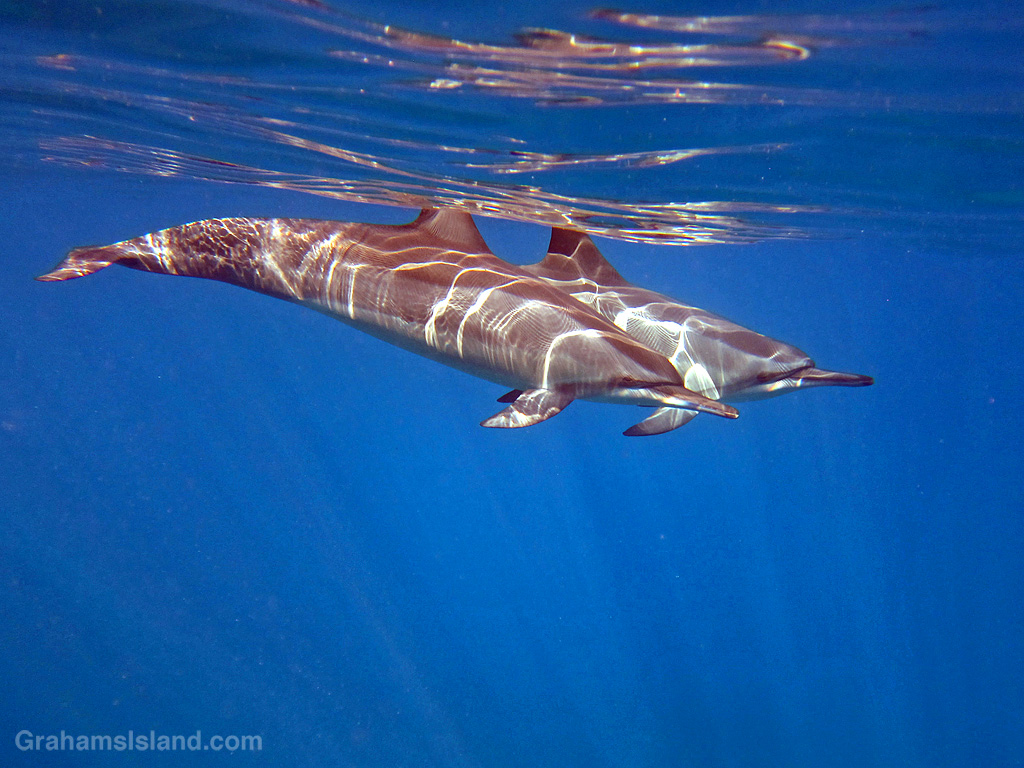
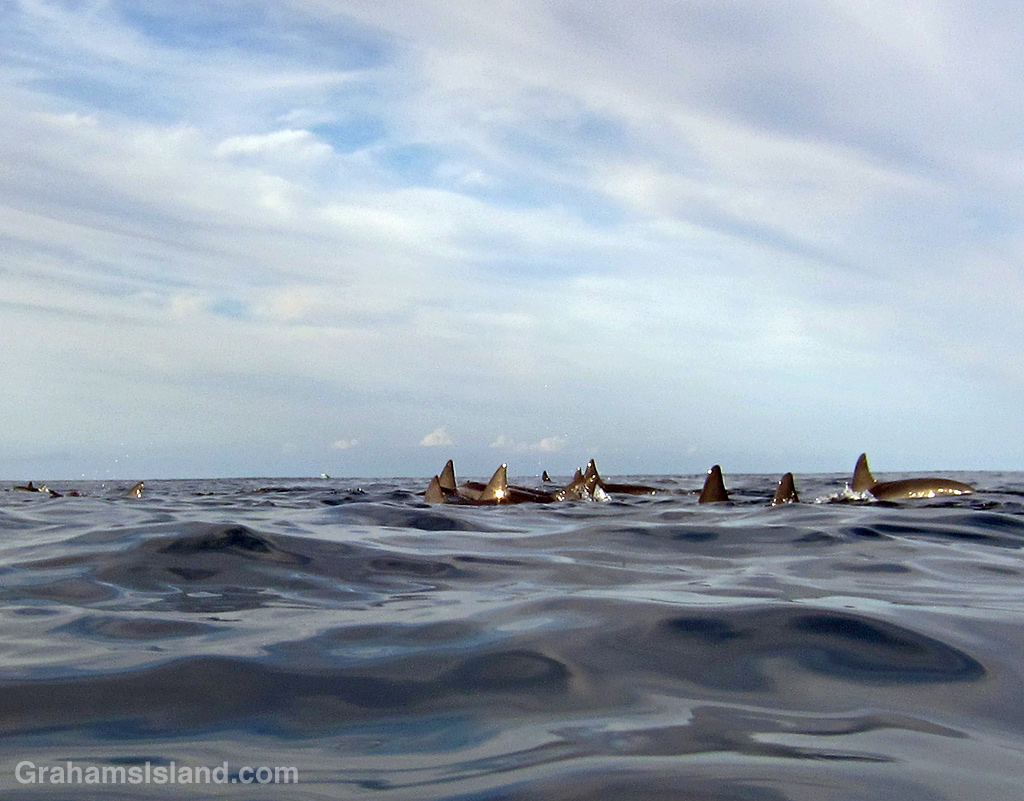

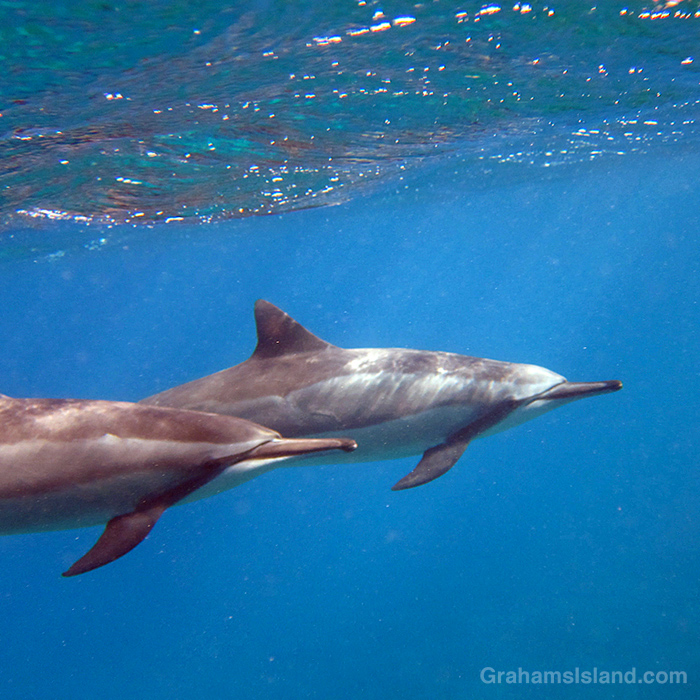
We swam back the way we’d come, popping up frequently to see if we could spot them. Sure enough, after a few minutes, we not only saw fins in the bay, but that they were coming our way. I got my camera ready and out of the hazy water the dolphins emerged. There were a lot more than we first thought. They swept beneath us and around us, hanging out for a short while, before taking off to the northwest. We watched them go, thrilled to have had this encounter.
A little later, as I was heading back into the bay, I looked up to see another snorkeler followed by a cluster of fins. The dolphins hadn’t gone away! They’d doubled back again. I swam slowly in their general direction. There was no point rushing. If the dolphins came my way, fine. If not, I was never going to be able to catch up with them even if I wanted to.
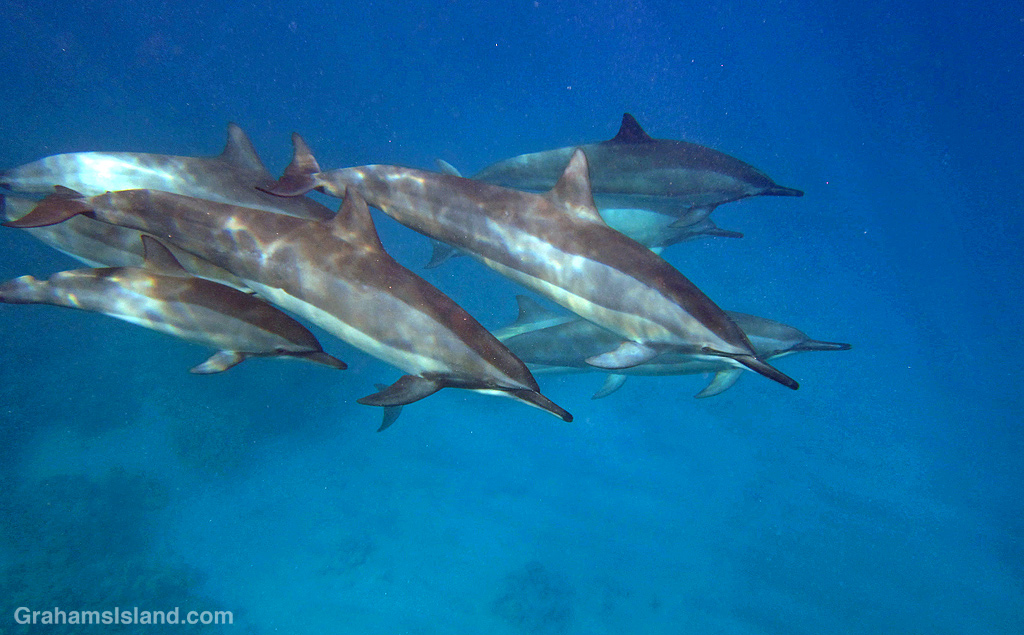
Sure enough, the dolphins came rocketing by, and for the next 10 or 15 minutes they zipped around the bay. I mostly stayed in the center of the bay, not trying to chase, and there was no need to. I’d watch a group whizzing by, see them recede, then turn around and spot another group coming my way. They were very active, twisting around each other as they swam, soaring up and down. When I’d see them heading for the surface, I popped up, hoping to get a photo of one spinning up into the air, but I didn’t see any doing that on this occasion.
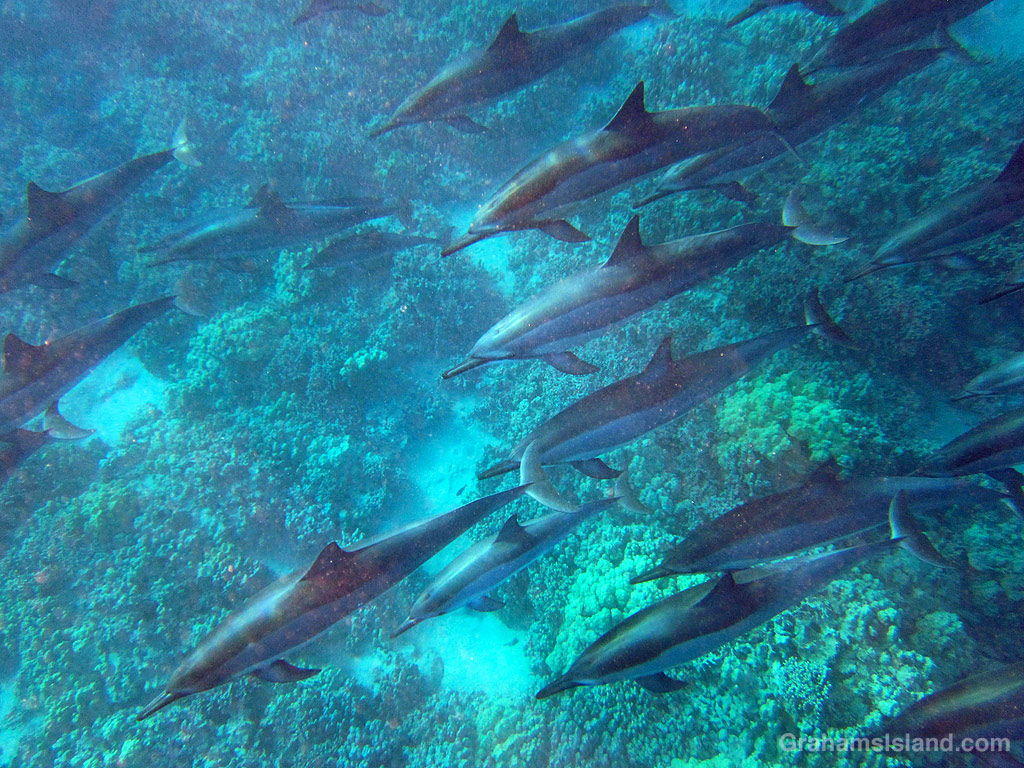
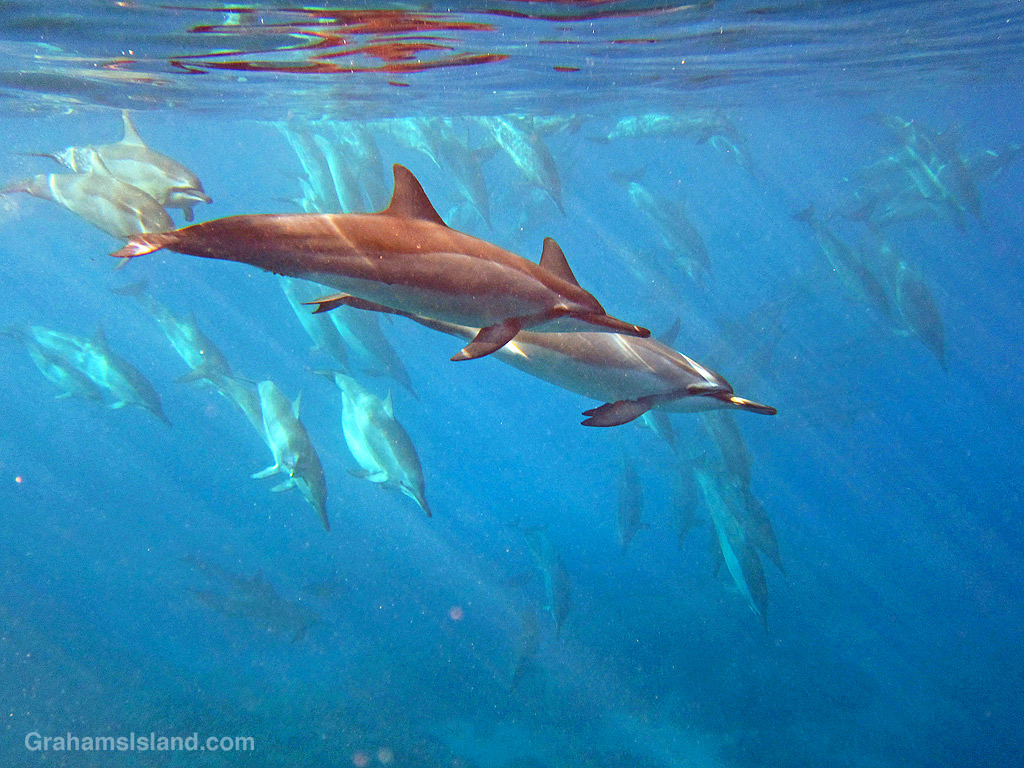
After a while, the dolphins moved away from where I was and I decided to head in. My wife and I thought there must have been at least 30 dolphins in the bay, perhaps more. When I looked at my photos, I saw that in one of them (the bottom photo), I could identify at least 40 dolphins, and I knew I hadn’t taken a photo of all of them. Probably there were 50 or 60, though I joked that after a few years of recalling this encounter the pod would likely be well into the hundreds!
One thing I can say with some certainty, is that swimming with dolphins never gets old for anyone. It’s always a thrill to spend a little time with these wonderful creatures in their natural environment.










 Graham's Island