Tag Archives: Spiders

Four views of a Hawaiian garden spider

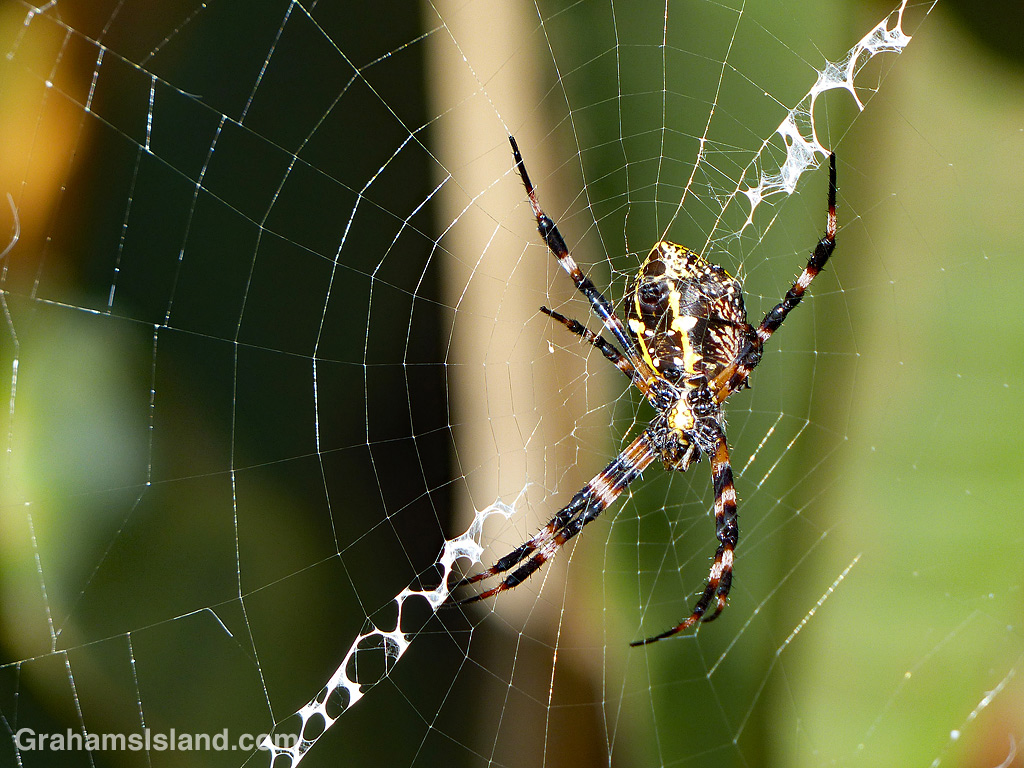
Hawaiian Garden Spider female underside
Hawaiian Garden Spider female top view
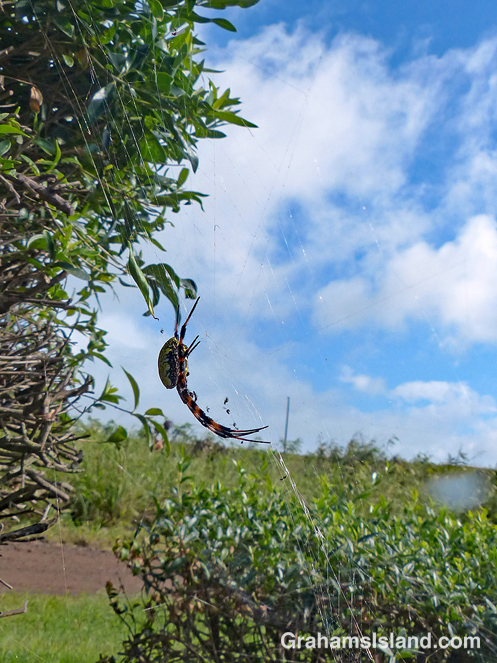
Hawaiian Garden Spider sideview
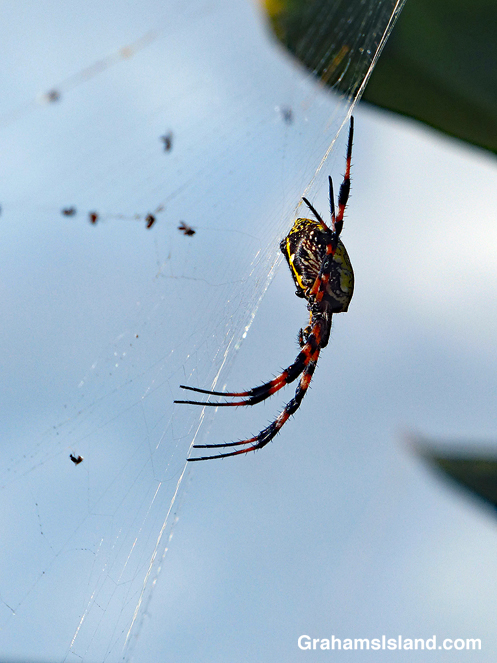
Hawaiian Garden Spider female side view

This rather large female Hawaiian garden spider (Argiope appensa) had spun a web in a place where I was able to gain decent access to it, so I decided to take photos from front and back and both sides.

The top pose is the one I see most often, with the spider perched on the underside of her web. The back view is the most striking, with its jewel-like top side of the abdomen. The two side views show how gently the spider sits on her nest.

A couple of days later, I saw this same spider on her web with the jeweled back catching the sun. I must have got a bit too close because in an instant the spider was on the other side of the web, underside toward me. I’m still not certain how she made such an instantaneous transition, whether it was through a hole in the web or zipping around the edge, but it was faster than my eye could record.

Teamwork

Ants and a spider

I noticed this spider moving across a dirt road in a most peculiar way. A closer look showed the reason why. This group of ants was taking it home, but not in a warm and fuzzy kind of way.

The ants were moving at a pretty good speed, which was impressive considering there were several of them involved and all pointing in different directions. After a few moments, they scuttled over the side of a rock and out of sight.

The victim looks like some kind of jumping spider.

Lesser grass blue butterflies

Lesser grass blue butterflies

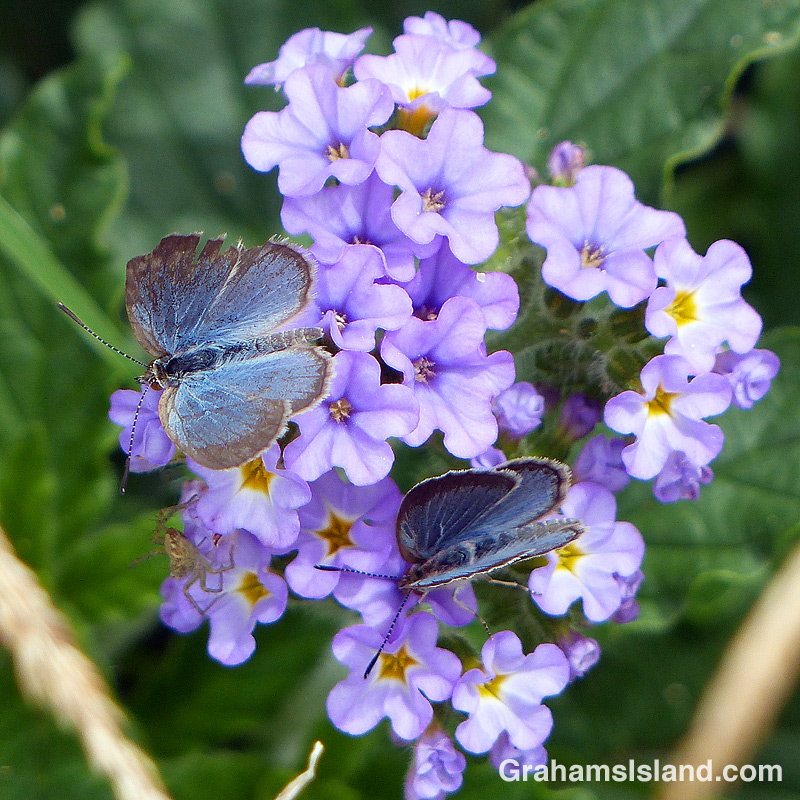
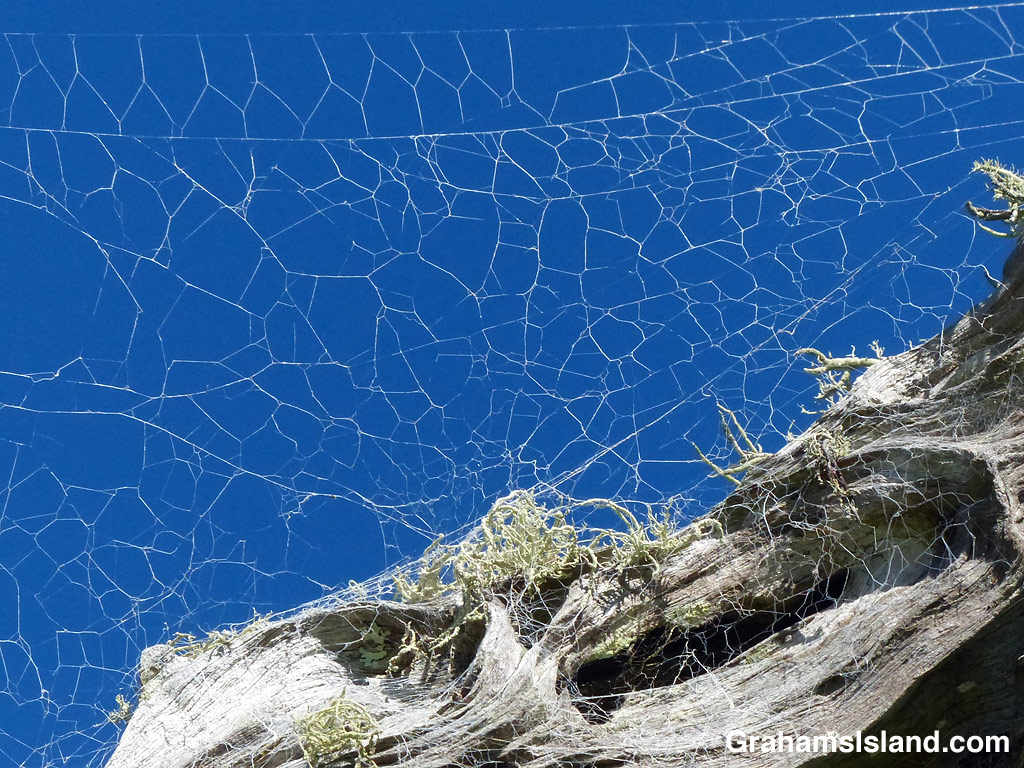
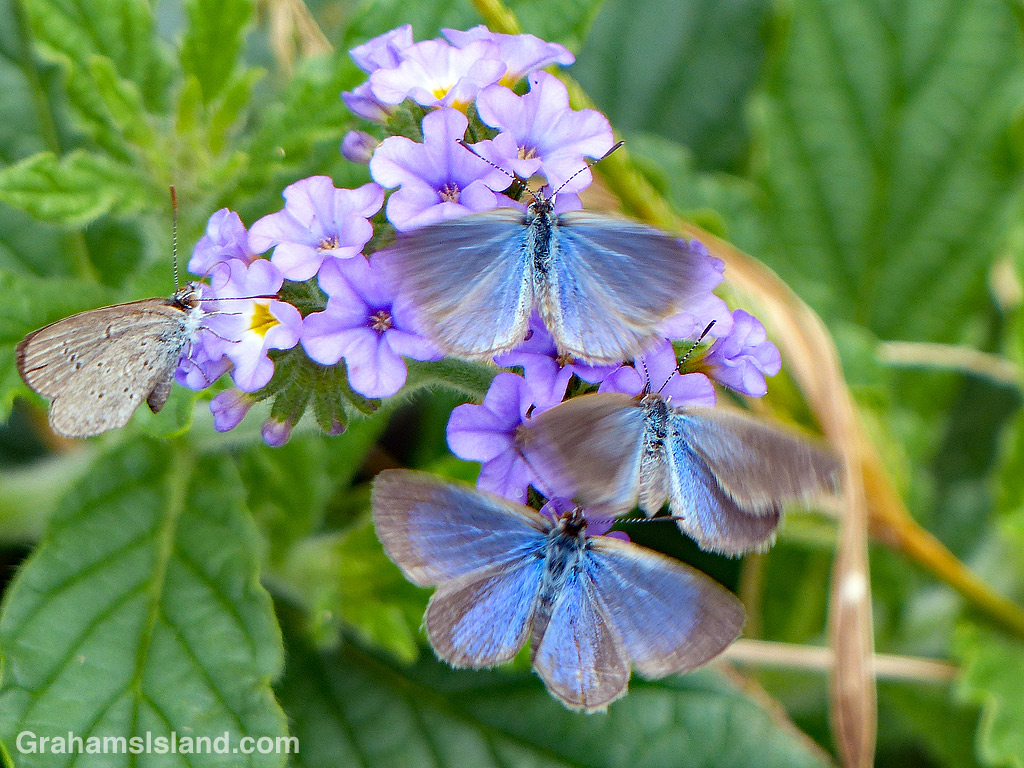
Lesser grass blue butterflies and a spiderThe lesser grass blue butterfly (Zizina otis) was first seen in Hawaii on Oahu in 2008 (for an article, or most of an article, about the find, click here). They’re now well established on the Big Island as well.
Lesser grass blues are very small, with a wingspan no more than ¾-inch. With wings folded up they’re the size of a small fingernail. They also fly close to the ground, within a foot or two.

Lately, I’ve been seeing them in large numbers on these blue heliotrope (Heliotropium amplexicaule) flowers. When I say ‘seeing them,’ what I mean is that when I walk past a patch of these flowers, a host of lesser grass blues will flutter up from the flowers, dance around in a tizzy for a few moments, and then settle back down again. When they do this, it’s like blue confetti being thrown (a few inches) into the air.

I’ve tried to capture this image with my camera, but haven’t been able to (and I’ve taken LOTS of photos). The butterflies are so small, I’m tall, and the effect is fleeting. But the top photo gives an idea of what’s going on, with three lesser grass blues homing in on the small blue heliotrope flowers while a fourth has already found a spot.

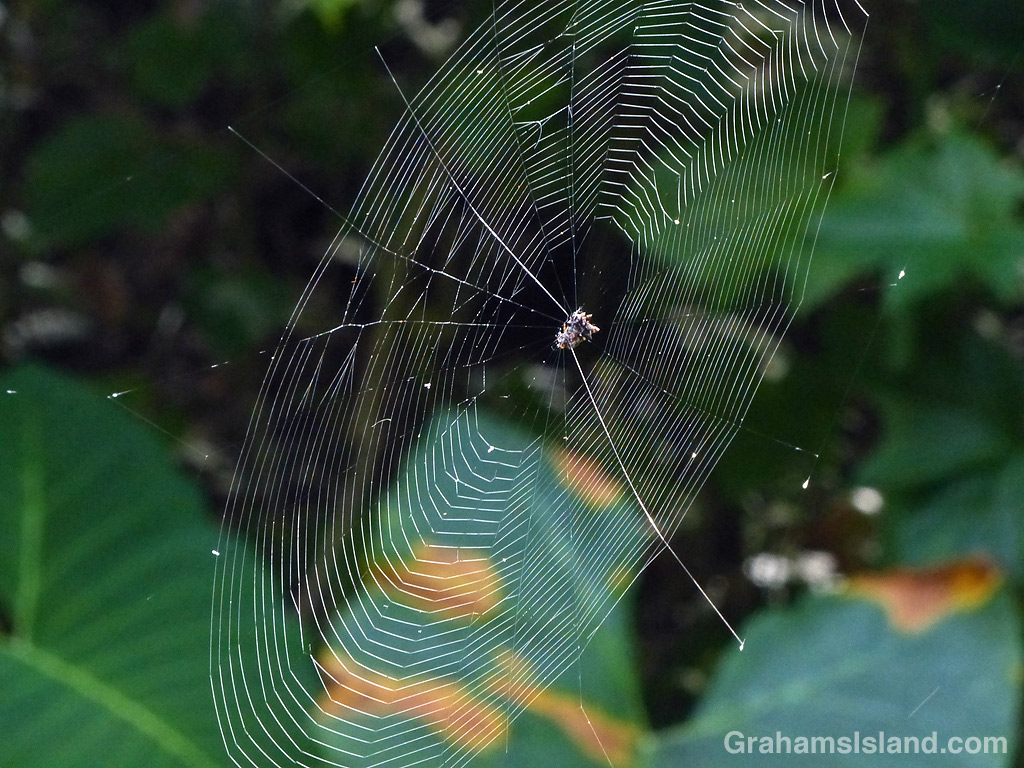
It wasn’t until I processed the photos at home that I noticed the spider in the second photo. I don’t know what it made of all the butterfly activity. I hope they weren’t its prey.

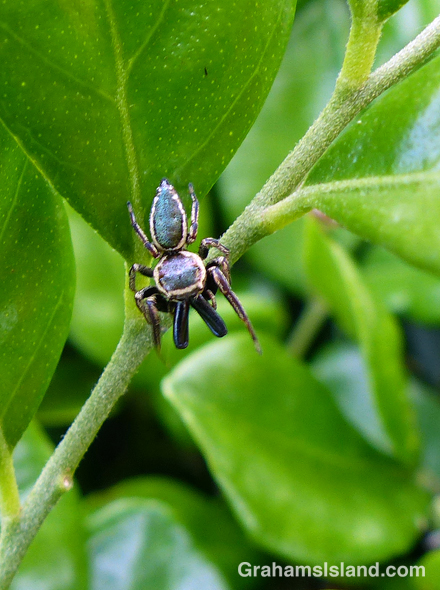
A jumping spider snags a meal

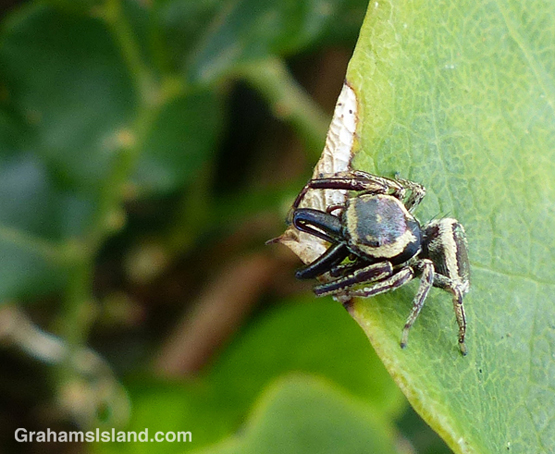
A jumping spider catches a parasitic wasp.
I was watching some butterflies recently when my eye was caught by something tiny (we’re talking a quarter-inch long here) bouncing across the dirt in front of me. I peered down and snapped a couple of photos before it disappeared. I’d seen enough to recognize it as a spider and the photos, while not great, were good enough to enable me to identify it as a striped lynx spider, a kind of jumping spider.

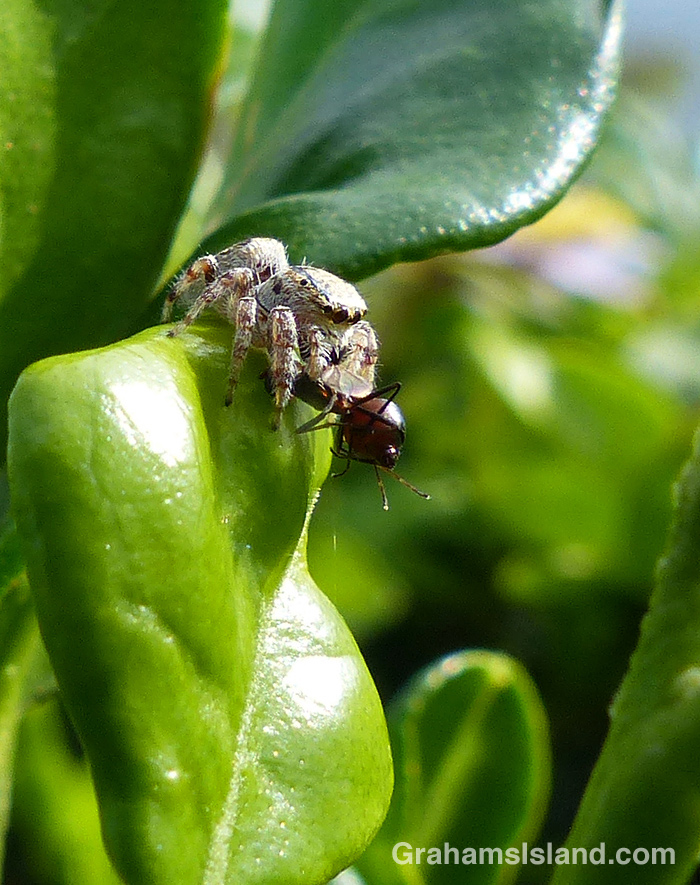
Not long after that, I was again watching butterflies and other bugs inhabiting a mock orange hedge, when I saw this little creature. Again, no more than a quarter inch long, it’s movement caught my eye against the glossy green of the mock orange leaves. A different kind of jumping spider, it hung around, enabling me to get this photo, because it had latched on to what I think is a parasitic wasp. Jumping spider don’t make webs, they pounce on their prey.

Jumping spiders are in the family Salticidae, but there are numerous species within the family and I haven’t yet been able to identify which this is. A characteristic of these jumping spiders is the pair of large eyes in front. This gives them very good eyesight, useful in identifying prey.

Another thing I’ve found out is that they’re everywhere around here. Now that I’m aware of them, and looking out for them, I see them often where I had never noticed them before. Mine eyes have been opened to the glories of the jumping spider – or something like that.