Tag Archives: Spiders

Spiders and stick insect

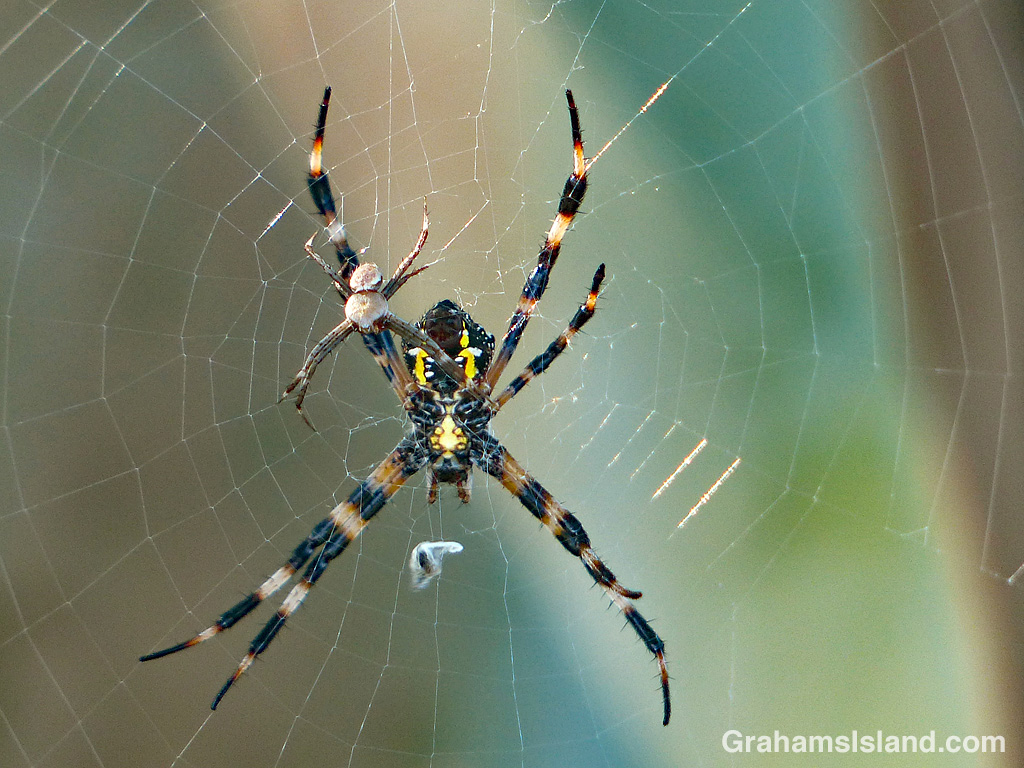
A Hawaiian garden spider and a stick insect snared in its nest
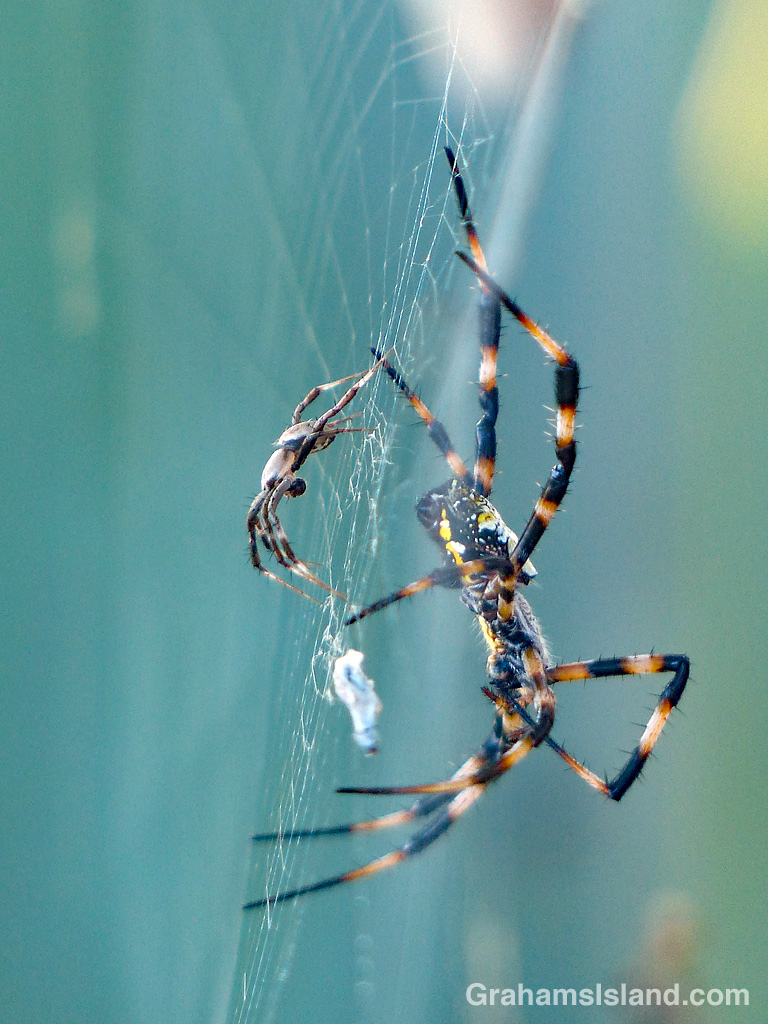
A tiny spider on a stick insect snared by a Hawaiian garden spider

Outside my bathroom window, a colony of crab spiders has created a vast network of webs between the house and utility lines. The image (bottom photo) would have been a good one for Halloween.

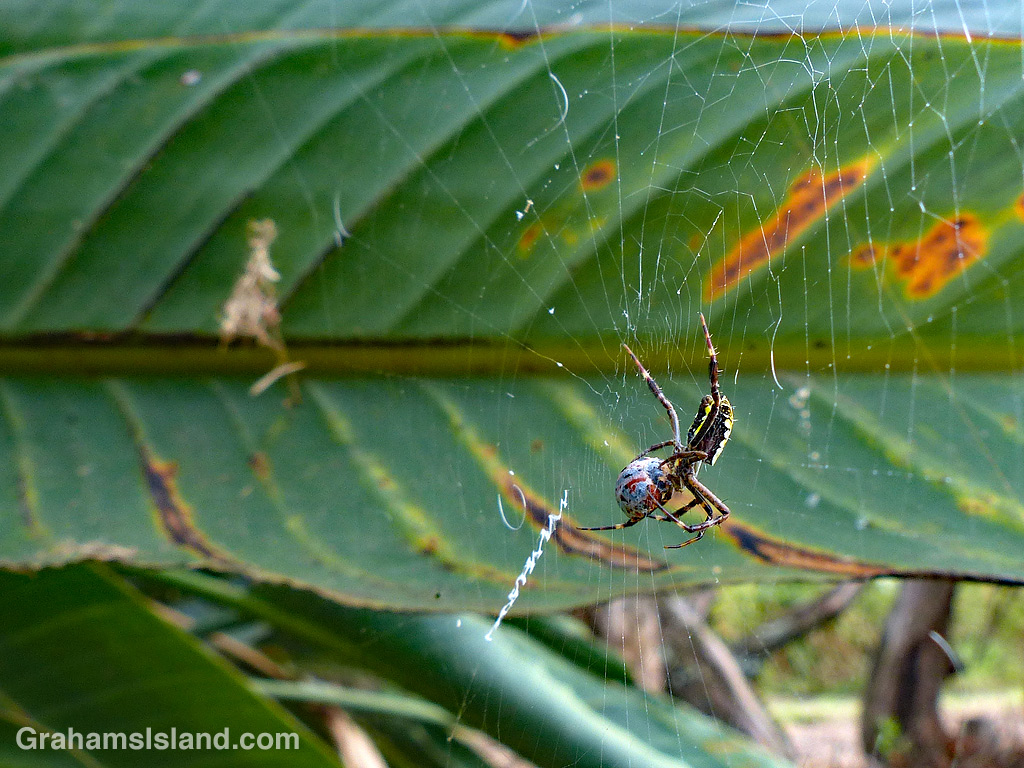
In amongst the crab spiders, a female Hawaiian garden spider has staked out a spot. It’s close to the window and I get a good view of what she’s up to. Usually there are one or two little cocoons of white webbing where she has captured and stashed a wee bug for later.

On this morning I glanced outside and saw a large brown shape stuck in the web and lightly wrapped in white. So I went outside and took the top photo of the unfortunate victim. When I looked at it, I realized the garden spider wasn’t the only one in the photo. I noticed a much smaller spider on the stick insect. So I went out again and took the second photo.

I don’t know what kind of spider it is, but I liked its shiny metallic abdomen. I assume that spider was in the process of snagging itself a free meal. The garden spider didn’t seen too bothered, I presume because she figured such a small spider wasn’t going to deplete her larder very much.
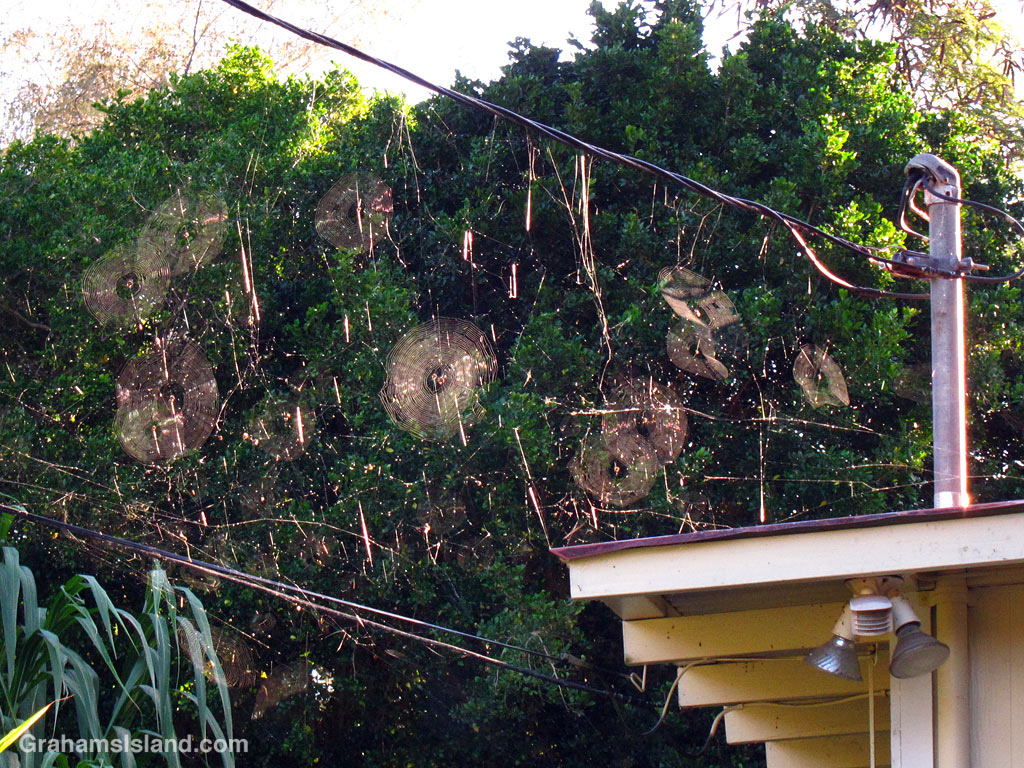
Spider webs on utility lines

Alright, Mr. DeMille, I’m ready for my close-up.

The current Friendly Friday challenge theme is ‘Close ups and Macros.’ See more responses here. Here’s a selection of some little creatures up close and personal.

Bugs

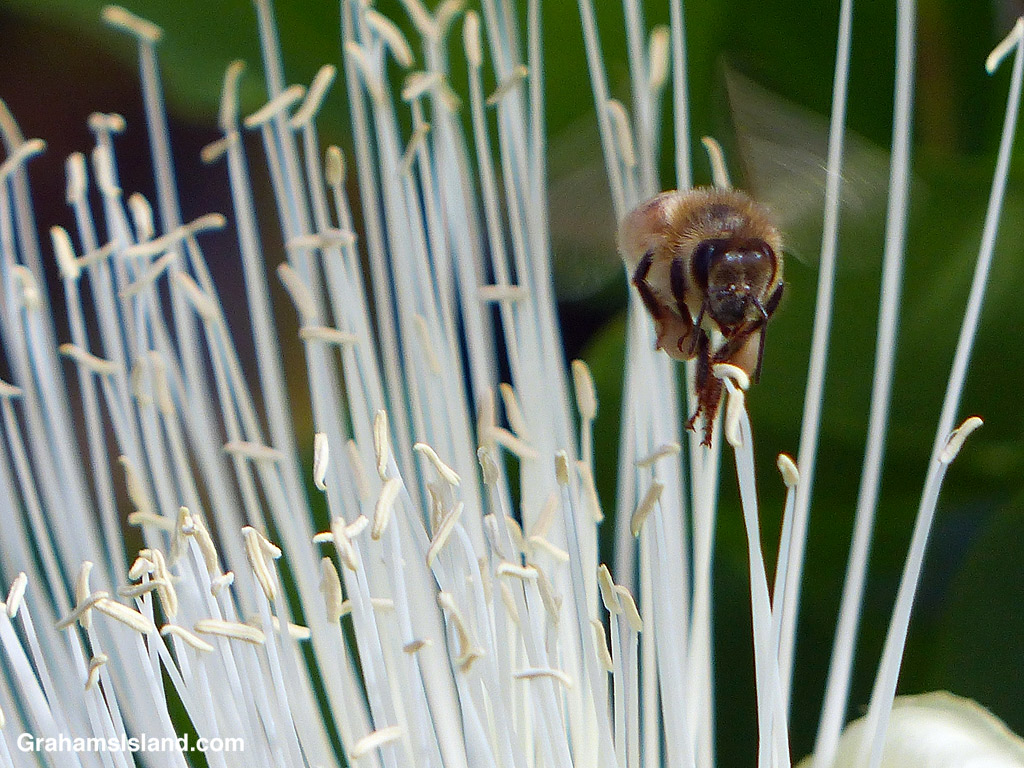
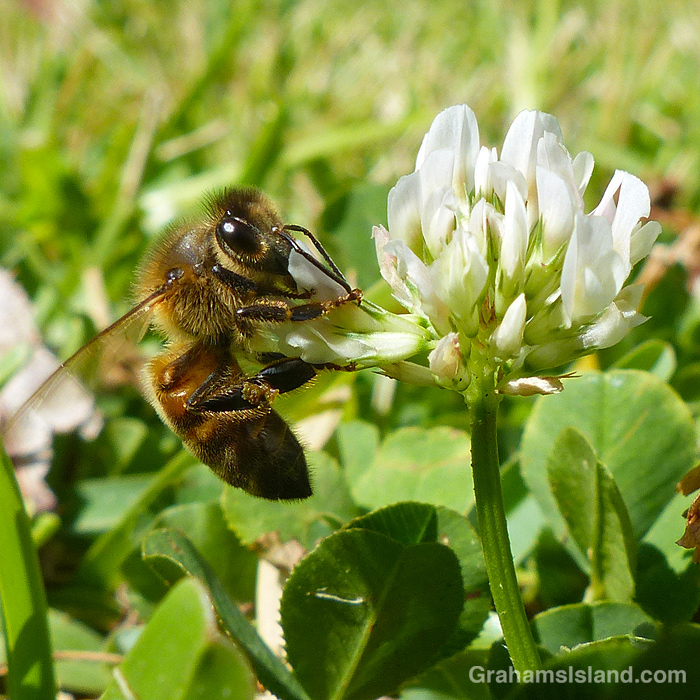
A Bee on a Maiapilo flower

This week’s Sunday Stills challenge theme is ‘Summer Bugs.’ (See more responses here.) To the best of my knowledge, Hawaii’s bugs are pretty much the same year-round. Here are some of them.

The top photo shows a bee showing impressive balance on a maiapilo flower.

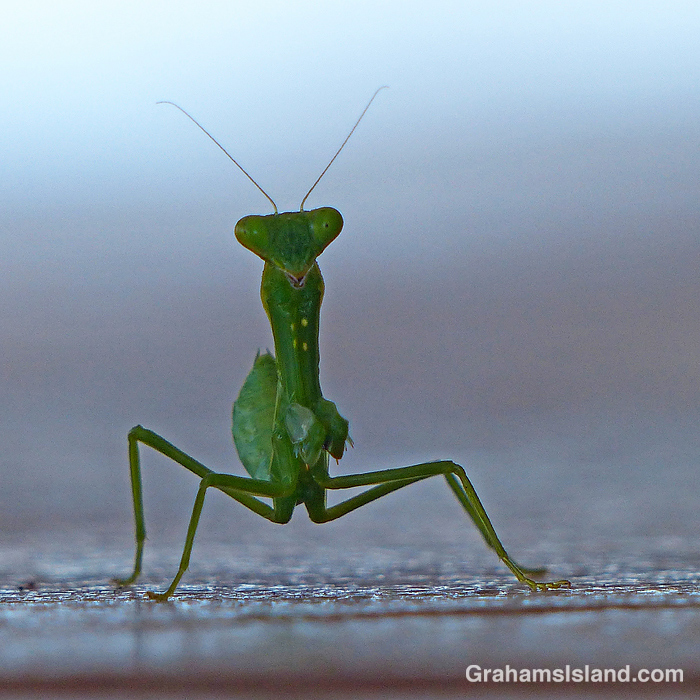
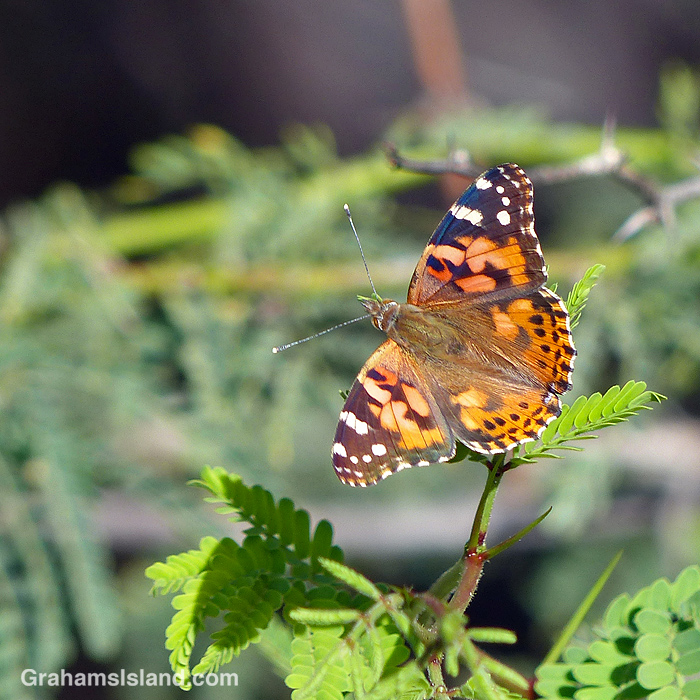
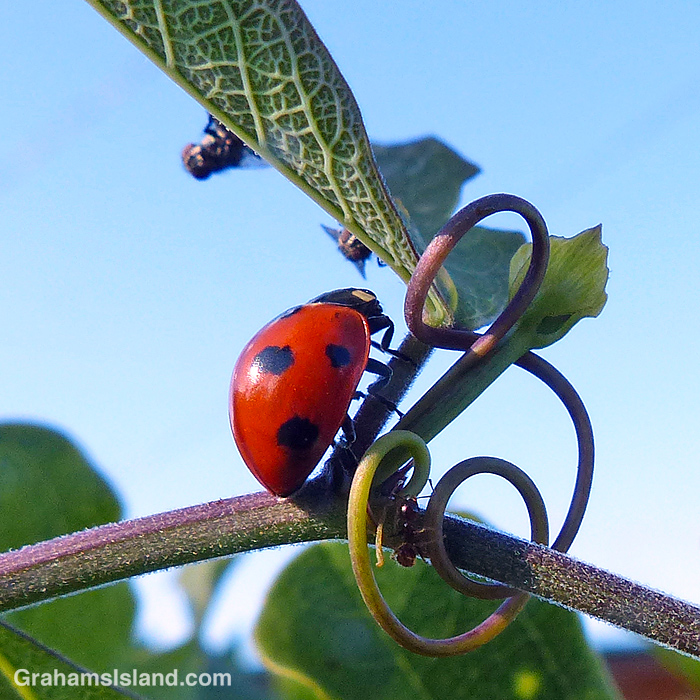
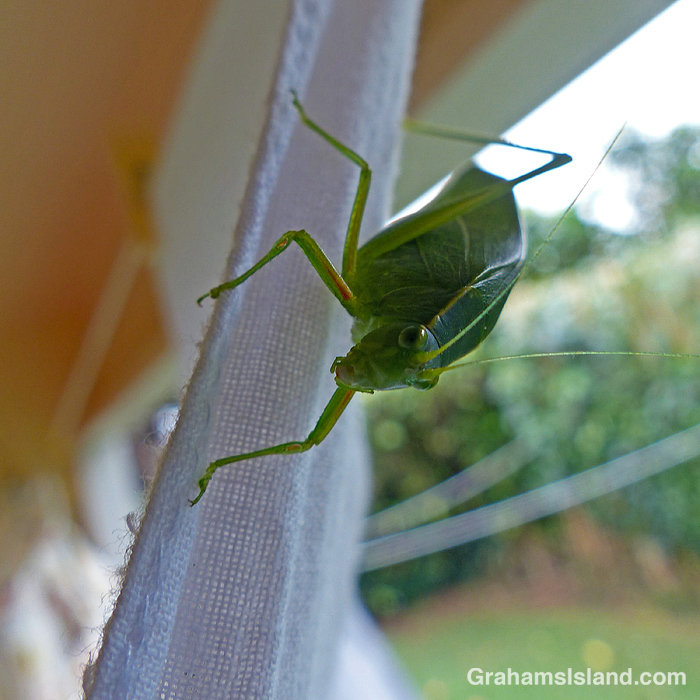
Next up, clockwise from top left: Getting down to eye level with a juvenile praying mantis. A painted lady butterfly on a kiawe tree. A katydid wondering what it’s done to deserve this much attention. A seven-spotted lady beetle being watched.

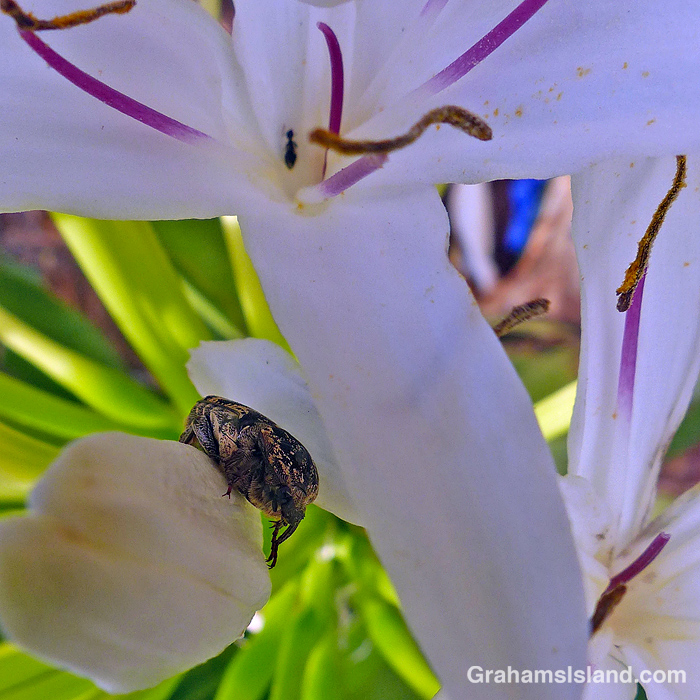
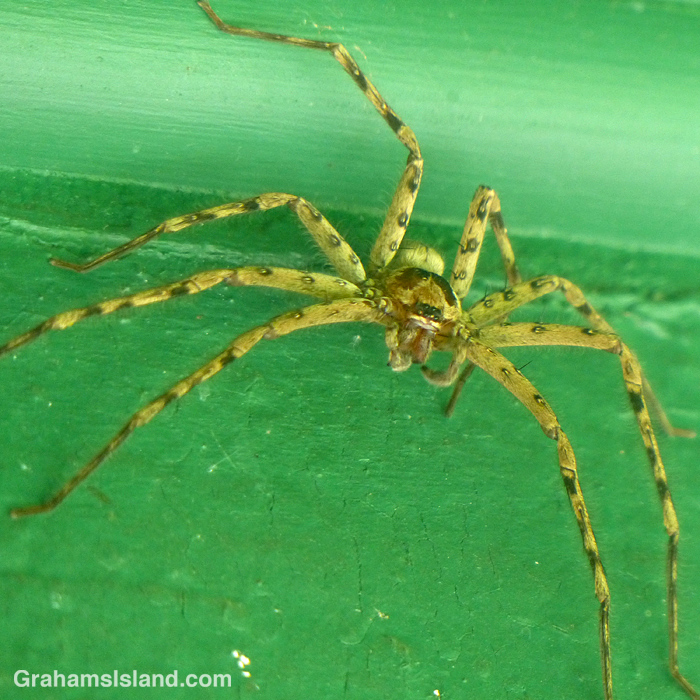
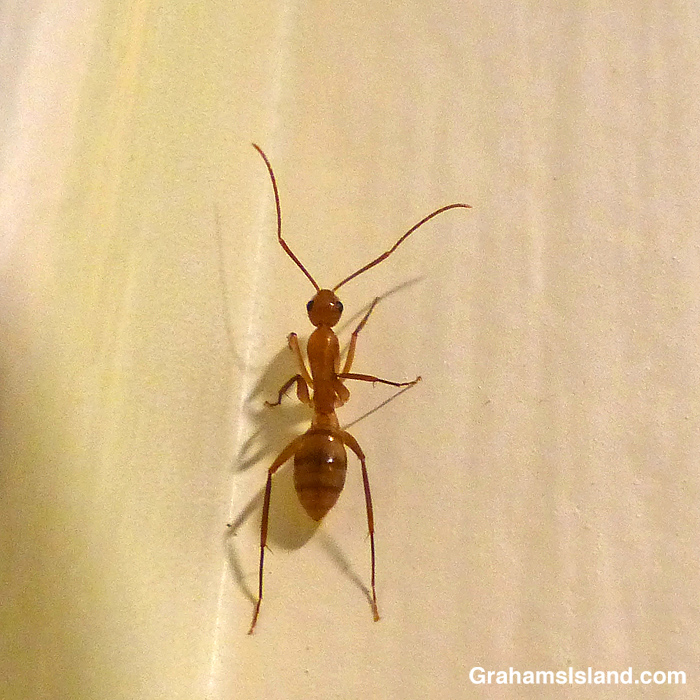
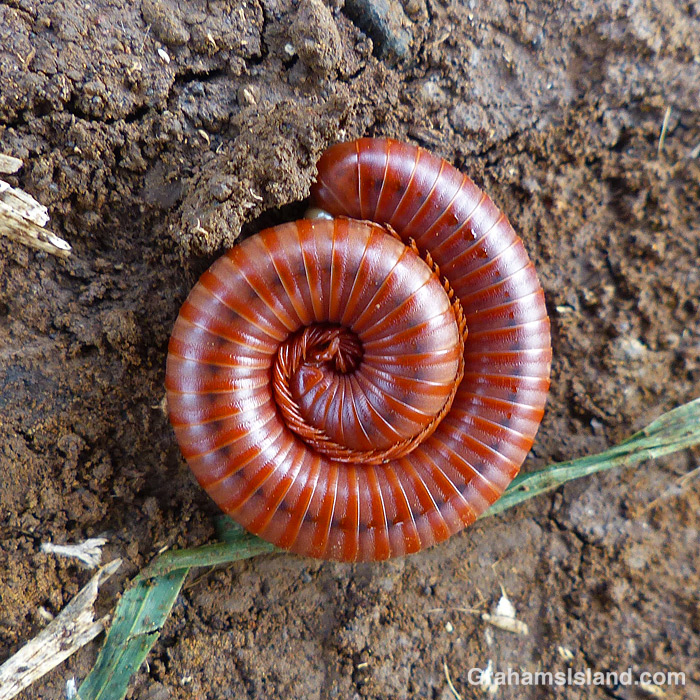
The final gallery: Top left: A mango flower beetle explores a spider lily. Top right: A watchful cane spider wondering if it should run, very fast, away. Bottom left: A Hawaiian carpenter ant (Camponotus variegatus), one of too many that have taken up residence in the house. Bottom right: A rusty millipede deciding that it’s all too much!

A rainy day in North Kohala

A rainy day at Upolu Airport, Hawaii
A crab spider web in the rain

This week’s Sunday Stills challenge theme is ‘Rainy Day.’ See more responses here.

I had just finished my walk around Upolu Airport when the weather closed in. Usually, clouds and rain are blown in by the northeast trade winds, but on this day a system was moving in from the west. I’d been watching its progress as I walked, but still got caught out as it moved faster than I expected. Still, I did make it back to the car, waiting for me in the wet parking lot, before the next deluge arrived (top photo).

The crab spiders didn’t seem to mind the weather, and the raindrops made a picture of their webs (middle photo). It also made them easier to see so that I could avoid my usual trick of blundering into them and having webs wrapped around my head.

On the drive home, after my walk, I carved an avenue of spray as I motored along the puddled road (bottom photo).

A rainy day in North Kohala, Hawaii

Hawaiian garden spiders face off

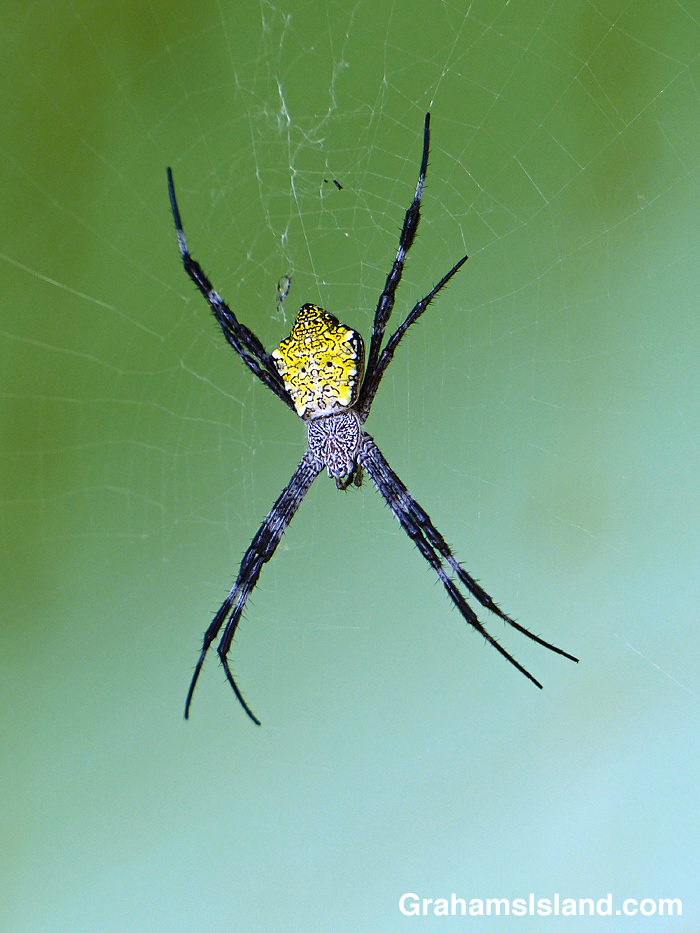
Hawaiian garden spiders face offHawaiian garden spidersThis pair of Hawaiian garden spiders spent a long time facing off from different sides of the female spider’s web. The male is the smaller, drab spider, while the larger female has splashes of yellow, orange bands on her legs, and a bejeweled back, which can be seen here. The female spiders are much bigger than the males, though this female is not actually a particularly large one. Full-sized females dwarf their male counterparts.
I don’t know how this encounter turned out, but the previous day I did see another male on this web and it did not turn out well for him. I didn’t get good photos, but he appeared to be thoroughly enveloped in her ‘loving’ embrace.

When male garden spiders approach a female, they pluck the females web in a certain way to alert her to their presence. Typically, successful male garden spiders mate with a female and then die immediately afterwards. Sometimes the female will eat their male suitors. I’ve read than canny males will try to mate while the female is undergoing her final molt because during this process she will be immobile!

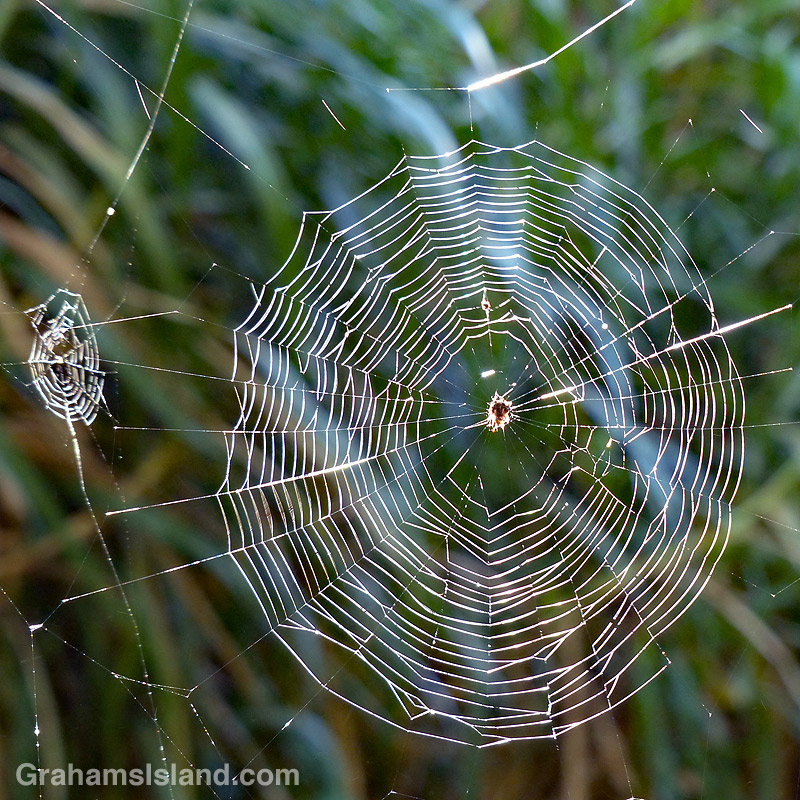
Crab spider webs

Crab spider webs

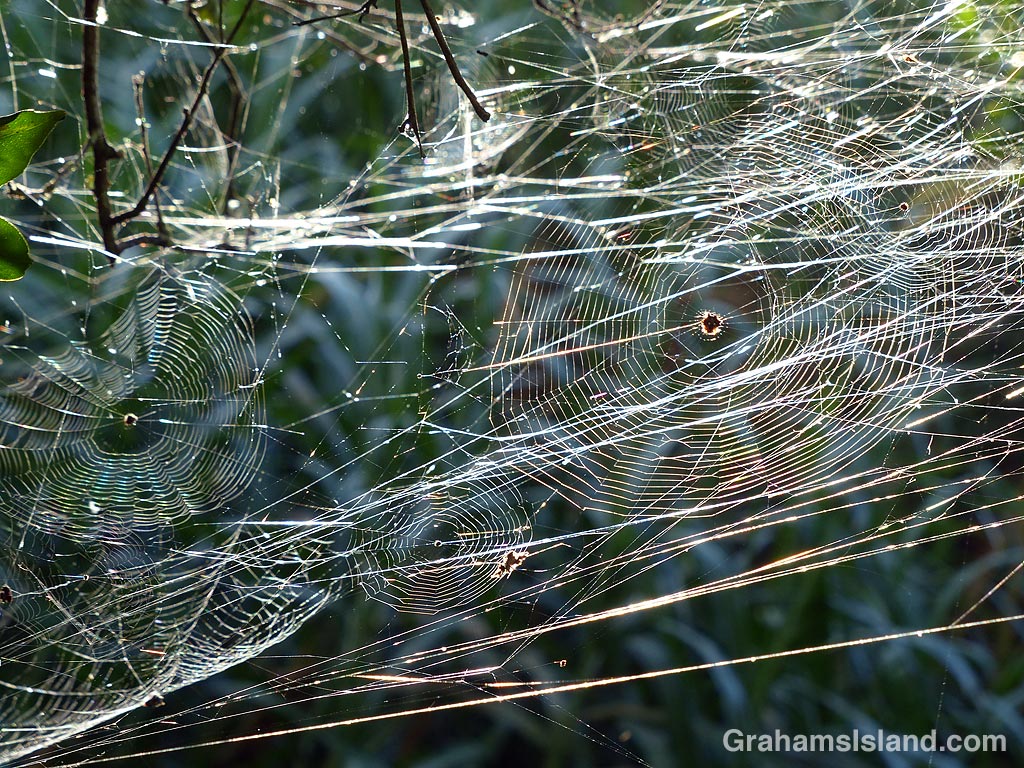
Crab spider webCrab spiders tend to proliferate in the fall and dwindle in the spring. That means winter is prime time for encountering lots of them, usually in the form of blundering into their webs. This is easy to do for two reasons.
One is that the webs can be large. While the circular centers aren’t that big, the anchoring strands often span 10 feet or more, and are hard to spot. The second reason is that crab spiders build connected webs, meaning there are often a dozen or more covering a large area.

Crab spiders will bite, usually after they’ve got caught in someone’s clothing. This is why, when I run into a web or webs, my first response is to locate the spider. If I find it on a remnant of its web, I don’t worry too much. If I don’t see it, then I usually do my flailing crab spider dance, which serves no useful purpose other than to likely irritate the spider if it is on my person.

On the plus side, crab spider webs, like most webs, are quite beautiful when they catch the sunlight.

The next generation of Hawaiian garden spiders

Hawaiian Garden Spider and prey

I posted a few weeks ago here about a large female Hawaiian garden spider which had spun a web in a place I often visit. A week or so later, that spider had disappeared.

Now, in that spot, three new webs have appeared, each occupied by female Hawaiian garden spiders. However, these new occupants are much smaller, about the same size as the average male of the species. I think it’s likely they’re the offspring of the first spider I saw there.

The smallness of the new spiders can be seen in the size of the prey this one had caught – a little ladybird.