
Needlefishes travel in one direction near the surface, while convict tangs go the opposite way on a lower level. It’s not unusual for fish to have a particular level they operate in.

Needlefishes travel in one direction near the surface, while convict tangs go the opposite way on a lower level. It’s not unusual for fish to have a particular level they operate in.
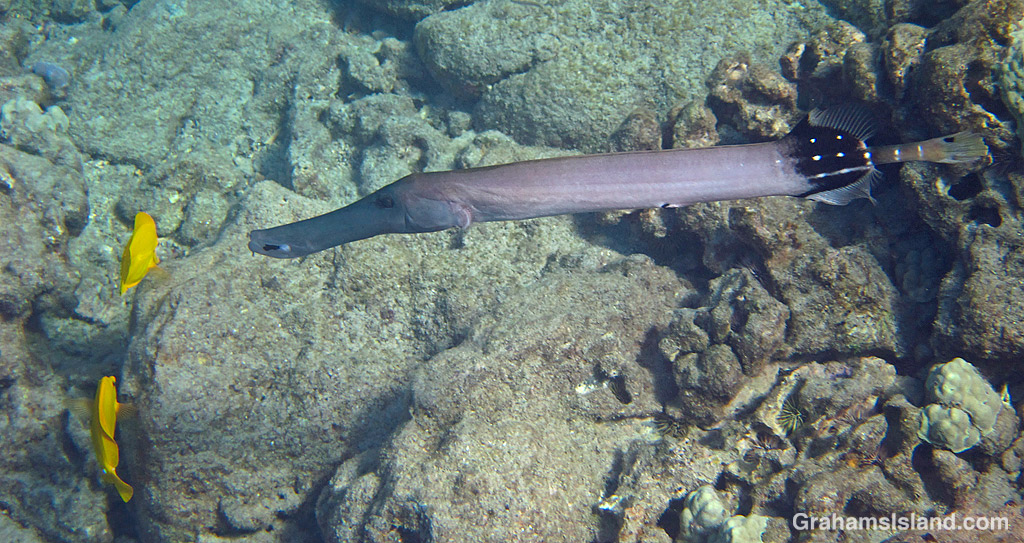
A Pacific Trumpetfish drifts in the water as a couple of Yellow Tangs pass by. Trumpetfishes often hang vertically, head down waiting to snag a meal. They also change color and markings to blend in with other fish, hoping to sneak up on prey.
Trumpetfishes looks easy to spot, but they propel themselves with dorsal and anal fins set far back on the body where they’re not seen by potential prey and, from the front, which is where its prey is, they’re very hard to see.
The ring around the eyes of these fish, which gives them their name, also gives them a look of perpetual surprise.

A variety of fish swim in the surge over a shallow part of the reef. The yellow chub is an unusual color variant of the gray chubs swimming with it.


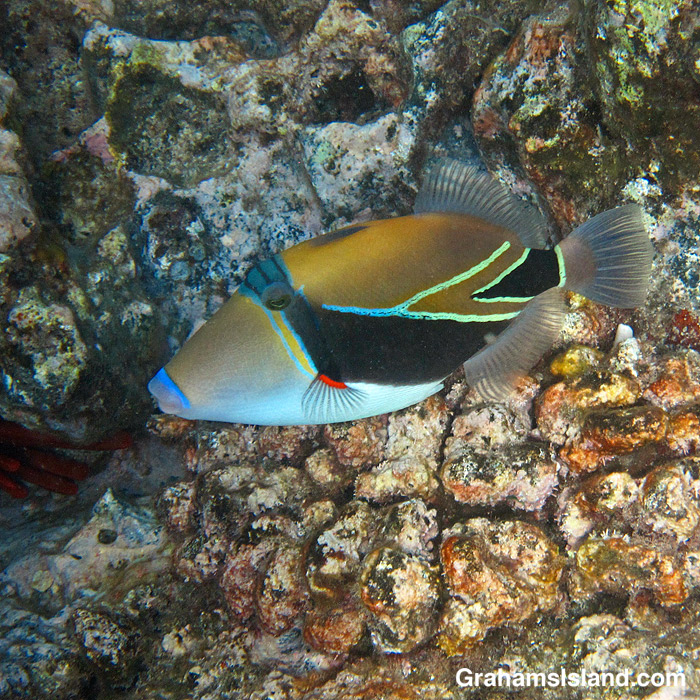


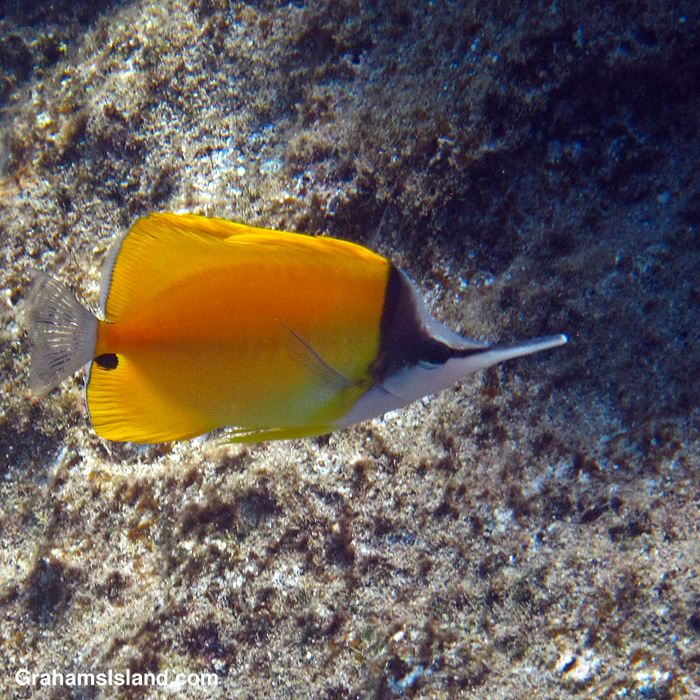

This week’s Friendly Friday challenge theme is ‘Something Fishy.’ See more responses here.
This seemed like a good opportunity to post a gallery of some of the fish I see when I snorkel around here. Most are brightly colored or have distinctive markings.
Also posted in response to Becky’s April Squares challenge theme of ‘Bright.’ See more responses here.

Yellow tangs are common here and are usually seen in schools. I like how, when they move from one feeding spot to another, they string out in long, colorful lines. They’re often seen in mixed schools with convict tangs, the paler fish with vertical black lines.

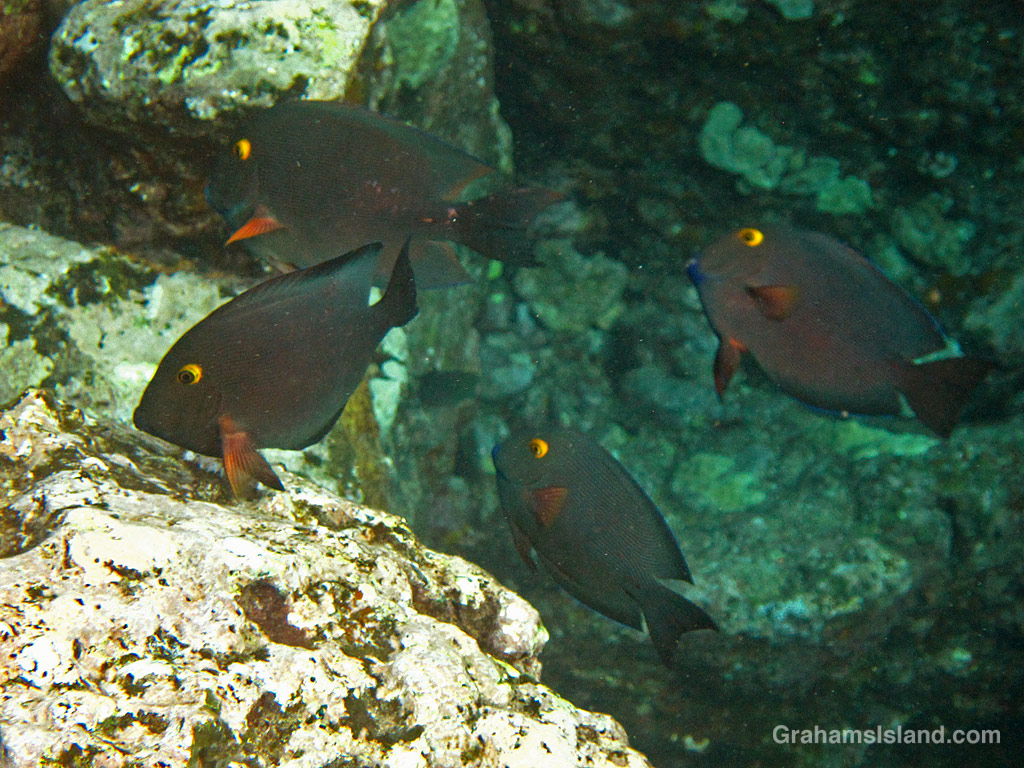
My fish book describes the brown surgeonfish as “so unremarkable in appearance that most divers and snorkelers overlook it.’ While this is true, any photographer knows that the right lighting can do wonders for a subject.


This varicose phyllidia is a small nudibranch, which I saw several times over the course of a week or so. Apart from being a lot smaller than the clumpy nudibranchs I saw a couple of months back, the varicose phyllidia has gills under the mantle skirt rather than in an exposed, wavy clump.
This one was two to three inches long. In the middle photo, the tiny white-spotted toby and small brown surgeonfish give a sense of scale.

