This week’s Sunday Stills challenge theme is ‘Glacier Blue.’ See more responses here.
We’re a little short on glaciers here on the Big Island, but the color description made me think of Kiholo Bay, where fresh water intrusion gives the water a different look to most places around here. The bay is also a great place to see turtles, which can be seen in the water and hauled out on the shore to rest.
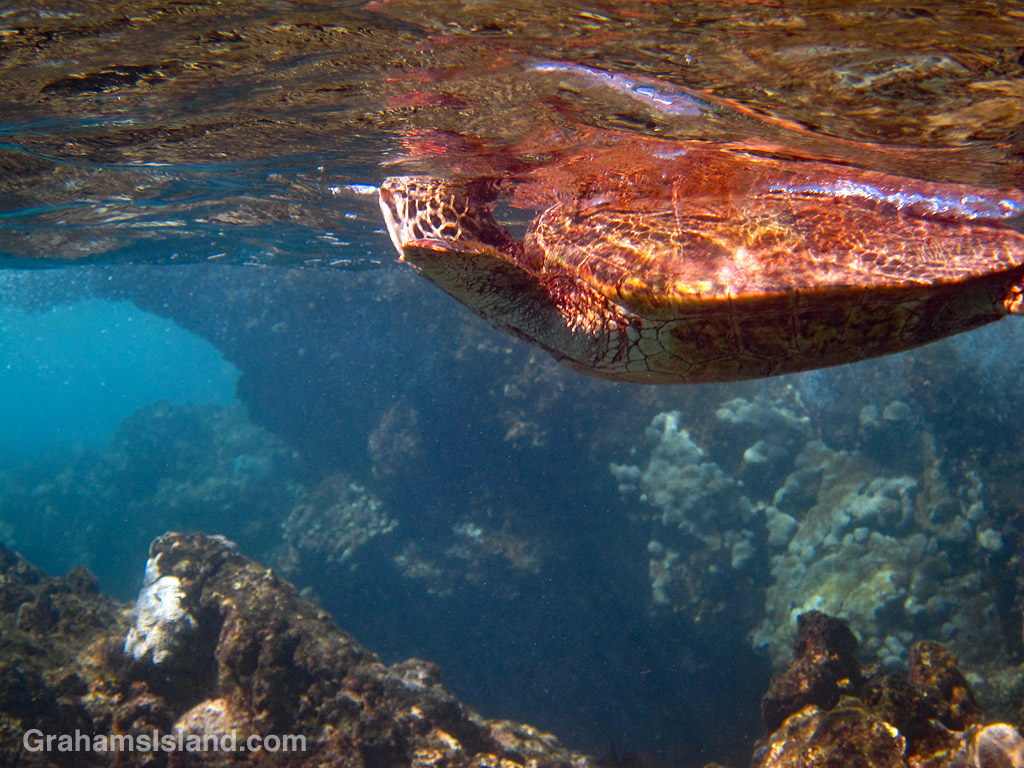
This turtle was swimming in the bay where the gently rippling surface gave it an abstract appearance as it came up for air.
Also posted in response to Becky’s January Squares challenge theme of ‘Up.’ See more responses here.
This week’s Sunday Stills challenge theme is ‘Yellow.’ See more offering’s here.
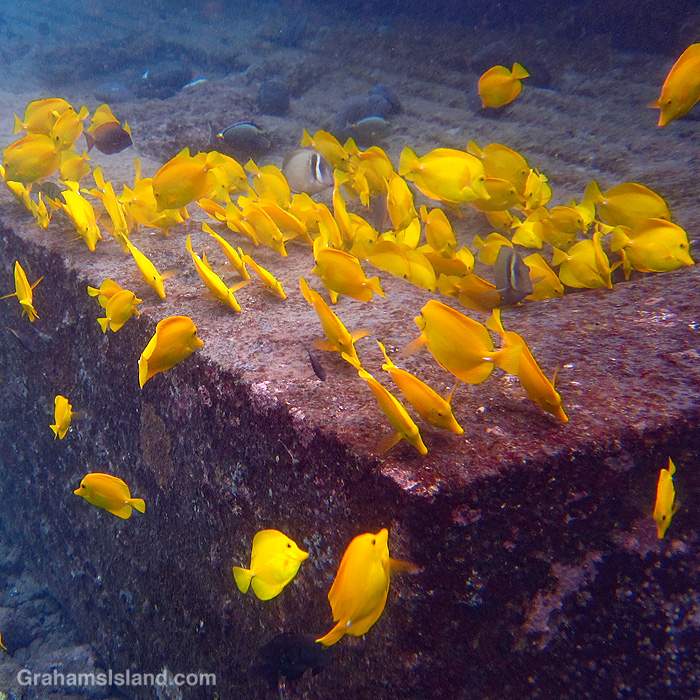
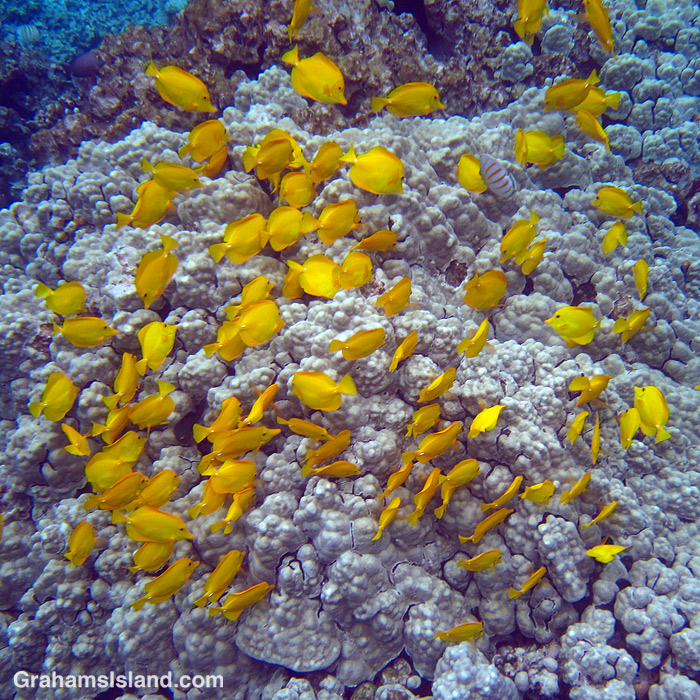
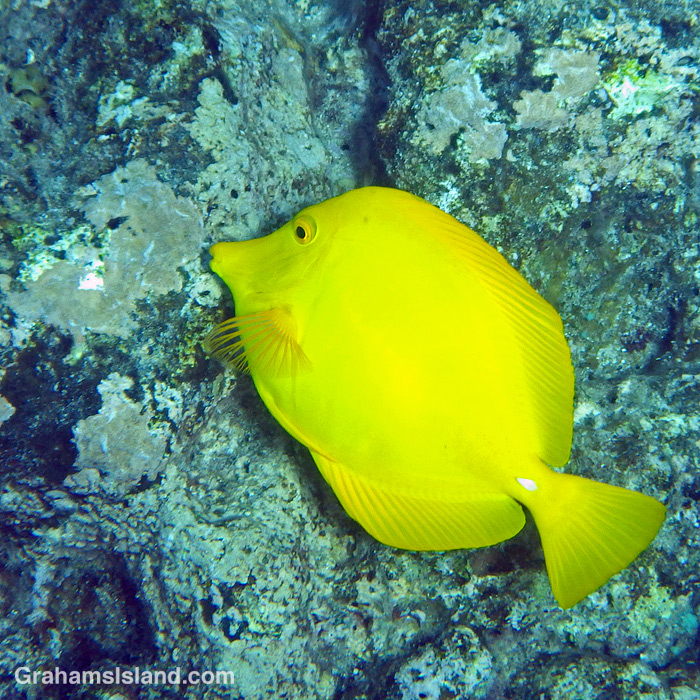
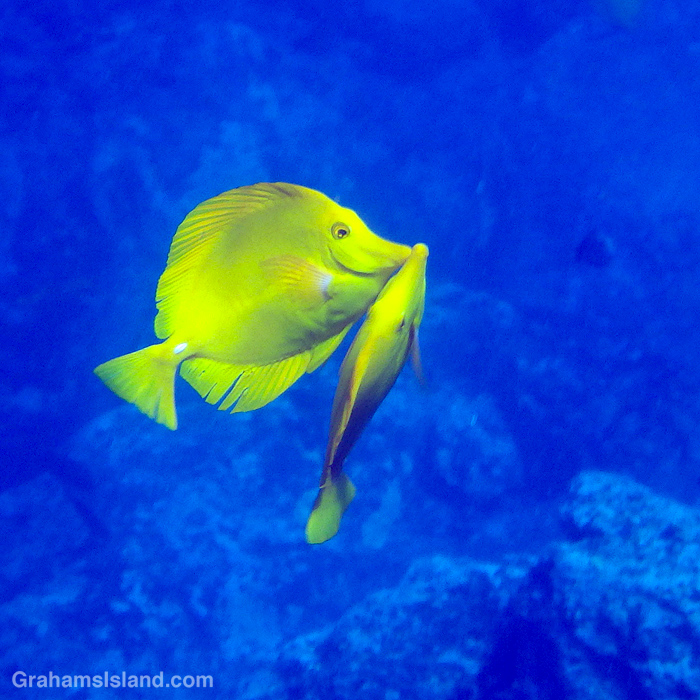
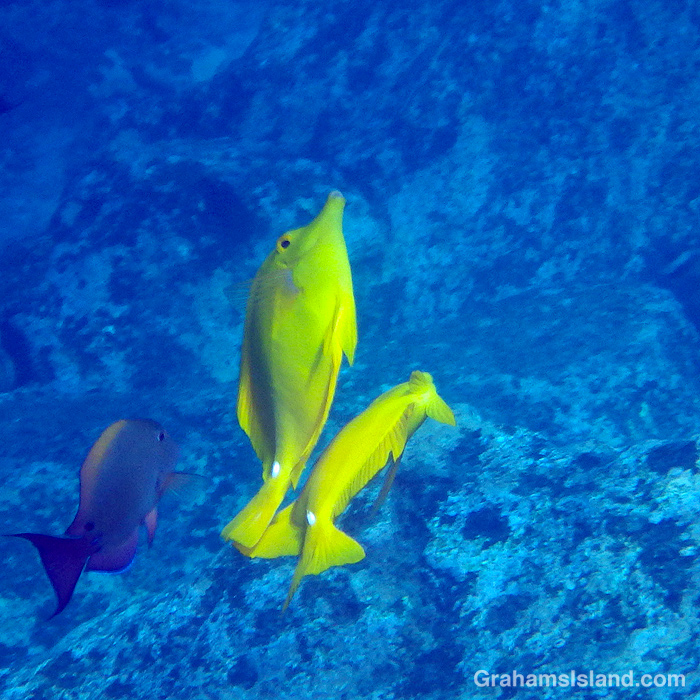
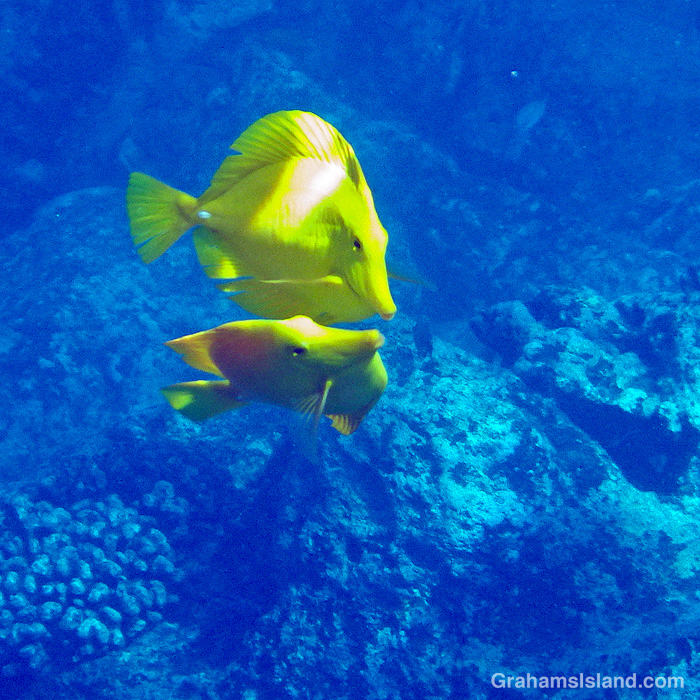
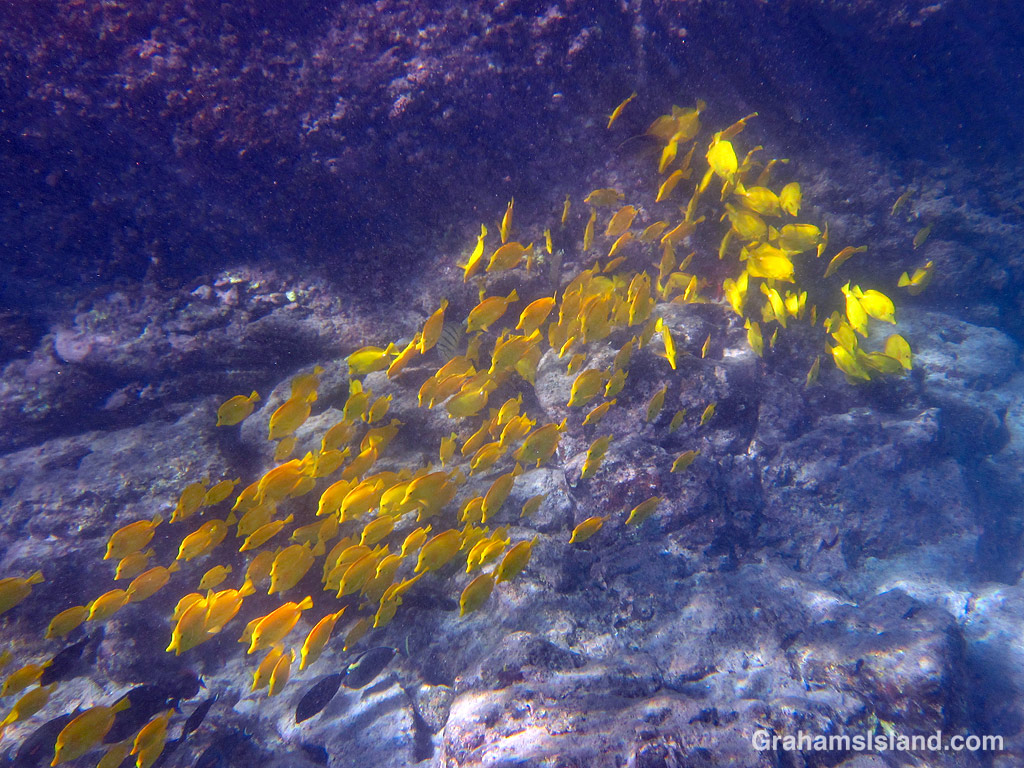
I thought I’d try the WordPress gallery feature for this post, which features yellow tangs, the first fish everyone notices in Hawaii. These bright yellow fish putter about in fairly shallow water, sometimes singly or in pairs, but often in large groups. They feed on algae, and occasionally can be seen cleaning turtles for this purpose. Unlike some fish, juveniles look the same as mature yellow tangs so shoals often contain a variety of sizes. The lower three photos show a pair of yellow tangs engaged in what I think is some kind of mating ritual.
Yellow tang are long-lived fish. They can live to be 20 or 30 years old. They’re also fish that are very popular in the aquarium trade but, since they don’t breed in captivity, all aquarium fish are collected from the wild. Currently, there’s a moratorium on the aquarium fish collection trade here, because of concerns about fish stocks and the sustainability of the practice.
Also posted in response to Becky’s July Squares challenge theme of ‘Perspective.’ See more responses here.
I first saw this turtle taking air at the surface. Then it dived an disappeared under a shelf of rock. This photo gives the impression of the sea floor sloping, but there is no horizon underwater and I like how this angle emphasizes the turtle’s descent.
Posted in response to Becky’s July Squares challenge theme of ‘Perspective.’ See more responses here.
This is the third and final part of a three-part description of a hike along the Puna Coast Trail in Hawaii Volcanoes National Park (See part 1 here, part 2 here).
The last part of the trail before ʻĀpua Point crosses over the only stretch of ʻaʻā lava on the trail which, as can be seen in the second photo, is markedly more rough and jagged than pahoehoe lava. This ʻaʻā is part of a 1969 flow from the same eruption at Mana Ulu that produced the pahoehoe lava that most of the trail passes over. The Mauna Ulu eruption lasted from 1969 to 1974.
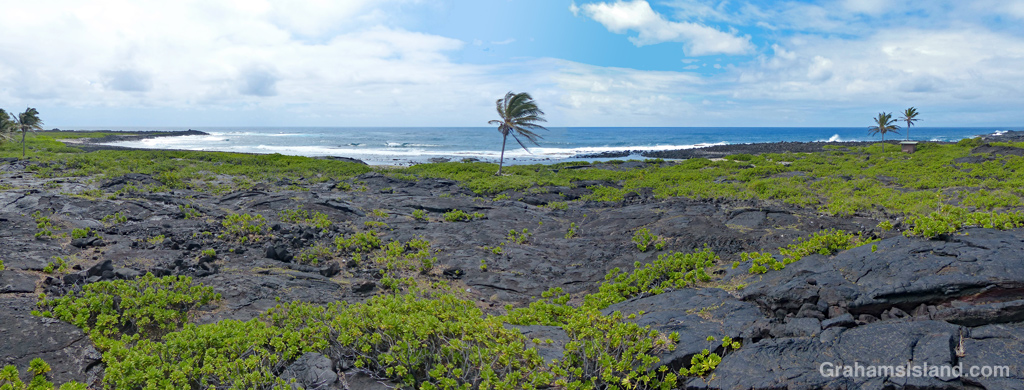
ʻĀpua Point is like a little oasis in a bleak landscape. Flows from the Mauna Ulu eruption reached the ocean on either side of the point, but the point itself was spared. The top photo is a panoramic view of the coast, stitched together (not well) from two photos, to show the view from ʻĀpua Point’s outhouse – actually a composting toilet. This toilet also represents the sum total of the facilities for anyone thinking of camping there.
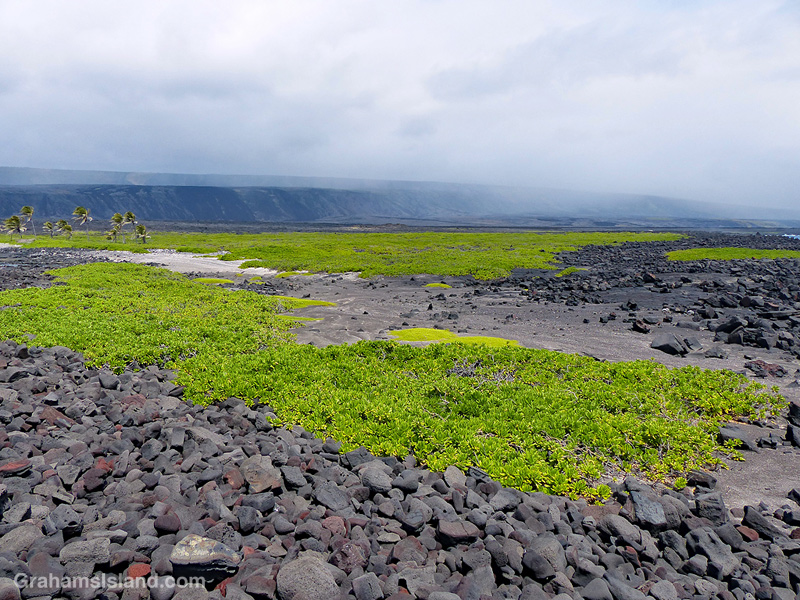
ʻĀpua Point itself is a rocky coastline jutting into the ocean. But behind this wall of rock, a sandier area hosts fields of naupaka, sea purslane, and other plant life, as seen in the third photo. Also in the background of this photo, a passing shower runs along Hōlei Pali. As I mentioned in part one of this description, the trail can be hot, wet, and windy, but for my hike, I saw moderate breezes, some overcast skies, and just a few spritzing showers.
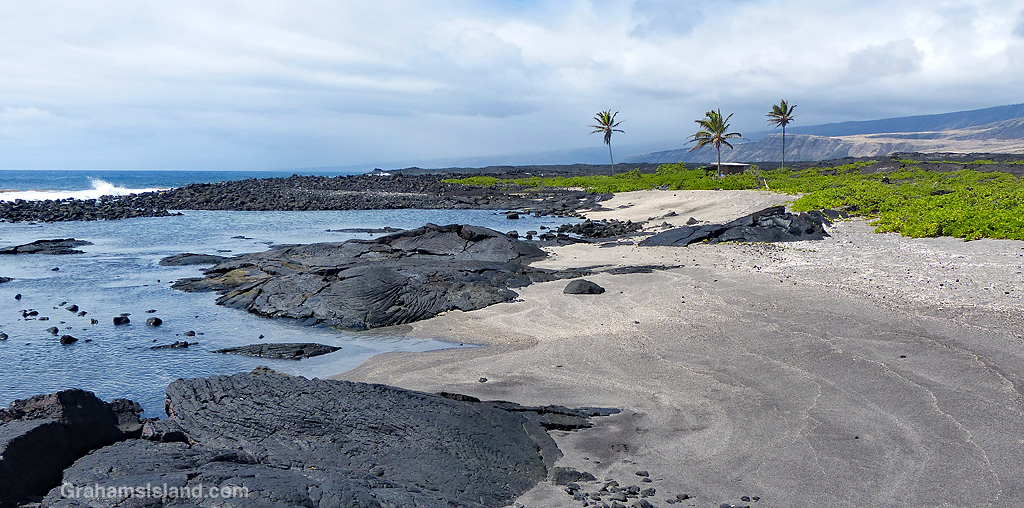
Swimming in the ocean along this coast is very dangerous because of high surf and strong currents. But at ʻĀpua Point there are shallow pools, suitable for soaking, that are protected from the surf by a border of rocks. There are also a few small sandy beaches such as the ones in the photo below.
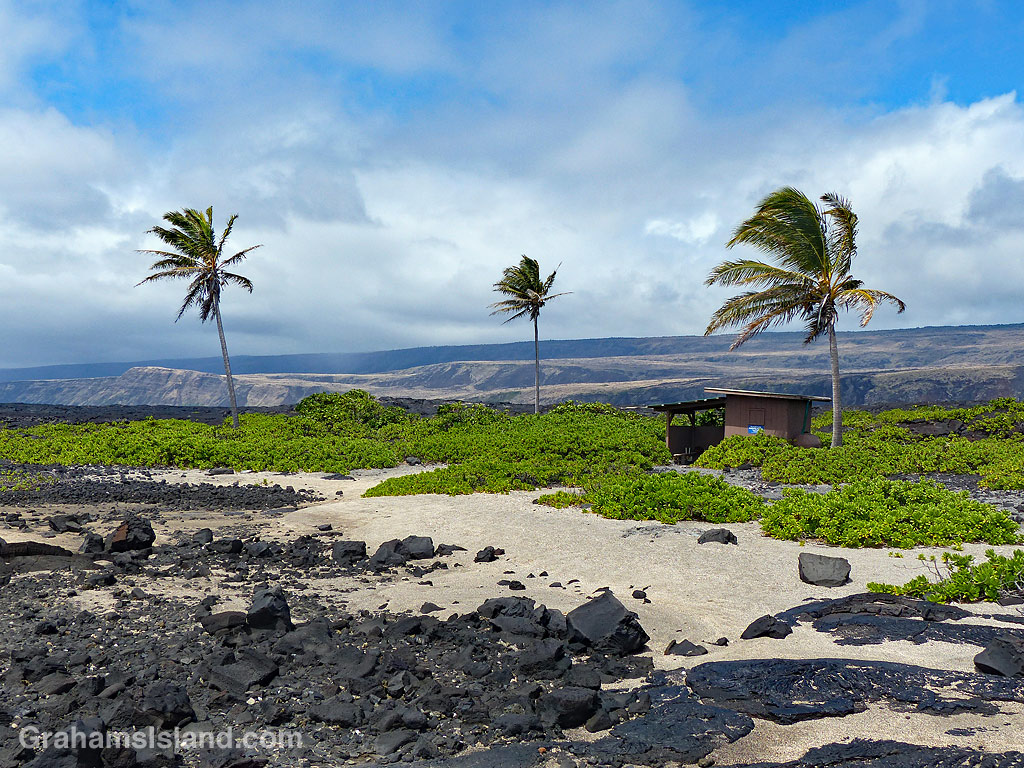
Besides the composting toilet, there is one other structure on ʻĀpua Point. It’s a small shed with an open covered area beside it, surrounded by naupaka and a few palm trees. This covered area represents pretty much the only shade to be found on the entire hike. The shed is used by the Hawksbill Sea Turtle Recovery Project, which monitors and protects endangered hawksbill turtles which use this area for nesting. I believe the nesting season runs from May to September, so I might have to return sometime after that.
And speaking of returning, from here it was time to turn around and hike the 6.6 miles back to the car. The hike took me about 3 hours each way with, of course, numerous stops for photography and just to enjoy the views.
Lately, the gloom and doom enveloping the country has been matched by conditions in the water (not that I can access it anymore since all beach parks are closed). A series of swells and high winds has churned things up so that visibility is a hit and miss proposition.
So it was a joy to encounter this small turtle coming directly toward me one day, in a patch of relatively clear water. I took a couple of photos, and this one captured the moment it slid past before easing away into deeper waters.
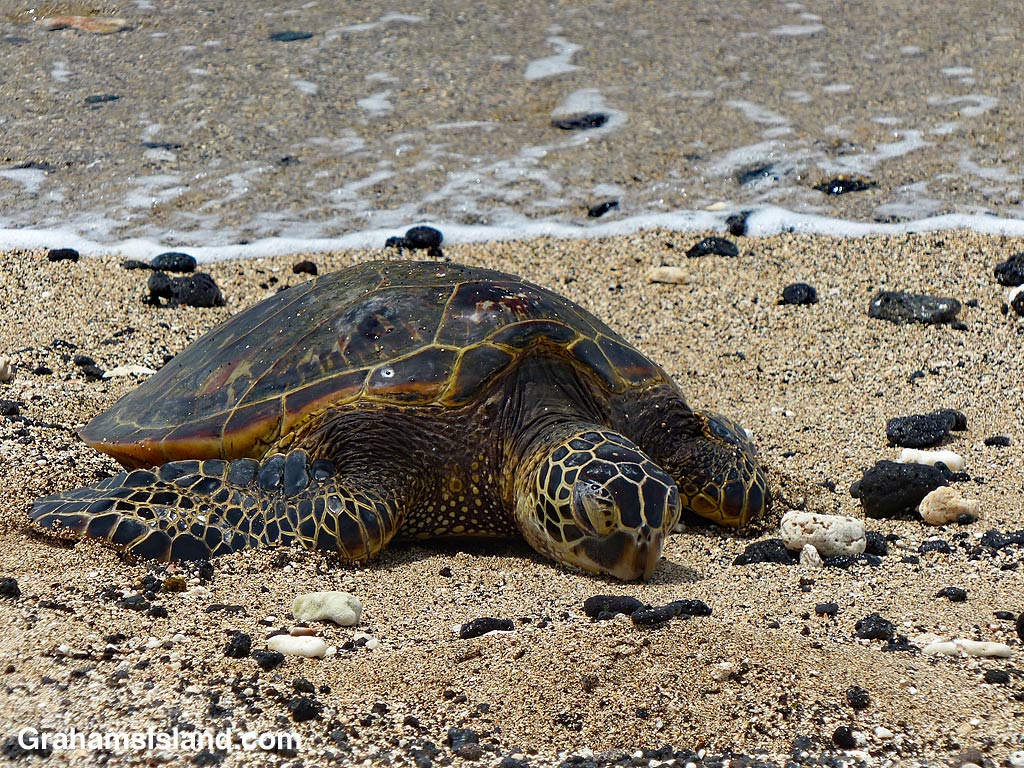
I see green turtles hauled out on pebbles, rocks, and lava flats, but a sandy beach seems to be the preferred spot for a rest. They’re rather ungainly on land, so digging those flippers into soft sand and nudging forward to a suitable spot is probably easiest for them.
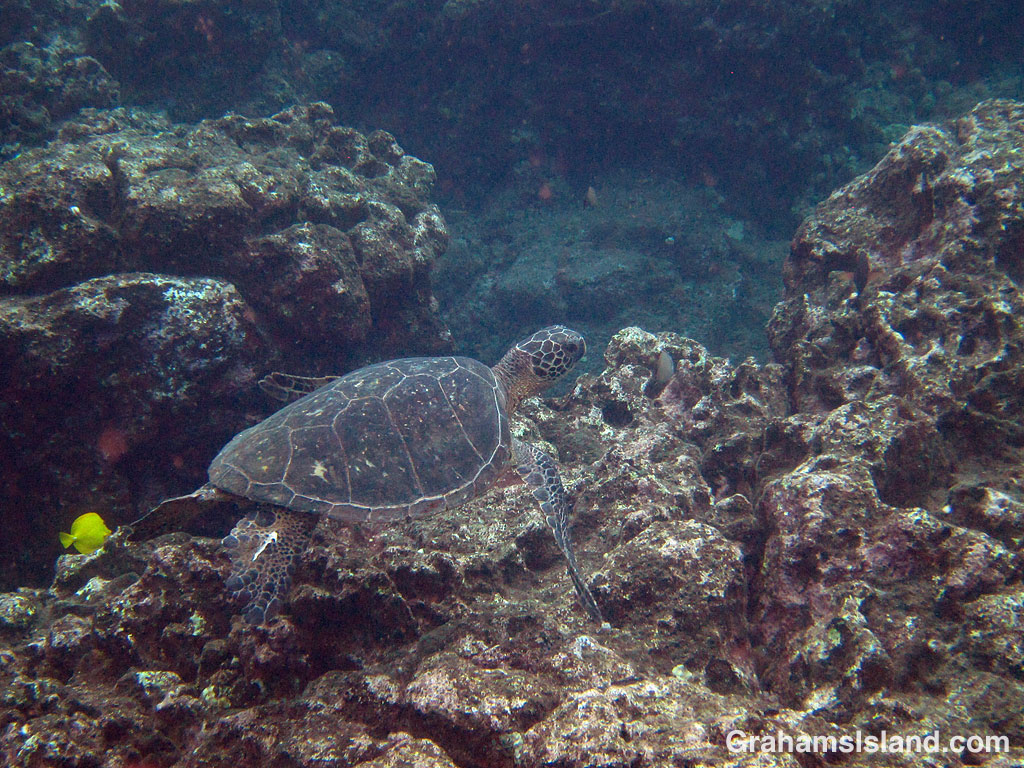
It had been a good while since I’d seen a turtle in the water until I spotted this one. It was cruising along at a leisurely speed, over the rocks and coral. I followed it for a while and then left it to meander on its way.





 Graham's Island