Tag Archives: Upolu

V-22 Ospreys

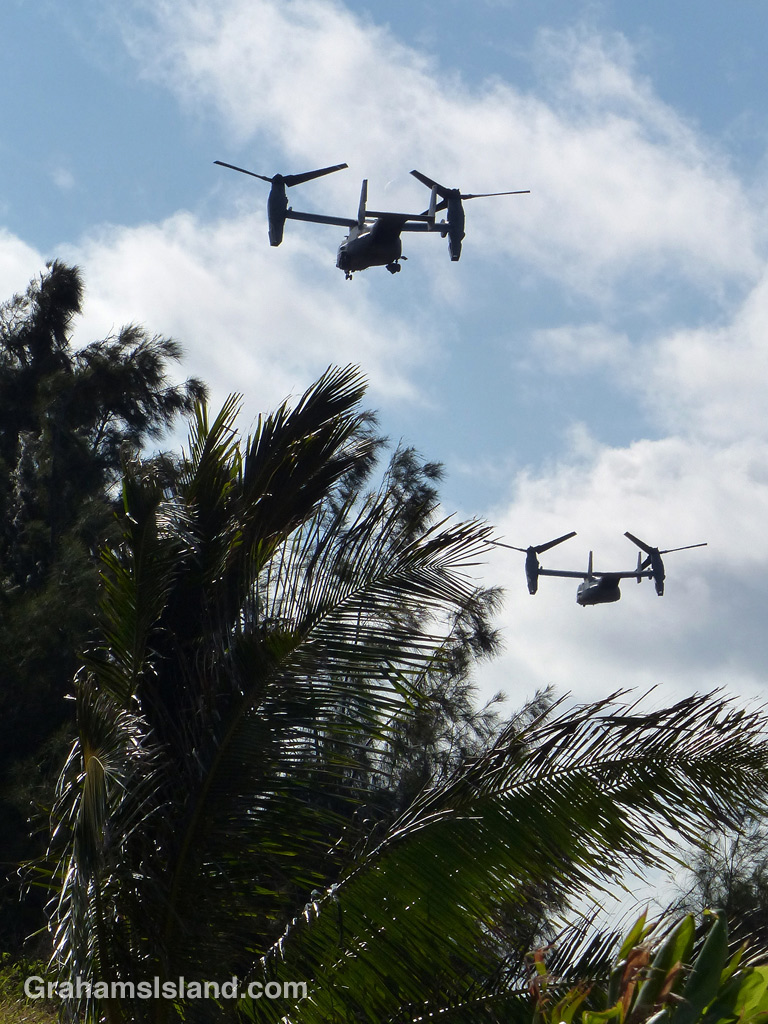
Two V-22 Osprey aircraft land at Upolu Airport on the Big Island.Two V-22 Osprey aircraft leave Upolu Airport on the Big Island.
I’m not a bird watcher per se, but I’ve increasingly enjoyed the wide variety of bird life that I see when I’m out and about. Recently, I’ve been seeing a couple of pairs of nene, the Hawaiian goose. There’s a family of zebra doves that huddle up together on the mock orange outside the kitchen window. On a daily basis I encounter pairs of mynah birds, saffron finches, northern cardinals and several more.

What does that have to do with these photos? Well, for some reason, my first thought on seeing these two V-22 Ospreys thundering toward Upolu Airport was, ‘I wonder if they’re a breeding pair?’ All things considered, I suspect they are.

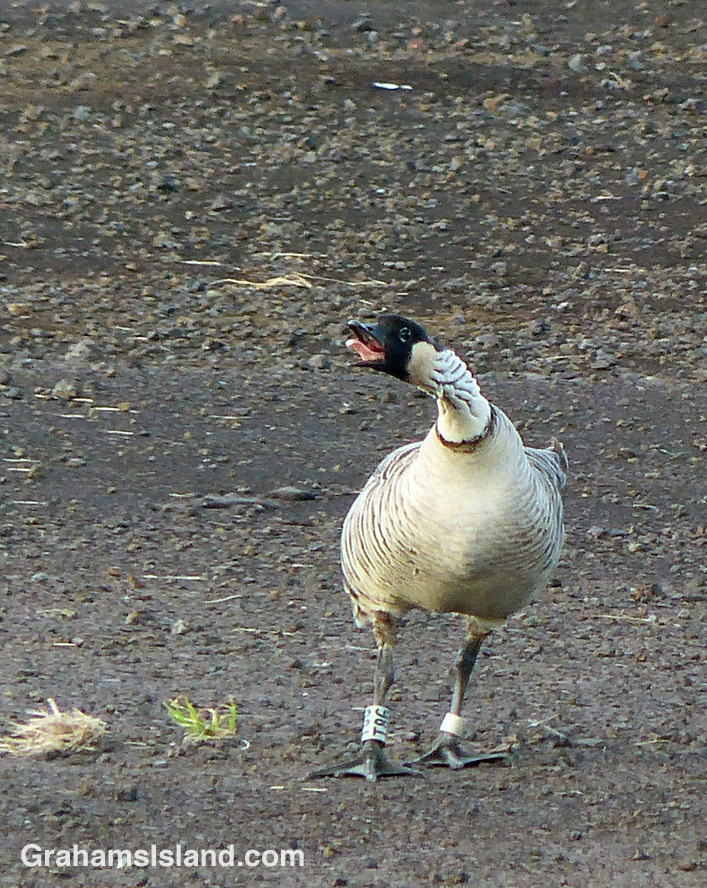
Nene calling

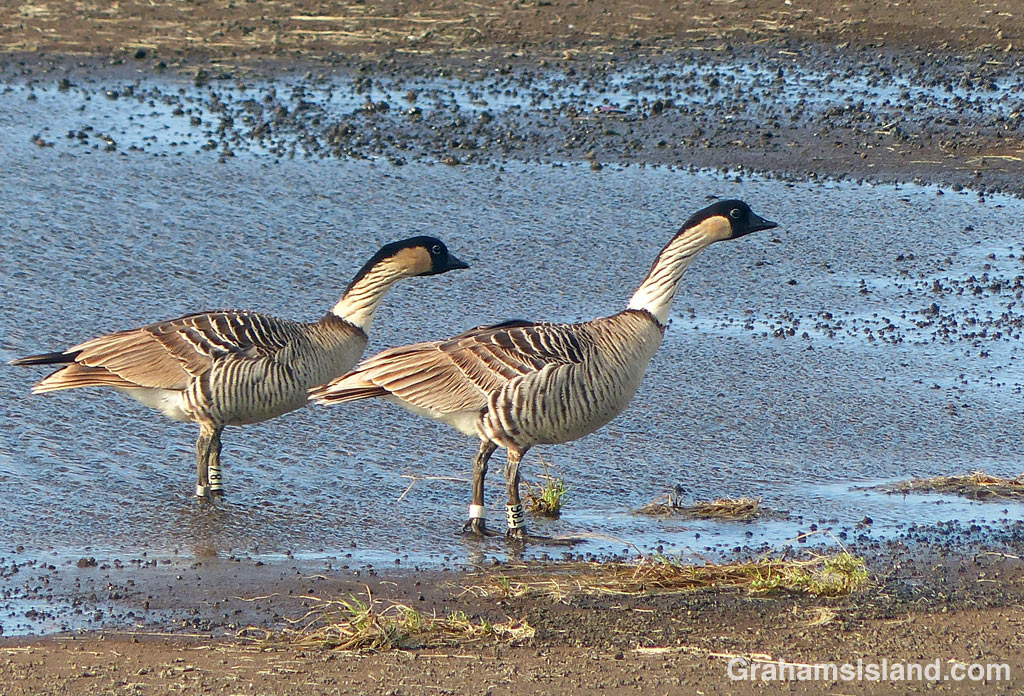
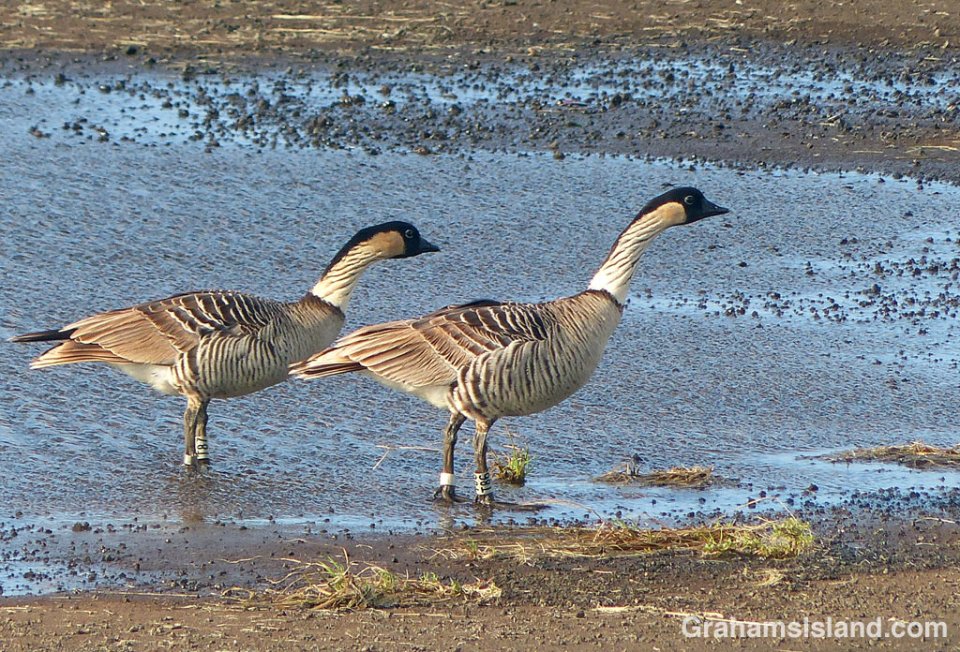
A pair of nene on the Big Island of HawaiiA nene calls on the Big Island of Hawaii
When it rains, large puddles form off to the side of the runway at Upolu Airport. These puddles are popular with a variety of birds, including these two nene, which were in fine voice.

The nene, or Hawaiian goose, is the official state bird and endemic to the islands. It’s also an endangered species and people are encouraged to report sightings to help track the birds. Here on the Big Island, nene sightings are reported to Hawaii’s Division of Forestry and Wildlife. The person I contacted there, Raymond B. McGuire, gave me this information about the birds:

“All of the nene that have the gray bands (like these) are part of a Governor’s Proclamation to move nene from Kaua’i (where they were nesting in a golf course near the airport) to the Big Island and Maui. In total, the Big Island received 598 nene in a 5-year period (2011-2016), this more than doubled the resident population prior to the project. The bands not only tell us where the nene came from, but also the sex. There should be two bands on the nene. One is metal with a U.S. Fish and Wildlife Service number (really tiny and hard to see) and the other is made of colored plastic and much easier to read the ID numbers (though the gray bands are not always easy to see on a gray legged bird). These gray-banded birds were banded by sex: males will have their plastic bands on the right and females will have the plastic bands on the left. These two particular nene, T86 and T87 were brought to the Big Island in 2014 and according to my records T86 is a male, and T87 is a female. They were brought as a breeding pair with 4 offspring. The translocated birds have been exploring the island more than the local birds have been. Although most of the introduced nene have been mixing with local nene and frequenting already established nene areas, we also now have nene frequenting areas that historically have not seen them or used to see them very infrequently, such as in Pahala, Punalu’u, Hawi (including Upolu), Waimea, and Kukuihaele!”

For more information about Nene and other native Hawaiian birds, go to state.hi.us/dlnr/consrvhi/forestbirds/.

V-22 Osprey

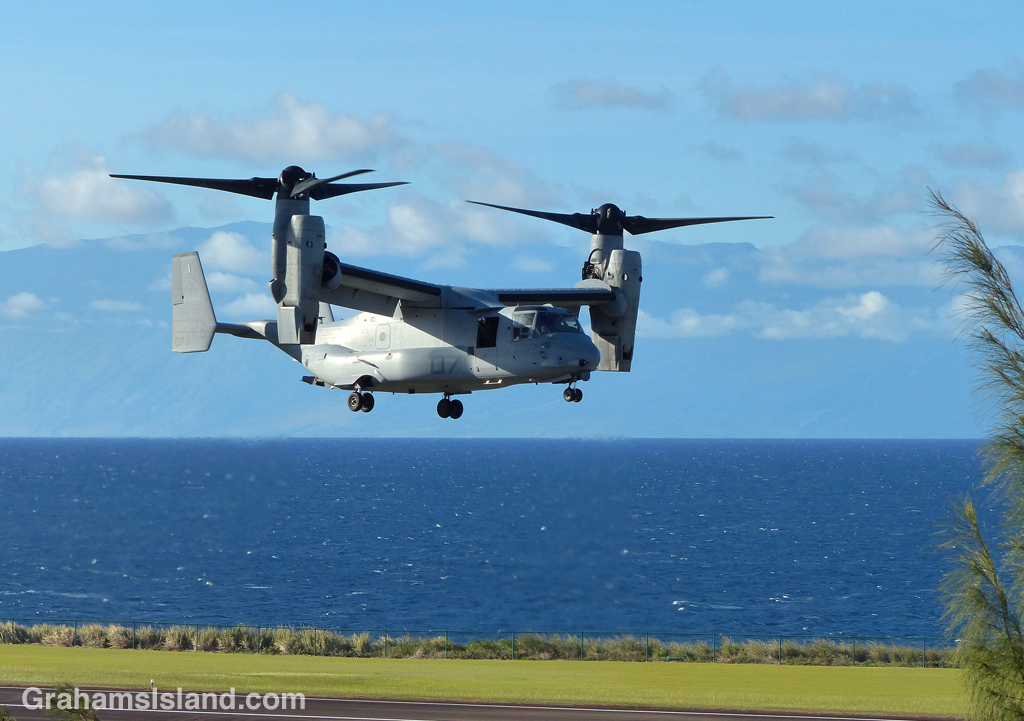
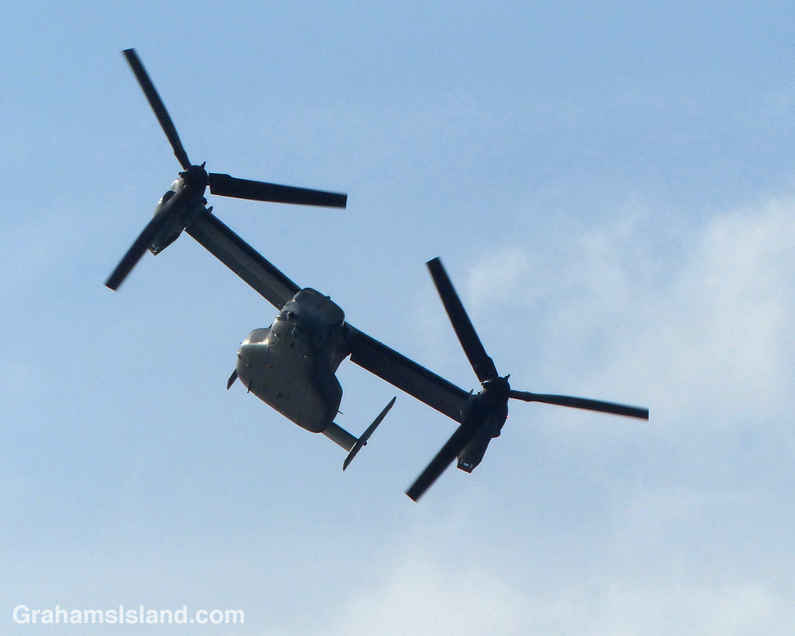
A V-22 Osprey lands at Upolu Airport.A V-22 Osprey banks as it approaches Upolu Airport.
Returning from a walk around Upolu Airport, I was startled by a loud thumping noise close by. Through the trees I saw this peculiar-looking aircraft touching down. The plane is a V-22 Osprey, a tiltrotor aircraft used by the military, in this case, the U.S. Marine Corps.

The plane made several loops, out over ʻAlenuihāhā Channel and back around to the airport to land, then do it all over again. It was actually quite fascinating to see the engines rotate from horizontal to vertical while in flight.

Eventually, the plane headed out over the channel and kept going, probably back to its base on Oahu.

Cackling goose

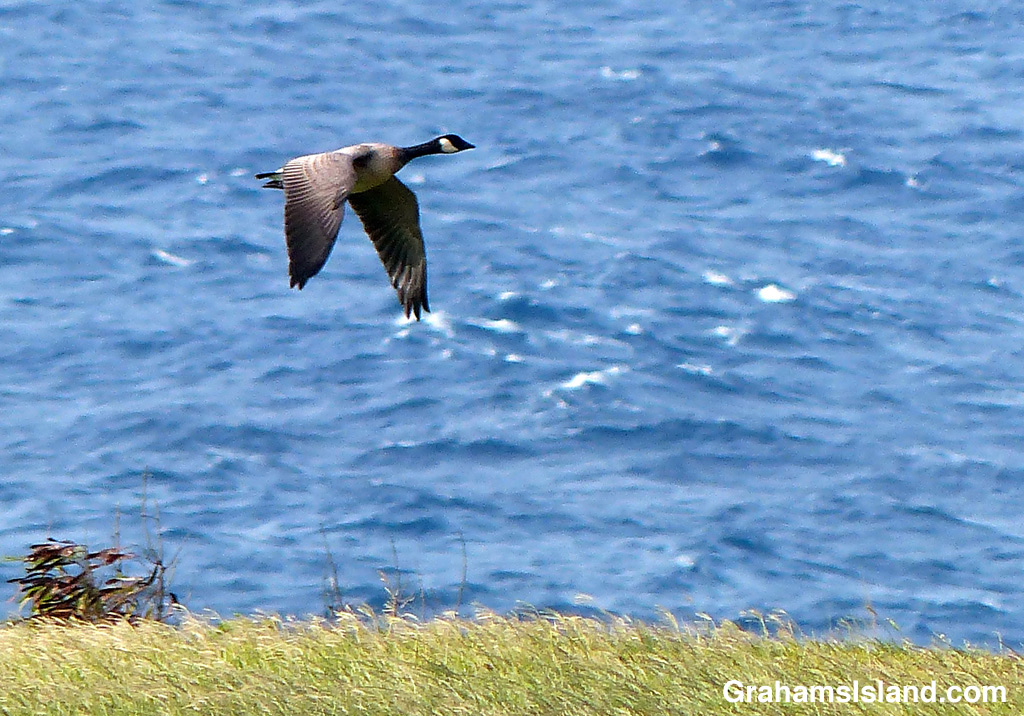
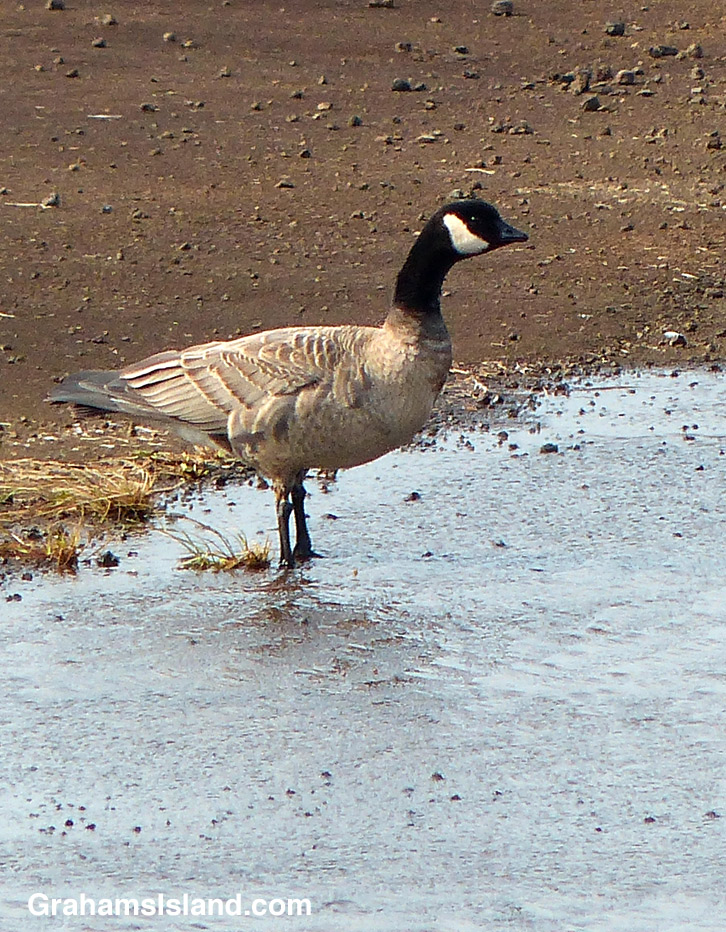
A cackling goose on the Big IslandA cackling goose on the Big Island
A cackling goose is similar in appearance to a Canada goose, but much smaller and with a shorter beak. Both are rare visitors to Hawaii. This cackling goose was taking a drink of water from a puddle at Upolu airport until a couple of mynah birds started harassing it. Then it took off and headed east, into a strong wind.

Mo’okini Heiau

Mo'okini Heiau


According to tradition, Mo’okini Heiau dates back to the 5th century, when it was built on the northern tip of the island, by the high priest, Mo’okini. Somewhere between the 11th and 14th  century (dates vary) another priest called Pa’ao is said to have built the current structure. Pa’ao came from Tahiti or Samoa and is also said to have brought to Hawaii the practice of human sacrifice and the kapu system, laws that governed daily life.

Given its history, it’s not surprising that some people find the site eerie and unsettling. The stone in the second photo, is where flesh was stripped from bone after a person had been sacrificed.

For more information about Mo’okini Heiau, go to nps.gov/nr/travel/Asian_American_and_Pacific_Islander_Heritage/Mookini-Heiau.htm.

The stone at Mo'okini Heiau where flesh was stripped from bone after a sacrifice.