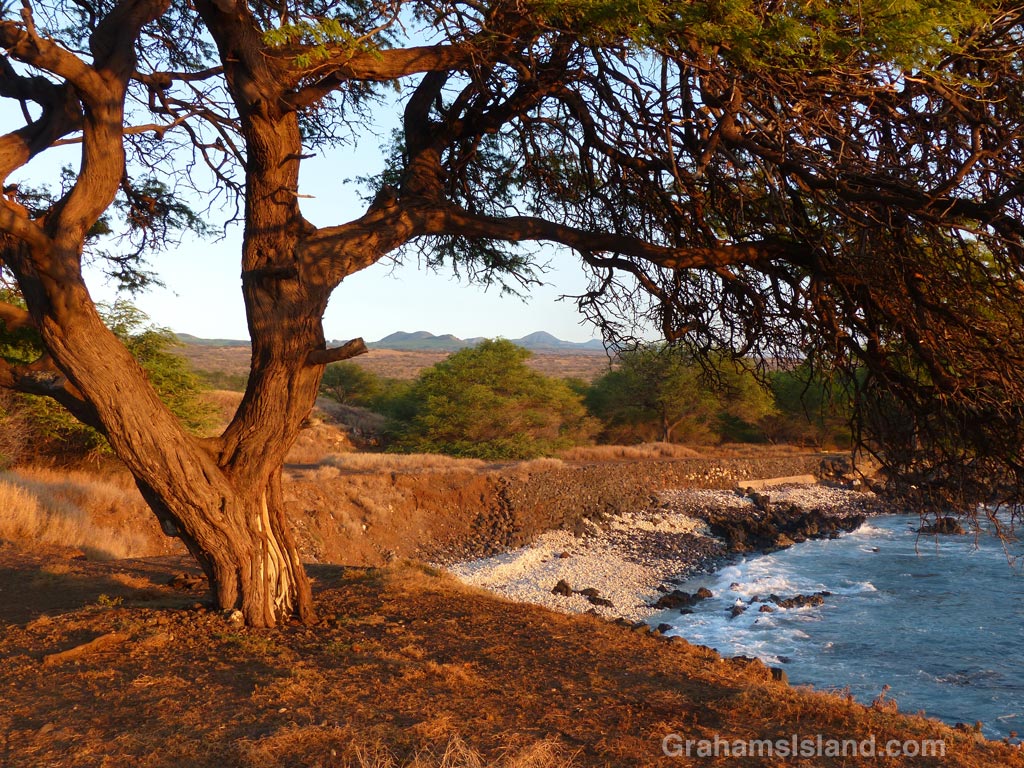
Often, clouds roll in during the day and by late afternoon the Kohala Mountains are obscured. This was one day they remained clear.

Often, clouds roll in during the day and by late afternoon the Kohala Mountains are obscured. This was one day they remained clear.
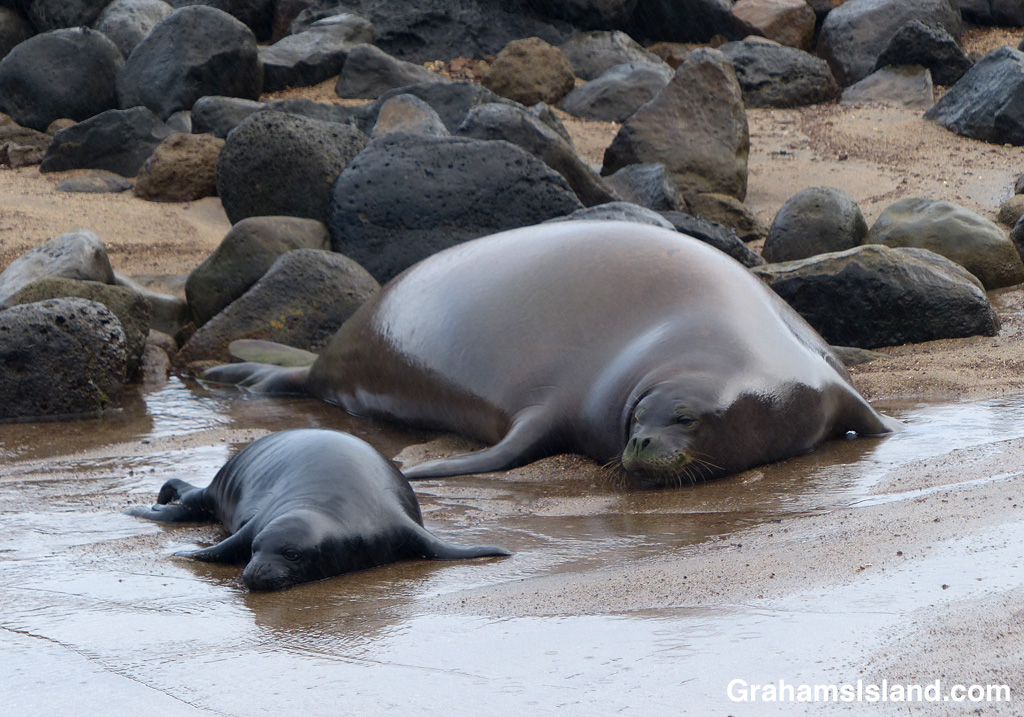


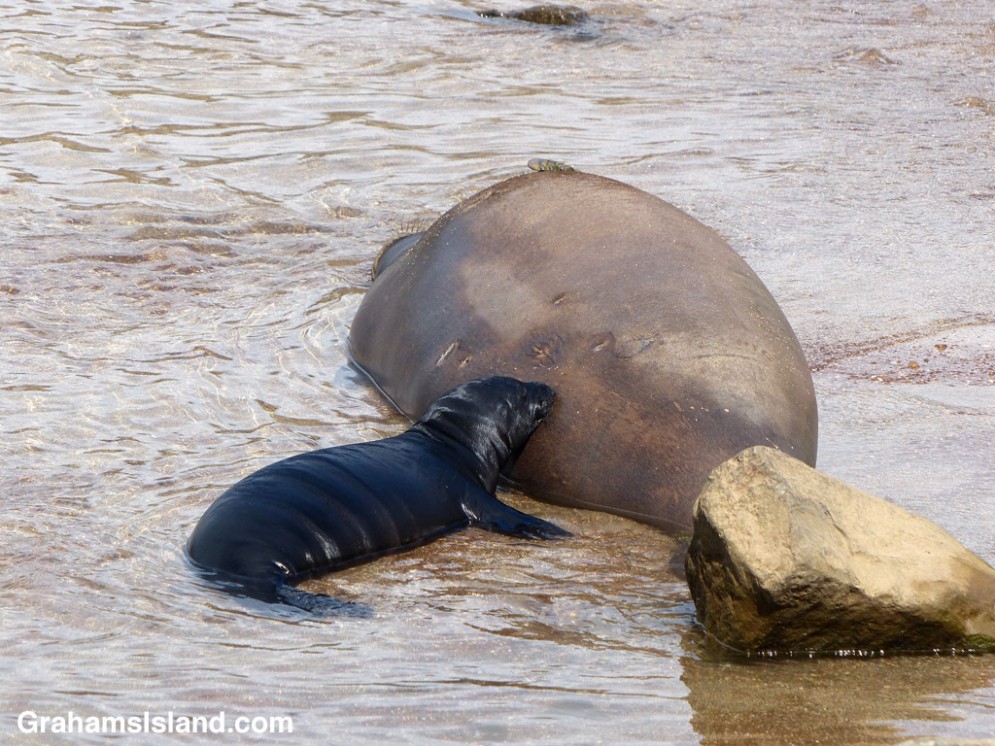
These photos are from November of last year. Not being on social media or especially well connected, it wasn’t until late November that I heard a monk seal pup had been born at Keokea Beach Park. The pup was born November 2 and was named Elua by the local community.
Elua means ‘two’ or ‘twice’ in Hawaiian. He was given the name because his mother, Waimanu (named after the valley where she was born), had given birth to another pup at the same spot two years previously. That pup was named Keokea, after the park. He died in his first year after swallowing a fishhook, a major hazard for monk seals around the islands.
I first stopped by on November 22 and returned on November 25 with a view to joining the volunteers who take shifts to monitor the pup. The idea is that these volunteers provide information about the pup, and monk seals in general, to people visiting the park and try to ensure that the seals aren’t unduly disturbed.
The general consensus was that Elua was doing very well and seemed to be picking things up fast. There was hope the pup would be ready to leave earlier than Keokea had when he was here. Indeed, Elua did seem livelier and more adventuresome, even at this early stage.
On November 26, Thanksgiving Day, Elua was found dead. My understanding is that a necropsy was unable to determine exactly what happened. I heard the cause was ‘blunt trauma’ resulting in edema (abnormal accumulation of fluid) in the lungs. As far as I know, what caused the ‘blunt trauma’ is unknown.
The loss of any pup is serious because there are so few monk seals. They’re a critically endangered species, with a current population of around 1,100. Most live in the northwestern atolls with about 200 around the main Hawaiian islands. In addition, the Hawaiian monk seal has a very low genetic diversity, which makes it potentially very vulnerable to disease and environmental changes.
For more information about Hawaiian monk seals, go to www.pifsc.noaa.gov/hawaiian_monk_seal/ or www.marinemammalcenter.org/hawaii.

I’ve seen this shoal of sharpnose mullets several times, always in the same area. They hang out where a ledge borders deeper water. On this day, breaking surf washed them back and forth over the ledge, along with an assortment of other fish and me if I’m not careful. It’s important to pay attention in these situations as it would be easy to end up in too shallow water and get raked over the coral – not good for it or me. When I got out of the water I met a friend who understood that. He’d had that happen to him just a few days earlier.
In my attempts to identify what I see in the water, I use John P. Hoover’s book The Ultimate Guide to Hawaiian Reef Fishes, Sea Turtles, Dolphins, Whales, and Seals. His website is hawaiisfishes.com.

This little mourning gecko has already been in the wars, having lost most of its tail. The tail will grow back. Geckos can shed their tails as a defensive mechanism, the idea being that the discarded tail, still wiggling, distracts an attacker long enough for the gecko to escape.
There seems to be a regular gecko cycle in the house. A new batch of eggs hatch and the number of baby geckos jumps. They can be seen scurrying over the walls and ceilings with great industry, if no apparent purpose. Over the next few days, their numbers decline until only an odd one or two are seen. Then, a couple of weeks later, a new batch hatches and off they go again.
They seem to succumb to three things: failure to find enough food, getting eaten by larger geckos, and being squashed by the large feet of yours truly. They’re hard to spot on the floor, especially in low light.
For more information about geckos, go to geckoweb.org.

Water ripples in a colorful tide pool.
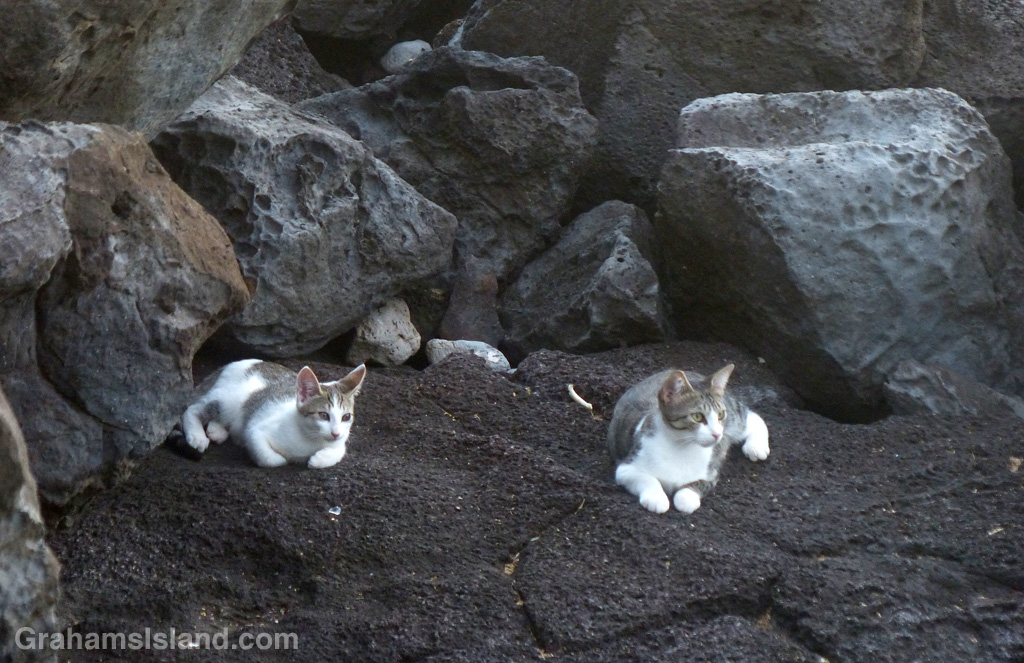

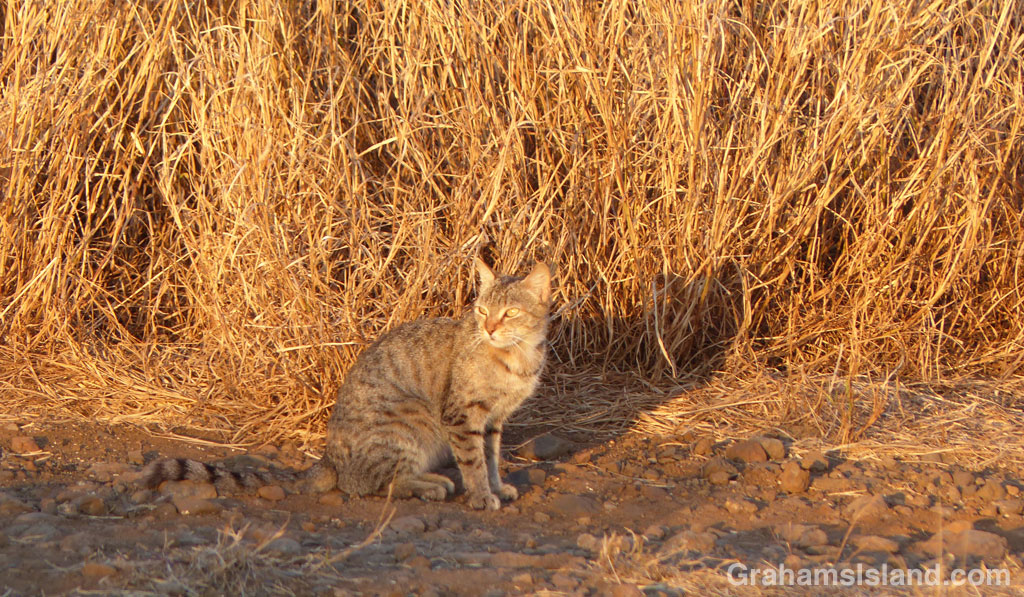
These cats look cute, but they’re wild and feral cats are something of an issue on the island. Besides the usual problems, their feces can carry Toxoplasma gondii, a microscopic protozoan parasite, which can be washed into the water in runoff. This parasite is potentially fatal to monk seals with several deaths attributed to it.
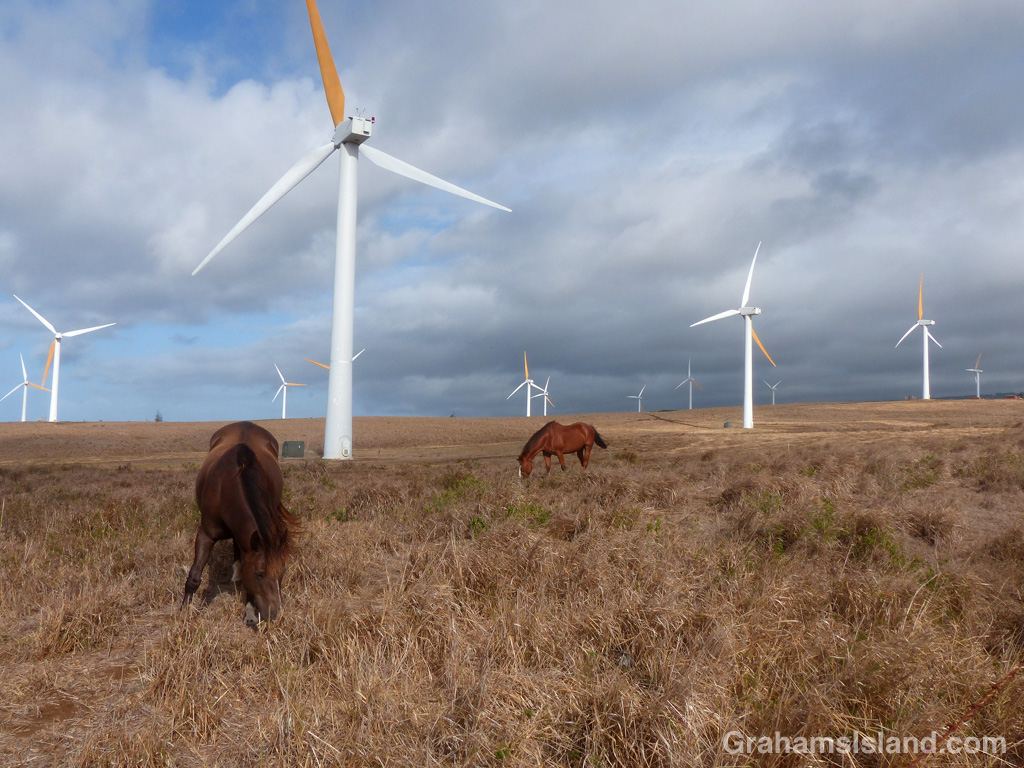
A pair of horses forage in dry grass at the Hawi Wind Farm. The turbines are driven mostly by northeast trade winds whistling off the ocean.
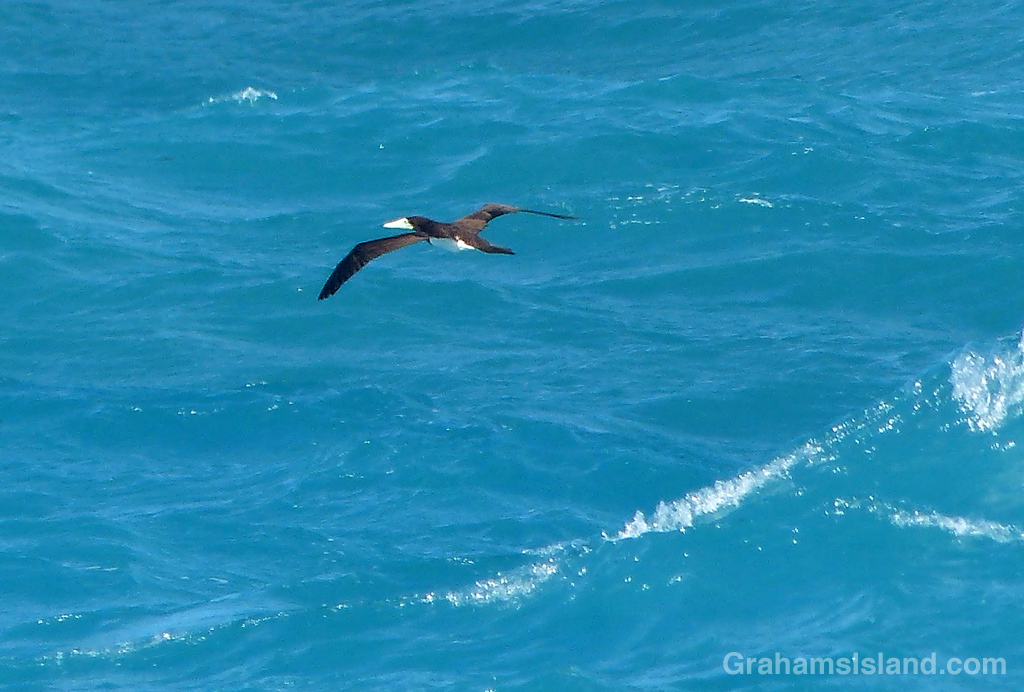
I saw this brown booby gliding effortlessly over the water just off the Kohala coast.
 Graham's Island