Monthly Archives: July 2016

The spooky horses of Waipi’o Valley

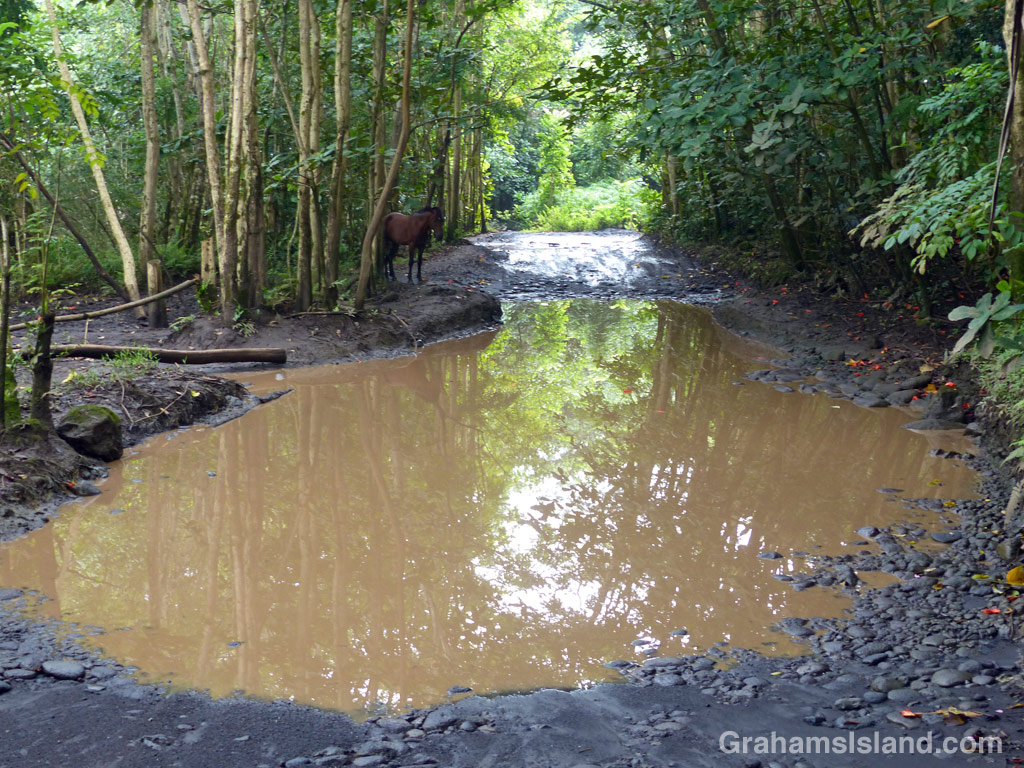
A horse stands by a pool in the road to the beach at Waipi'o ValleyA horse stands by a pool in the road to the beach at Waipi'o Valley
Yesterday, I posted about my hike into Waipi’o Valley. One feature of the valley is that wild horses live there. These appear to be ‘wild’ in the sense that they aren’t owned, but they’re not the wild mustangs of the wide open west.

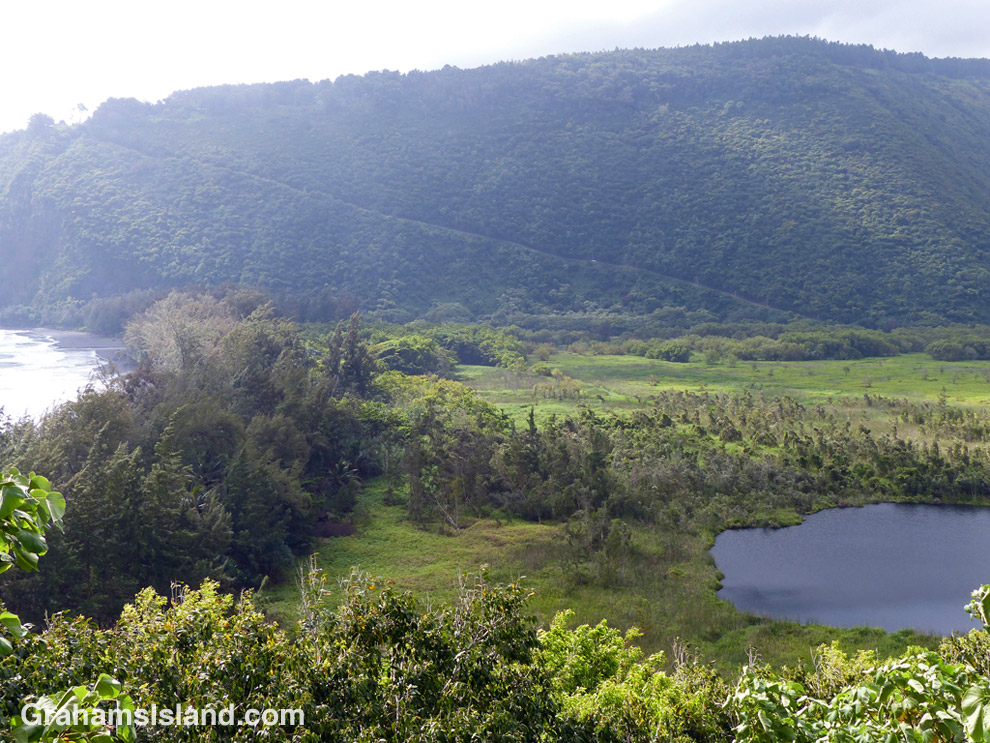
I saw the first of them when I came to this large lake spanning the sandy road leading to the beach. At first I didn’t notice it, but as I looked for my best path around the pond, I saw it standing off to the side, by the trees. My best path would take me in the horse’s direction; the other side looked too muddy.

I looked at the horse again. It hadn’t moved. Not at all. Not a swish of the tail, not a flick of an ear. It was eerily still, so still I wondered for a moment if it wasn’t a super-realistic, life size model set there to disconcert tourists. No matter. I had to go by it and it would surely move then. As I approached, I spoke to it. Still nothing. I passed behind it. Not a twitch, not a blink. I walked to the other side of the road and took another photo. Nothing from the horse. A few more photos and finally the horse flicked its tail, the first sign of life since I initially saw it. After a while, the horse gathered itself, turned around, and eased into the trees.

Later, on my return after going a little way up the Muliwai Trail, I took the trail which runs through the trees behind the beach. A short way along the trail I just got a certain feeling. I turned around and there was a horse following me only about 10 feet behind. I hadn’t seen it. I hadn’t heard it. It looked at me, then turned toward the ocean. I walked on a few paces, then looked back. The horse was gone, nowhere to be seen.

For more information about the Waipi’o Valley trail, go to bigislandhikes.com/waipio-valley/.
Waipi’o Valley hike

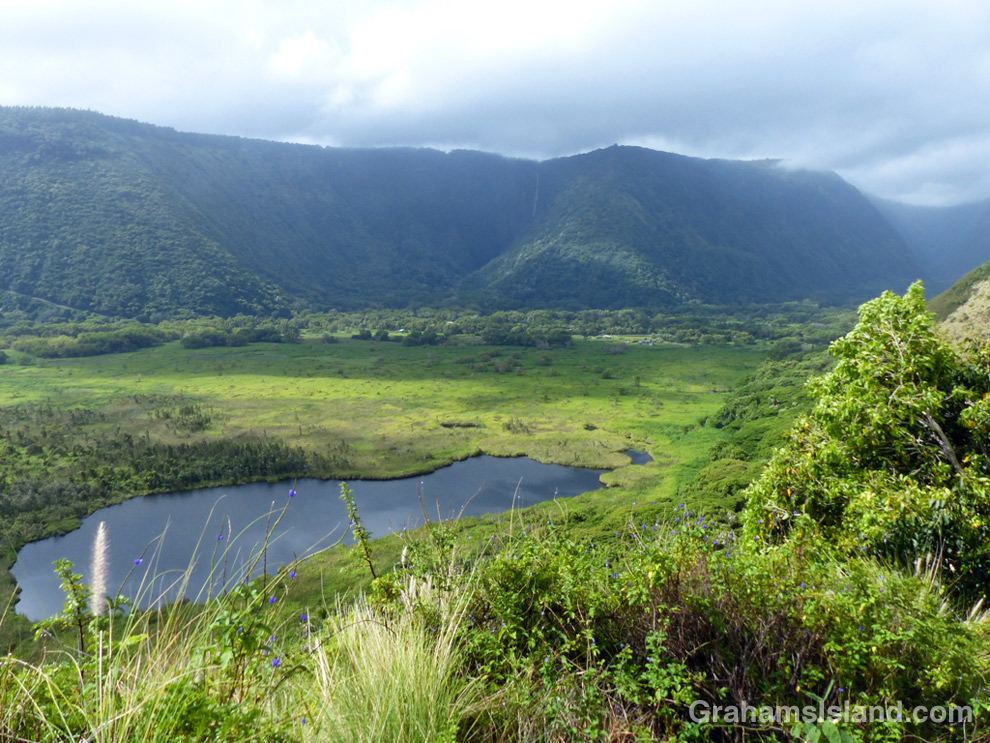
Waipi’o Valley with Hi’ilawe Falls in the distance, seen from a viewpoint on the Muliwai Trail which leads to Waimanu Valley.
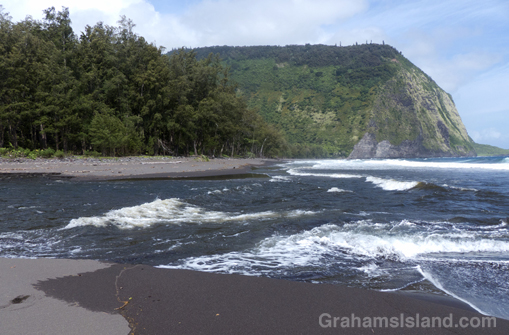
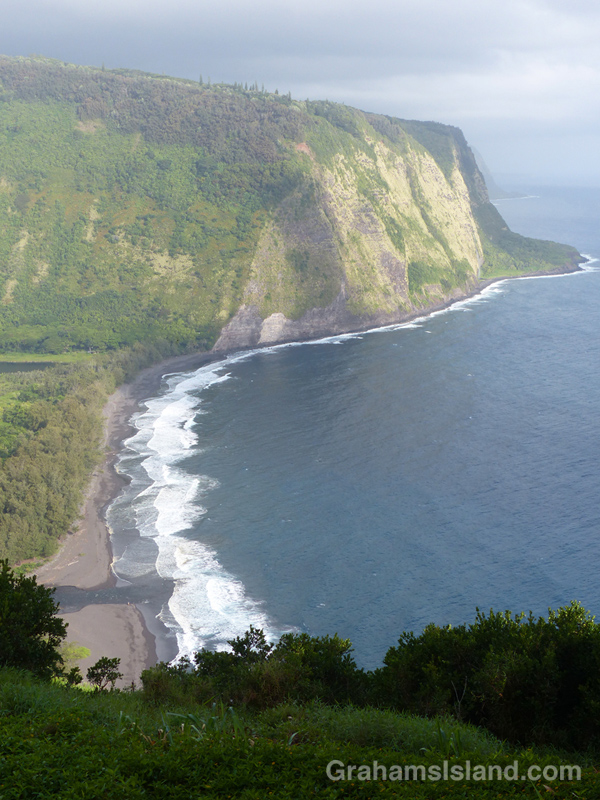
Waipi’o beach seen from the overlook near the parking area.
The stream crossing to reach the far end of the beach and the Muliwai Trail.
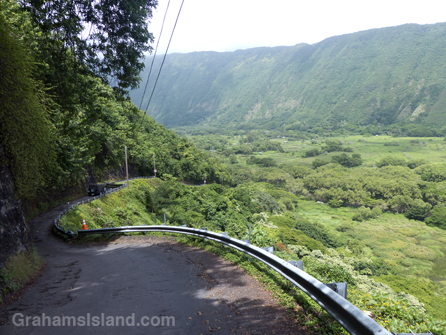
The road down into Waipi’o Valley is rough, winding, and very steep.

There’s a 22 miles stretch of the northern Big Island coast, from Pololu to Waipi’o Valley, that isn’t accessible by car. At the southeast end of that stretch, the road ends at the Waipi’o Valley overlook. From there, a paved road descends into the valley. It’s rough, winding, and very steep. The average grade is 25%, steeper in places. Four-wheel drive and healthy brakes are a must.

The alternative is to hike into the valley, which is what I did. The road drops about 800 feet in just over half a mile. It’s hard on the knees, but easy on the eyes. There’s a gradual unfolding of details that aren’t visible from the overlook – fields, dwellings, horses. The valley, which is important in Hawaiian history, was wiped out in a 1946 tsunami. Now it’s populated by taro farmers and people who tend to shy from society. It’s a bit of a clash for it to be a popular tourist stop.

At the foot of the hill is a junction. The road continues straight on into the valley, but the public access soon ends. In the opposite direction the road heads to the sea. After a little under half a mile, the sandy, lake-filled road breaks out to the beach. There’s lots of parking under the trees. On the other side of them is the beach, a long, curved stretch of smooth sand, interrupted only by the ‘stream’ that has to be crossed to access the far end.

I can’t say where it’s best to cross this stream; conditions vary from day to day depending on the state of the tide and the flow of water. I waded out just inland of the furthest reaching waves. I felt my way across the rounded rocks underfoot, feeling reasonably pleased with my progress. But about three-quarters of the way across, I reached the fastest flow of water, which had also cut the deepest channel. It was probably only a couple of feet deep, but it required great care not to lose my footing. This fast-flowing channel was soon crossed and I hauled myself out, somewhat relieved, on the sand at the other side.

A deserted beach stretched out ahead. I strolled along the water’s edge and, at the far end, cut inland to find the Muliwai Trail, which leads to Waimanu Valley eight miles farther on. The trail is steep and narrow as it zigzags up the cliff. After a short while it breaks into the open and lovely views emerge, back the way I’d come and up the valley where there’s a good view of Hi’ilawe Falls. This was my turnaround point. The return across the stream was easier, knowing what was involved. The hike back up the road to the overlook a steady, sweaty haul, though I was surprised it only took me 10 minutes longer than the descent.

For more information about the Waipi’o Valley trail, go to bigislandhikes.com/waipio-valley/.
From the Muliwai Trail, a view back toward the road leading into Waipi’o Valley

Whitemouth moray eel on the move

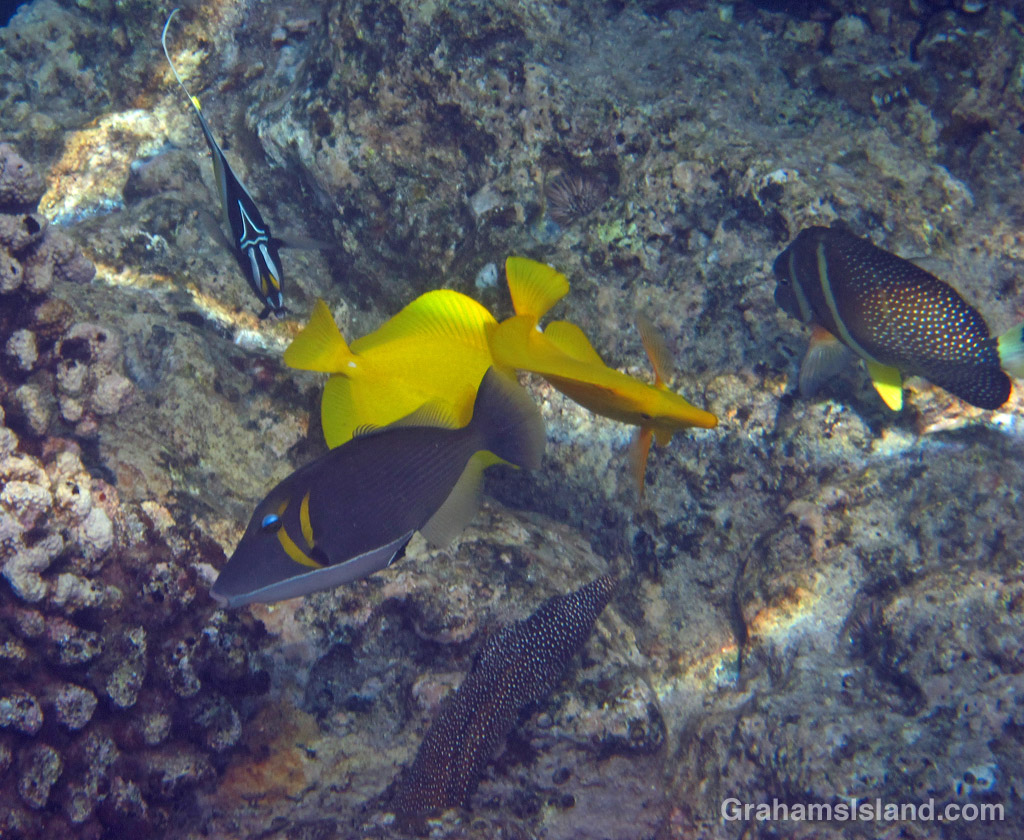
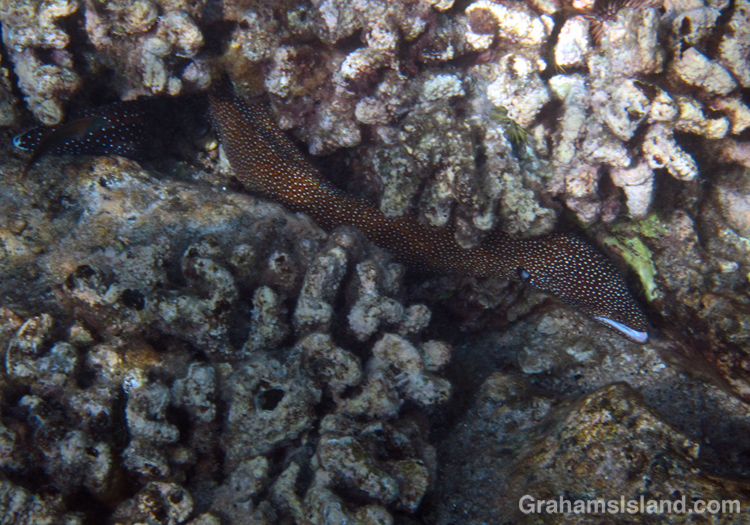
A whitemouth moray eel with a lei triggerfish, yellow tang, moorish idol and whitespotted surgeonfish.A Whitemouth Moray Eel between two coral heads.
This whitemouth moray eel appeared to startle these fish, a lei triggerfish, yellow tang, moorish idol and whitespotted surgeonfish. However, it kept going, sliding into and out of cracks as eels do, until it settled between a couple of coral heads.

In my attempts to identify what I see in the water, I use John P. Hoover’s book The Ultimate Guide to Hawaiian Reef Fishes, Sea Turtles, Dolphins, Whales, and Seals. His website is hawaiisfishes.com.

Signs: Hazardous Area

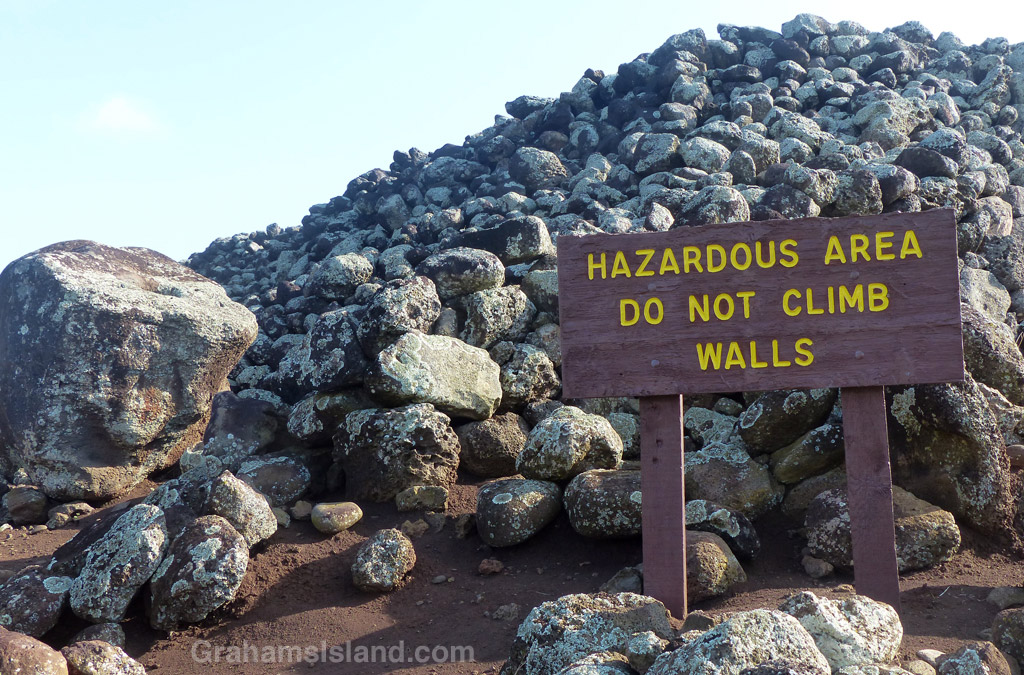
A sign at Mo'okini Heiau

This sign greets visitors to Mo’okini heiau. The heiau dates back to the 11th or 12th Century when it was an important religious site where thousands of human sacrifices were carried out. A hazardous area indeed. I imagine there were many who would happily have risked climbing the walls in those days.

For more information about the Mo’okini heiau, go to bigislandhikes.com/mookini-heiau/.


A flock of finches

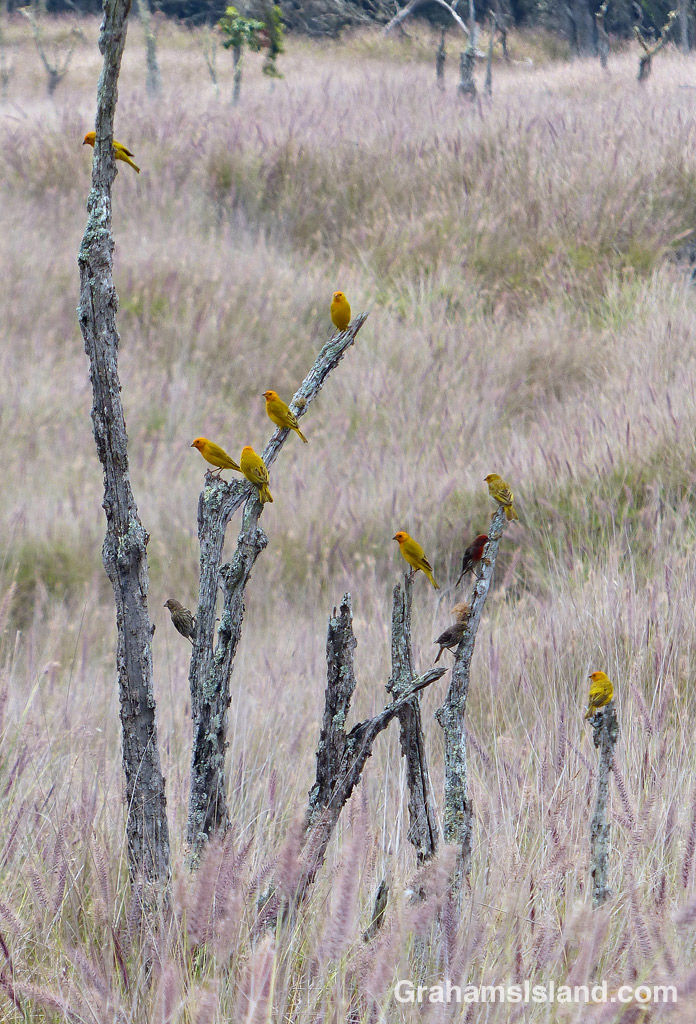
A flock of finches flying on the Big IslandA flock of finches at rest on the Big Island
I watched this flock of finches take off, settle, take off again, settle again. Saffron finches predominated, but there were several house finches, and I think I also glimpsed a couple of other types.

Centipede in a sandal

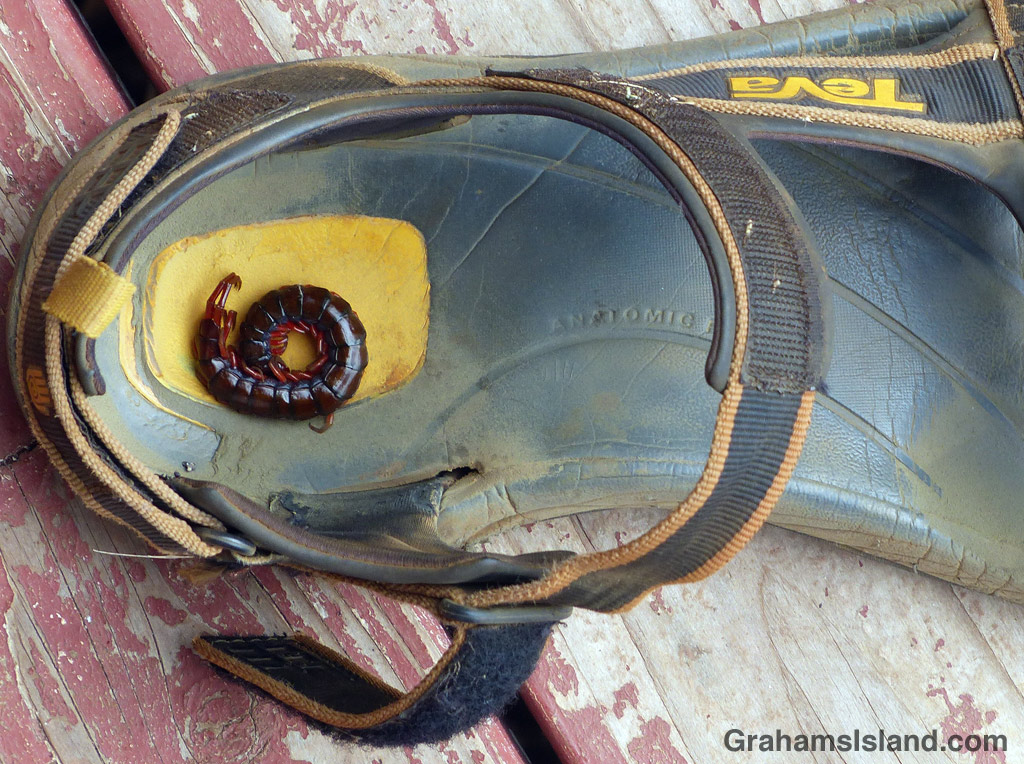
A centipede curled up in a sandal on the Big Island.
This is why it’s wise here to check clothes and shoes before use. Getting ready to go out for a walk, I glanced down and saw this centipede curled up in the heel of my sandal. Centipedes can give a very painful bite, so I’m told. I haven’t experienced one – yet. While this one wasn’t exactly lively, it was still alive. I can neither confirm nor deny that the poor fellow was overcome by fumes from the sandal.