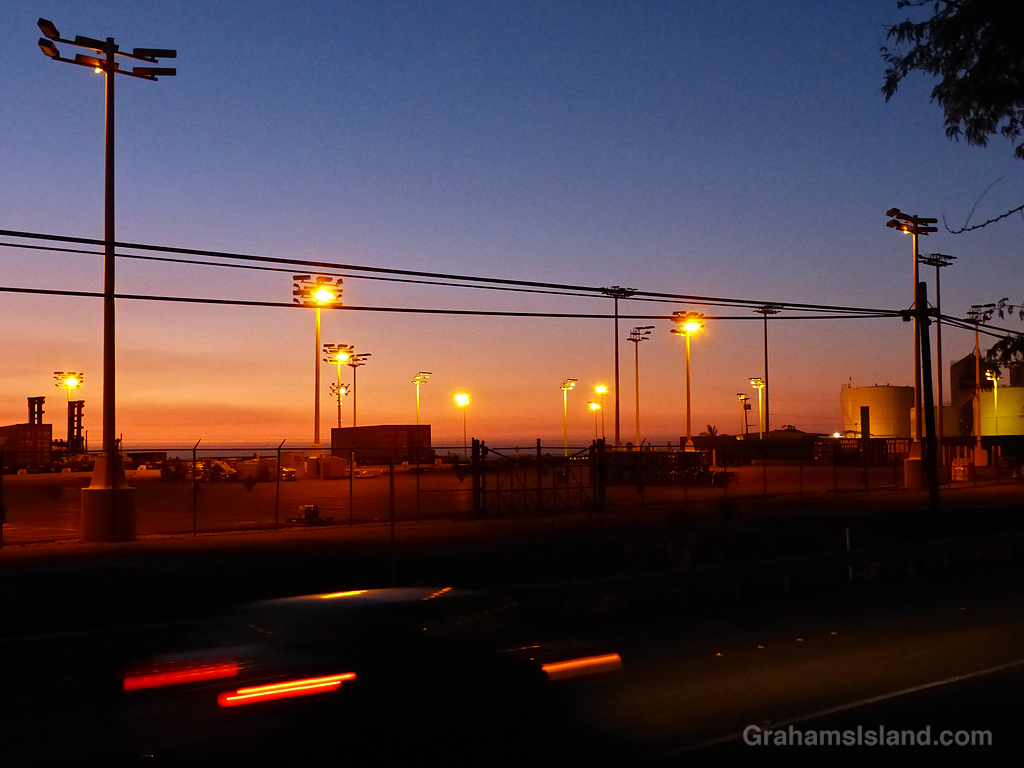
Kawaihae is the main commercial port on the west side of the Big Island. The inter-island barge visits regularly as well as commercial container ships. Here the lights of the port take effect as the sun goes down.
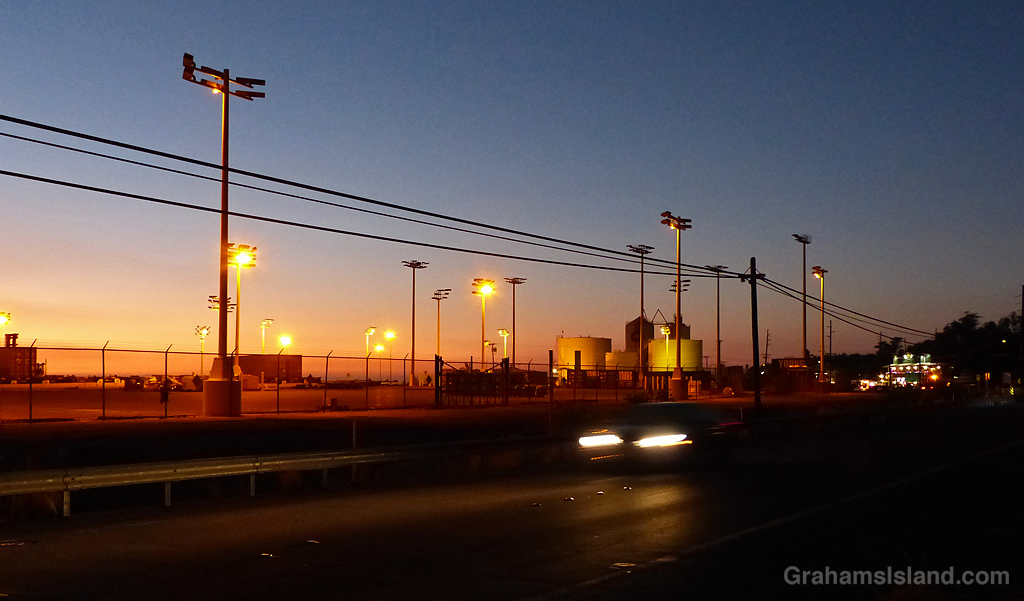

Kawaihae is the main commercial port on the west side of the Big Island. The inter-island barge visits regularly as well as commercial container ships. Here the lights of the port take effect as the sun goes down.
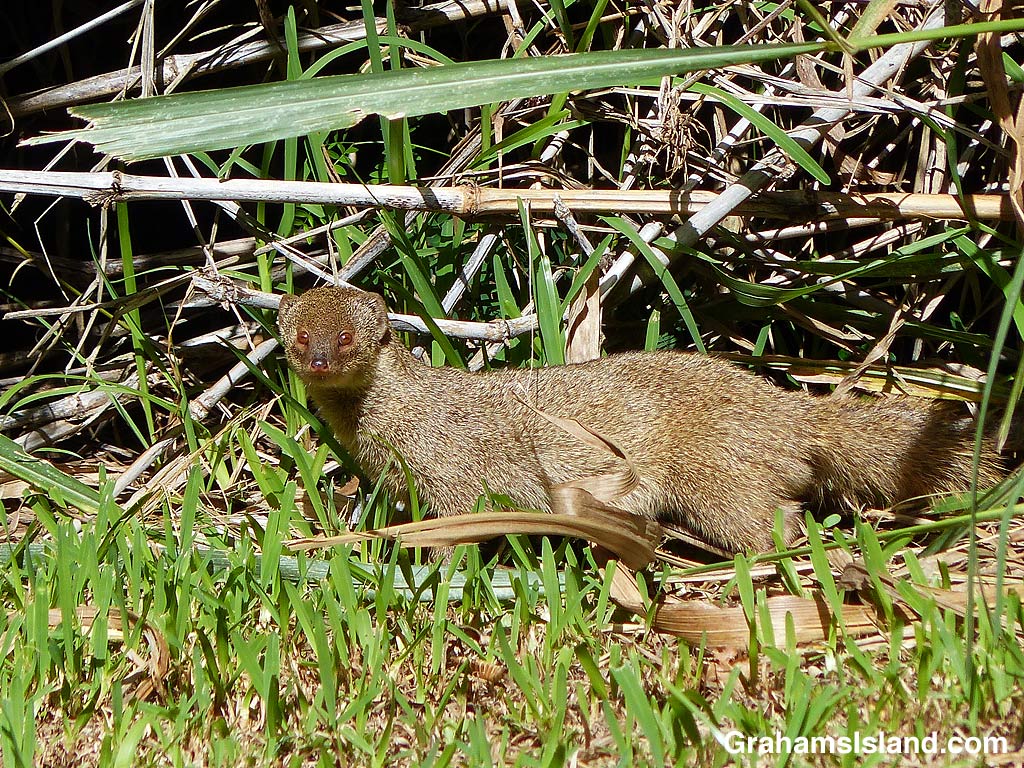
I saw this mongoose one morning, standing in the sunlight at the edge of the yard. It noticed me, of course, but remained in place for a while before disappearing. After I went indoors again, I looked out of the window and it was back, soaking up the rays.

Along the Kona coast, there are several ponds a little way inshore. These are anchialine ponds containing a mix of freshwater and saltwater. The freshwater comes from a mix of rain, runoff, and the occasional spring. The saltwater intrudes from cracks in the lava.
These ponds often harbor a mix of wildlife from birds and bugs to the tiny fish in this photo. I’m not sure what these fish are, in one such pond at Kaloko-Honokohau National Historical Park, but the ponds offer a relatively safe place to start out life. However, they will need to make their way to the sea before they grow too big to escape the pond. Once there, survival will become a chancier thing.
For more information about Kaloko-Honokohau National Historical Park, go to bigislandhikes.com/kaloko-honokohau-park/.
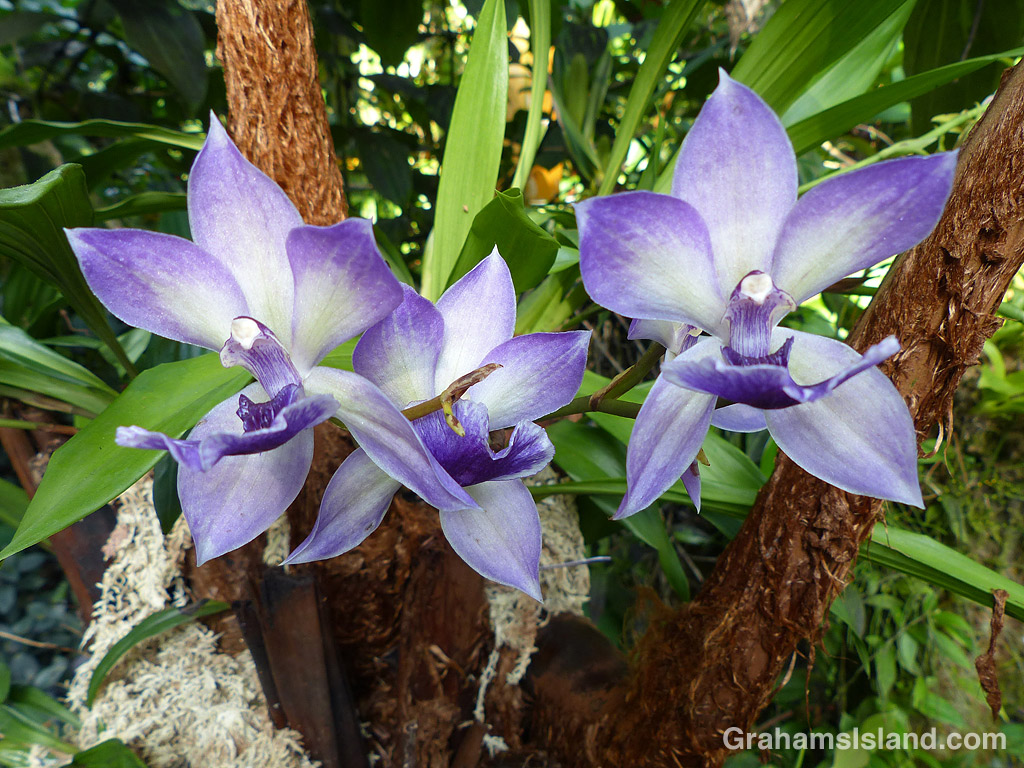
In Hawaii, plants grow year-round so there is no ‘spring’ where the first new growth sprouts from the ground. But there are still seasons, times when certain plants come into bloom and then seed. This is one of several reasons why I like revisiting Hawaii Tropical Botanical Garden, north of Hilo. There’s always something new to see by visiting at different times of year.
On my most recent visit, I found this orchid, Zygonisia Cynosure ‘Blue Birds,’ blooming. It is, apparently, about as close as it gets to a blue orchid. It does have a certain ethereal quality about it.
For more information about Hawaii Tropical Botanical Garden, go to htbg.com.


This dead tree on the slopes of Pu’u Wa’awa’a did not die of natural causes. The pale strip near the bottom of the trunk is where the tree was girdled.
The tree is, I’m pretty sure, a silk oak. Native to Australia, these trees were introduced to Hawaii around 1880. When in bloom, they present a mass of brilliant orange flowers, but they seed prolifically and also produce an allelopathic substance that inhibits the growth of other plants. Because of this, they can crowd out native plants, of which there are many on Pu’u Wa’awa’a, so trees in areas where they have become too dense or are not wanted, are girdled.
For more information about Pu’u Wa’awa’a and its trails, go to puuwaawaa.org.


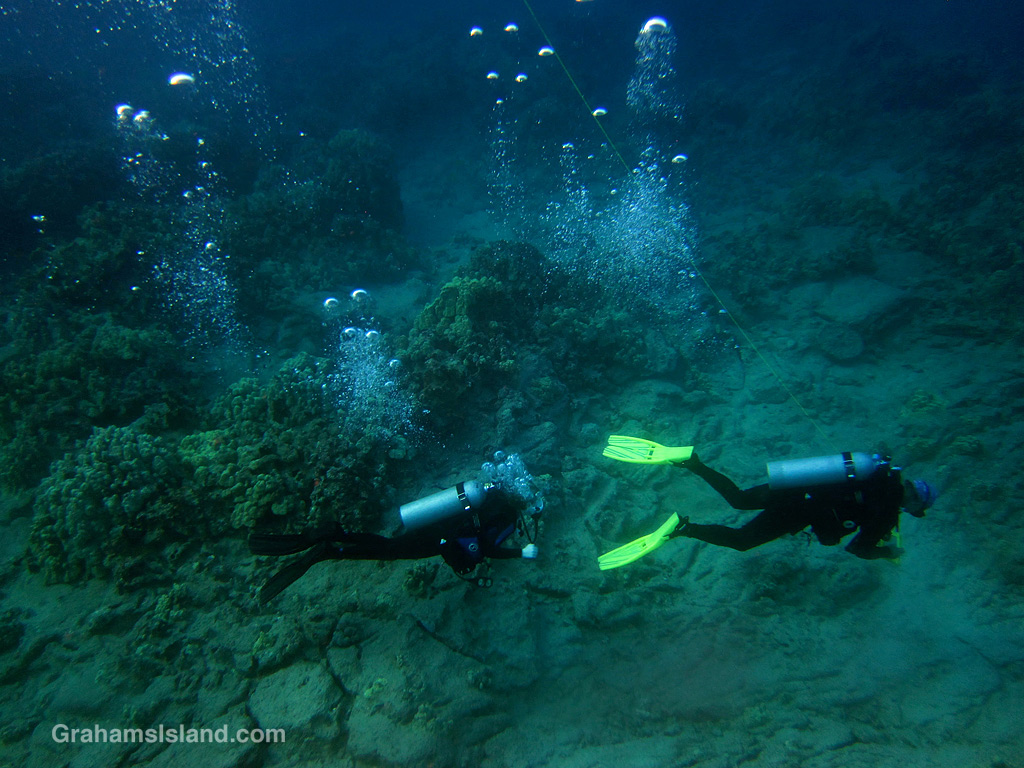
Not surprisingly, Hawaii is popular with divers. Warm, clear waters and lots of fish and coral means there’s lots to see. For snorkelers, like me, the divers themselves are something to watch for.
I saw this group heading out toward deeper waters and liked how the light caught the bubbles of air, and also the colorful fins of two of the divers.
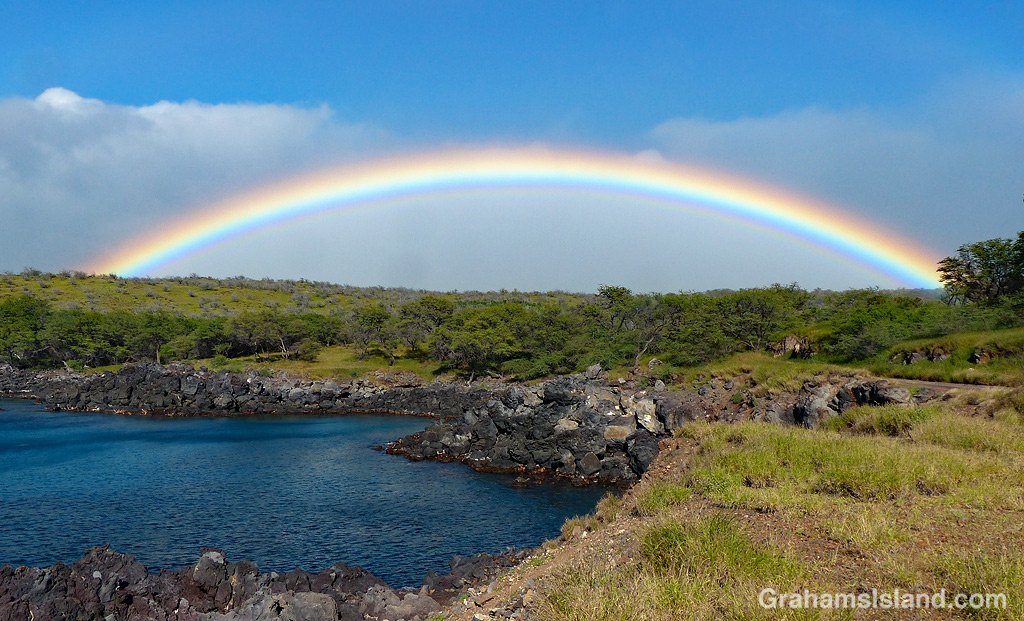
Wishing everyone a bright, colorful, and happy new year with this rainbow over North Kohala.
 Graham's Island