Yesterday, I posted about the dangers geckos pose to a praying mantis that has been living on a spider lily.
Today’s post is about the advantage of that location for the mantis. The primary benefit is that the spider lily’s flowers attract wasps, bees and other insects. In these photos, the mantis has caught a good-sized paper wasp, securely held by its forelegs. It held the wasp in that position for a while, but once it began its meal, it made short work of devouring the wasp. Next day I saw it with a bee and a beetle.
As the spider lily flowers fade, new ones pop up on other stalks, so the insect attraction has been fairly continuous.
For the past three weeks, this praying mantis has been a fixture on this spider lily. The downside of this location is that the plant is a favorite spot for gold dust day geckos. The geckos would no doubt like to eat the mantis, but have so far not made a move that I’ve seen. I suspect that one reason for this is that the geckos have learned that, while the mantis looks like it never moves, when they do, they move fast. A few futile sorties against a mantis would make any gecko decide to seek easier prey.
Tomorrow, I’ll post about the upside of this location for the mantis.
I always feel a bit sorry for cows that are plagued by the masses of flies that gather on their bodies. But I also find interesting the patterns made by the black and white cows, the direction of their hairs and the black spots of the flies themselves.
This week’s Sunday Stills challenge theme is ‘Paths.’ (See more offerings here.)
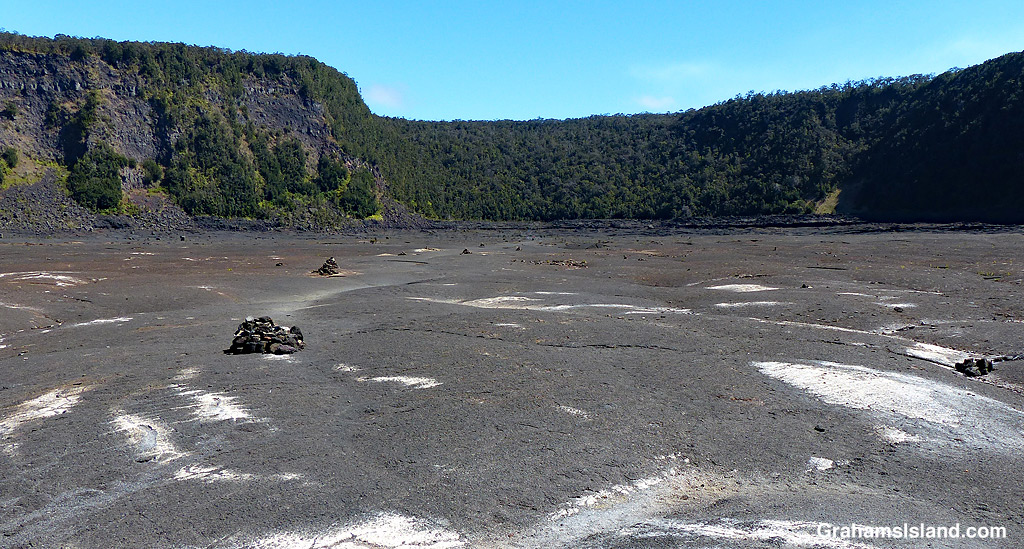
Kilauea Iki Trail is one of the more popular trails in Hawaii Volcanoes National Park. But last year’s volcanic activity, with numerous earthquakes, resulted in the park being closed for several months. Even after it reopened in September 2018, many parts of the park remained closed because the areas were too unstable to be opened to the public.
The Kilauea Iki Trail was one of those areas along with Thurston Lava Tube and Jaggar Museum. The latter two locations are still closed and Jagger Museum may never be reopened, but the Kilauea Iki Trail is currently listed as mostly open. Given that this is a loop trail, it would be wise to check ahead and find out what ‘mostly open’ means.
These photos were taken during a hike I took a couple of years back. The top photo shows the view from the part of the trail that follows the rim of the crater before it descends to the crater floor. The second photo shows two hikers heading out across the crater floor. The dark hill in the background is Pu‘u Pua‘i where a 1959 eruption poured lava out into the crater. The third photo shows hikers near the center of the crater where the path winds through broken areas of the crater floor. Below, cairns mark the trail across a flat area of the crater that leads to the switchback trail which takes hikers back up to the crater rim.
For more information about Hawaii Volcanoes National Park, go to nps.gov/havo/.
This week’s Friendly Friday challenge theme is ‘Twins.’ (See more responses here.)
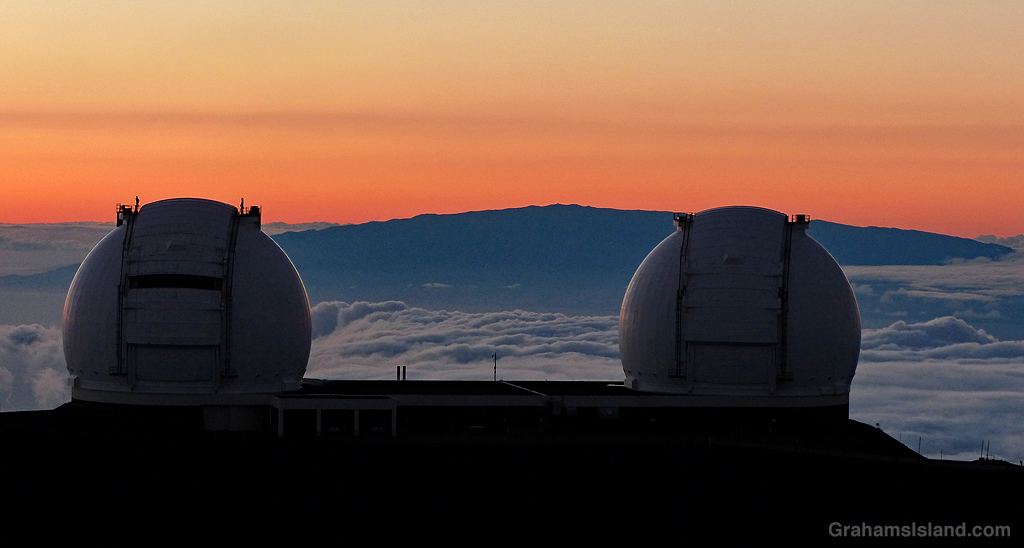
These are the two telescopes of the W. M. Keck Observatory on Mauna Kea. Keck 1 began operation in November, 1990, while Keck 2 made its first observations in October 1996. Each telescope’s 10-meter primary mirror is made up of 36 segments, hexagonal in shape. Not that these segments are small themselves. Each one is 1.8 meters wide and weighs half a ton.
The telescopes can accommodate a wide variety of instruments, such as cameras and spectrometers, and are considered to be the most scientifically productive in the world.
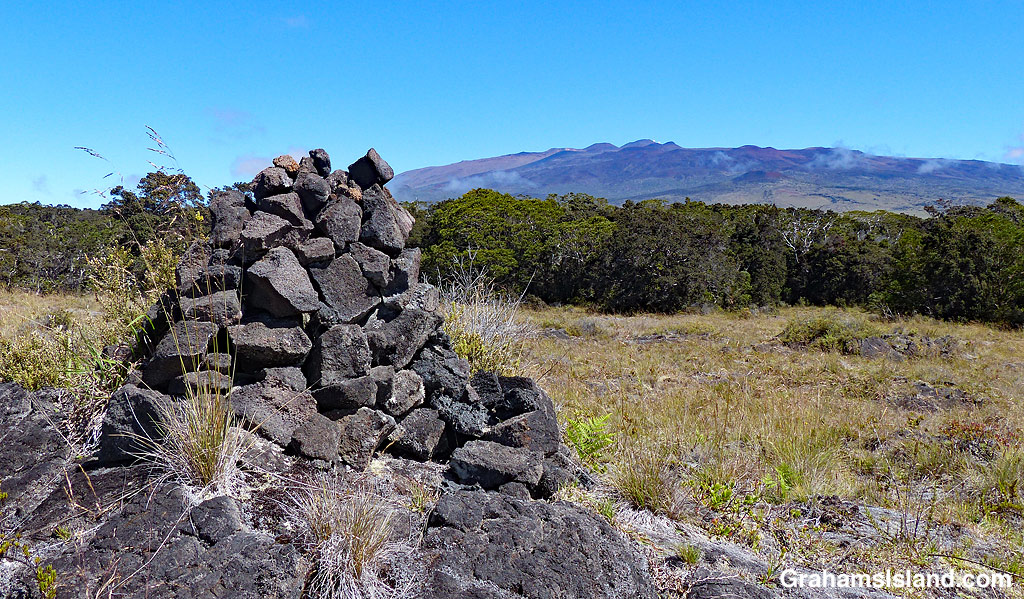
This cairn is one of many that mark the path of the Pu’u O’o Trail, off Saddle Road. At various spots, the trail offers good views of Mauna Kea such as this one.
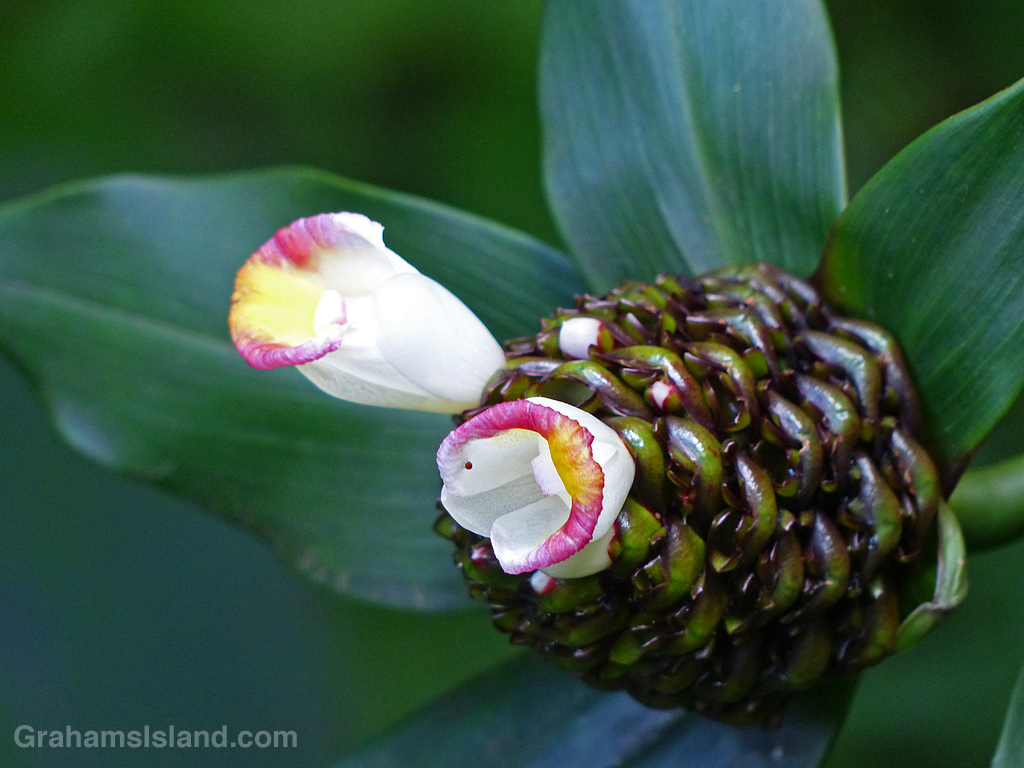
Costus lucanusianus is a native of tropical Africa. It’s also known as spiral ginger or African spiral flag. It’s related to true gingers and the ‘spiral’ in the name comes from the arrangement of the leaves on the stems.
This one was at Hawaii Tropical Botanical Garden. For more information about Hawaii Tropical Botanical Garden, go to htbg.com.