
Padina japonica is a kind of seaweed which is found in tide pools. I love it’s creamy curled shape.


Padina japonica is a kind of seaweed which is found in tide pools. I love it’s creamy curled shape.
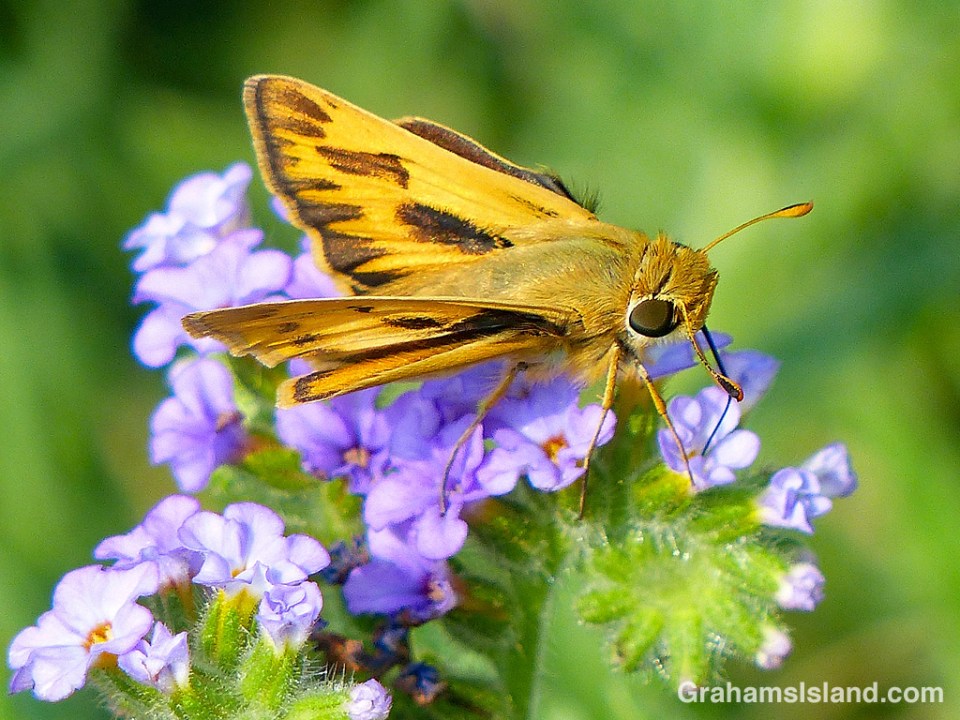
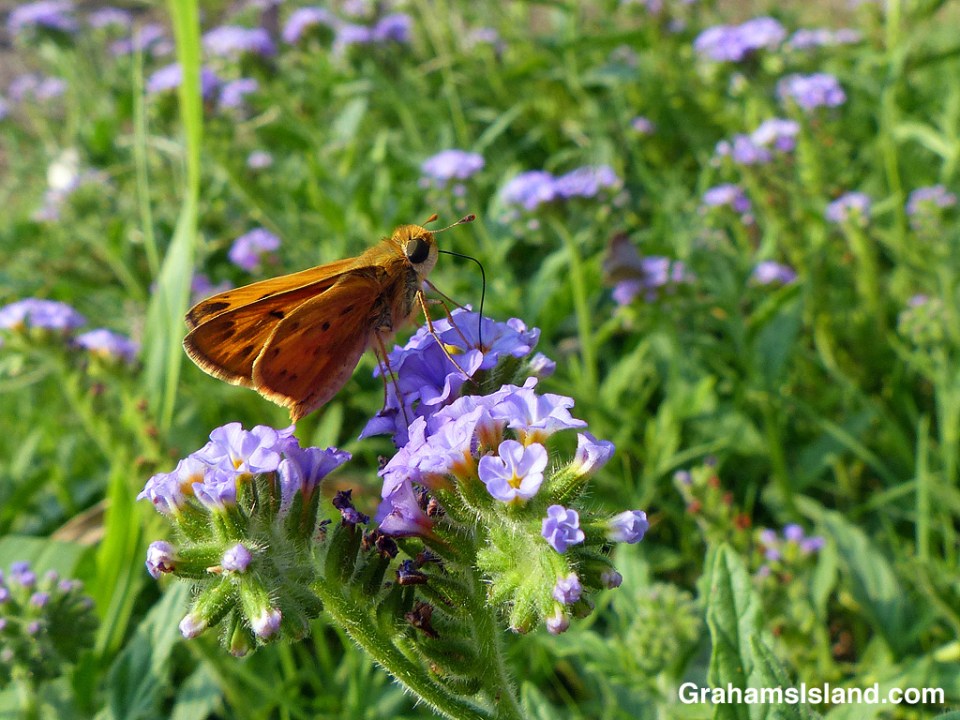
A fiery skipper butterfly stops to feed on blue heliotrope (Heliotropium amplexicaule) flowers.

The sun peeks above a heavy cloud layer, as seen from the slopes of Mauna Loa.

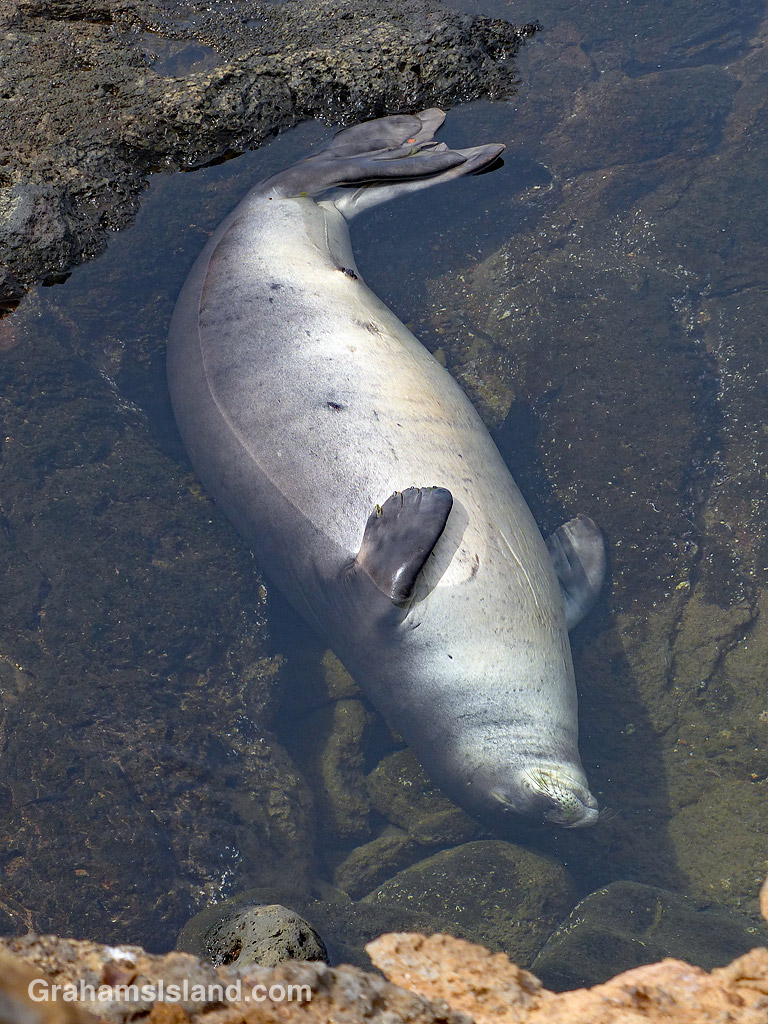 Monk seals are endangered and only a handful regularly live in the waters around the Big Island. The seal in these photos is one of these and I’m lucky enough to see him on a regular if not always frequent basis. When I do see him, it’s not unusual for him to be submerged in a tide pool as he was on this day.
Sometimes, when there’s been rain, the tide pool will be brown with runoff and all I see is this body with its head submerged. When I first saw this, I wondered if the seal had drowned, but since a monk seal can hold it’s breath for 20 minutes or more I know that’s not what’s going on.
What I like on this occasion, was the little fish (seen above) swimming around the seal’s head and through his whiskers. I like to think it was wondering what the heck this giant lump was that had suddenly taken up most of the space in its pool.
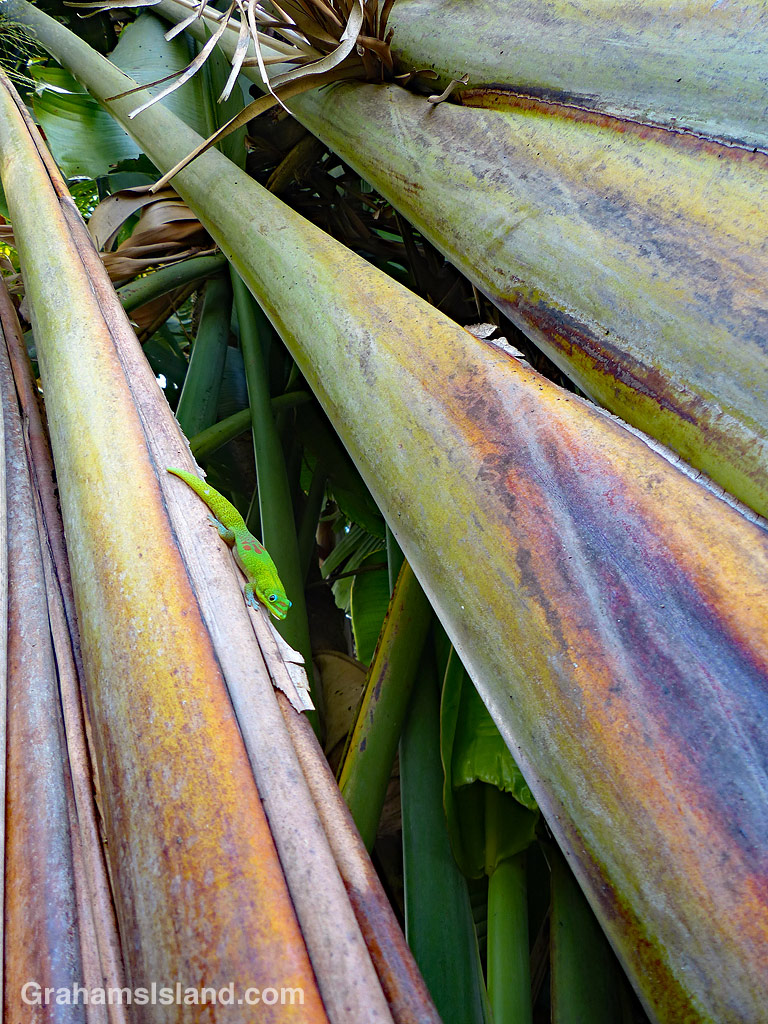
A gold dust day gecko scoots down the stem of a traveler’s palm.
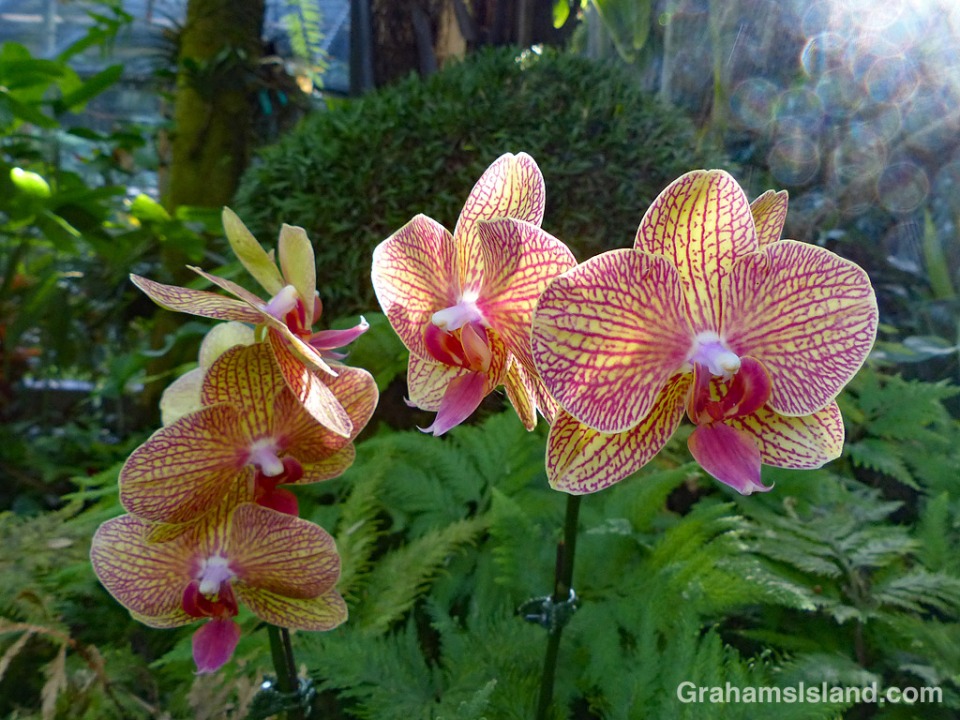
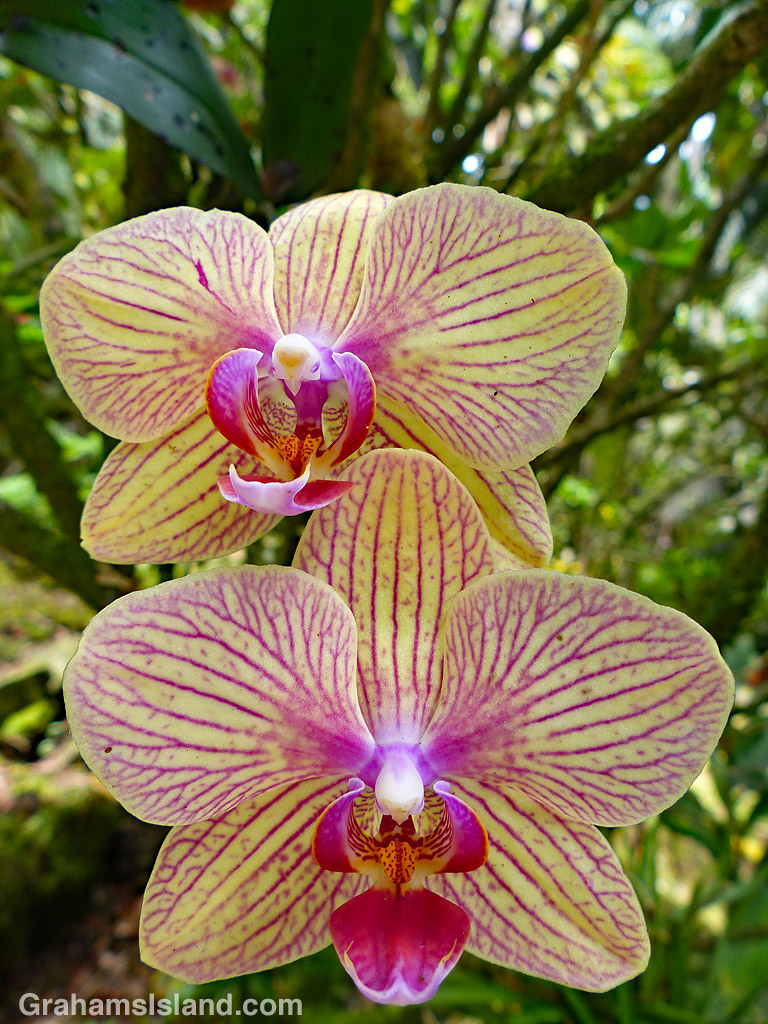 Phalaenopsis orchids are also known as moth orchids because the flower shape resembles a moth in flight. They’re very popular with growers because they’re relatively easy to care for and bloom for a long time. This popularity has also resulted in growers producing numerous hybrids of this orchid.
These blooms were at Hawaii Tropical Botanical Garden, near Hilo. For more information about Hawaii Tropical Botanical Garden, go to htbg.com.
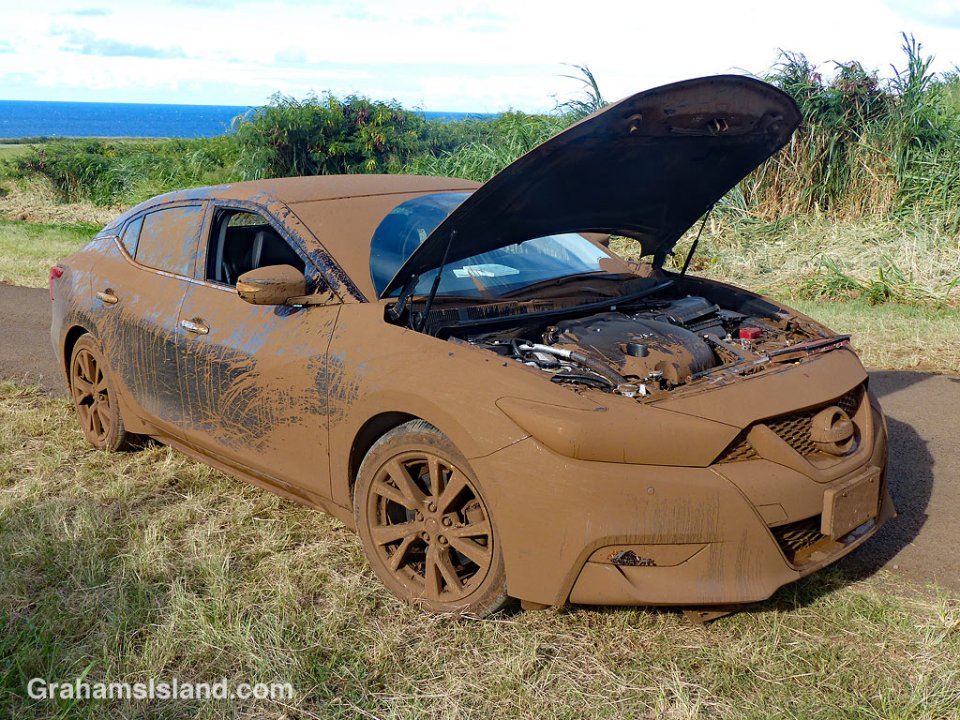
This week’s Sunday Stills challenge theme is ‘On the road’ (more responses here), and I thought of this image.
One of my regular walks is a loop around Upolu Airport, at the northern tip of the Big Island. It’s a dirt road and rough in places, but excellent for walking, especially along the coast. There’s a spot where this loop reaches the coast where visitors, en route to Mo’okini Heiau and King Kamehameha’s Birthplace, pause to view the coast and get their bearings.
On this day, I ran into two older men in the car in the photo and they asked me about driving to the heiaus. I said it was possible (I’ve seen a Smart Car out there before), but there were two things to watch out for. The first was clearance. As you can see, their car didn’t have a lot of that and the dirt road is studded with rocks, some of them capable of disemboweling a vehicle. The second thing I mentioned was that the road could have significant mud puddles. I hadn’t been down that way in a while and so didn’t know the state of the large puddles that form when there’s rain. But I said they could drive down past the house and they’d see the first one. I cautioned that if there’s mud I wouldn’t recommend them driving through it. A Jeep would be OK, but not that car. The mud can be quite deep, which is bad enough for a low-clearance car, but that mud can also conceal those disemboweling rocks.
The two men thanked me for the information and drove off. I carried on with my walk.
About 45 minutes later I neared the parking lot and saw their car pulled over on the side of the road. My first thought was that the car looked as if it had been coated with chocolate. The brown layer across the front, top, and back, was perfectly smooth. The sides were more splattered, but it was clear that an impressive amount of mud had somehow been made to coat most of the car.
I had a momentary panic. Had I somehow forgotten to mention the rough road and the mud? Had I said, ‘Don’t worry about the conditions. Just go for it.’ One of the men I’d seen earlier was talking on a phone next to another car. The other was standing besides the muddied car. I walked up to him and before I could say a word he said, “Do you know what the four most satisfying words in the English language are?” I looked blank. “I told you so,” he said. I told him that wasn’t what I was thinking and that was true. I was more curious about what the heck had happened.
He said they’d come to the first mud puddle and his friend, who was driving, said the thing to do was to go through at speed. He’d urged caution, but they zoomed into the mud, disappeared from view, and emerged in a different color car. Oh, and then the car died. They got it going again and somehow coaxed it back to the paved road near where I found them. Quite how they managed this, I don’t know. It meant driving back through the mud and then easing along for another mile to the paved road. They did this very slowly. Once they reached this road, they sped up and the car promptly died again.
I looked into the engine compartment and it was as liberally coated with mud as the exterior. They’d removed the air filter because that was full of mud. Chances were that several other significant engine cavities were similarly choked.
I waited with them until a tow truck arrived and then left. I never learned how bad the car was damaged or how they explained it away. I didn’t really want to know. Instead, I preferred to remember the image of that chocolate-coated car and my image of the magnificent ride that made it that way.
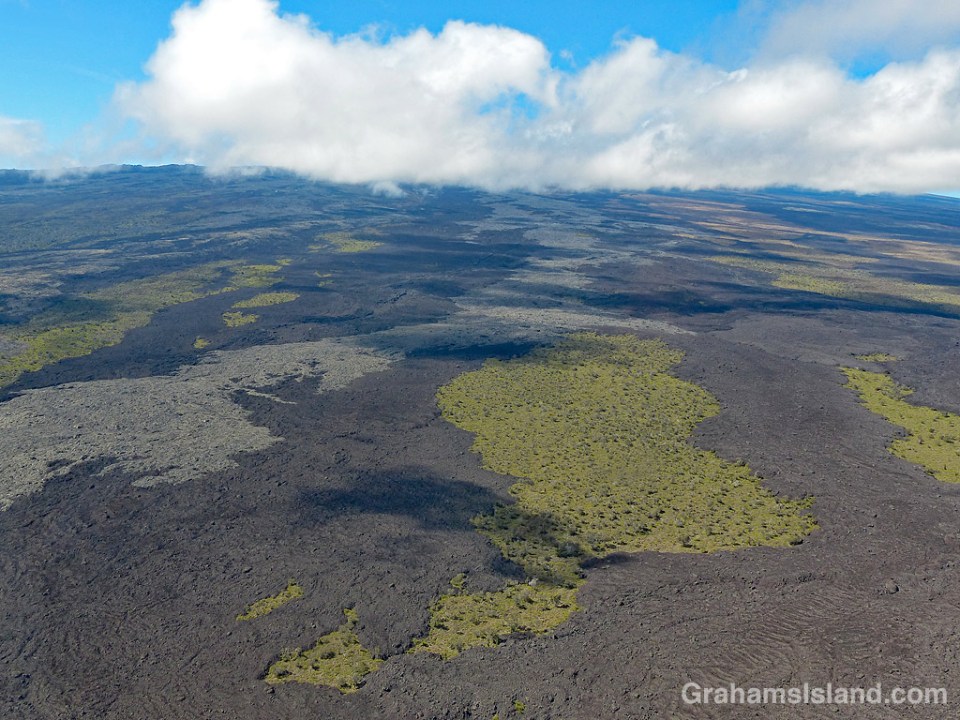
These lava flows, on the northeast slopes of Mauna Loa, show some of the colors lava takes. Together with the untouched islands of vegetation and cloud shadows, I think they make an interesting patterned landscape.

