
I happened to glance out of a window in time to see this green anole leap onto the trunk of a mango tree and scamper upwards. They’re fast movers, so it was only a glimpse, but I did see it had something in its mouth. ‘It’s caught a meal,’ I thought. Time to grab the camera and see what’s going on.
When I got to the tree, I found this scene. That wasn’t lunch the anole had grasped in its jaws, it was his mate. He had dragged her across the grass and up the tree in a most unceremonial manner. But this bite on the neck and the rough handling is the norm for anoles.
In fact, this episode seemed less fraught than others I’ve seen. Once on the tree there was no thrashing around or falling off as I’ve seen before. The two were twisted and locked as one, and their tails arched together. A few minutes later they were done. The female wandered off looking bemused while the male remained in the same spot, lord of all he surveyed.
Posted in response to this week’s WordPress Photo Challenge ‘Twisted.’



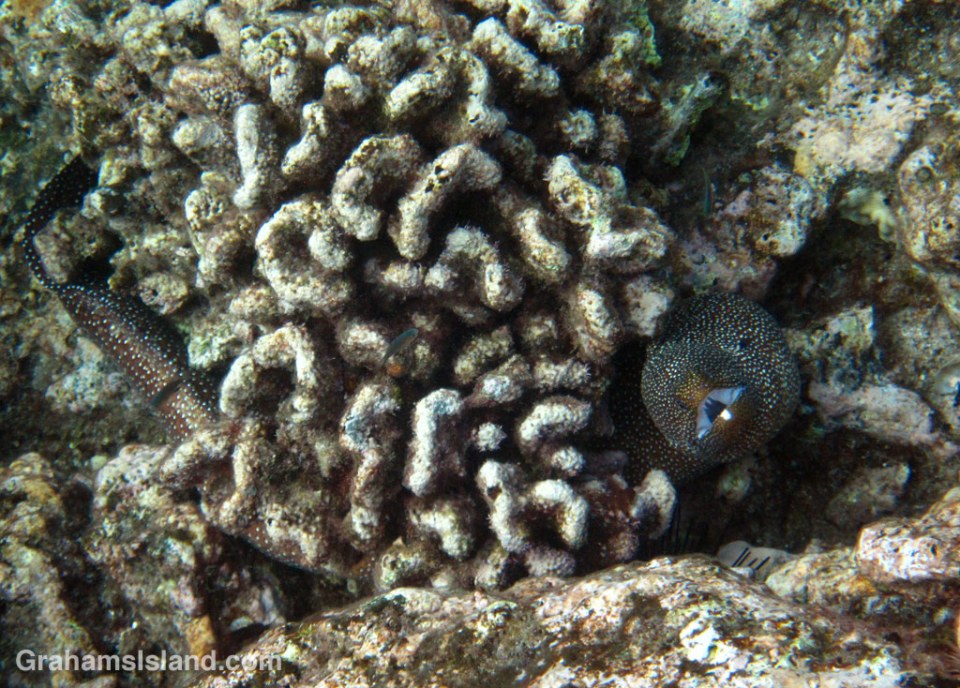
 I’m always amazed and entertained by the ability of eels to disappear into a seemingly solid lump of coral or rock and then, a few moments later, emerge from some unexpected location. I mean, how do they know they’re going to find a way out? There must not be too many claustrophobic eels in the world.
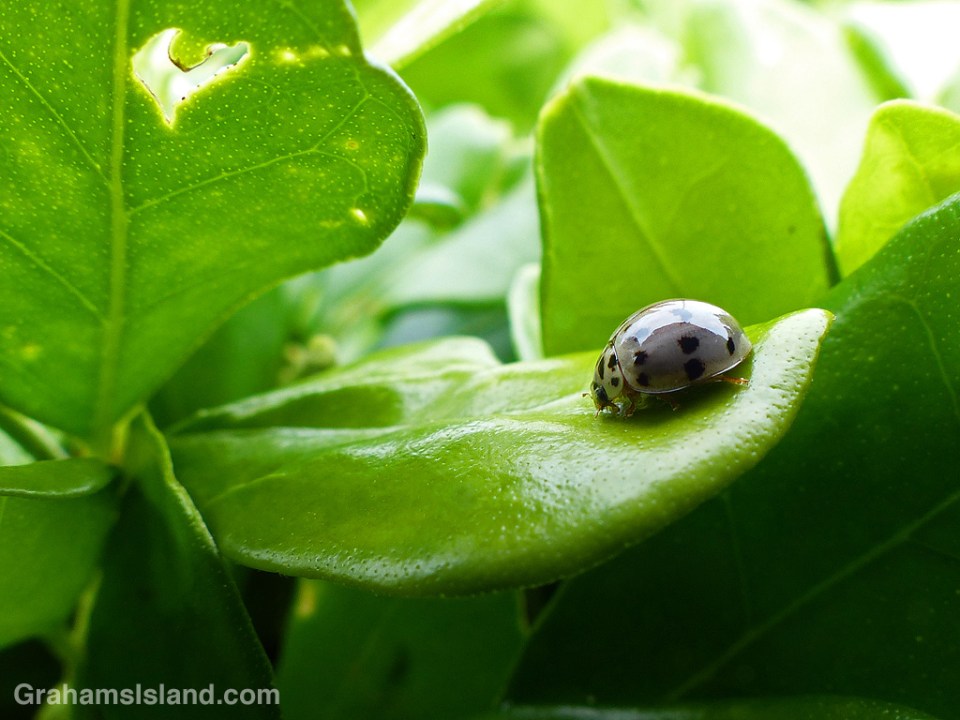
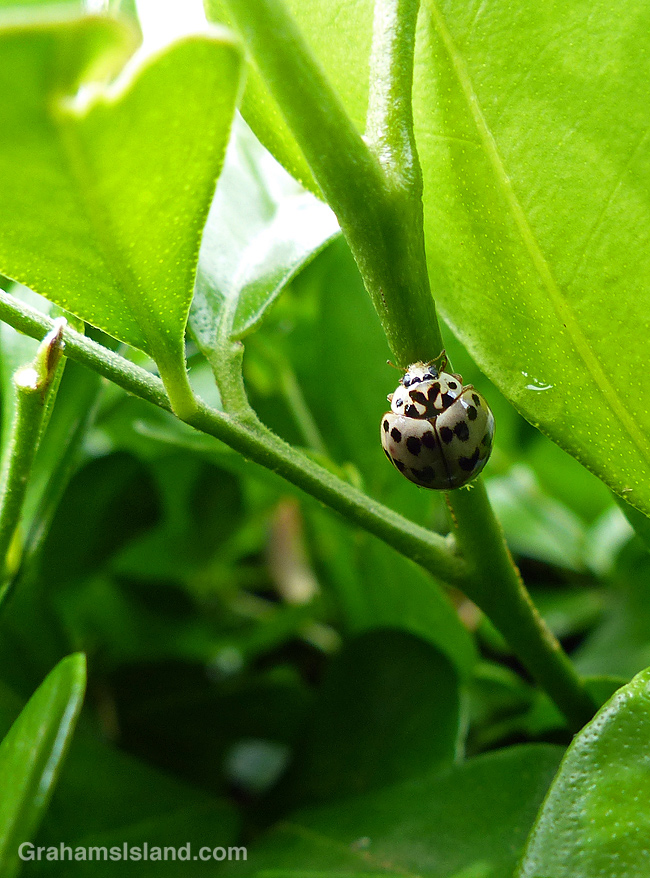 Photographing lady beetles is always a bit hit and miss. When I see them, they tend to be scurrying along the edge of a leaf or up the stalk of a plant. They whip around a corner of the leaf and zip down the underside, then back onto the stalk. I’m always reminded of bumper cars, though I’ve never seen two lady beetles bang into each other in that way. That’s a photo I’d love to get.


