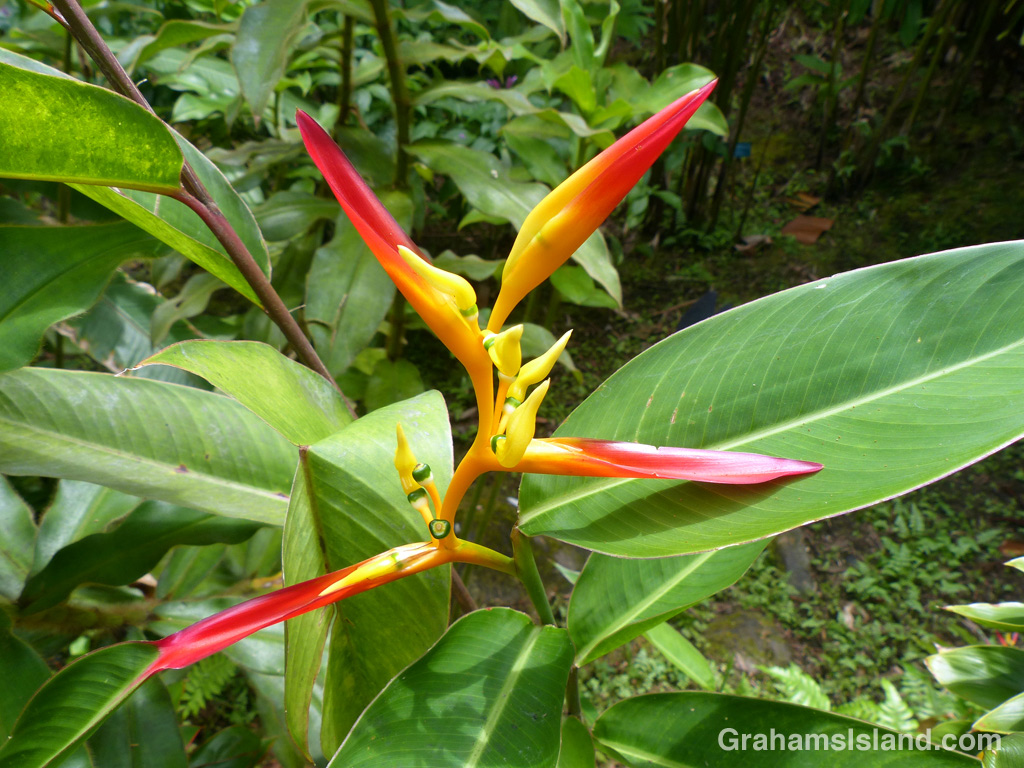
I saw this striking Heliconia Schumaniana at Hawaii Tropical Botanical Garden, north of Hilo.
For more information about Hawaii Tropical Botanical Garden, go to htbg.com.

I saw this striking Heliconia Schumaniana at Hawaii Tropical Botanical Garden, north of Hilo.
For more information about Hawaii Tropical Botanical Garden, go to htbg.com.

The rolling pastures of the Kohala hills as seen from the mountain road in the late afternoon.
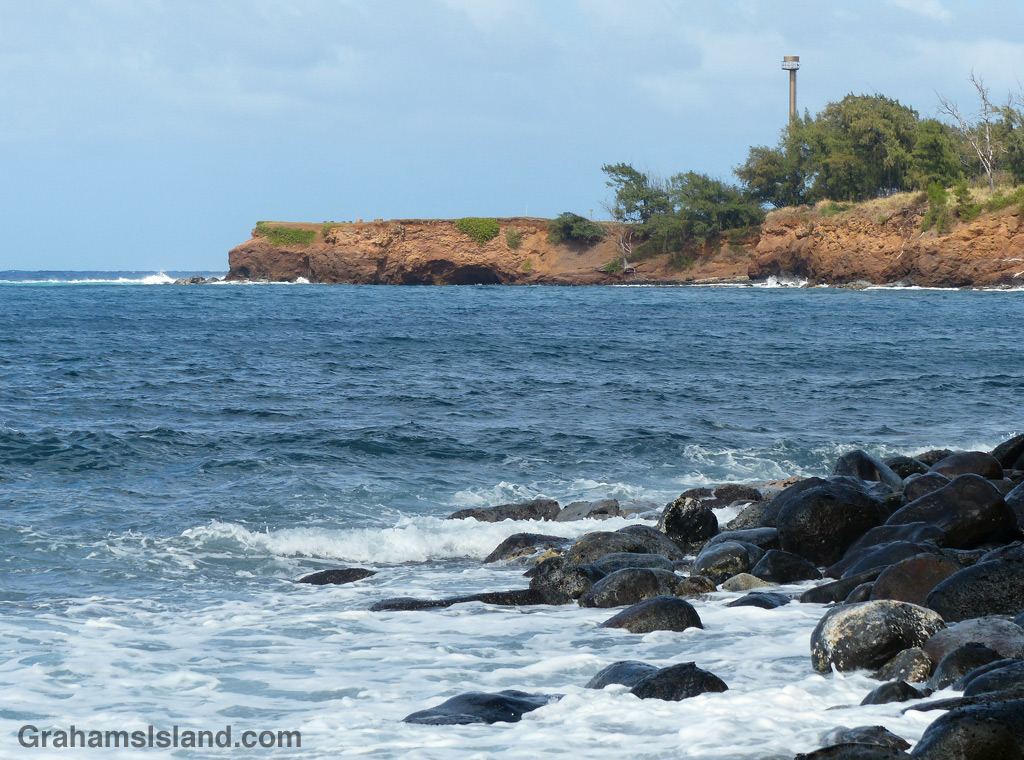
The Kauhola Point lighthouse is a modern affair, an automated light atop a tall metal pole. It replaced the previous, more traditional-looking lighthouse that was demolished in 2009. In the photo, the old base of that lighthouse can still be seen as several small block shapes toward the tip of the point. Therein lies the story.
The old lighthouse was demolished because erosion was eating away at the land near the base. The passing of time will surely remove even these remnants in the next few years.
In a way, this situation is a microcosm of the whole state. Many people think of the state of Hawaii as the eight main islands at the southeast end of the chain, but it encompasses hundreds of islands stretching away to the northwest for more than 1,500 miles. These small islands were formed over the same hotspot that fuels Kilauea Volcano today, but as the tectonic plate beneath the islands moved northwest, so the islands stopped growing and began to shrink under the forces of erosion. Over time, they too will disappear one by one.

Last May, I posted here about the hike from the end of Highway 270 down to the beach at Pololū and up on to the ridge on the other side. There, a bench awaits the hardy hiker, as well as wonderful views along the coast and into Honokane Nui Valley. I’m happy to report that the bench, which was in bad shape last time I was there, has been replaced by one with a plastic frame. While this might be aesthetically less pleasing, it should last a good deal longer.
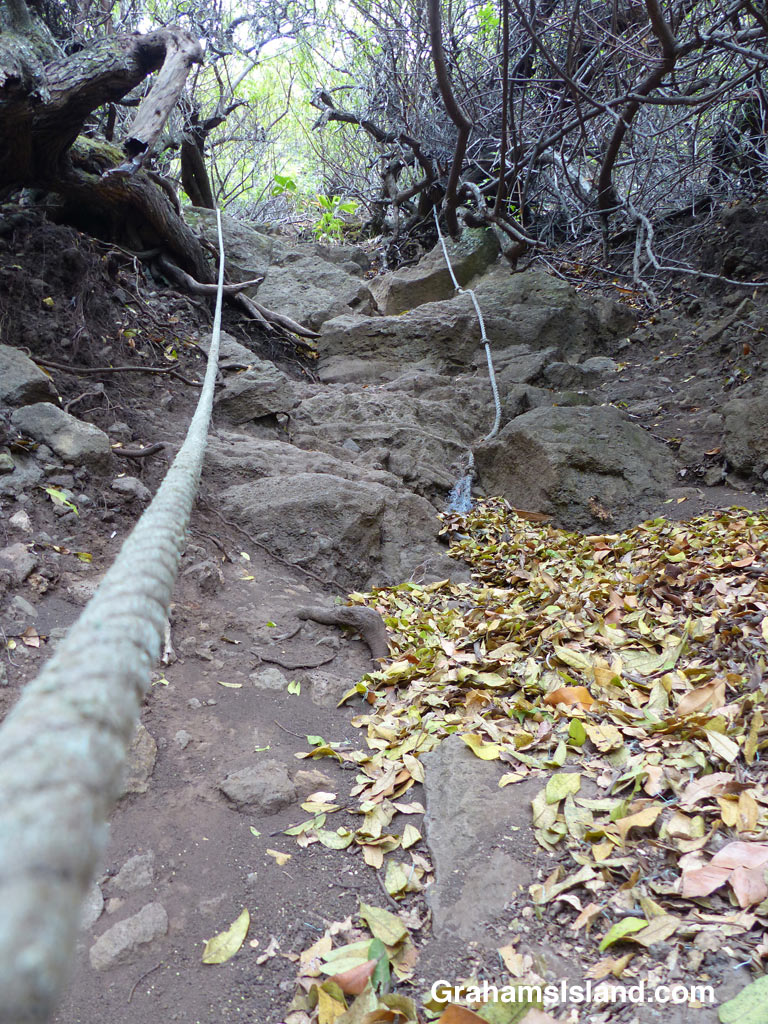
I also mentioned that not far beyond this point, the trail into Honokane Nui Valley got wiped out by a landslide in the earthquake of 2006. Now, instead of switch-backing down to the valley floor, the trail goes straight down. The precipitous drop is made passable by a series of ropes, to hang on to on the way down, and to haul on on the way up. It’s a great workout though not necessarily the safest one around. If a rope gives way, it could be a long and nasty fall. Let the user beware.
The top photo shows what the entry into this section of trail looks like. This part is steep, then it drops off out of view. The second photo shows a steeper section with two ropes to hang on to.
For more information about the Pololū hike, go to bigislandhikes.com/pololu-valley/.

A day octopus settles on a patch of coral. It will change its coloration from moment to moment depending on whether it wants to blend in or, perhaps, display an aggressive warning.
Spotting an octopus is a matter of chance. It helps if it’s on the move, but the presence of goatfish (in this photo, a manybar goatfish), is sometimes a tipoff.

A garden skink fights its way through the jungle. OK, it’s just what passes for a lawn around here, but for the skink it’s heavy going.


The sausage tree (Kigelia Africana), as its botanical name suggests, is an import from Africa. It’s also one of the easiest trees to identify. Long stems hanging from the branches bear first the flowers, then the large, sausage-shaped fruits. These fruits can be as much as 2 feet long and weigh up to 15 pounds, though usually they’re somewhat smaller. Not the place for a picnic though.
The bottom photo shows stages in the transition from a flower beginning to bloom, to shedding petals, to fruit forming.


The last of this week’s posts in response to the WordPress photo challenge on the theme of ‘transient.’
High winds resulted in a bump in the amount of debris in the water. This branch could be on its way back to shore or headed for somewhere across the Pacific, depending on how wind and currents move it.

