
A seven-spotted lady beetle climbs a plant gone to seed, presumably looking for something to eat. I never see them catch anything, only see them busily investigating.

A seven-spotted lady beetle climbs a plant gone to seed, presumably looking for something to eat. I never see them catch anything, only see them busily investigating.
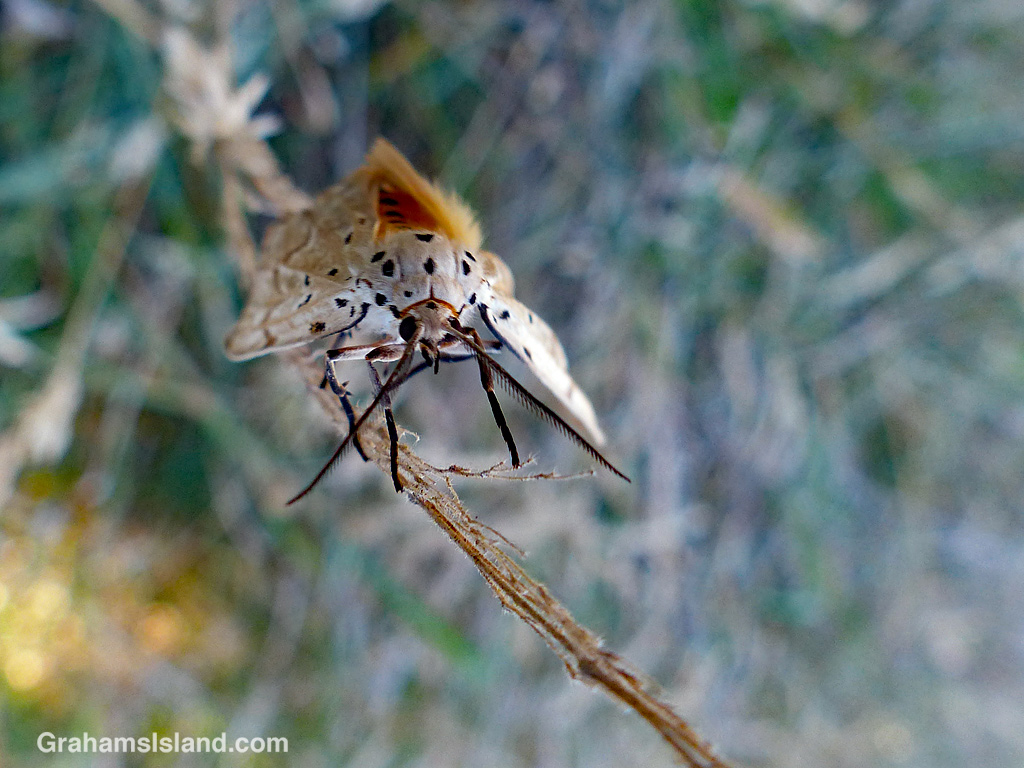
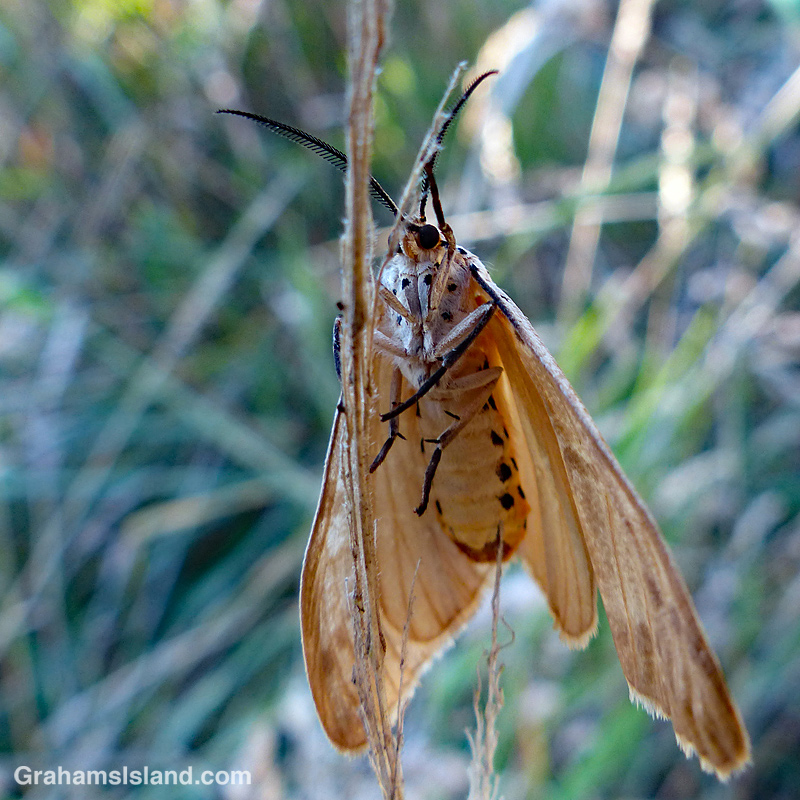
A couple of different views of a fireweed control moth (Secusio extensa). This one wasn’t doing much of anything to control fireweed!

This week’s Sunday Stills challenge theme is ‘Home.’ See more offerings here.
Here in Hawaii, home is where the termites are, and if nothing is done about them, they will literally eat you out of house and home. So every few years most houses get tented and filled with poisonous gas. Best not to be home at the time. The house stays tented overnight to give the gas time to seep into all the nooks and crannies. Next day, the tent is removed and the homeowner is supposedly guaranteed a few more years of termite-free living.
This was a neighbor’s house, and every time I see a tented house like this, I think of circuses.

I’m still surprised by what I see in some of the most inhospitable-looking areas on the island. I saw this grasshopper out in the lava fields on the Puna Coast Trail.
This week’s Friendly Friday challenge theme is ‘The Color Pink.’ See more responses here.
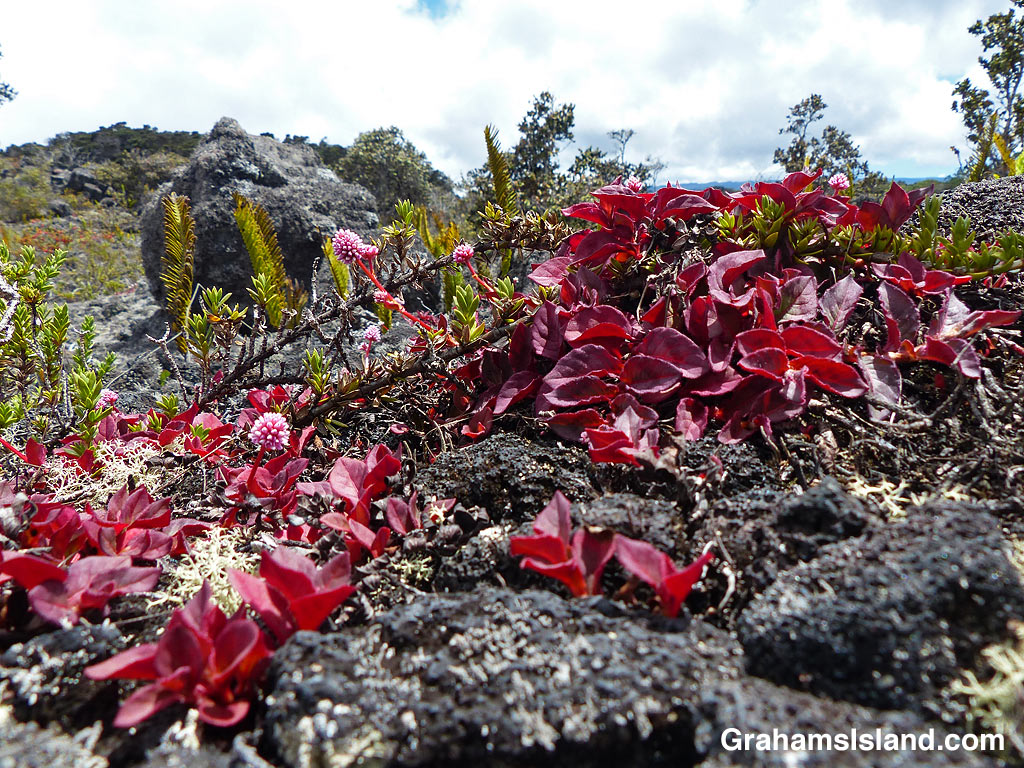
Pinkhead smartweed (Polygonum capitatum or Persicaria capitata) is a groundcover that hails from western China and the Himalayas. It’s variously known as pinkhead knotweed, pink knotweed, Japanese knotweed, pink-headed persicaria, or pink bubble persicaria. I use pinkhead smartweed for the very good reason that I like the name. It sounds like the name of someone pretentious, but slightly seedy, from the alleged upper crust of society.
In this bounty of names, a couple of elements stand out. One is ‘pink,’ the other is ‘weed.’ This is a very pink plant and, in Hawaii and elsewhere, an invasive weed. Drive eastbound over Saddle Road (officially Hawaii Route 200, the Daniel K. Inouye Highway) and, once you cross the saddle and begin your descent, this plant will become obvious very quickly. It lines the road on both sides for several miles with very little in the way of other plants competing for that space. This is because pinkhead smartweed will grow in poor ground and lava fields fit that description.
This is also a stretch of highway that, relatively recently, was converted from a narrow, winding road, that rental car companies routinely forbid their clients from driving on, to a wide, smooth thoroughfare, the only place on the island where you can legally go 60 mph, and where you can expect to receive a ticket if you go 80 mph like everybody else.
Redoing the road left verges of rock and gravel and very little else. Pinkhead smartweed was quick to move in and colonize this unpromising territory so that now the descent toward Hilo begins with pleasing pink borders.
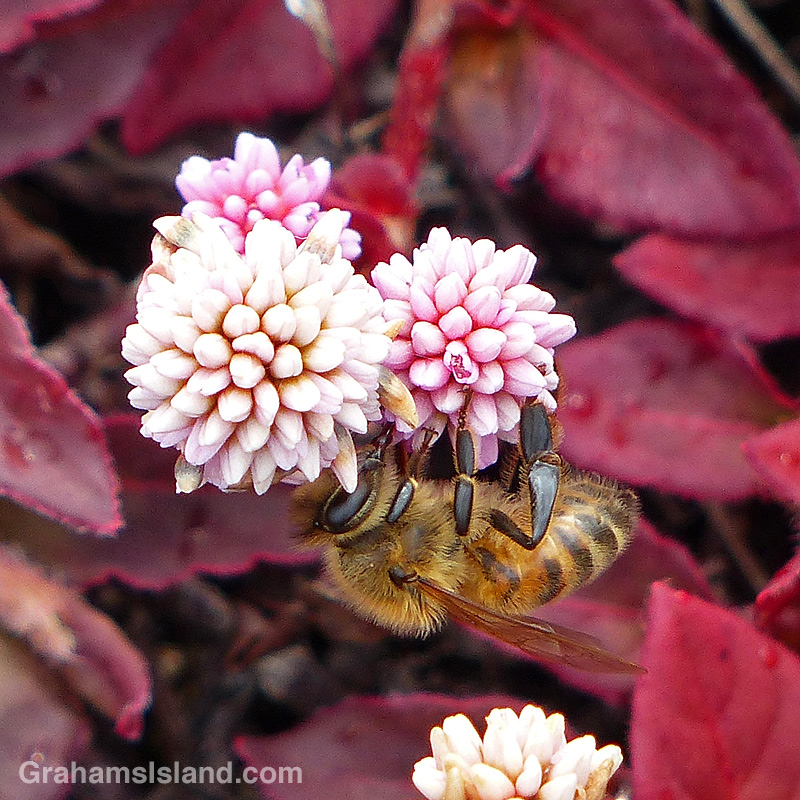
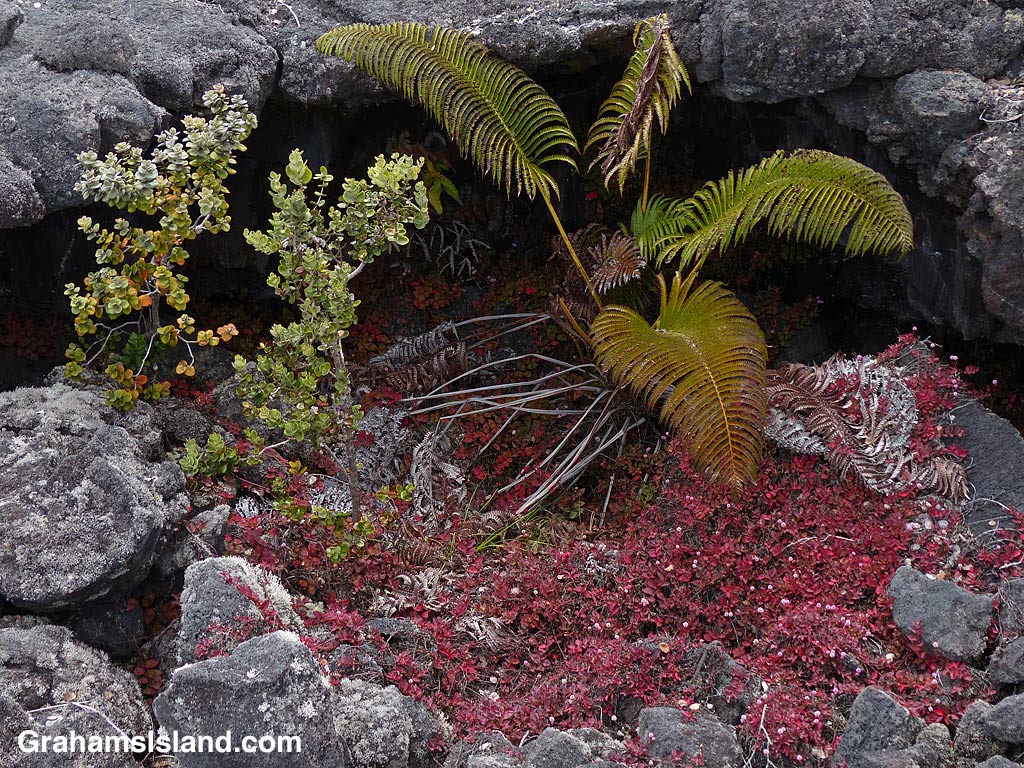
The top photo shows the rugged kind of ground pinkhead smartweed can grow in. To the right, bees appreciate the flowers of this plant growing at an elevation over 5,000 feet. Below, the collapse of a lava tube has left a shady hole where pinkhead smartweed, an endemic amaumau fern, and an ohia tree have established a good foothold.

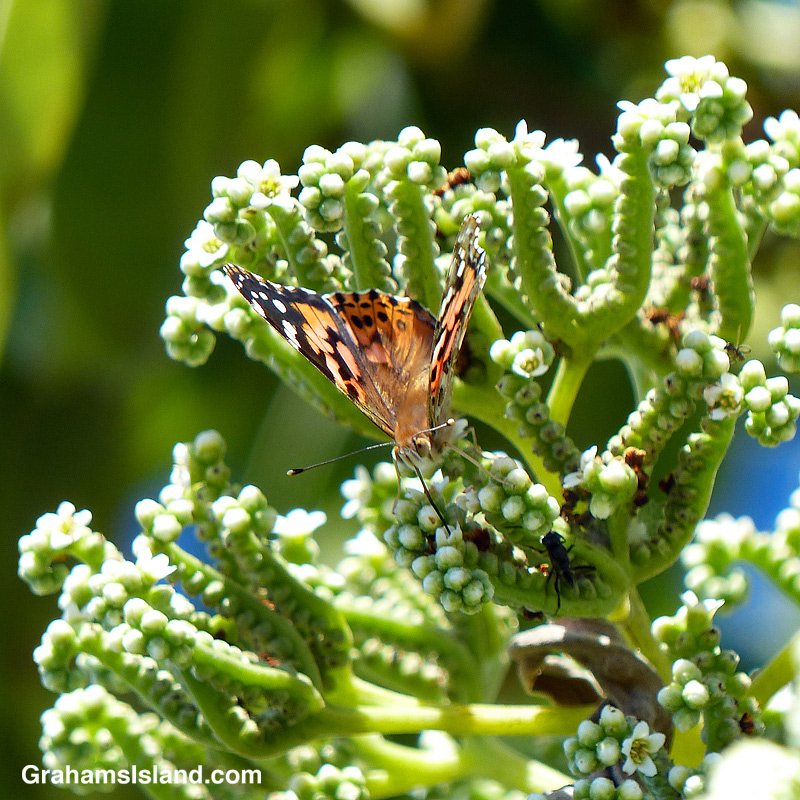
A painted lady butterfly feeds on the small blooms of a tree heliotrope. This particular tree heliotrope stand by itself on a small beach on the North Kohala coast. It’s a popular destination for a variety of butterflies and bugs.

A bee on a passion flower as another bee approaches. What I like about this photo is the one bee’s leg up in the air. A friendly wave? Get away from me? Only the bees know for sure.
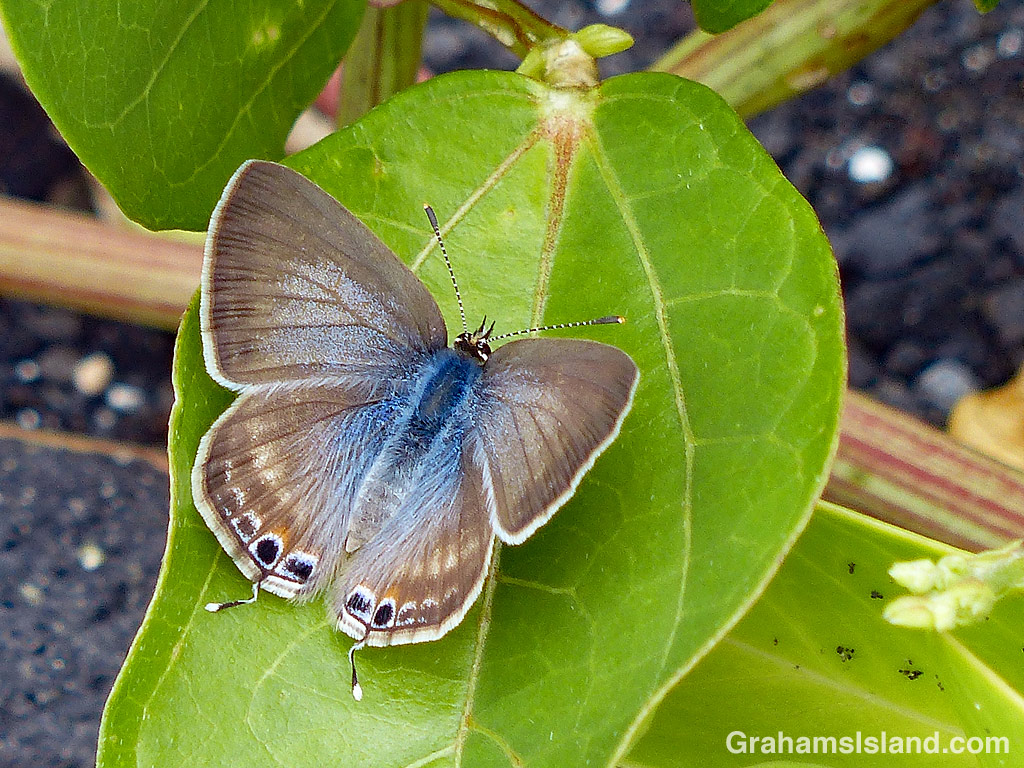
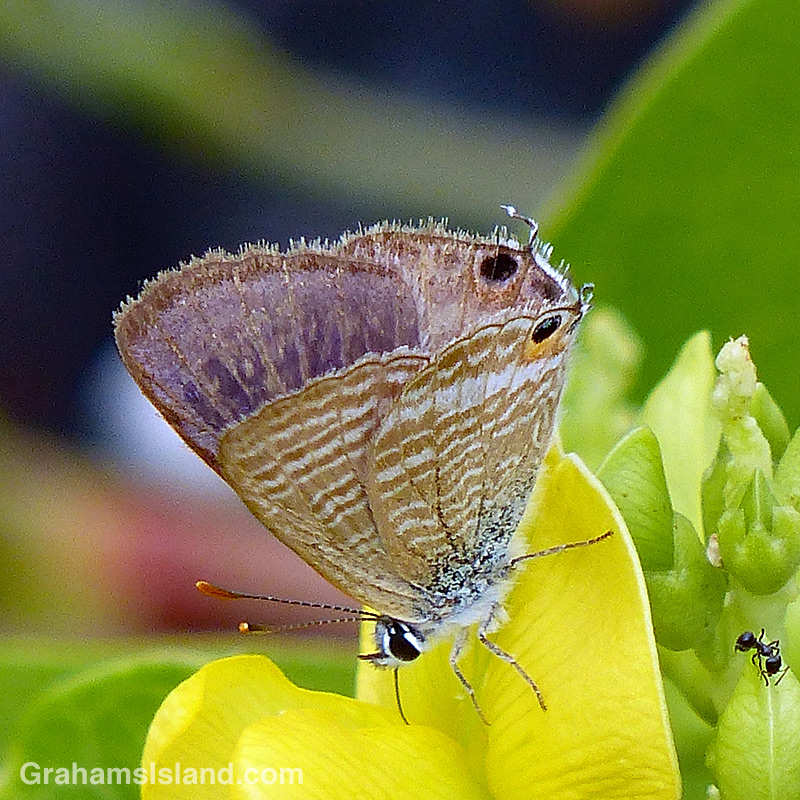
The long-tailed blue butterfly (Lampides boeticus) is believed to have been accidentally introduced to Hawaii in the 1880s. Accidental or not, it wasn’t a good thing. Its common name, bean butterfly, gives a clue as to the problem. It damages a wide variety of bean and pea plants, both domestic and commercial.
These photos were taken on the Puna Coast Trail in Hawaii Volcanoes National Park. The plant is Vigna marina or beach pea, an indigenous plant that grows well in the harsh, exposed coastal area that the trail passes through.
 Graham's Island