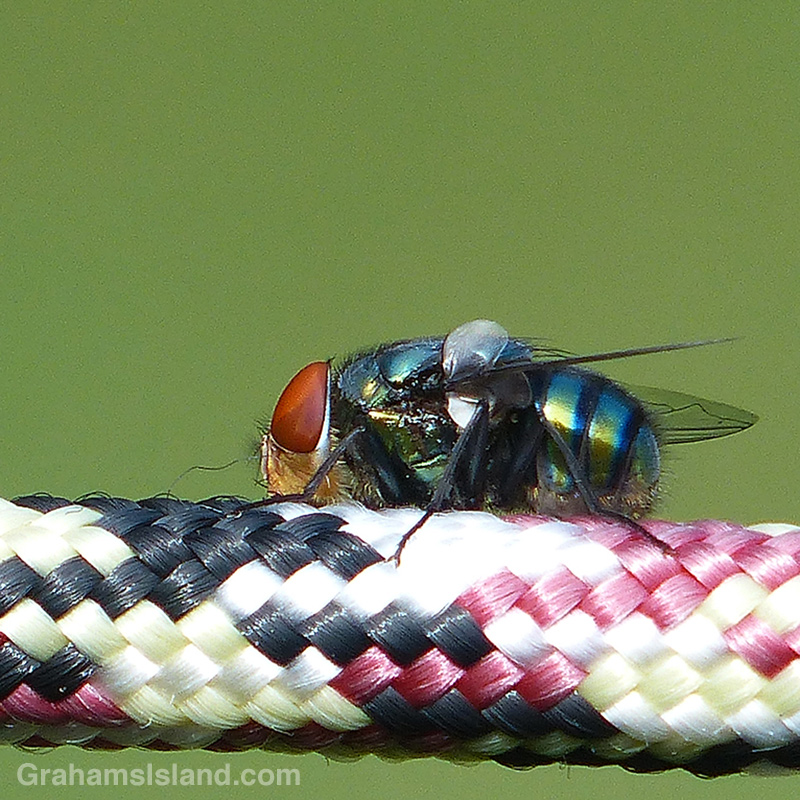
I saw this green bottle fly perched on top of a washing line. Every time I pointed my camera its way it would rotate to the other side of the line. We played this game for a little while before I was able to snap a couple of shots with the fly still in the picture. This was one of them.
Posted in response to Becky’s April Squares challenge theme of ‘Top.’ See more responses here.
This fiery skipper butterfly was feeding on top of a cluster of tree heliotrope flowers, some open, some about to bloom. It was one of a host of insects buzzing around the tree.
Posted in response to Becky’s April Squares challenge theme of ‘Top.’ See more responses here.
The latest Bushboy’s Last on the Card photo challenge is for April 3, 2020. (See challenge rules and more responses here.)
I saw this seven-spotted ladybug on my usual walk along the coast (which is still permitted here). Its bright red elytra jumped out against the largely green background. I’m not sure what the weed in seed was that it was clambering over.
The top photo was the last on my card for that day. The other two were taken earlier in the same encounter and have been cropped and adjusted.
This week’s Friendly Friday challenge theme is ‘Yellow.’ See more responses here.
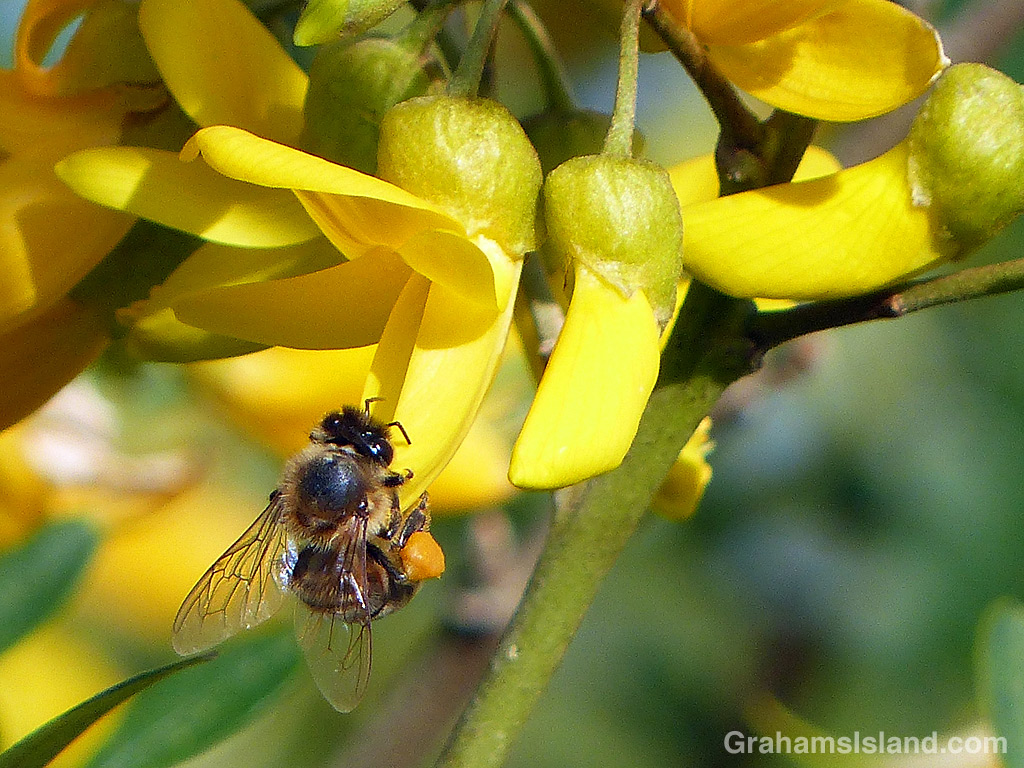
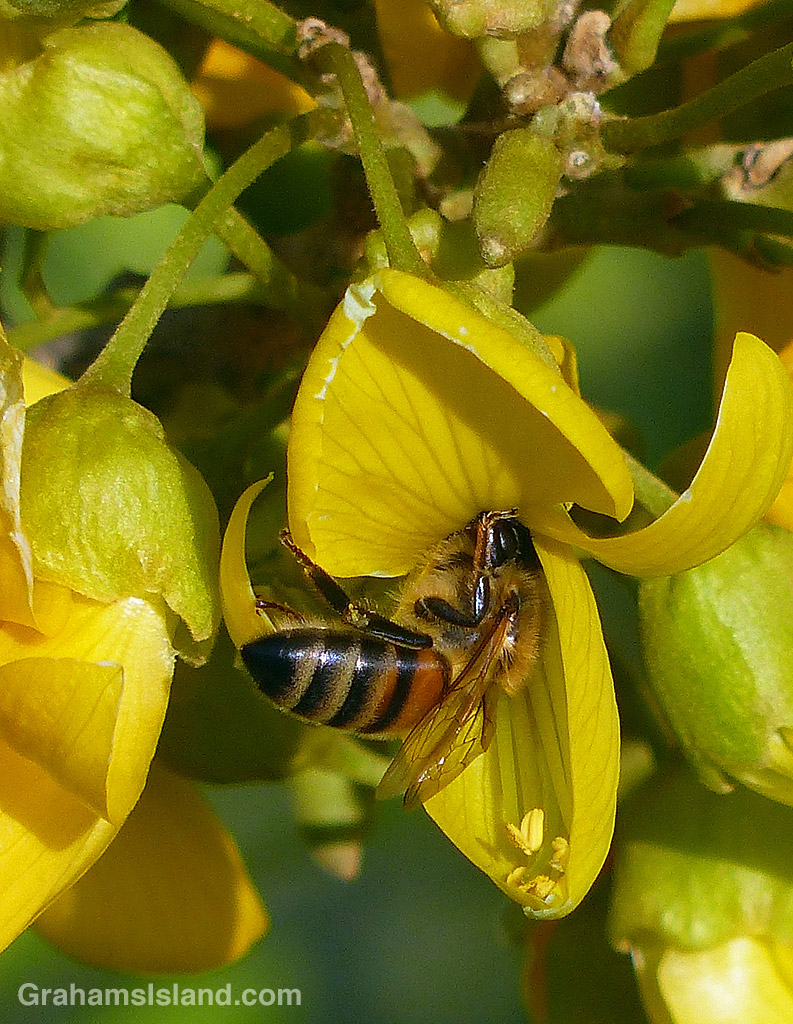
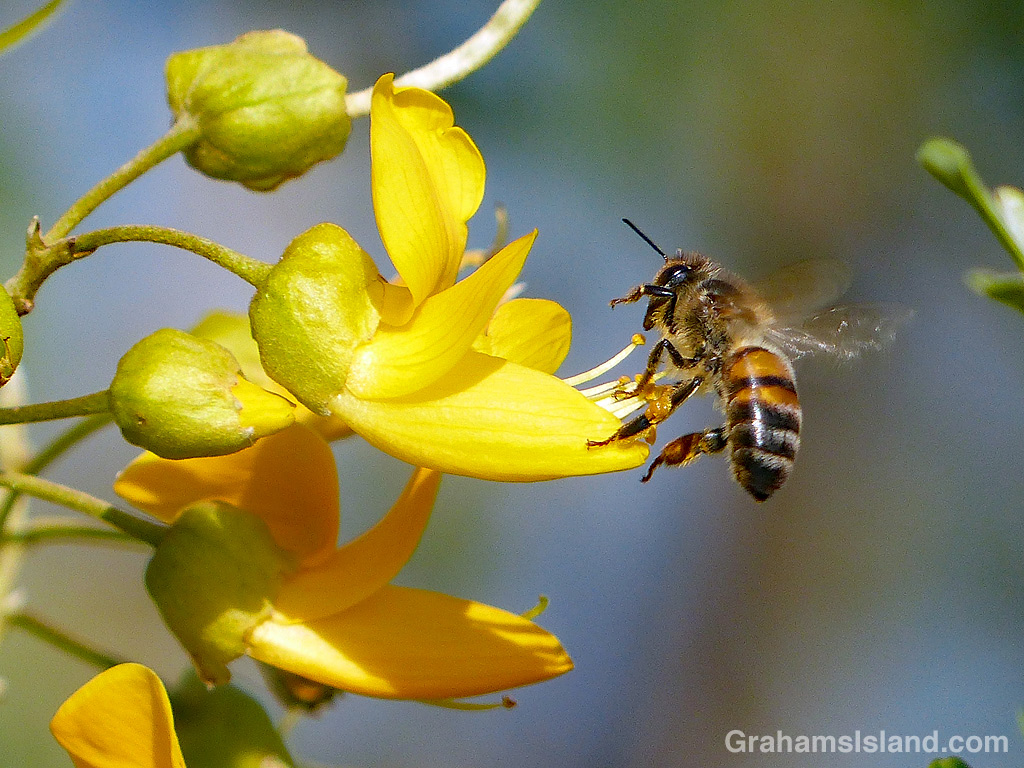
This is a good excuse to post more photos of bees foraging on bright yellow māmane flowers. Māmane (Sophora chrysophylla) is endemic to Hawaii, but while its flowers attract many insects, the seeds are highly toxic. The endangered palila, one of the last endemic Hawaiian honeycreepers, is a bird that feeds mostly on the māmane’s immature seed pods without any ill effect.
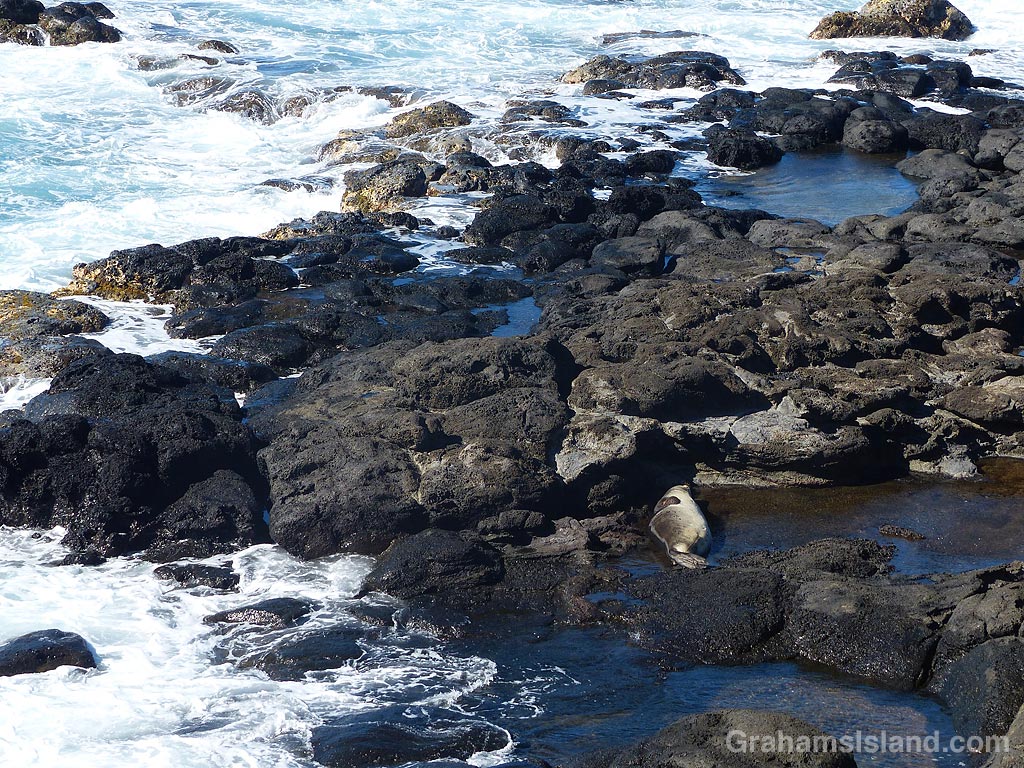
I call this spot Fran Point since that’s the name on the cross in this photo. Here, a rainbow arches over the coast and the surf rolling in.An endangered Hawaiian monk seal rests in a tide pool along the rocky shoreline.
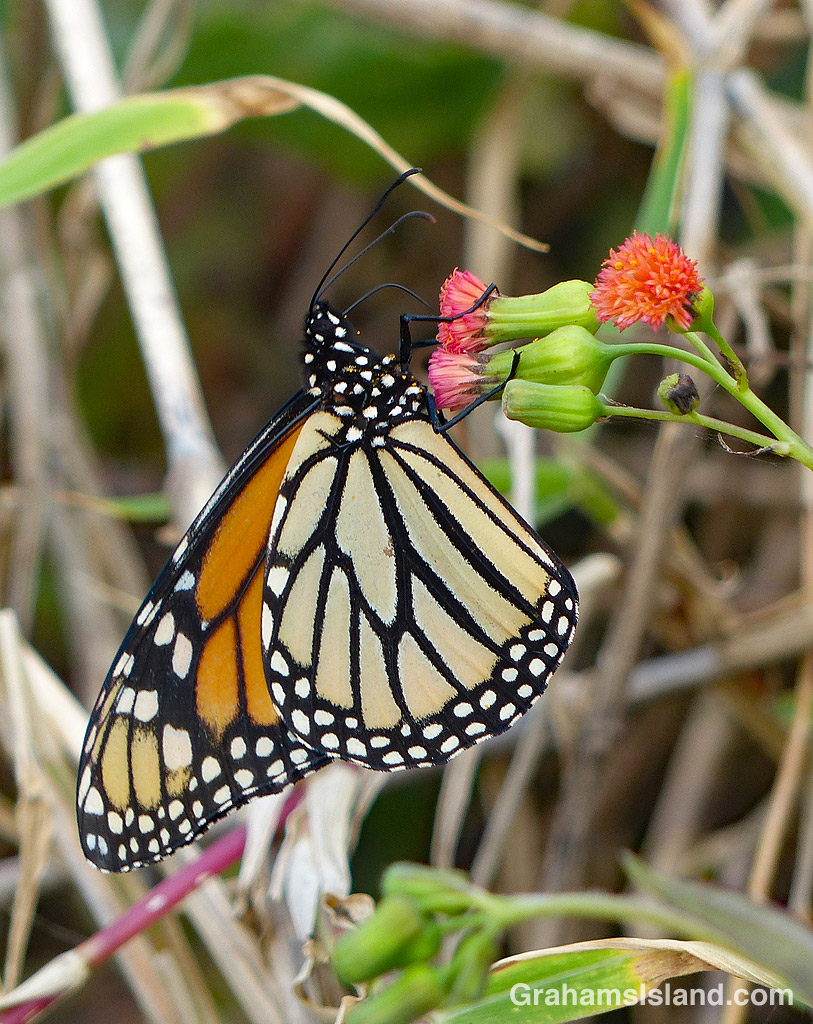
A monarch butterfly on a tasselflower.
This week’s Sunday Stills challenge theme is ‘Favorite Place.’ See more offerings here.
I could think of several places on the Big Island that would fall into the category of favorite place. Hawaii Tropical Botanical Garden, Hawaii Volcanoes National Park, Palila Forest Discovery Trail, the ocean – all these are places I return to. But the coast at Upolu is where I go for exercise and to enjoy the ever-changing scene there.
This stretch of coast features scenic high cliffs interspersed with lower areas where tide pools nestle among the rocks. Often, there’s a great view of Maui across the ʻAlenuihāhā Channel. In those waters I look for humpback whales, turtles, monk seals, and once, even a passing shark. Up in the air I might see anything from plovers to noddys to great frigatebirds. On land, there’s an assortment of birds, bugs and butterflies to be seen, as well as horses, cattle, and the occasional wild pig.
Sometimes, it’s hot and dry, but usually there’s a decent breeze, occasionally strong enough to make me lean into it while blown dirt sandblasts my legs. Sometimes, I get caught in the rain, but when I do, I’m usually dry again by the time I get back to my truck.
I’ve lived here seven years now and I never tire of going down there and looping around the fenced airstrip, wondering what I’ll see.
A bristle-thighed curlew strides along the edge of the airstrip at Upolu.A humpback whale cruises no more than 50 feet offshore. This was one of a pair that I saw just this past week. I suspect they were a male and female, with the male interested in mating before heading north to Alaska. Not only was this as close as I’ve seen whales, but it was the first time, from land, that I’ve heard a whale do anything other than blowing. In this case, the pursuing whale made a deep, two-toned mooing sound as it went by.
This week’s Friendly Friday challenge theme is ‘Rails.’ See more responses here.
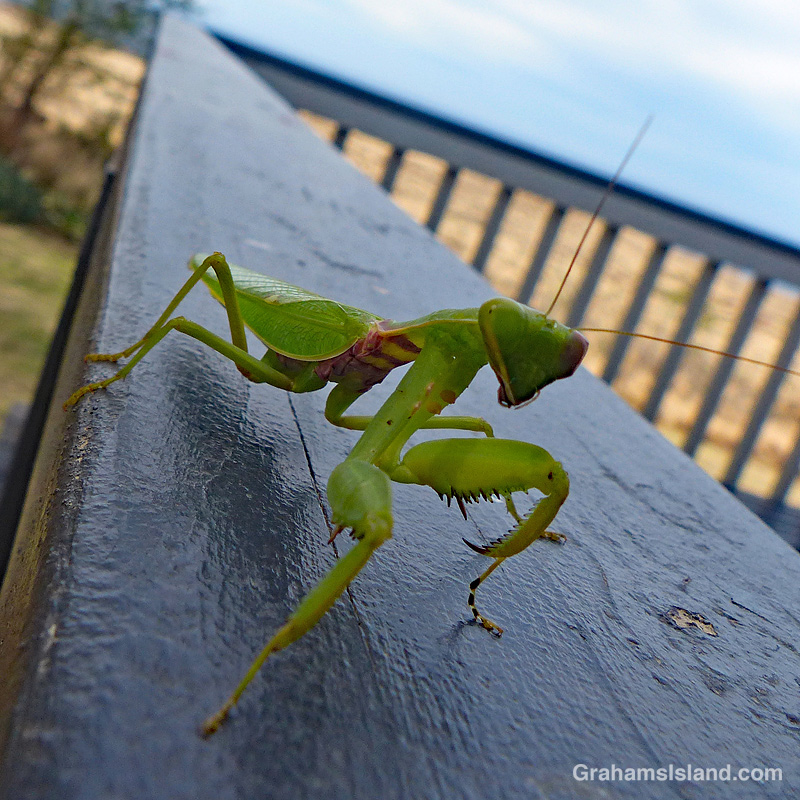
Here’s a praying mantis on a railing. Typically, I line up photos where horizons are horizontal and strong vertical lines are vertical. This photo’s an exception. I think the off-kilter lines complement the off-kilter appearance of the mantis, especially since this mantis had lost an eye and a leg, hence the title of this post.
I usually think of praying mantises as just that, but there are more than 2,000 mantis varieties. Ones that are most often seen in Hawaii include Giant Asian mantis (Hierodula patellifera), Carolina mantis (Stagmomantis carolina), and European mantis (Mantis religiosa).
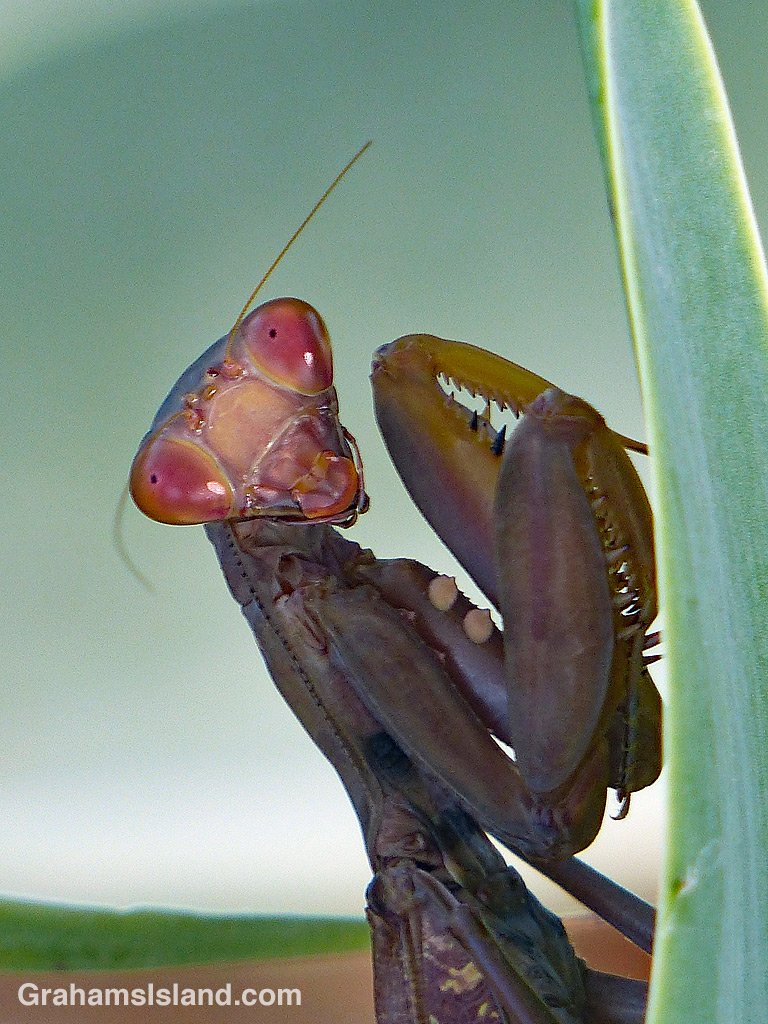
This one is probably a Giant Asian mantis. While I usually see green mantises, they can change color so this reddish one is not that unusual.
Thanks to Hawai’i Insect ID for help with identifying this. For more information about Hawai’i Insect Identification, go to flickr.com/groups/hawaii-insect-id/pool/.







 Graham's Island