Category Archives: Insects

A new kind of exercise program

This dung beetle was clearly getting a workout pushing its ball of dung up and over the grass and other obstacles. It occurred to me that this could be the next big workout craze. Just make yourself a nice big ball of 100% organic, 100% recyclable dung and push it up and over the sofa, around the living room, through the kitchen. Great exercise and environmentally friendly. What do you think?

Posted in response to Becky’s October Squares challenge theme of ‘Kind.’ See more responses here.

Sonoran carpenter bee

Sonoran carpenter bees are big. They’re the kind that, when I see one, I automatically flinch because I don’t want it to bump in to me and have it leave a bruise. Truth is, they’re pretty docile. This one is a female and has a stinger, but will only use it if provoked. Males are brown and somewhat smaller and don’t have a stinger at all.

Posted in response to Becky’s October Squares challenge theme of ‘Kind.’ See more responses here.
A mantis buffet

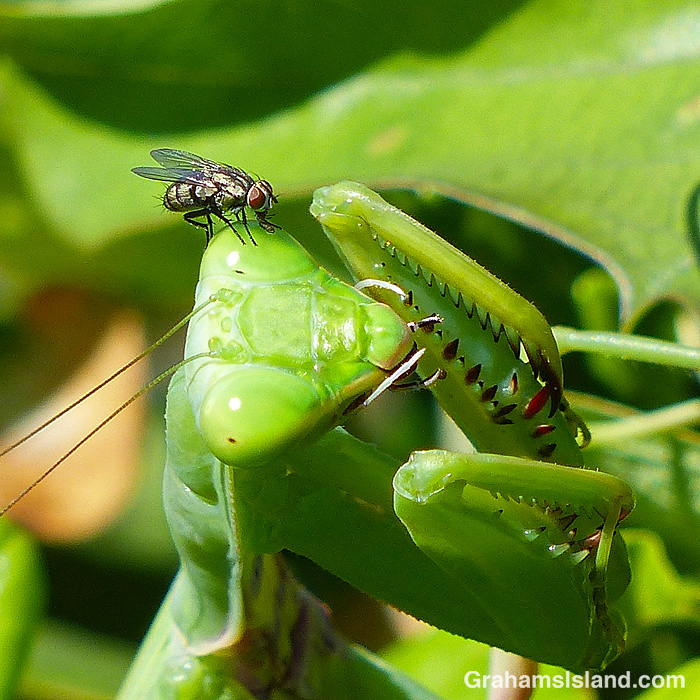
At Upolu Airport, where I go walking a lot, there’s a mock orange hedge with a passion vine running through it. I check this hedge to see what’s happening on it and lately, it’s been overrun by flies. I don’t know why this is, but I wasn’t surprised when I noticed two praying mantises stationed in the hedge. They were having a field day.

The flies would flit around as flies do, but when one settled, a mantis would strike. Their success rate was quite high, but the flies were easy targets. The safest place to be was on one of the mantises, but that wasn’t a long term solution.

The scene remained the same over three or four days, and then, though the flies were still around, the mantises disappeared. I guess that’s understandable. I mean, how many flies do you think you could eat before you’d start looking for something different?

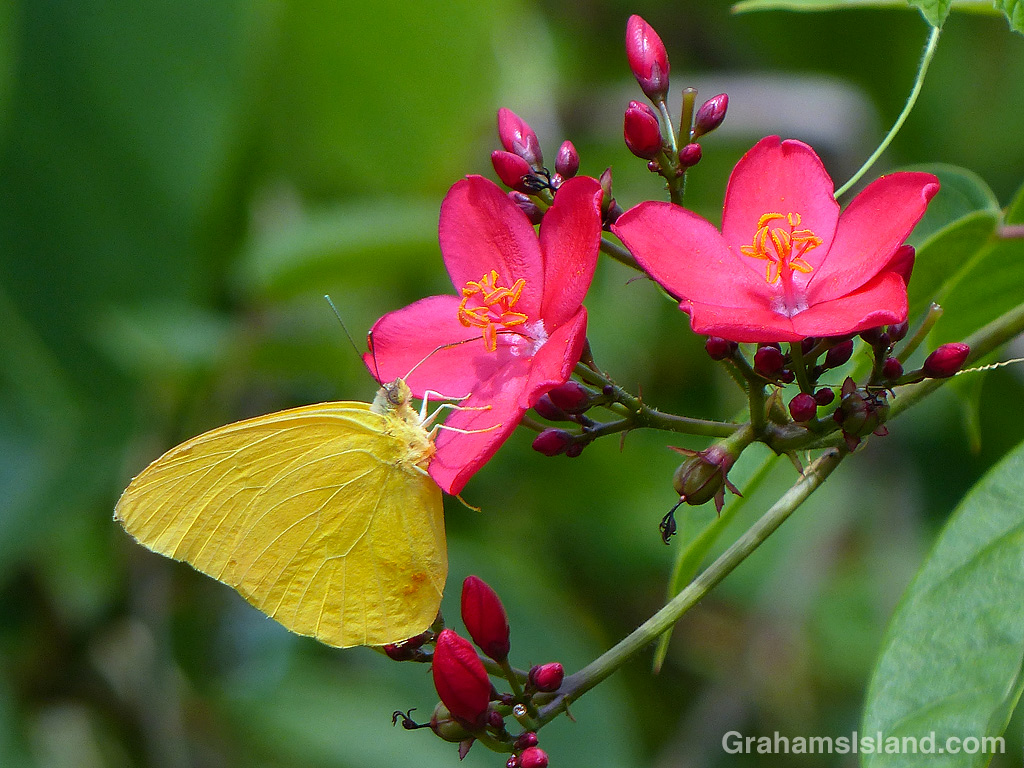
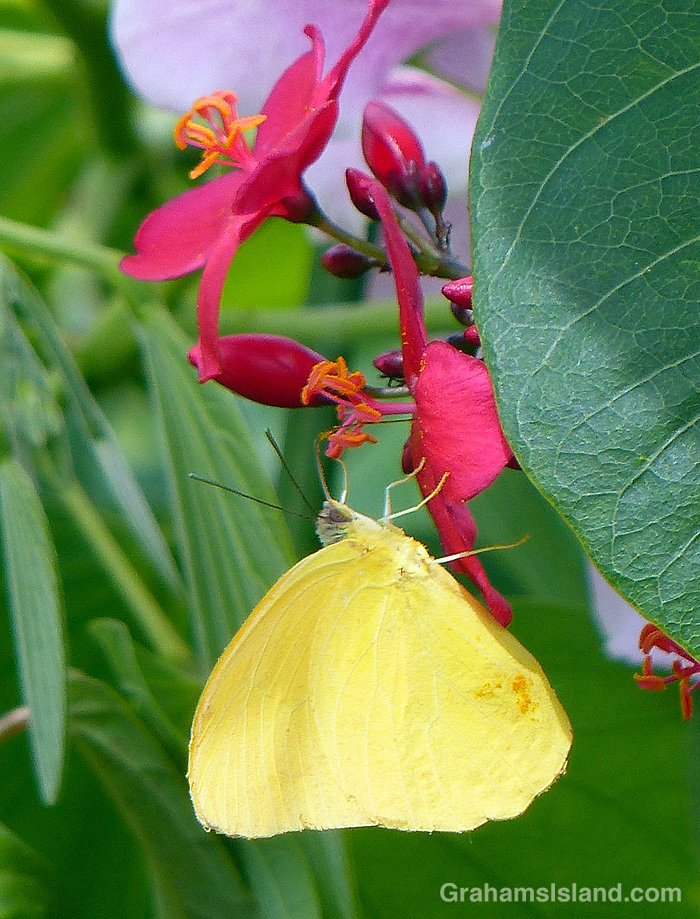
Bees on a mock orange

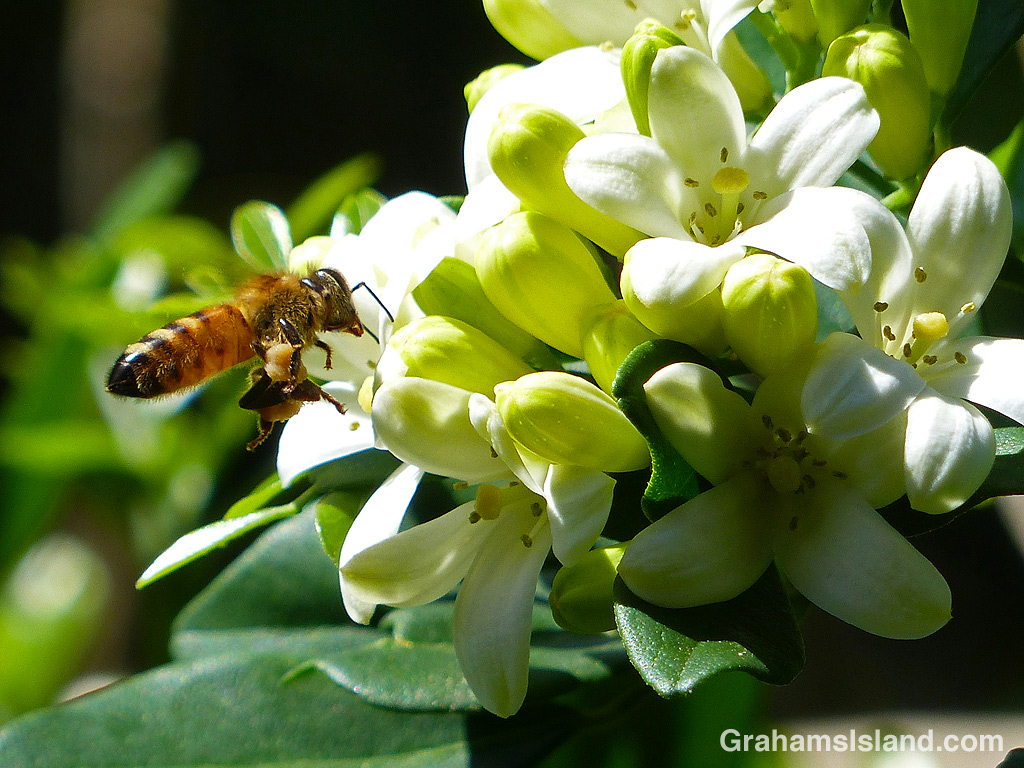
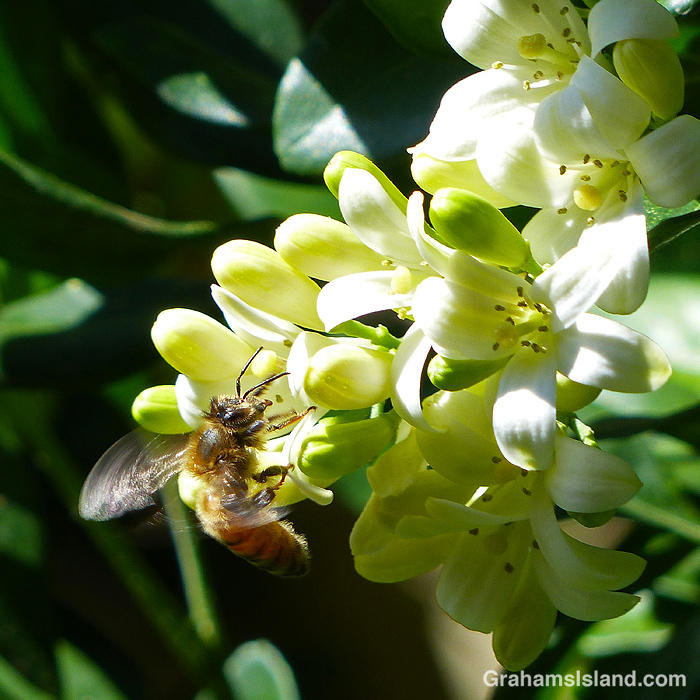
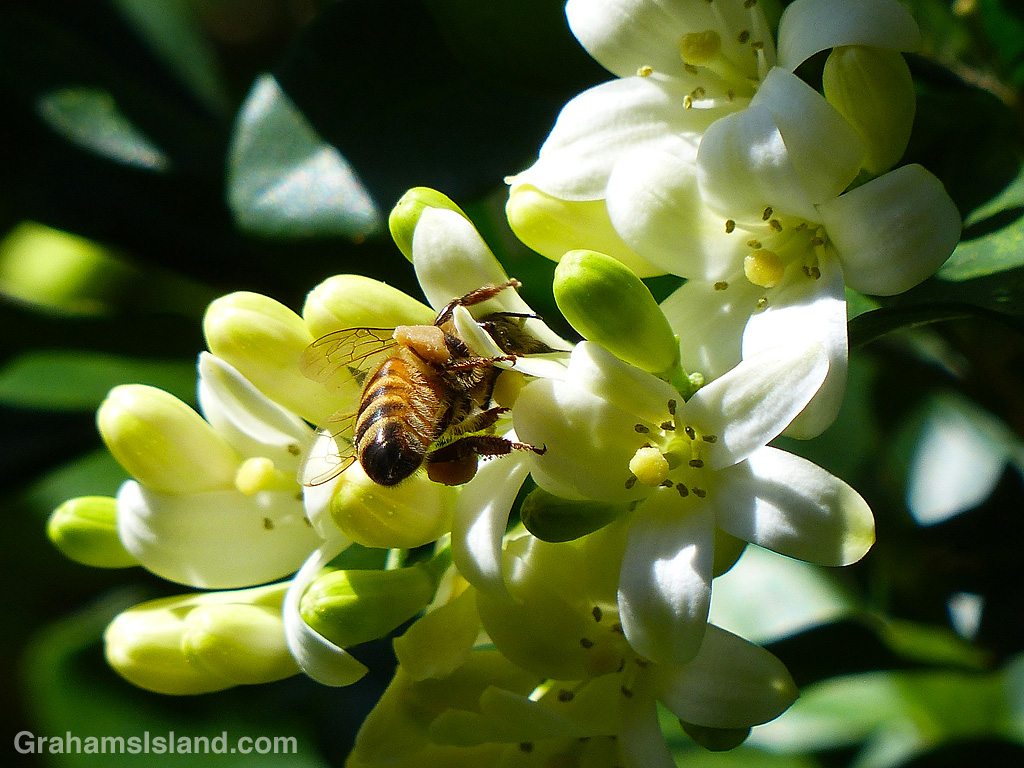
The mock orange next to the house has bloomed again. It does this several times a year, sometimes just parts of it, sometimes all of it. This latest bloom was the whole tree and when that happens the bees come out in force. Step outside, and a low hum fills the air as well as an intense aroma.

I take lots of photos, trying to capture something of interest to me, such as a bee approaching a flower (top), helicoptering in to land (middle), and getting stuck in (bottom). In the bottom photo, I was struck by the flat underside of the bee, not something I’d noticed before.

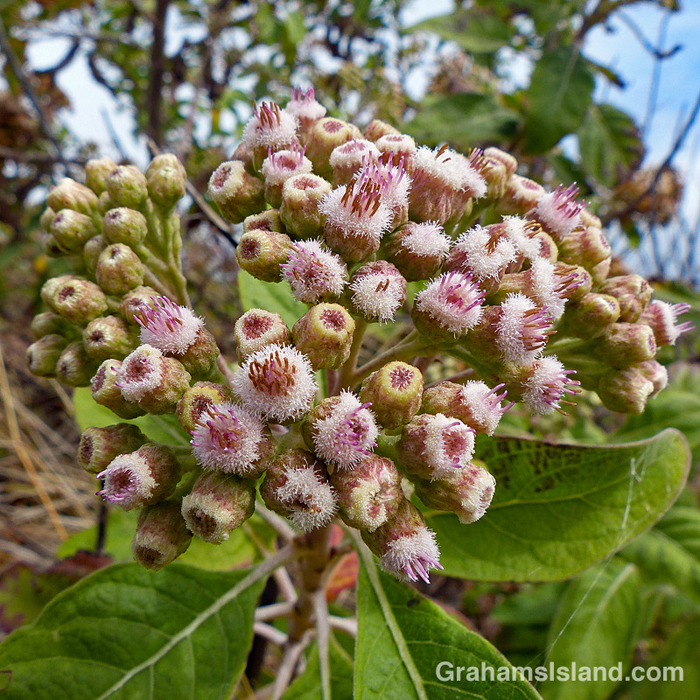
Pluchea carolinensis

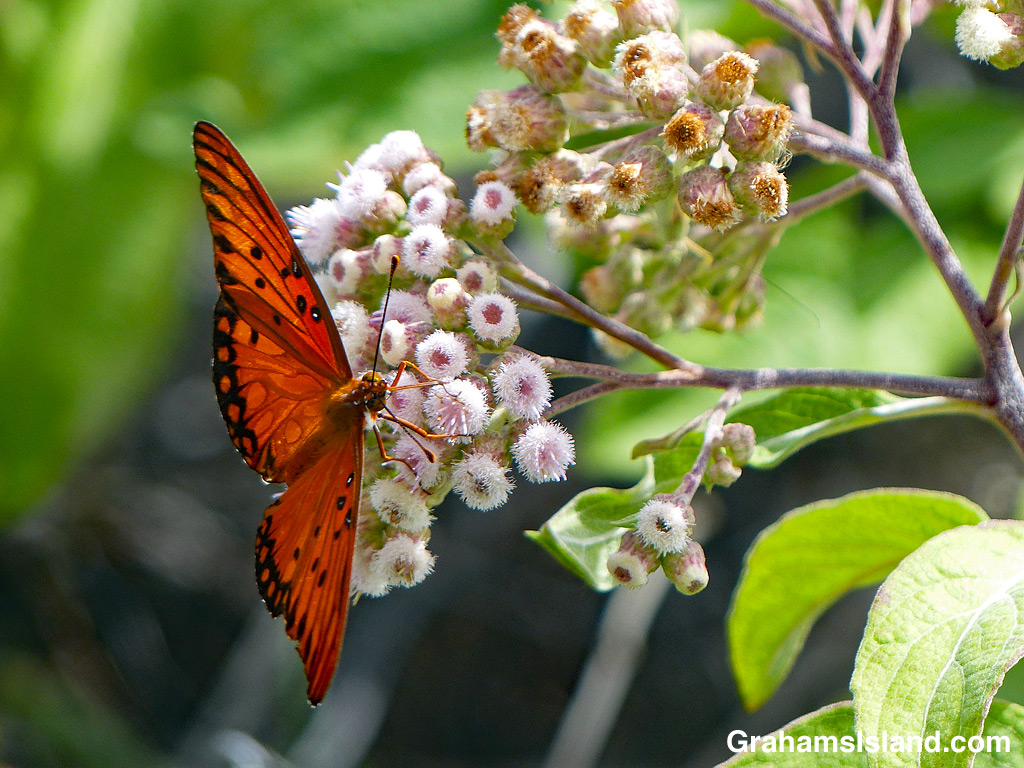
Pluchea carolinensis is also known as sourbush and cure-for-all. This latter name probably comes from its medicinal use in its native range, which is the tropical Americas. It’s a member of the aster family – Asteraceae.

The plant was first reported in Hawaii in 1931 and on the Big Island in 1933. It’s believed to be an accidental introduction, possibly associated with shipping to Hawaii and within the islands. The onset of World War II prompted the plant’s spread through the Pacific, probably in military shipments.

On the Big Island it’s most often seen in drier coastal areas, but it can tolerate a variety of climates and conditions. These photos were taken on the Puna Coast Trail in Hawaii Volcanoes National Park.

For more information about Hawaii Volcanoes National Park, go to nps.gov/havo/.

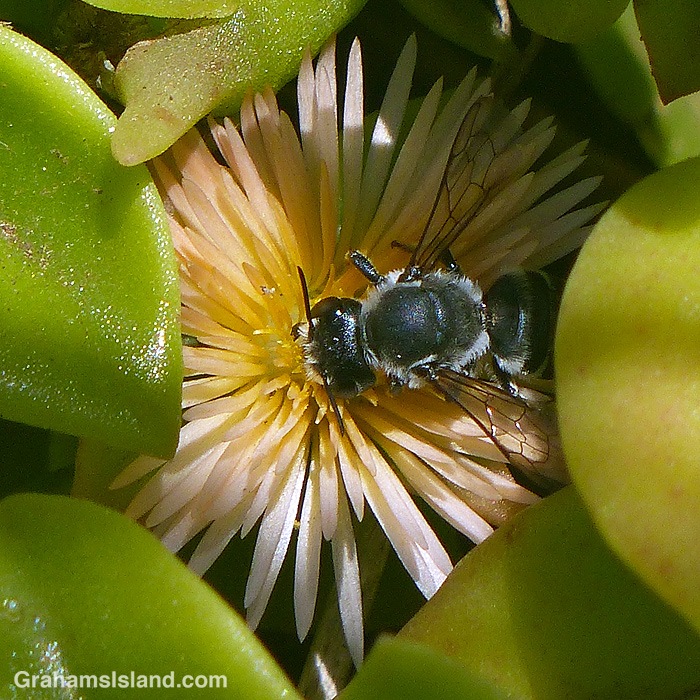
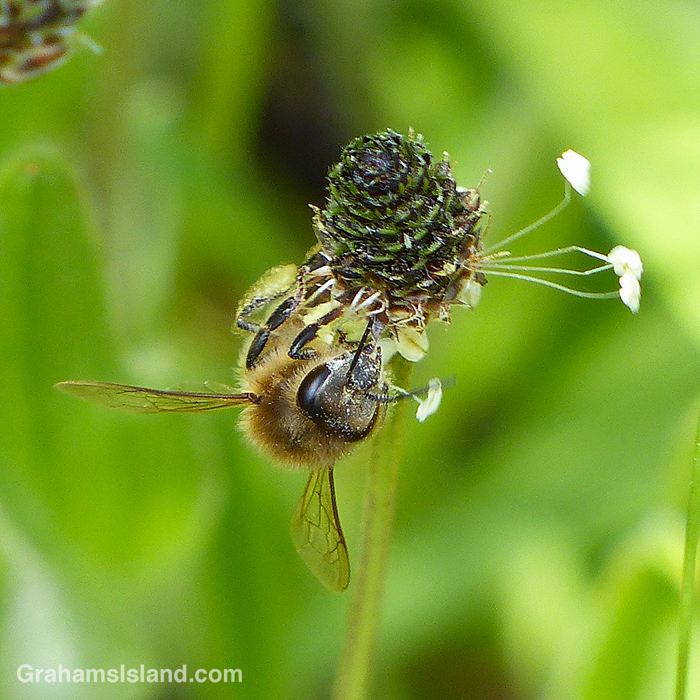
Bee on a ribwort plantain

When I saw this bee I thought, I know that plant, but what’s the name of it? Well, it’s ribwort plantain, but my knowledge of it stems from many years ago when, as kids, we used to pick them, loop the stem around just below the head of the plant, and then jerk that loop forward to send the head of the plant zinging in the direction of the intended victim. It was amazing how far those heads would travel.

This bee is using the plant for more beneficial purposes.

Posted in response to Becky’s July Squares challenge theme of ‘Perspective.’ See more responses here.