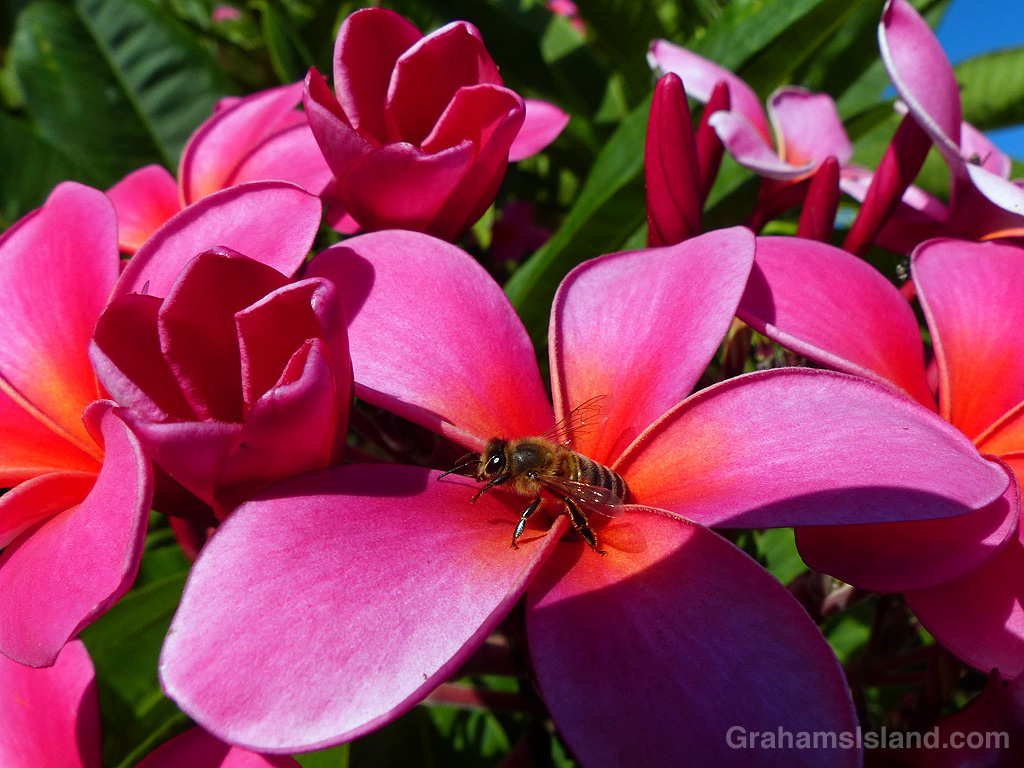
A bee forages on a red plumeria flower.

A bee forages on a red plumeria flower.

I’ve posted about agave attenuata before, in January of last year (here). The plants are blooming again and, once again, the bees are all over them. This year I wanted to focus on the bees in flight, just before they settled on the flowers to forage. This resulted in a fair number of bees buzzing around my head, but I worry less about that than I used to. I took a lot of photos, most of which were free of bees, or featured bee blurs.
These were a couple of my favorites, each capturing a bee just before plunging into the bounty within.


This is a guava moth (Ophiusa disjungens), which hails from south-east Asia and the south Pacific, but has also found a home in Hawaii. This one is a darker variant of the moth which is more often mostly yellow or orange.

This is easily the smallest stick insect I’ve seen here. I noticed it on a window screen and it was no wider than a single square of the screen and not very long either.

A pair of boldly marked Asian swallowtail butterflies flying in the blue Hawaiian skies.

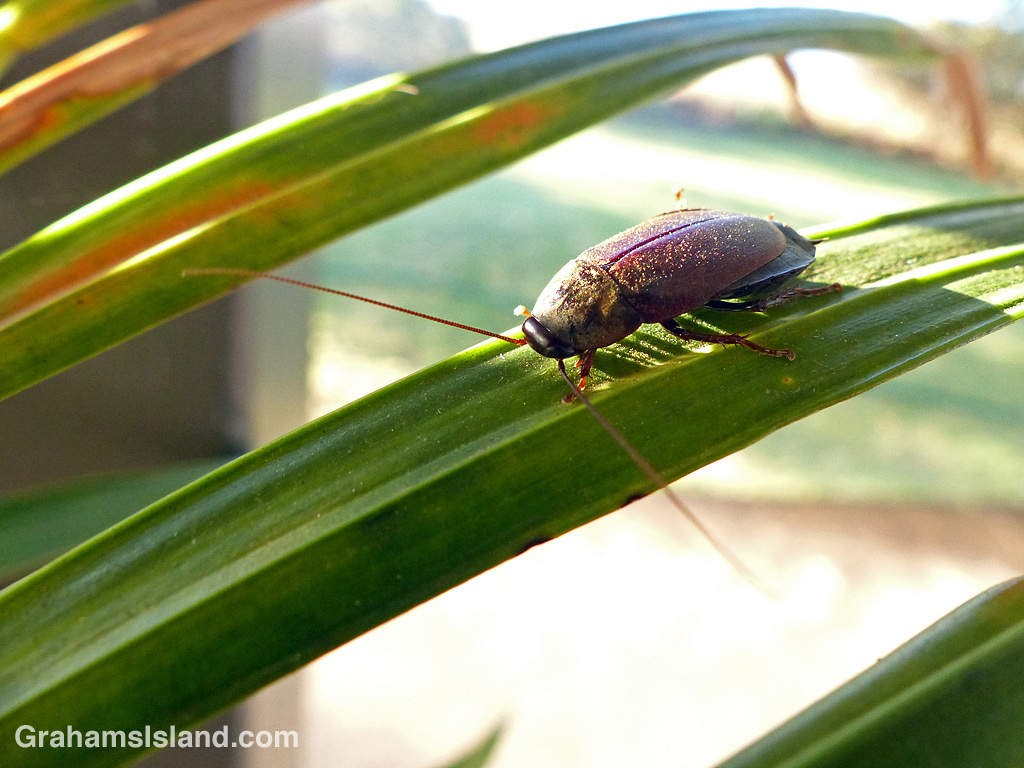
When I first saw this bug, with its red back and gold sparkles, I thought for sure it was a beetle. But it turns out, it only resembles a beetle. It is in fact a cockroach, which left me with slightly less warm thoughts about it.
But it turns out that the Pacific beetle cockroach is quite interesting. It’s one of a few that are viviparous, meaning that it gives birth to live offspring. A couple of years ago, this cockroach was in the news because the ‘milk’ it feeds its young is a more complete food than cow’s milk and was being touted as the next superfood. Not that cockroach dairies were about to be set up, but the thought was that the protein crystals in the milk could be reproduced in labs.
This hasn’t happened yet, but who knows. I bet Gwyneth Paltrow is out there, milking cockroaches, even as I post this.
Thanks to Hawai’i Insect Identification for help in identifying the Pacific beetle cockroach. For more information about Hawai’i Insect Identification, go to flickr.com/groups/hawaii-insect-id/pool/.
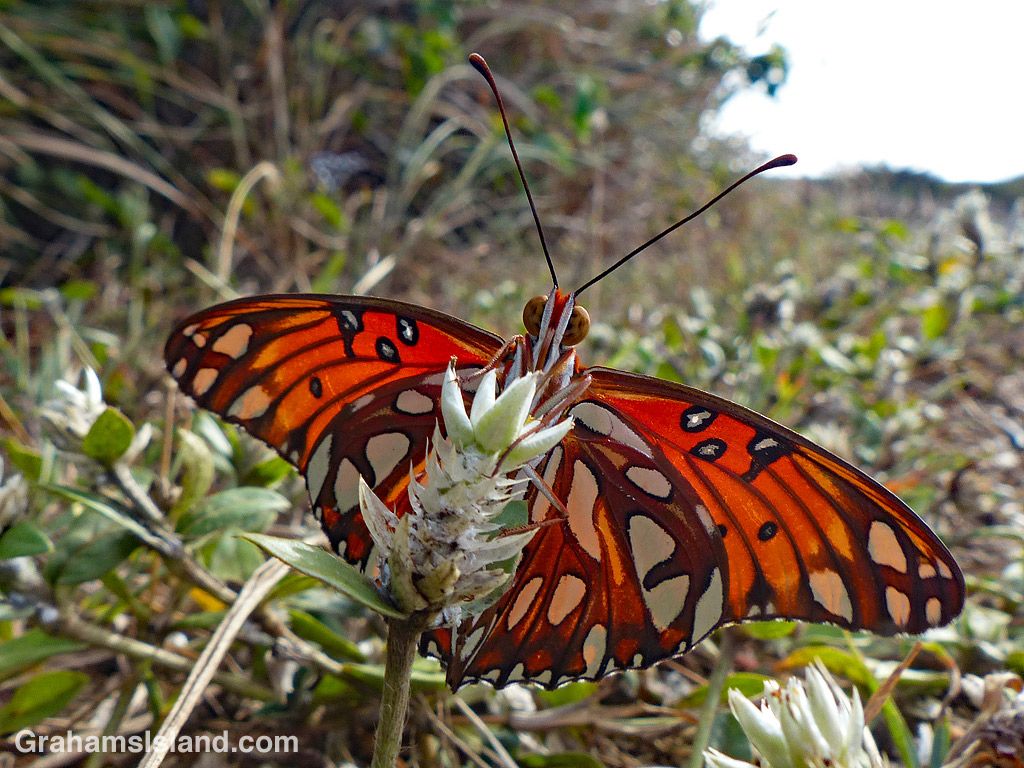

I saw this passion vine butterfly resting one windy late-afternoon. It didn’t seem in any rush to head off into the wind again so I got some decent photos. What I like about the photos is that I was close enough to get clear images of the butterfly’s labial palps, the white appendages sticking up on either side of the proboscis. These palps are covered with hairs that are believed to allow the butterfly to sense whether something is edible or not.
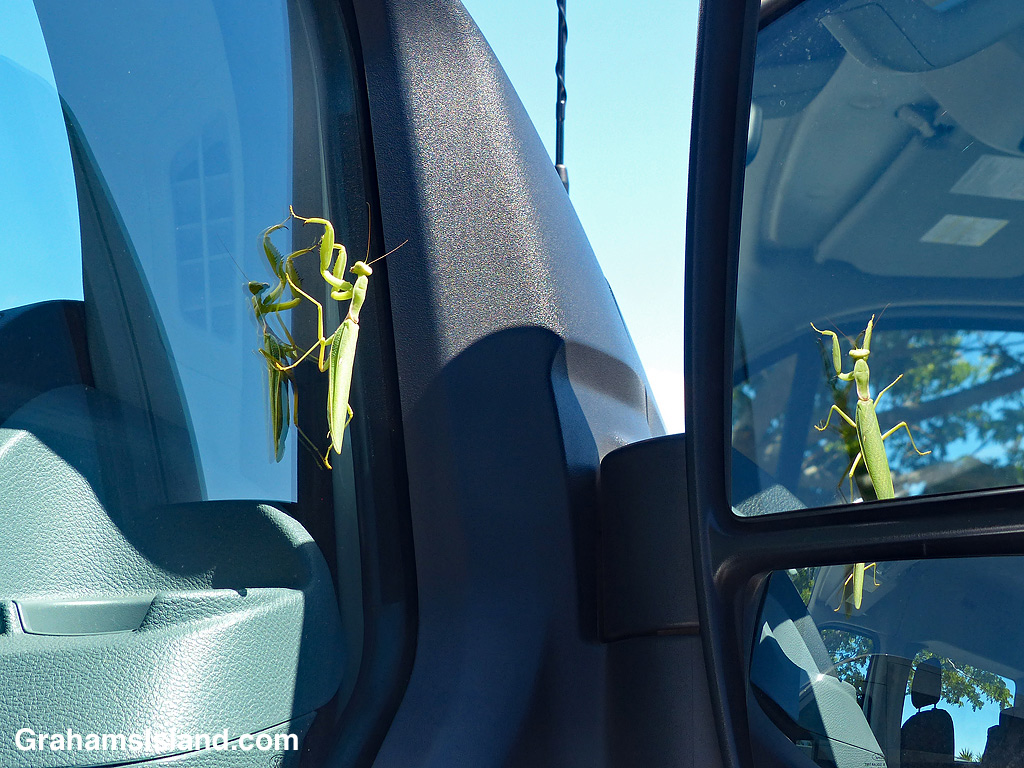
This praying mantis landed on a vehicle window and instantly became reflective. Perhaps it was feeling introspective. Perhaps it has multiple personalities. Perhaps it’s just trying to get away from me.
 Graham's Island