

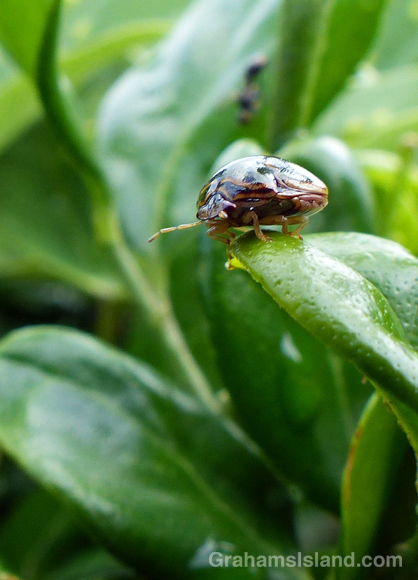
I thought this was a lady bug when I first saw it, but a bit of research revealed that it’s actually a black stink bug (Coptosoma xanthogramma). Black stink bugs were first found in Hawaii in 1965 on Oahu and can be problematic for some legumes and vines here.
Category Archives: Animals
Young katydid

This very small katydid gave me a wary look as I descended the front steps. It had good reason to since katydids have been one of the main munchers of the basil plants. But since those plants are now safe under netting, I tiptoed past without so much as a nasty glare.
Gecko on pink heliconia
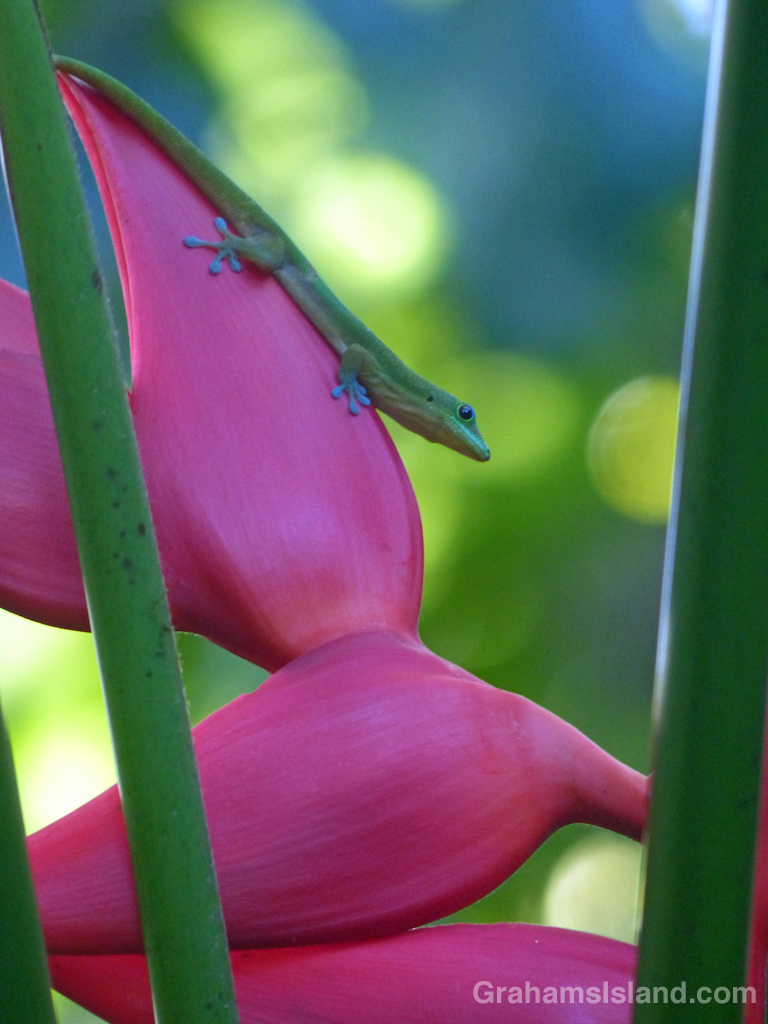
A gold dust day gecko rests on a deep pink heliconia flower.
Cattle egret on a cow
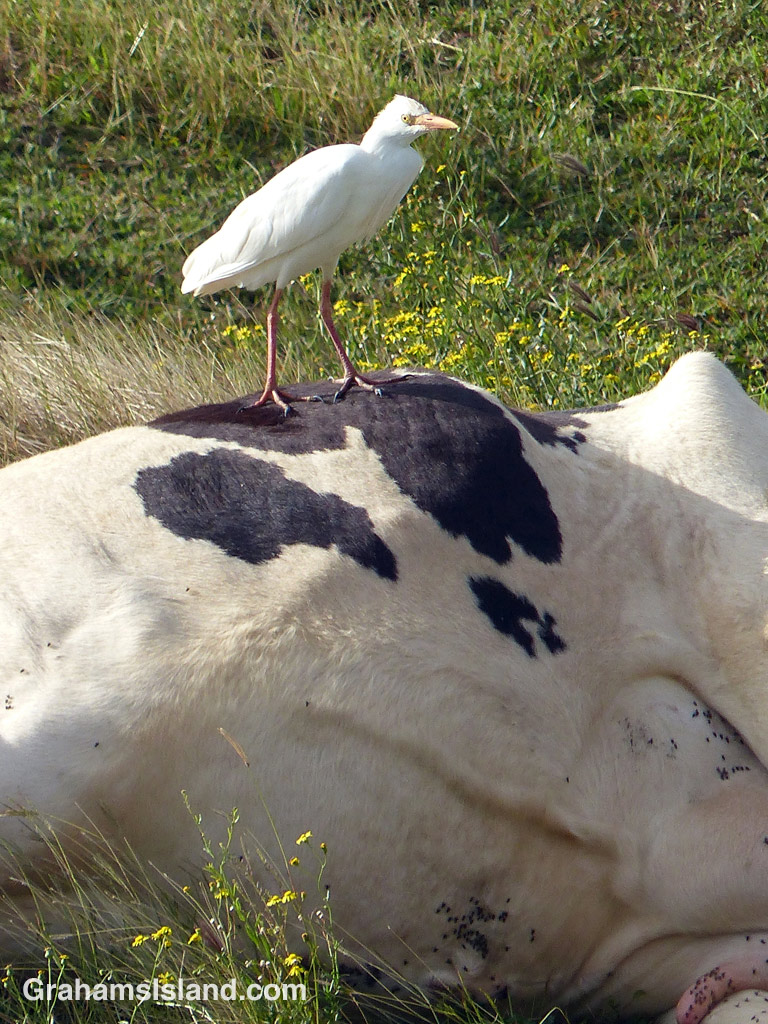
Something about the gleam in this egret’s eye made me think about an old Far Side cartoon where two fishermen are in a boat and one has hooked a cow in the water. The other fisherman says, “It’s gonna be fresh burgers tonight!” Mind you, I think the cow might have had a thing or two to say about that.
Better Days: Hawaiian garden spider
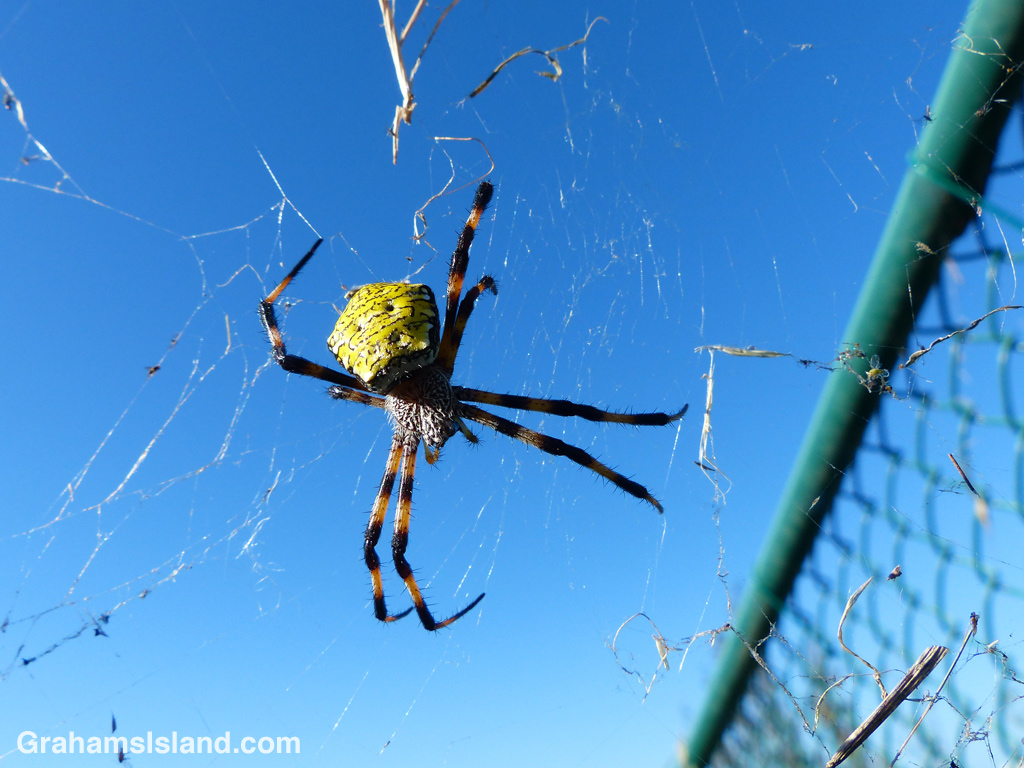
I came across this brightly-colored Hawaiian garden spider, the female of the species, in the late afternoon of a windy day. Her web shows debris that’s been blown in and likely encounters with bugs large and small. The web looks like it’s on its last legs and indeed it is because, at the end of the day, this spider will eat her web (or what remains of it) and start afresh in the morning.
Abstracts: Green anole on wire
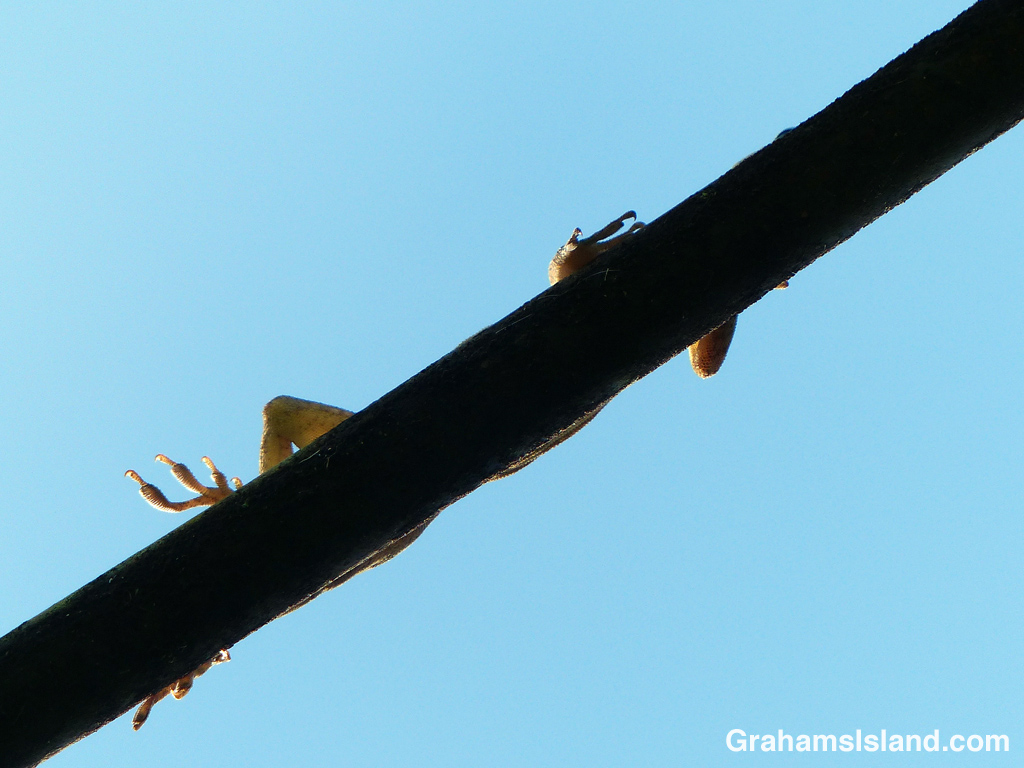
I posted once before here about how green anoles head back and forth from the house on the cable and power lines. This is a photo of one of them as seen from below.
Unwise mourning gecko
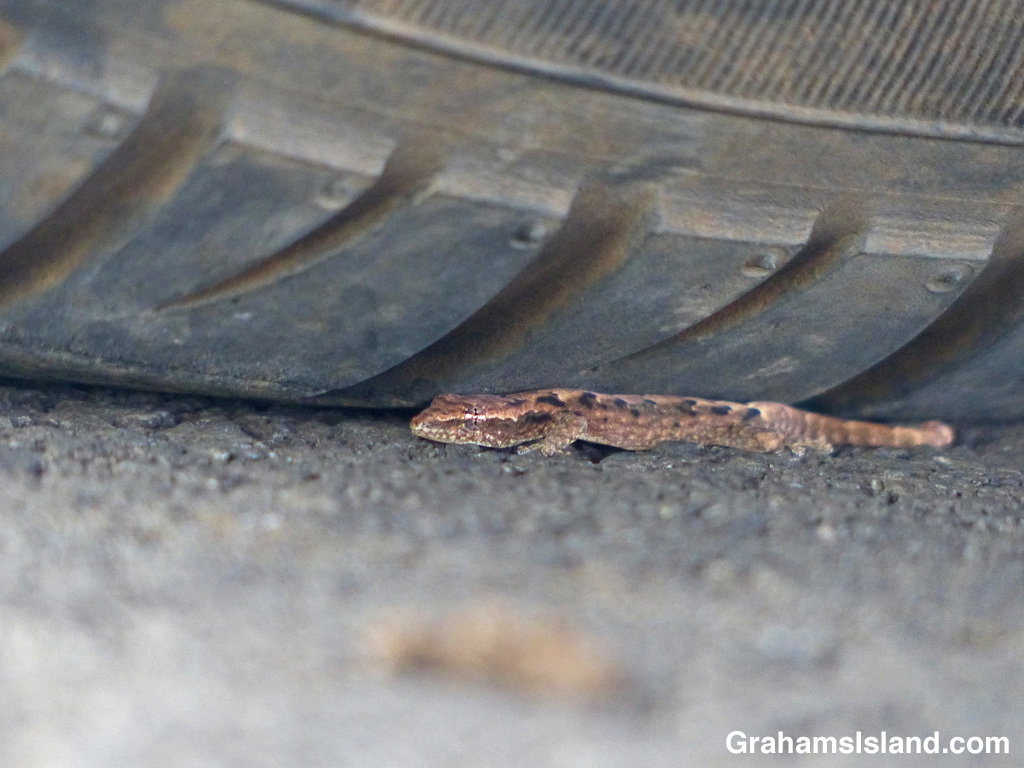

Returning to my truck after a walk, I happened to notice this little gecko scuttling into the shadows. I got down on hands and knees to see where it had gone and it moved farther under the truck. I went around the truck, back on hands and knees, and saw it shoot off in the opposite direction. Then I went to the front of the truck, hands and knees again, and wondered where it had gone.
It took me a while to discover it’s hiding place. As the top photo shows, the gecko hadn’t picked a great spot. I waggled my hand at it, but it didn’t budge. So I got up, found a stick, and, back on hands and knees again, reached in and tapped the ground behind it until it shot out and around the other side of the tire. I got up, walked around to usher it away and it promptly scurried back to the inside of the tire.
We repeated this little dance two or three times. I wasn’t getting anywhere and the young mourning gecko clearly believed it had found a really safe hideout. My knees were sore and I figured this kind of activity was probably what Darwin was thinking of. So I got in the truck, fired it up, waited a minute or two, and slowly reversed. Then I pulled forward, stopped and got out.
The little guy had survived so I thought I’d take a photo. Right about then a young woman approached with two boisterous dogs and asked if I could suggest a good place to exercise them. The dogs were getting plenty of exercise right there, barking continuously, and jumping up and down. I cast concerned looks at where they were landing as I gave her a few tips.
When she headed out of the parking lot with her charges, I bent down and saw that the little gecko had survived the canine cacophony and was still anchored in the same spot. I took the second photo and then the gecko headed off toward the low concrete tire stop and eventually disappeared underneath.
Goat on a rock
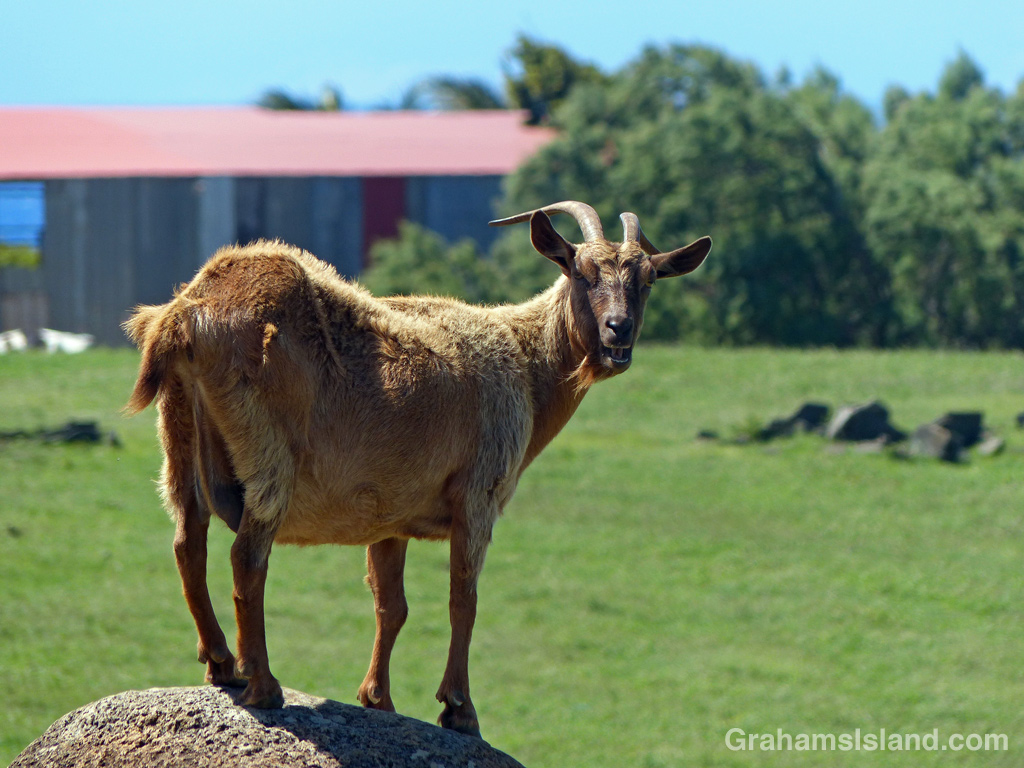
Following up on yesterday’s against-the-odds photo of a bright-eye damselfish, here’s one of a goat standing on a rock. What are the chances of seeing that?
 Graham's Island