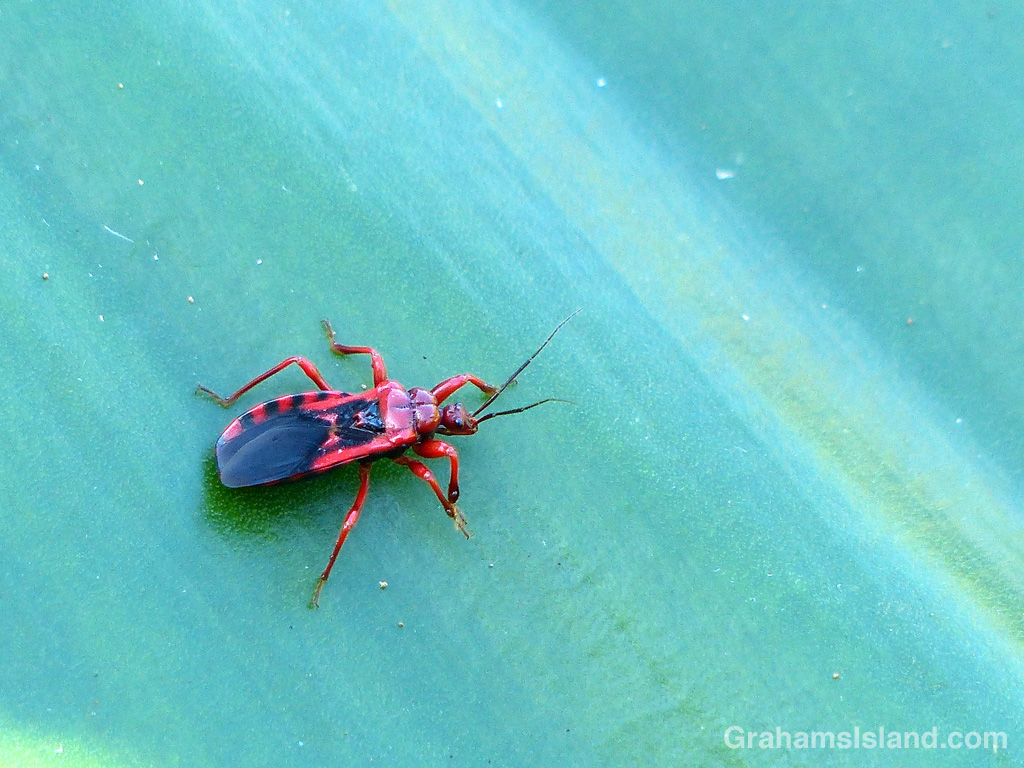
This striking creature is an assassin bug, (Haematoloecha rubescens). Got to love a name like that, which lets you know right away what it’s about. This one is a predator of millipedes, which is no bad thing either. This species is believed to have arrived in Hawaii in the 1970s, probably from Asia.
Category Archives: Animals
Tree heliotrope and potter wasps
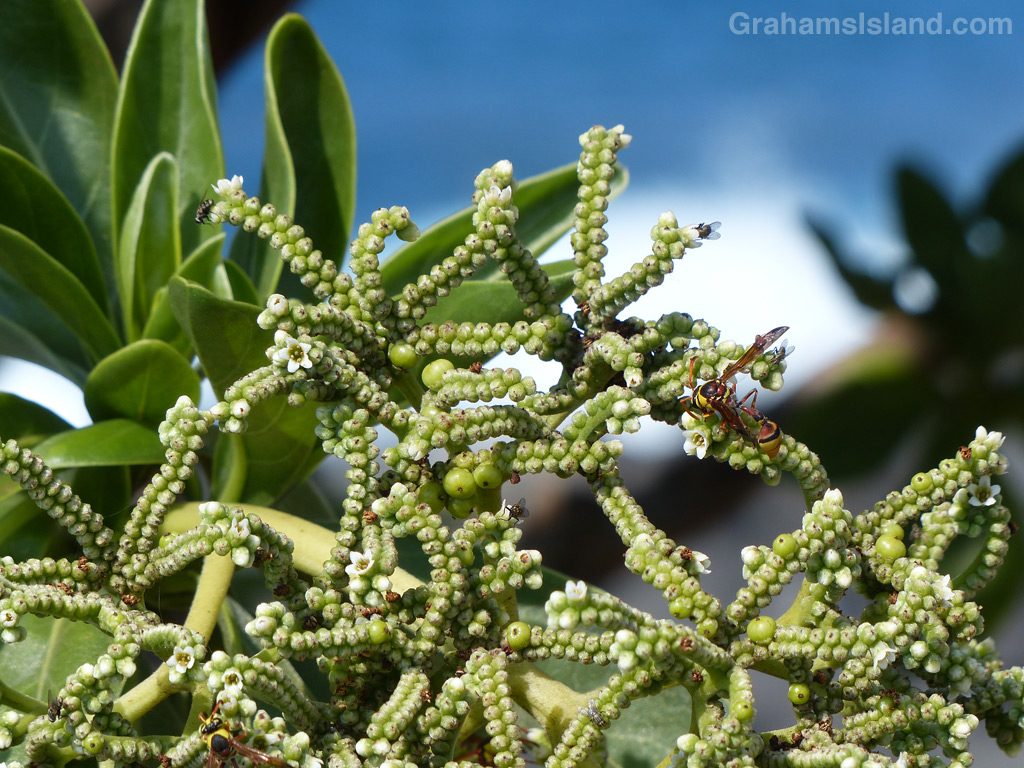
On one of my coast walks I was surprised to find a tree that I visit regularly, abuzz with wasps and other insects. The tree is a Tree heliotrope (Heliotropium foertherianum) which, as the photos suggest, is hardy and salt tolerant. This was the first time I’d seen it with striking tentacles of flowers and berries, hence it’s other common name of Octopus bush.
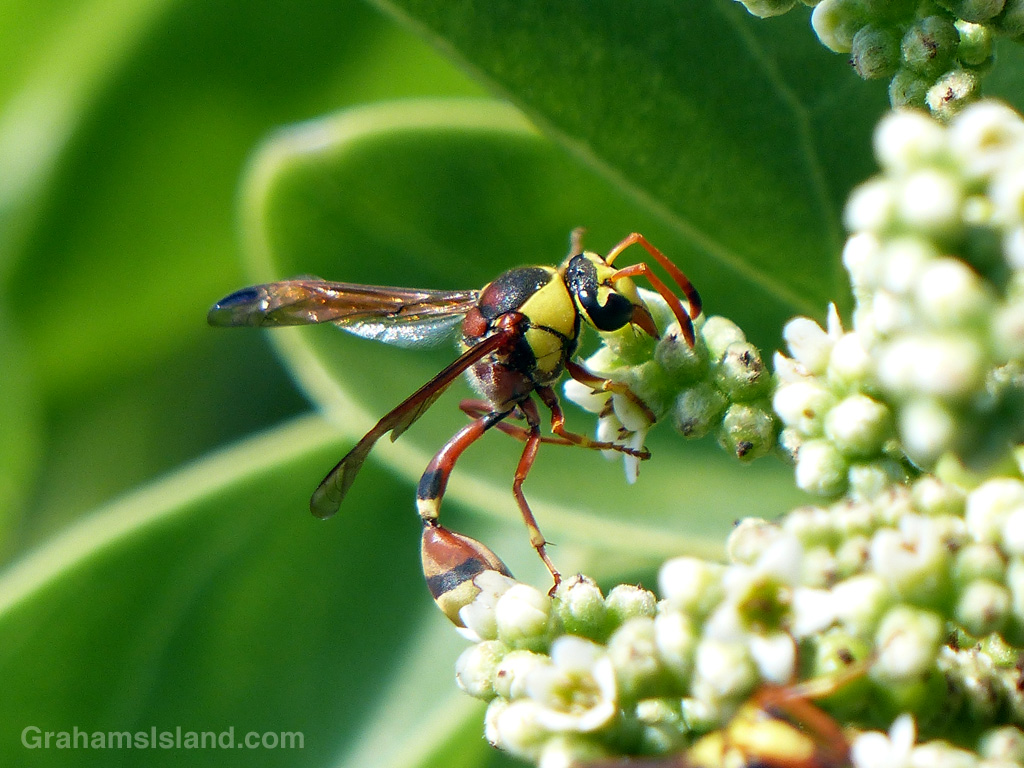
The majority of the wasps attracted to the tree were potter wasps, specifically Eumenes bollii I think. They were focused on their task for which I was grateful, since I was shoving my camera quite close to them on occasion.
Look out behind
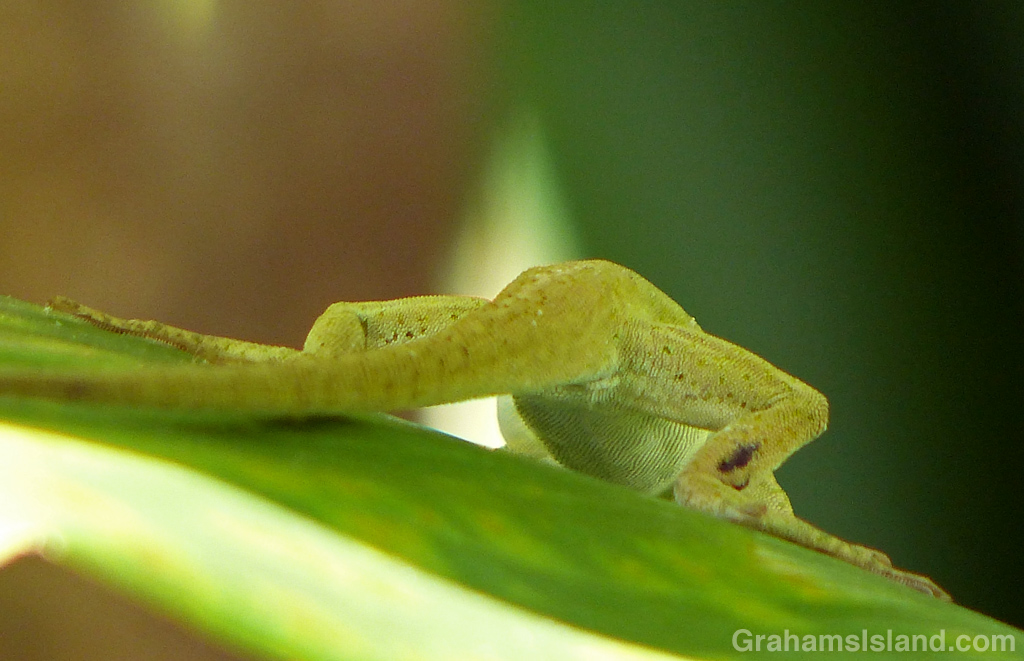
This green anole was busy looking at something, unaware he was being observed.
For more information about green anoles, go to en.wikipedia.org/wiki/Carolina_anole.
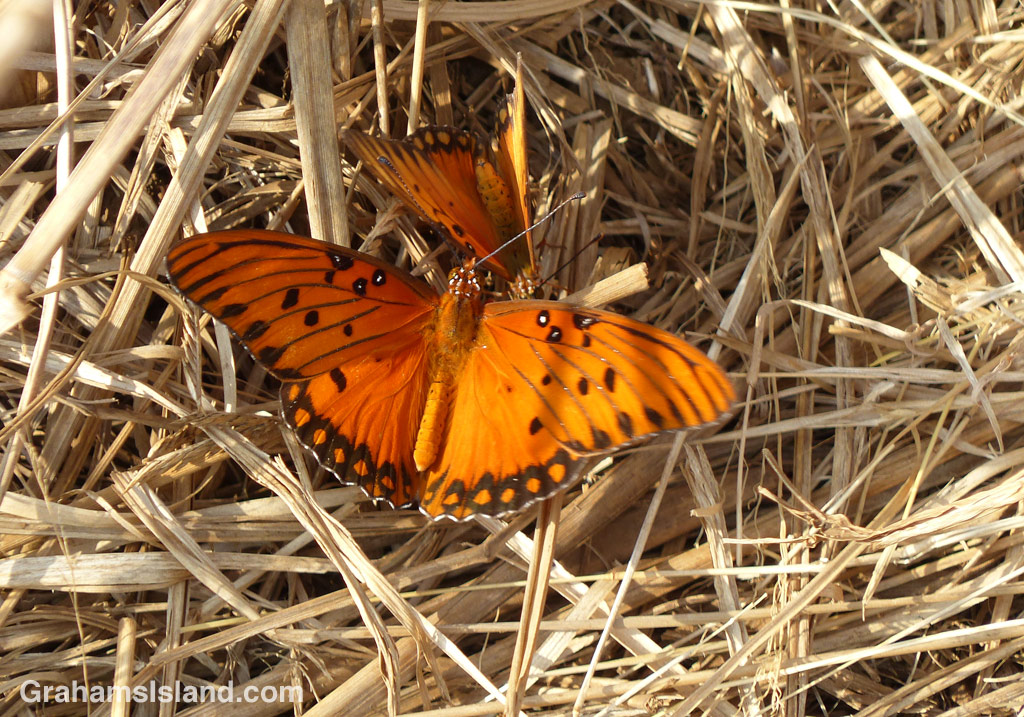
Passion vine butterflies
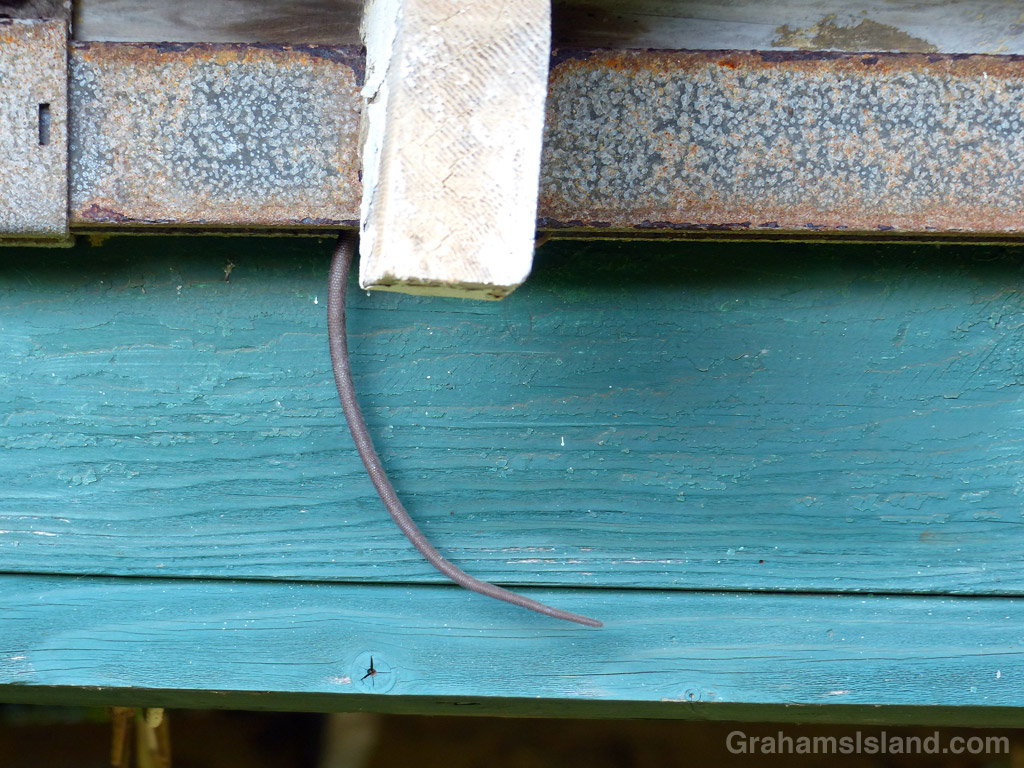
Abstracts: Do I smell a rat?
Gold dust day gecko snares a stick insect
Hawaiian garden spider
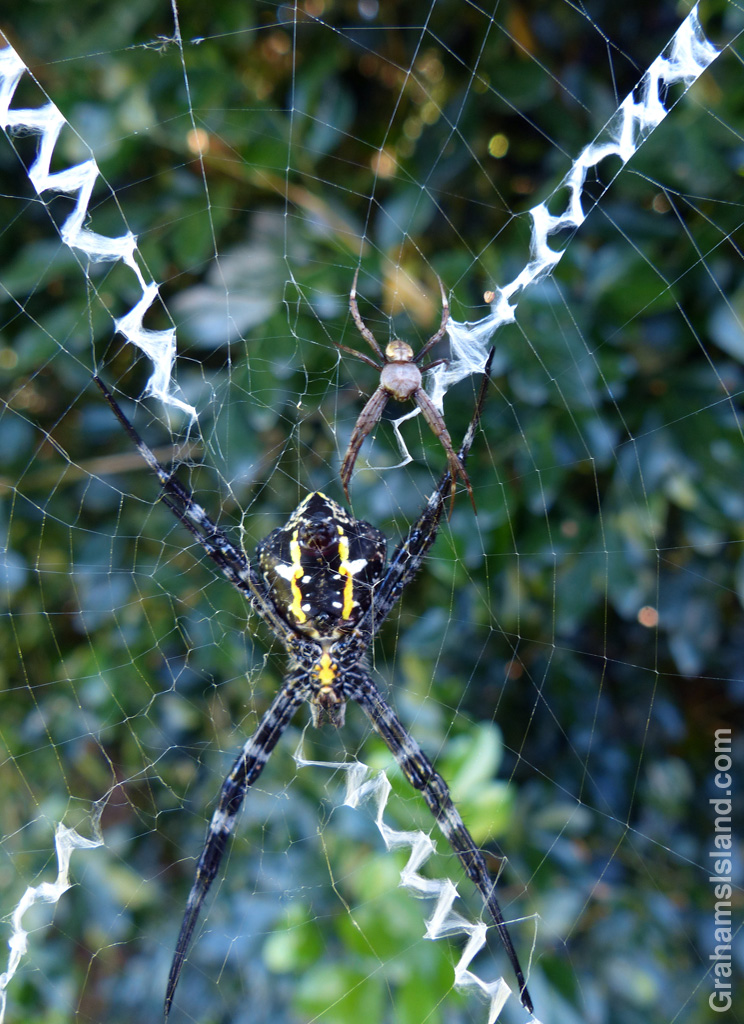
Sorry arachnophobes, but there are spiders in Hawaii. These are Hawaiian garden spiders (Argiope appensa), which came from Asia originally. Mostly it’s the female spider, the large, colorful one in the center of this web, that is seen. Indeed, this was the first time I’ve noticed a male, the much smaller, brown spider. Another web nearby also sported a male and female pair.
Their distinctive webs usually feature one or more broad zigzag lines of silk, called stabilimentum. I’ve read that this is to stabilize the web, but might also serve to lure prey or as a marker to birds and the like, so they don’t fly in to it.
For more information about the Hawaiian garden spider, go to insectidentification.org.
Baby mourning gecko
This little mourning gecko has already been in the wars, having lost most of its tail. The tail will grow back. Geckos can shed their tails as a defensive mechanism, the idea being that the discarded tail, still wiggling, distracts an attacker long enough for the gecko to escape.
There seems to be a regular gecko cycle in the house. A new batch of eggs hatch and the number of baby geckos jumps. They can be seen scurrying over the walls and ceilings with great industry, if no apparent purpose. Over the next few days, their numbers decline until only an odd one or two are seen. Then, a couple of weeks later, a new batch hatches and off they go again.
They seem to succumb to three things: failure to find enough food, getting eaten by larger geckos, and being squashed by the large feet of yours truly. They’re hard to spot on the floor, especially in low light.
For more information about geckos, go to geckoweb.org.