A passion vine butterfly hangs upside down while sampling the good things on offer from a tasselflower.
Posted in response to Becky’s January Squares challenge theme of ‘Up.’ See more responses here.

A passion vine butterfly hangs upside down while sampling the good things on offer from a tasselflower.
Posted in response to Becky’s January Squares challenge theme of ‘Up.’ See more responses here.

The headquarters of Parker Ranch, founded in 1847 and one of the biggest ranches in the USA, can be found in the bucolic town of Waimea. It’s the heart of cattle country on the Big Island and where there’s cattle, there’s cowboys, but not here. Here in Hawaii, the cattle are tended by paniolos. That’s because, when the cattle industry grew, ranch hands were needed.
The first three came from California, then part of Mexico. These three vaqueros (Spanish for cowboys) spoke español, but the theory is that, because the Hawaiian language couldn’t handle the word español, it was converted to paniolo. The name stuck.
Over time, the local Hawaiians learned the skills associated with handling cattle. So well did they do this that, in 1908, three of them were entered in the Frontier Days World Championship in Cheyenne, Wyoming. Not only were they a huge hit with the crowds, but they also won titles. Ikua Purdy won the world steer-roping contest and was later voted into the National Rodeo Cowboy Hall of Fame. To commemorate those achievements this monument was commissioned. It arrived on the island in 2003 and today stands next to the main highway, on the edge of the parking lot of Parker Ranch Center, a large (for Waimea) shopping complex in the center of town.
For more information about monument, go to https://paniolopreservation.org/a-monument-to-paniolo-pride/.
For a brief history of the Big Island’s cattle industry, go to https://www.bikemaui.com/hawaiian-paniolo-brief-history/.
Posted in response to Becky’s January Squares challenge theme of ‘Up.’ See more responses here.

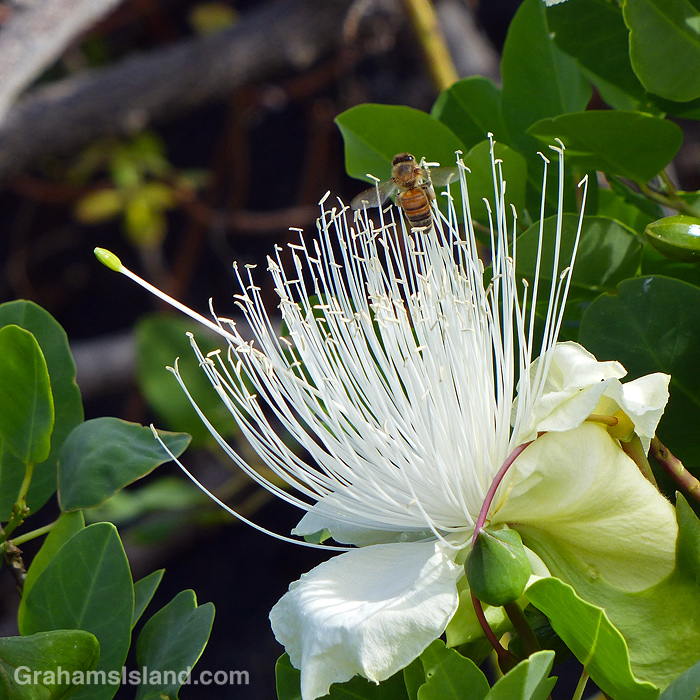
A bee forages on an ohia lehua flower.
Posted in response to Becky’s January Squares challenge theme of ‘Up.’ See more responses here.

Something spooked these wild pigs and they took off in a hurry.
Posted in response to Becky’s January Squares challenge theme of ‘Up.’ See more responses here.

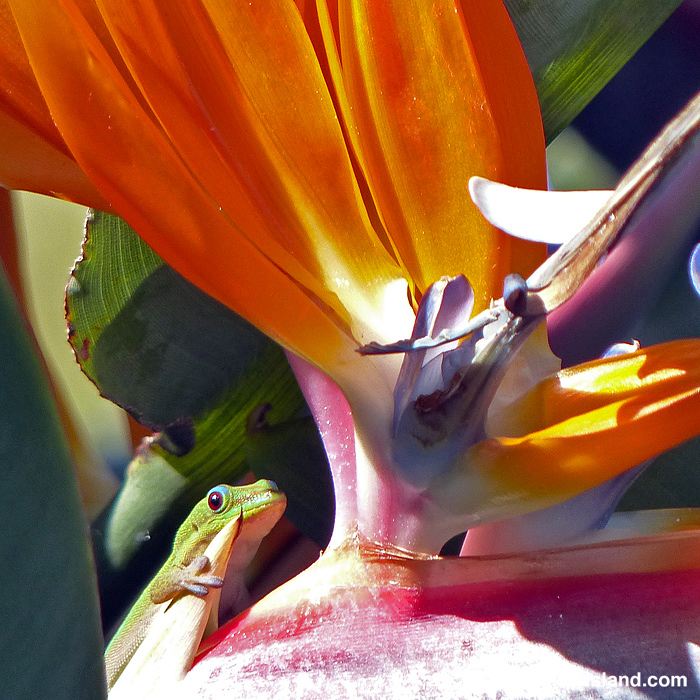
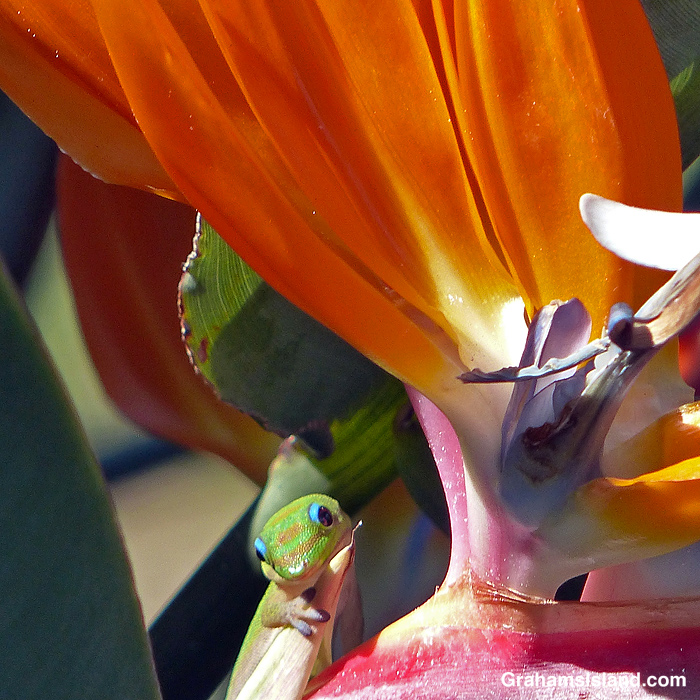
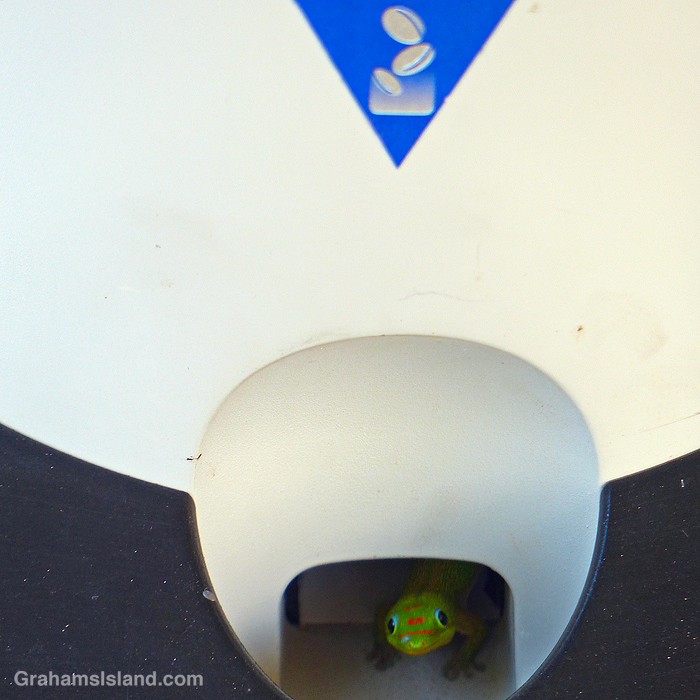
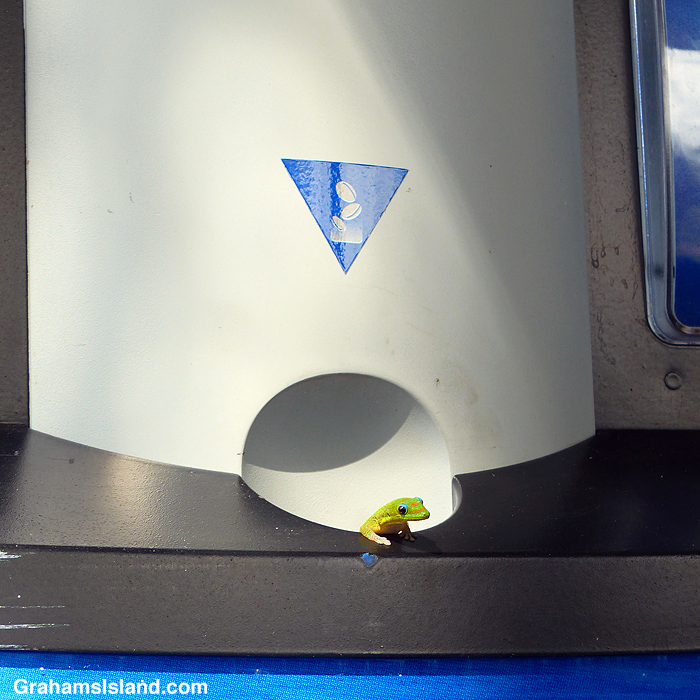
Mourning geckos are nocturnal, but this one was caught going up a corrugated panel in daylight. The bumpy texture of the panel is a bit like the gecko itself.
Posted in response to Becky’s January Squares challenge theme of ‘Up.’ See more responses here.

I heard an uproar from the myna birds in the yard and looked up to see this cat bounding up a tree trunk. It disappeared into the leaves and, shortly after, the mynas flew off in a huff. I took this photo when the cat was on its way down, with nothing to show for its efforts.
Posted in response to Becky’s January Squares challenge theme of ‘Up.’ See more responses here.


I saw this cow with her new calf on my way to my daily walk. Newborn calves tend to have a similar look about them. They’re very clean and bright and they have no idea what’s going on. They get on their feet pretty quickly, but there’s a shaky period until they figure out what legs are and how they work. They don’t stray far from their mothers, particularly when there’s a strange two-legged creature in the vicinity. And they can’t go long before they collapse and need to rest.
Mind you, compared to how I was as a child, they’re positively turbo-charged in their development.


I saw these two horses in Waimea, near the Parker Ranch headquarters. Nothing remarkable about them, but I’m pretty sure that brown lump in the grass is a third horse. I mention this because one of the early things I learned about horses is that they sleep standing up. They can do this because they have something called the stay apparatus, which locks the knees so they don’t fall over. The benefit of sleeping while standing is that they can respond quicker to a predator attack from that position.
While I learned this bit about horses, it didn’t register in the same way that horses will also lie down to sleep. As a result, every single time I see a horse lying stretched out in the grass the way they do, I think it’s dead or dying. Despite knowing better, this response seems to so ingrained in me that I doubt it will ever go away.