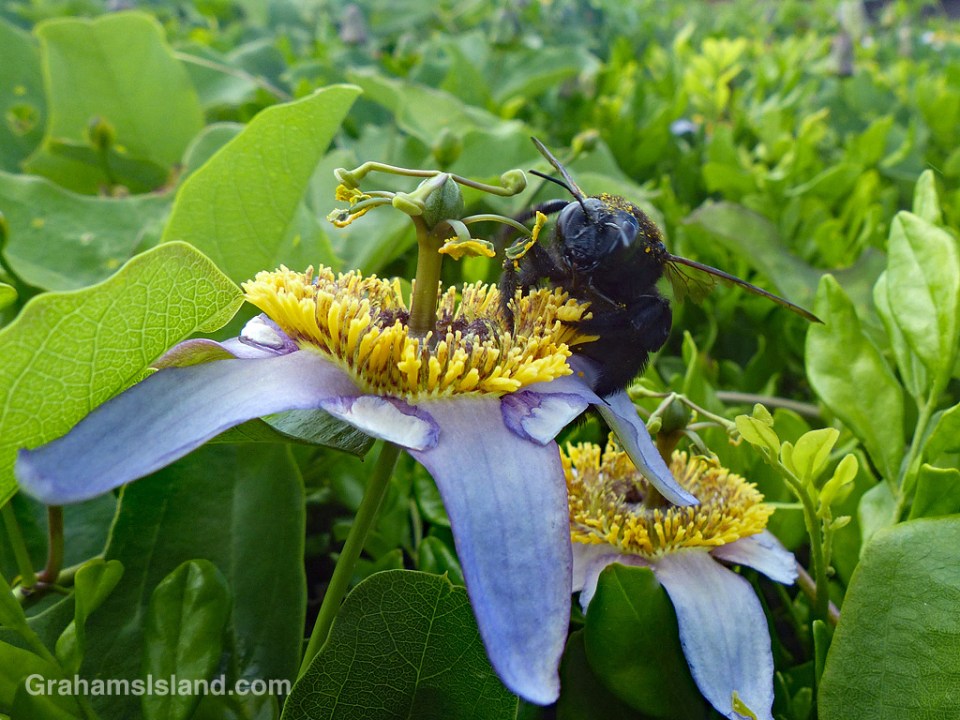
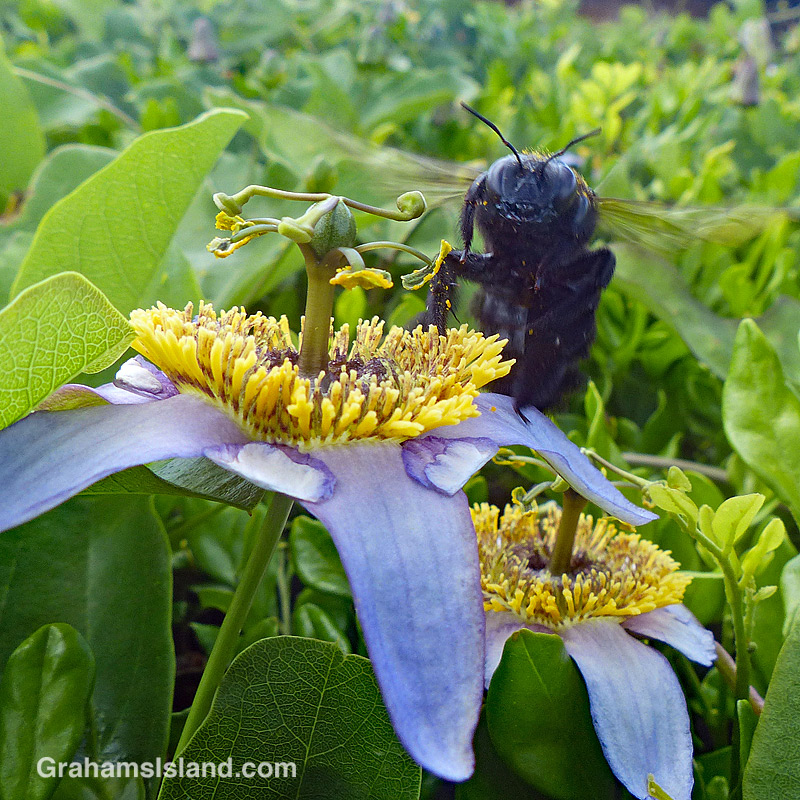
 The Sonoran carpenter bee (Xylocopa sonorina) was first recorded in Hawaii around 1874. This black bee is a female. Males are golden orange in color and smaller than the female.
These bees get their name because the females tunnel into wood to create cavities in which to lay eggs and raise their young. The entrance to a nest is usually a neat, half-inch diameter hole in the wood. In the wild, the bees make nests in dead branches or tree stumps, but around human habitation they’ll bore into fence posts, rails, and roof eves. Because of this tunneling habit, these bees are sometimes considered pests, but the damage they cause is far outweighed by their importance as pollinators.
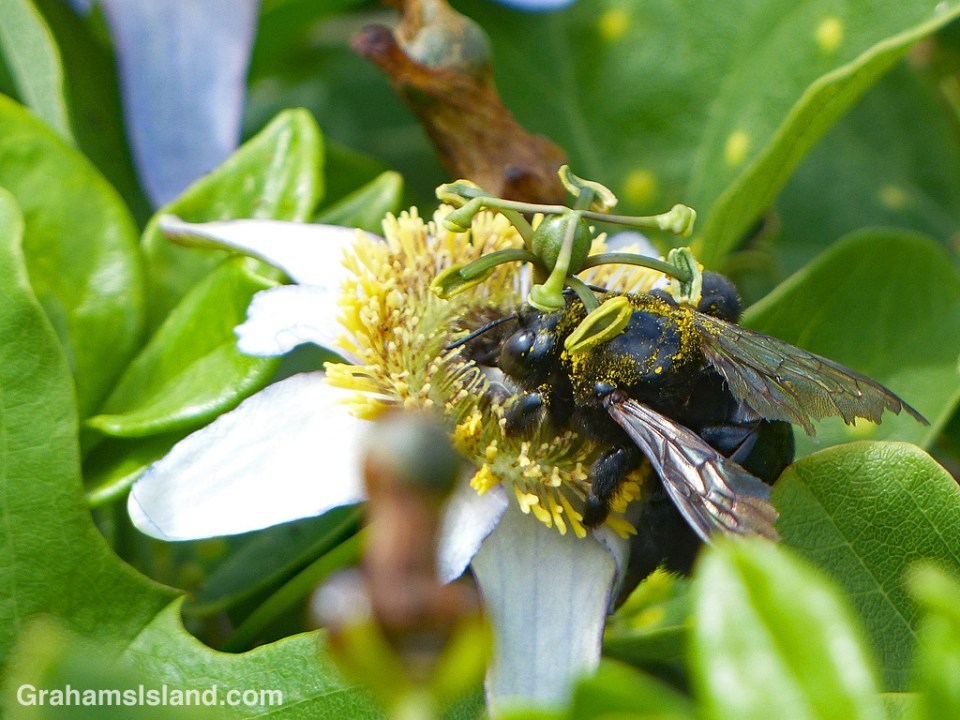
In Hawaii, passion fruits are one of the many fruits and vegetables pollinated by carpenter bees. The bottom photo shows how the bee’s size helps it pollinate the passion fruit’s large flower. It also shows how battered this poor bee’s wings have become. She was still able to get airborne though.

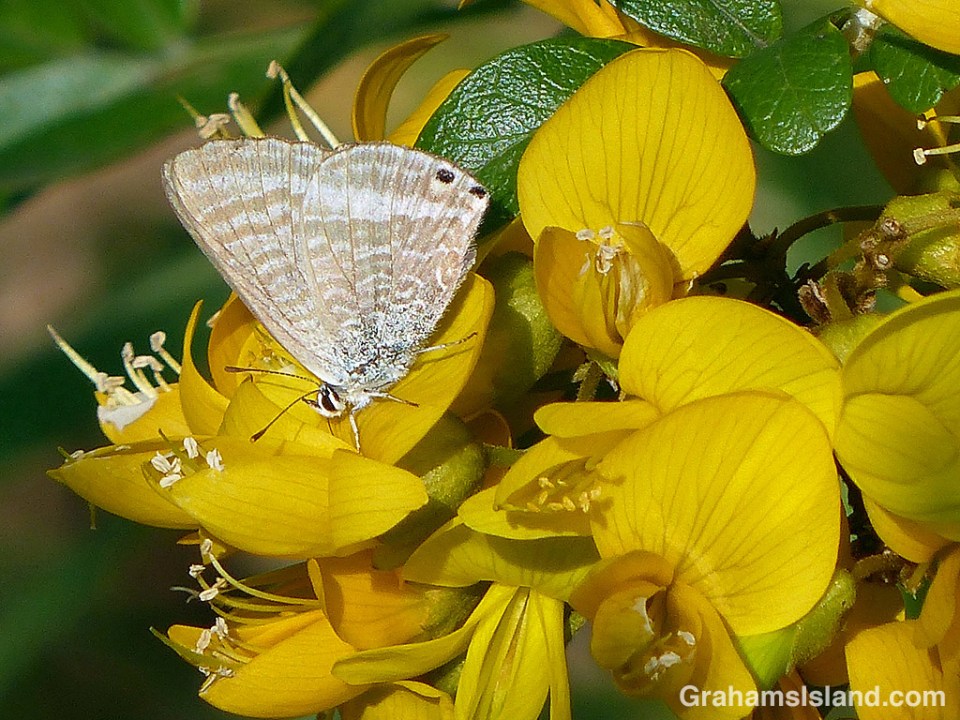
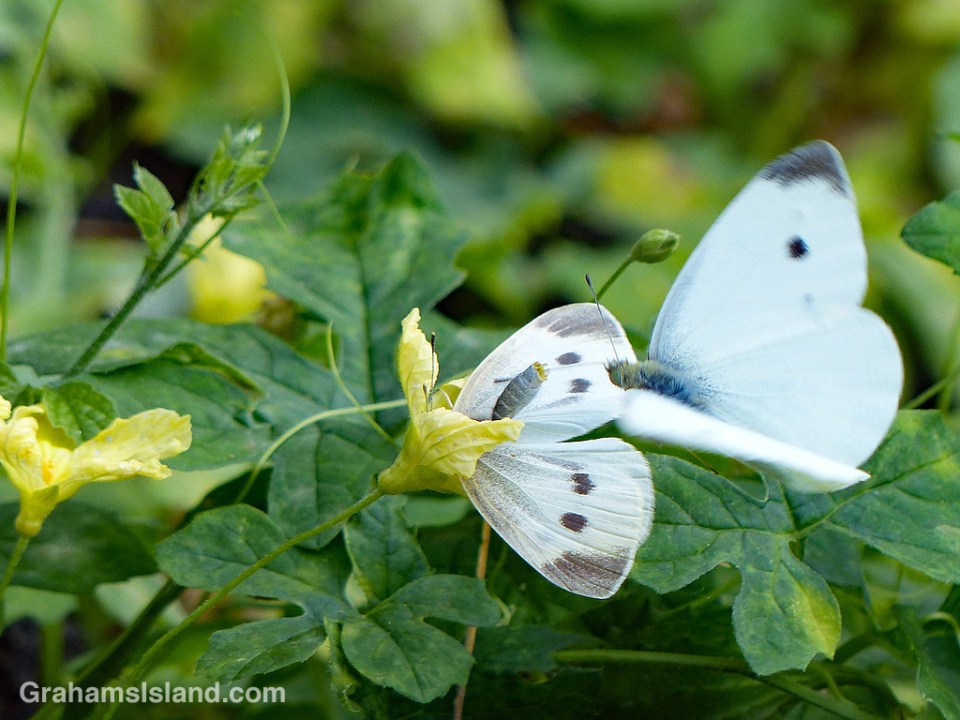
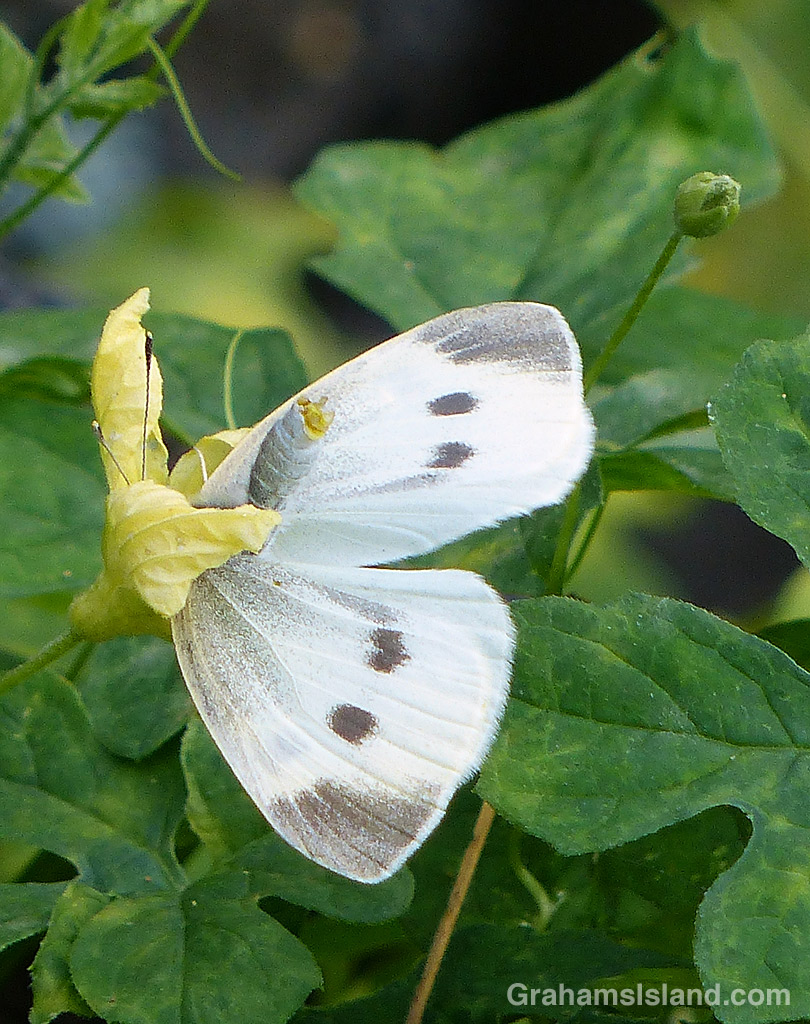 When I first saw these two cabbage butterflies I thought they were mating or about to mate. But I’ve since read that this posture, adopted by the female (identifiable by the two dark spots on each wing), is a signal that she’s already mated and is no longer available. In typical fashion, the male butterfly took a while to get the message before he gave up and left.

 Graham's Island