

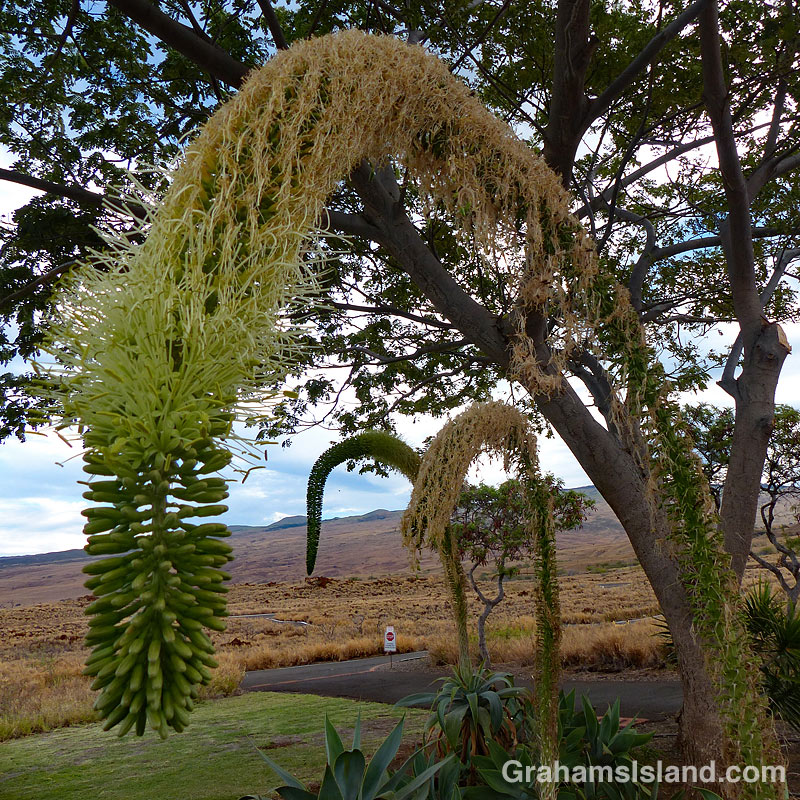
 Agave attenuata is native to Mexico, but is commonly seen in Hawaii. It’s also known as lion’s tail agave, swan’s neck agave, or fox tail agave. These names stem from its long flower stalk which rises from the center of the leaves and arches over. Most agaves bloom and die, but agave attenuata blooms annually without dying. Also, unlike many other agaves, agave attenuata leaves don’t have leaves with sharp points or spiky edges.
The progression of the flowering process can be seen on one agave attenuata plant. In the second photo, starting at the base of the flowering stalk, there is a bare section where the flowering process has finished. Above that is a brownish section where small brown pods have been set. Some of these, that remain attached to the stem, will turn into green fruits. Near the end is the portion of the stalk that is currently flowering and at the end are buds that have yet to flower.
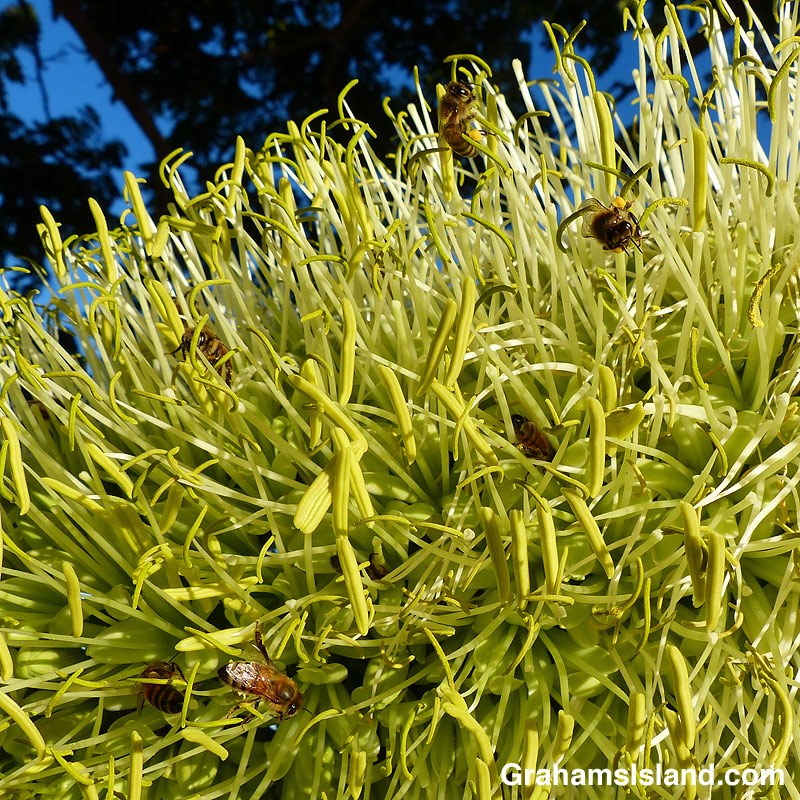
I was drawn to these plants, not just because of their striking flower stalks, but because in the mornings, bees were all over the plant. The top photo shows a bee clambering through a tangle of stamens and pistils. In the third photo, there were lots of bees working along the flowering portion of the inflorescence. Below, sometimes it’s hard work getting to grips with the task in hand.


 When I saw this goat, chomping on some bushes, my first thought was that it looked like a pirate. That’s certainly a mean-looking pair of horns. The curly one has pinned its left ear down, probably affecting its hearing. But the look in the second photo is hardly menacing. I wouldn’t mess with him though.
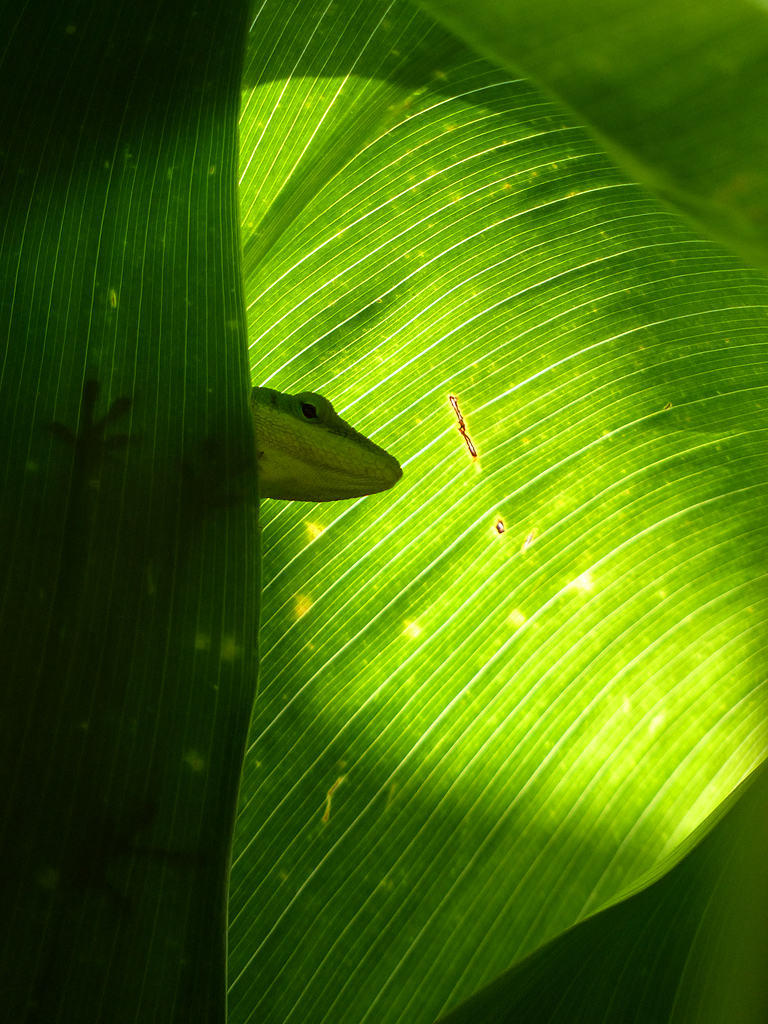 Ti plants grow well in Hawaii, so well that they can get out of hand. If they look like doing so, the prudent thing is to prune, but that has one drawback. Where you cut a stem of a ti plant, two new shoots will form. This means that trimming a ti plant is a temporary fix prior to it coming back stronger.

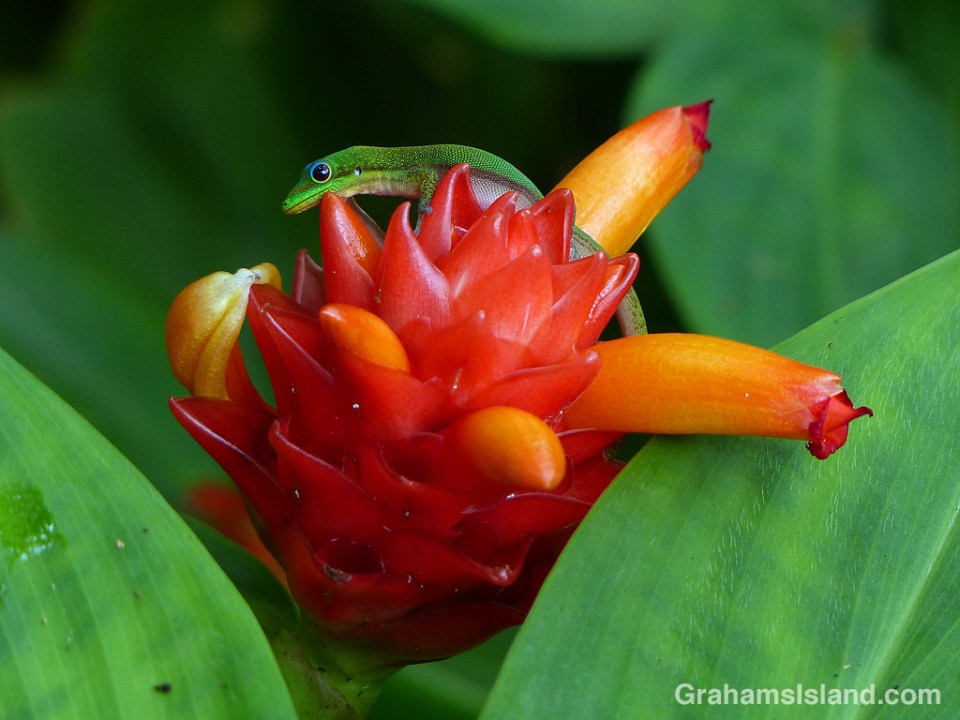
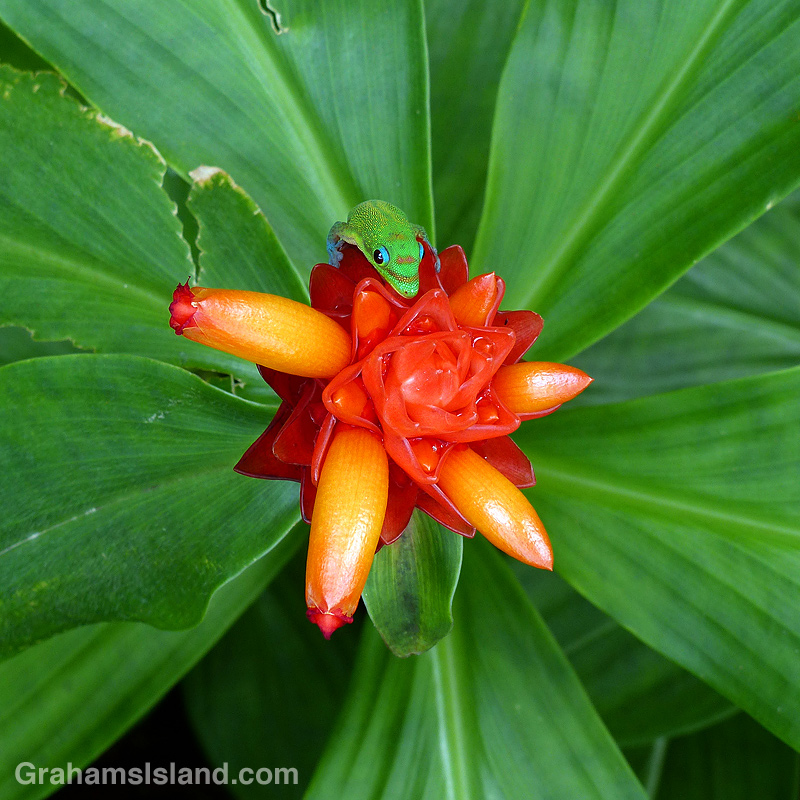 Costus curvibracteatus is also known as orange tulip ginger and hails from Costa Rica and Panama. In these photos, the overlapping red parts are the bracts and the longer orange tubular forms, emerging from between the bracts, are the flowers. However the bracts can also be orange, and the flowers a similar length as the bracts.
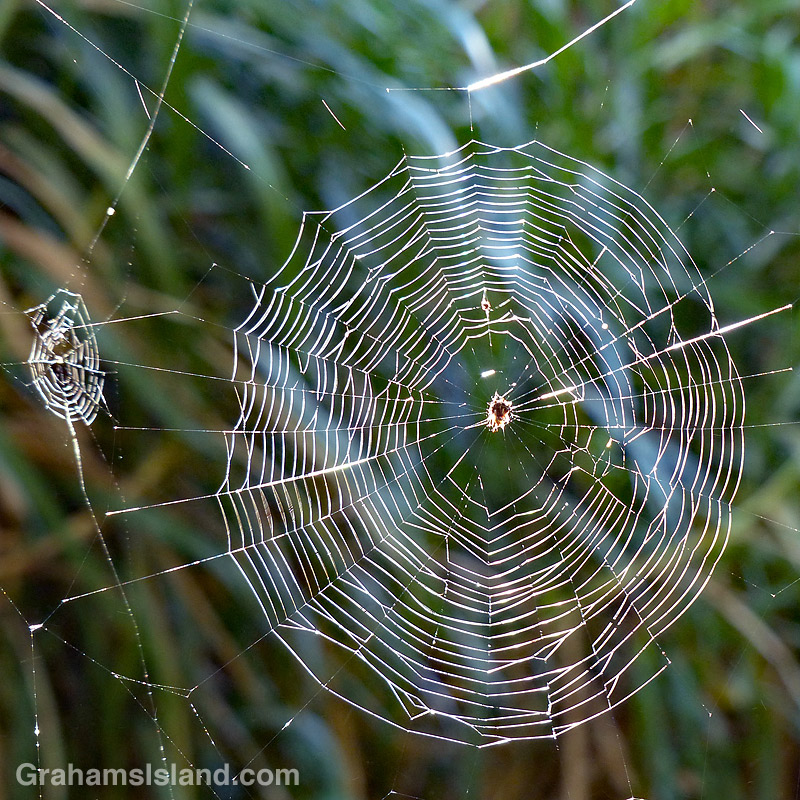 Crab spiders tend to proliferate in the fall and dwindle in the spring. That means winter is prime time for encountering lots of them, usually in the form of blundering into their webs. This is easy to do for two reasons.
 Graham's Island