Category Archives: Animals

Horses with a view

Horses and the ocean

I used to see these four horses frequently when I went for walks. They’re still around, but not as accessible as before. This pasture has been sold and is now used to grow Hawaiian heirloom sugarcane for use by a rum micro-distillery.

Another thing that’s changed is that the brown grass has been greened up by the last two hurricanes, both of which have dumped a good deal of rain, but generated very little in terms of wind, at least around here.

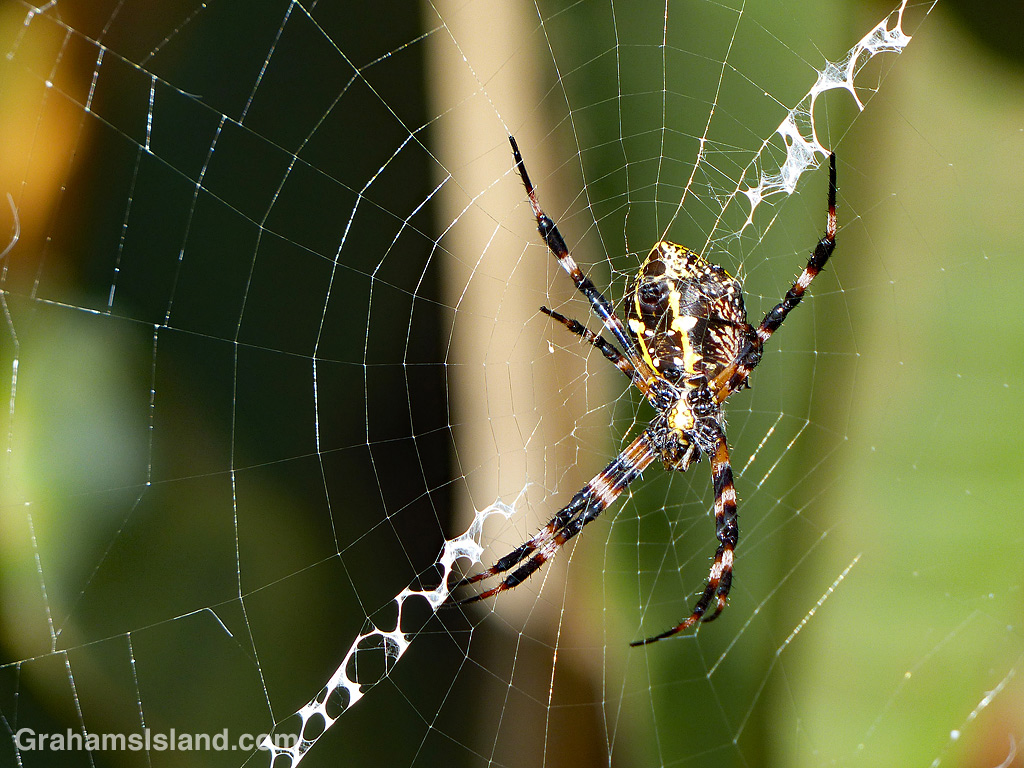
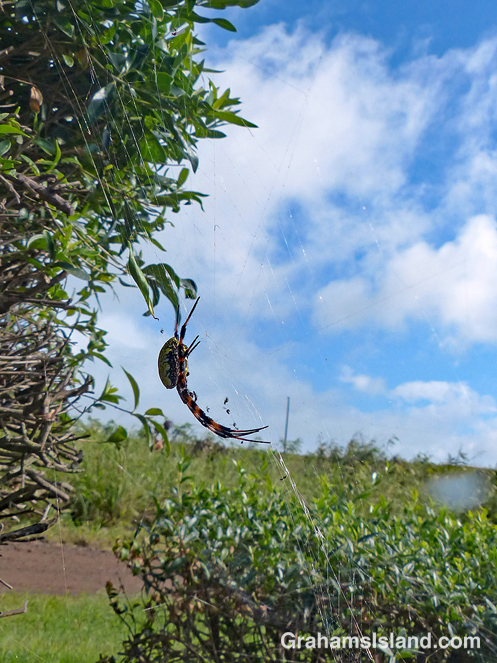
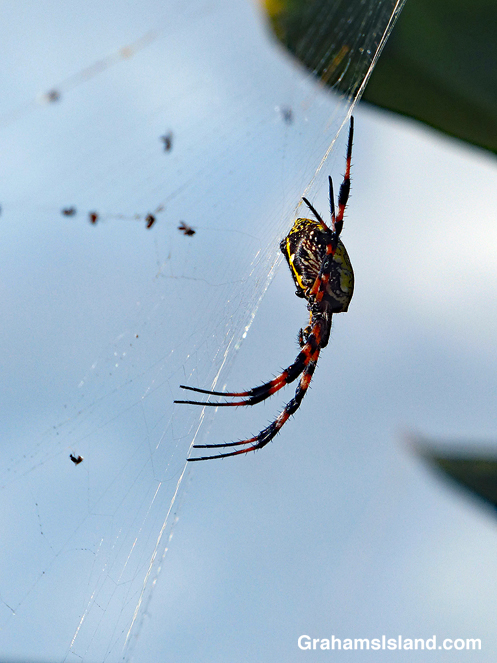
Four views of a Hawaiian garden spider

Hawaiian Garden Spider female underside
Hawaiian Garden Spider female top view
Hawaiian Garden Spider sideview
Hawaiian Garden Spider female side view

This rather large female Hawaiian garden spider (Argiope appensa) had spun a web in a place where I was able to gain decent access to it, so I decided to take photos from front and back and both sides.

The top pose is the one I see most often, with the spider perched on the underside of her web. The back view is the most striking, with its jewel-like top side of the abdomen. The two side views show how gently the spider sits on her nest.

A couple of days later, I saw this same spider on her web with the jeweled back catching the sun. I must have got a bit too close because in an instant the spider was on the other side of the web, underside toward me. I’m still not certain how she made such an instantaneous transition, whether it was through a hole in the web or zipping around the edge, but it was faster than my eye could record.

Kou tree

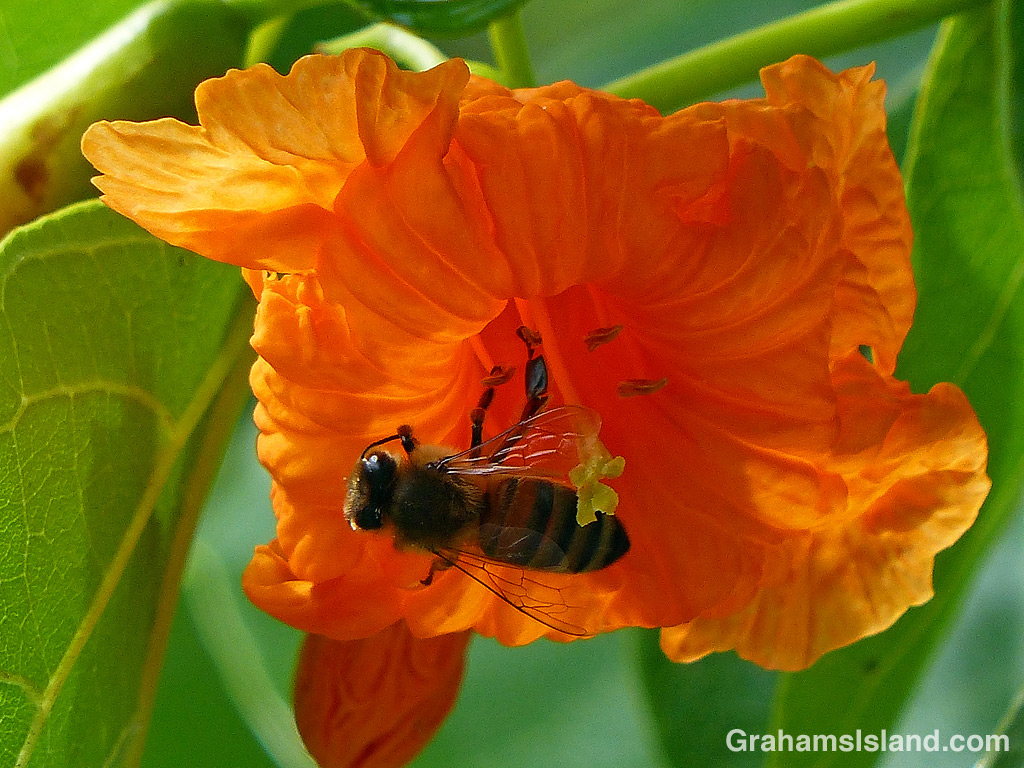
Kou flower and bee

Kou flowersKou (Cordia subcordata) is an indigenous tree that was also brought over by Polynesian settlers. It was highly prized for its wood, which was used to make bowls and other containers.

The flowers are beautiful, too. Less than two inches across, they grow in clumps, which are sometimes hidden by the shiny green leaves. The flowers are followed by small, round green fruits (seen in the photos to the left and below) which harden to a dark brown and contain white seeds.

The flowers on this tree were popular with a variety of insects including a honey bee, above, and a paper wasp (Polistes exclamans), below.

Kou flower and paper wasp

Kou flower and wasp

Kou tree

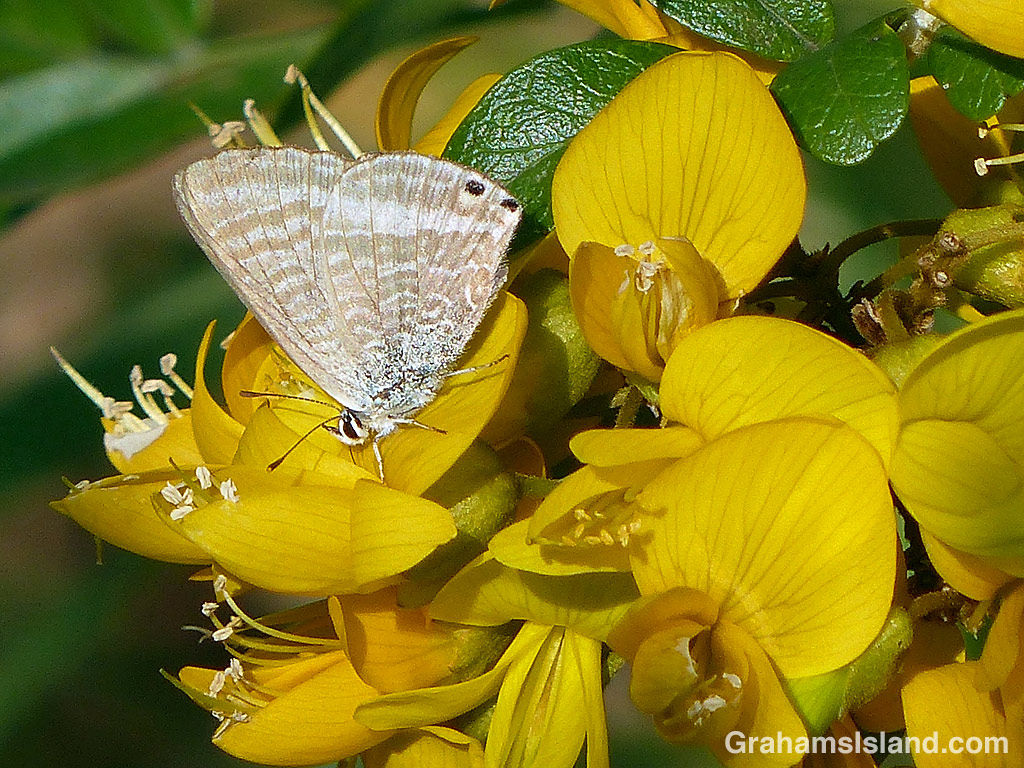
Long-tailed blue butterfly

Long-tailed Blue Butterfly

I think this is a long-tailed blue butterfly, otherwise known as the bean butterfly. It’s a pest on beans and peas and also wild legumes. My only question about the identification is that the tail, normally seen where the black spots are, is not visible here. But it’s possible that this butterfly has suffered a bit of damage in that area. Some butterflies look so beaten up that it’s a wonder that they’re able to fly at all.

It’s resting on the flowers of a mamane tree.

Sonoran carpenter bee

Carpenter Bee female on a passion flower

Carpenter Bee female lifts off a passion flowerThe Sonoran carpenter bee (Xylocopa sonorina) was first recorded in Hawaii around 1874. This black bee is a female. Males are golden orange in color and smaller than the female.

These bees get their name because the females tunnel into wood to create cavities in which to lay eggs and raise their young. The entrance to a nest is usually a neat, half-inch diameter hole in the wood. In the wild, the bees make nests in dead branches or tree stumps, but around human habitation they’ll bore into fence posts, rails, and roof eves. Because of this tunneling habit, these bees are sometimes considered pests, but the damage they cause is far outweighed by their importance as pollinators.

In Hawaii, passion fruits are one of the many fruits and vegetables pollinated by carpenter bees. The bottom photo shows how the bee’s size helps it pollinate the passion fruit’s large flower. It also shows how battered this poor bee’s wings have become. She was still able to get airborne though.


Carpenter Bee female

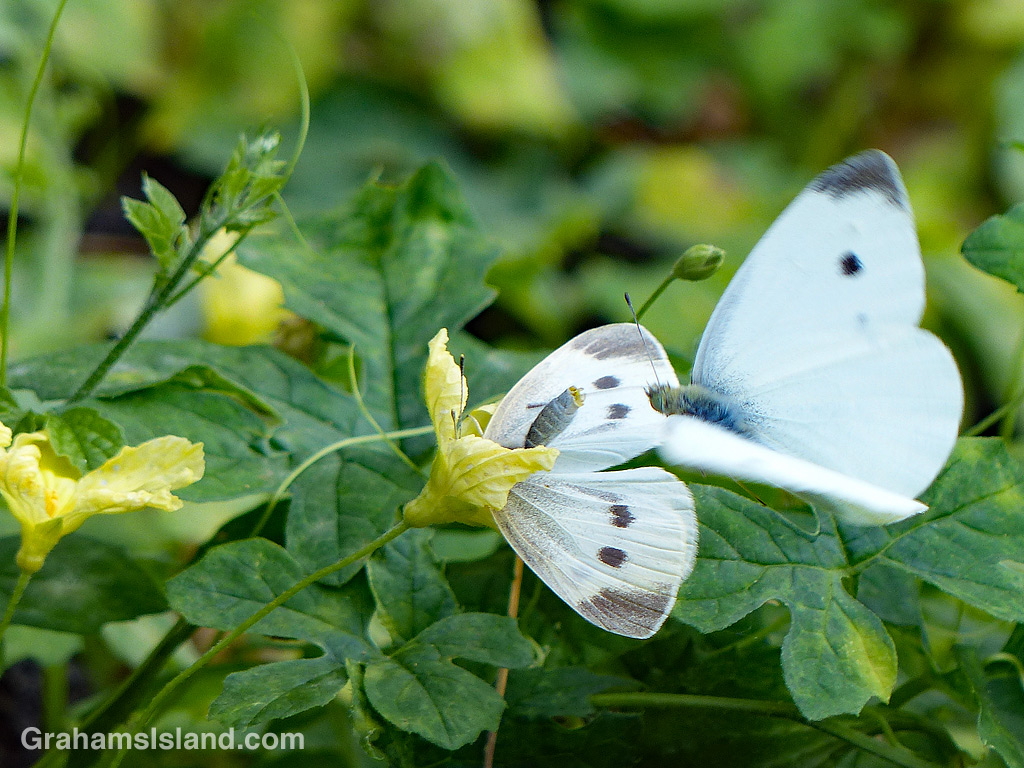
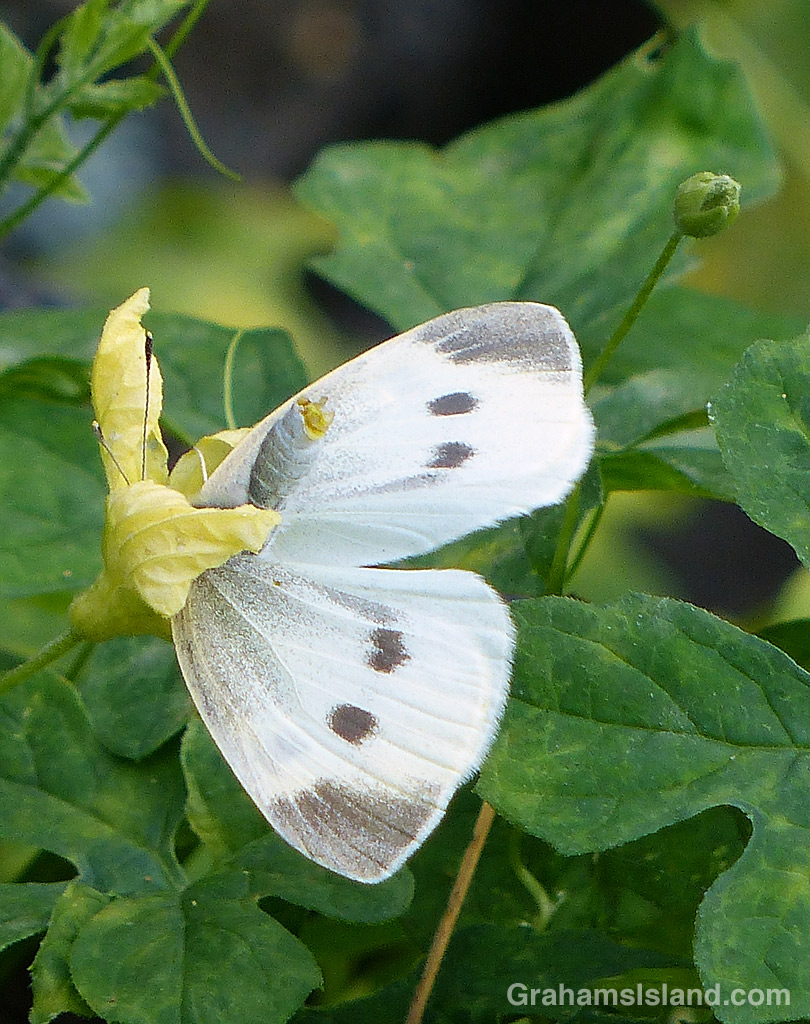
Cabbage butterflies not mating

Cabbage Butterfly female and male

Cabbage Butterfly femaleWhen I first saw these two cabbage butterflies I thought they were mating or about to mate. But I’ve since read that this posture, adopted by the female (identifiable by the two dark spots on each wing), is a signal that she’s already mated and is no longer available. In typical fashion, the male butterfly took a while to get the message before he gave up and left.
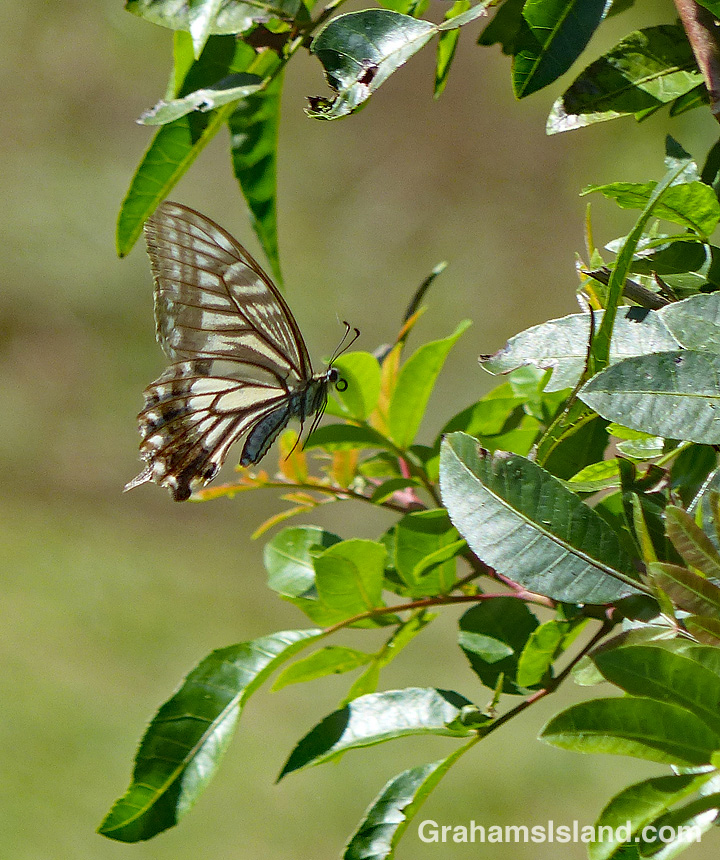
Asian swallowtail butterfly

Asian Swallowtail Butterfly

The Asian swallowtail butterfly (Papilio xuthus) is also known as the Chinese yellow swallowtail, and in my butterfly book, the citrus swallowtail. Whatever the name, this is the only swallowtail butterfly found in Hawaii, first sighted in 1971.

I see them mostly when I’m standing at the kitchen window, either preparing food or washing dishes. They seem to sense when I’m otherwise engaged and flutter by scenically. If I grab my camera and rush out, they’re always gone. For whatever reason, I hardly ever see them settle on a plant; they’re always flying.

This one was slightly less flighty than most and obliged by returning to the same plant several times.