Category Archives: Birds

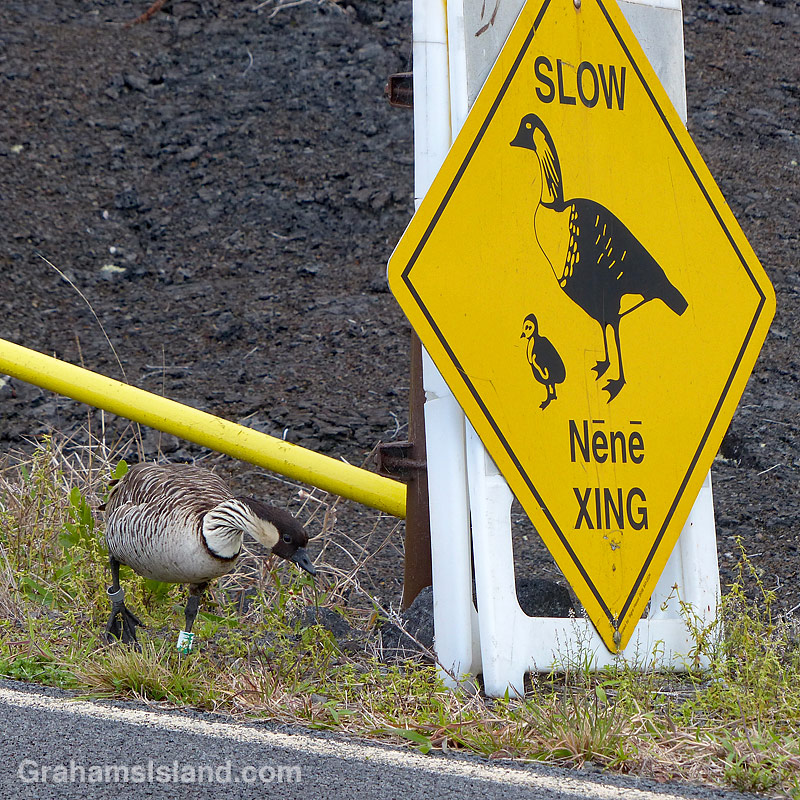
Signs: Nēnē crossing

This week’s Friendly Friday challenge theme is ‘Unusual.’ See more responses here.

Nēnē, the endemic Hawaiian geese, are long-distant relatives of Canada geese. They were listed as an endangered species, until the end of last year when their status was changed to ‘threatened.’

Because of the nēnē’s precarious numbers, it isn’t unusual to see “Slow, Nēnē Crossing” signs, particularly in areas where nēnē breed. Because their numbers are on the rebound on the Big Island, it’s also not unusual for me to see nēnē, on my daily walks or when I was working. But in my years on the island, I never saw a nēnē anywhere near one of the warning signs, until earlier this year, just before the lockdown. This sign and these two birds were in Hawaii Volcanoes National Park, where a fair number of the birds live and breed.

I had to stop and get a photo of this unusual event, fortunately without getting myself or the birds killed (it’s a busy, narrow road). The only disappointing thing about this encounter was that neither of the nēnē actually crossed the road. I guess I’ll have to wait another seven years to witness that.

Laysan albatross

Not the greatest photo, I know, but when I saw this bird flying off the North Kohala coast I knew it was something I hadn’t seen before.

It’s a Laysan albatross, more often seen on Kaua’i and O’ahu, but also on other Hawaiian islands. This wide-ranging traveler can cover a couple of thousand miles or more as it searches the Pacific for food.

Nutmeg mannikin

Nutmeg mannikin (Lonchura punctulata) is also known as scaly-breasted munia and spice finch. They feed on grass seeds. Here, a mannikin is feeding on cane grass seeds. It will work its way up the stem until the whole plant is stripped and the farther up it goes, the more the stem bends.

Watching from the shadows

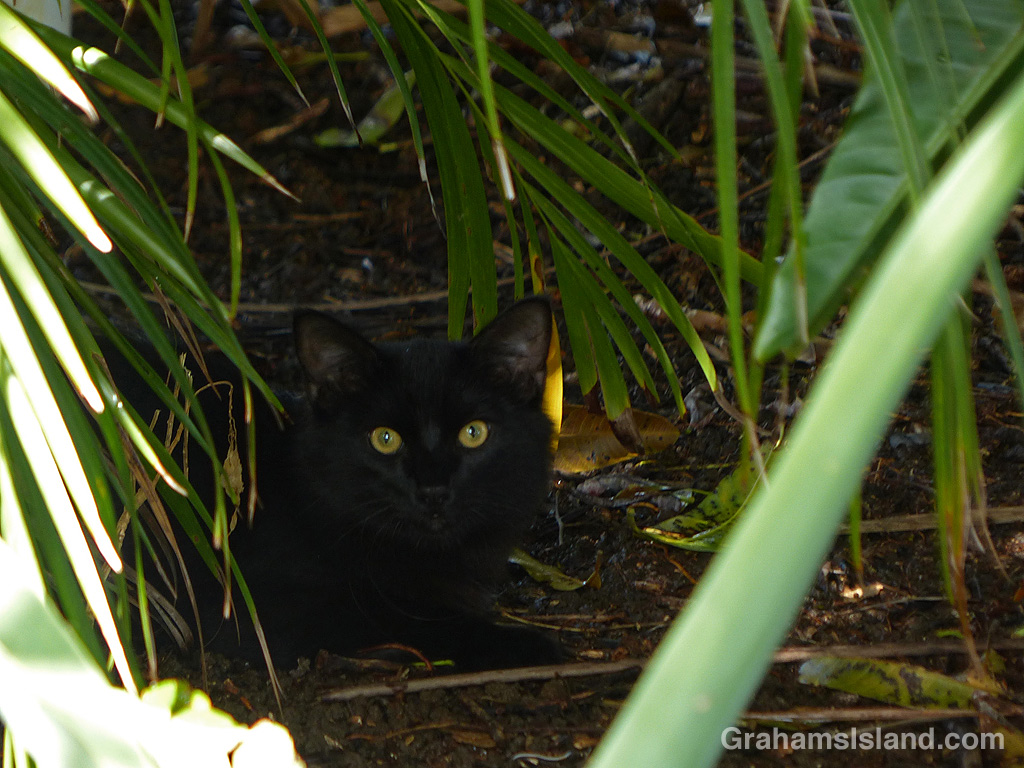
I was taking photos of birds in the yard – northern cardinals, Japanese white-eyes, and saffron finches – when I noticed that I wasn’t the only one watching them intently. A neighbor’s black cat was following their every move, until it realized that it wasn’t the only one doing that. Then it turned its stare on me.

Ring-necked ducks and lesser scaup

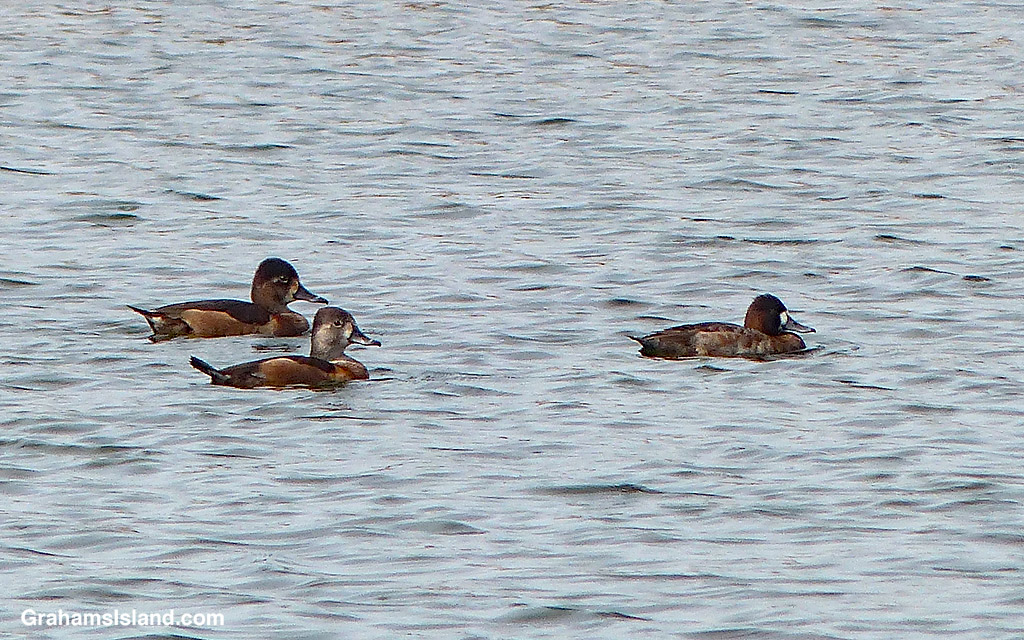
I saw a little group of ducks on a small reservoir near Hapuna. Most are ring-necked ducks, the bird on the right in the top photo being a male, and the two birds on the left below, being females. The odd one out is the bird on the left in the top photo and on the right below. That’s a female lesser scaup.

According to my bird book, a small number of lesser scaups migrate to Hawaii every year, but ring-necked ducks are considered uncommon visitors.

Thanks to birdforum.net for help with the identification of the female lesser scaup.

Dawn chorus

This week’s Sunday Stills challenge theme is ‘Awakening.’ See more offerings here.

Around here, awakening is usually courtesy of the dawn chorus. That occurs when the birds themselves awaken and announce to the world that they made it through the night. Pretty much every bird species that lives within earshot takes part, but there are some standouts.

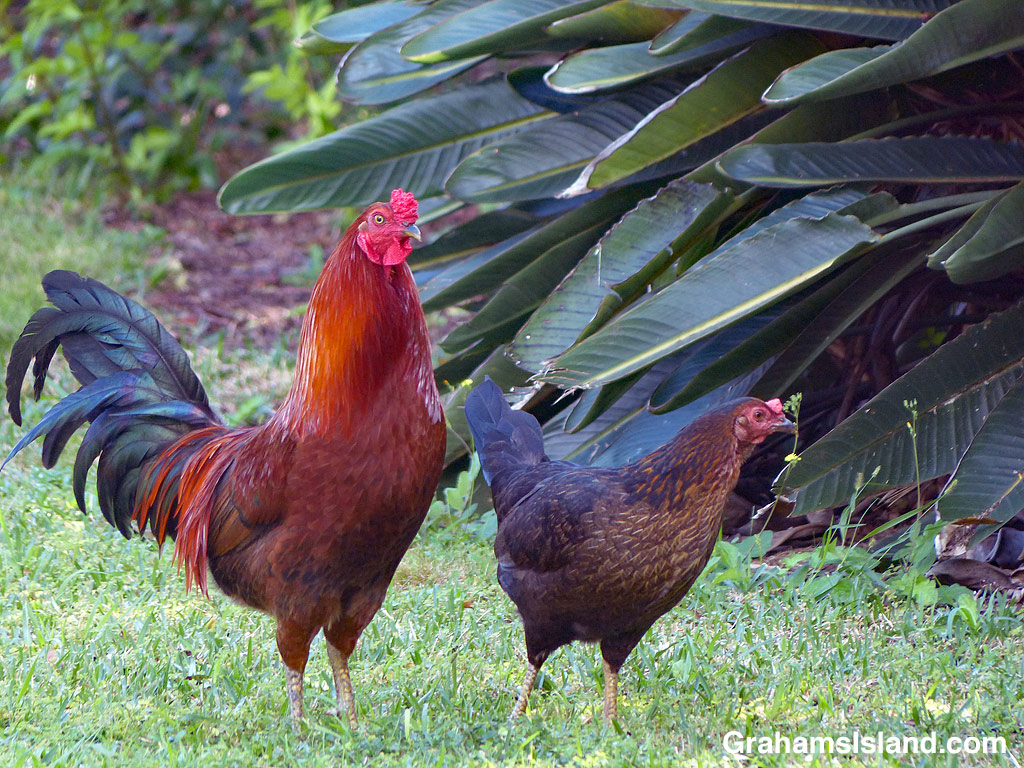
Roosters (above) are the traditional greeter of the new day and that’s true here, though it has to be noted that they’re equally likely to sound off at any time of the day or night. This neighborhood used to be rooster-free for several years. Then one wandered in from across the road and now there are several in the vicinity. One in particular keeps trying to make my yard part of its territory. I am resolved to prevent this.

Gray francolins (right) are smaller than roosters but might be even louder. Their call has a little wind up before soaring to full screech. It gets people’s attention at any time of day, but at 5:30 in the morning it’s more effective than mainlining caffeine.

The northern cardinal (below) is a smaller bird still but, from its typically high perch, its variety of powerfully-sung songs tend to ride over everything. But rest assured, the other birds contribute, from the red-billed leiothrix, to Japanese white-eyes, to an assortment of finches, they make sure that I’m up to greet the sunrise, whether I want to or not.

Top hat and tails

This Pacific golden plover is all dressed up with somewhere to go, and that somewhere is the Arctic. These birds overwinter in Hawaii, and elsewhere, before heading north to their summer nesting grounds. But before they go, they lose their usual pale front for this snappy look. Not quite top hat and tails, but awfully close.

Posted in response to Becky’s April Squares challenge theme of ‘Top.’ See more responses here.