Category Archives: Birds

Hawaiian noddy

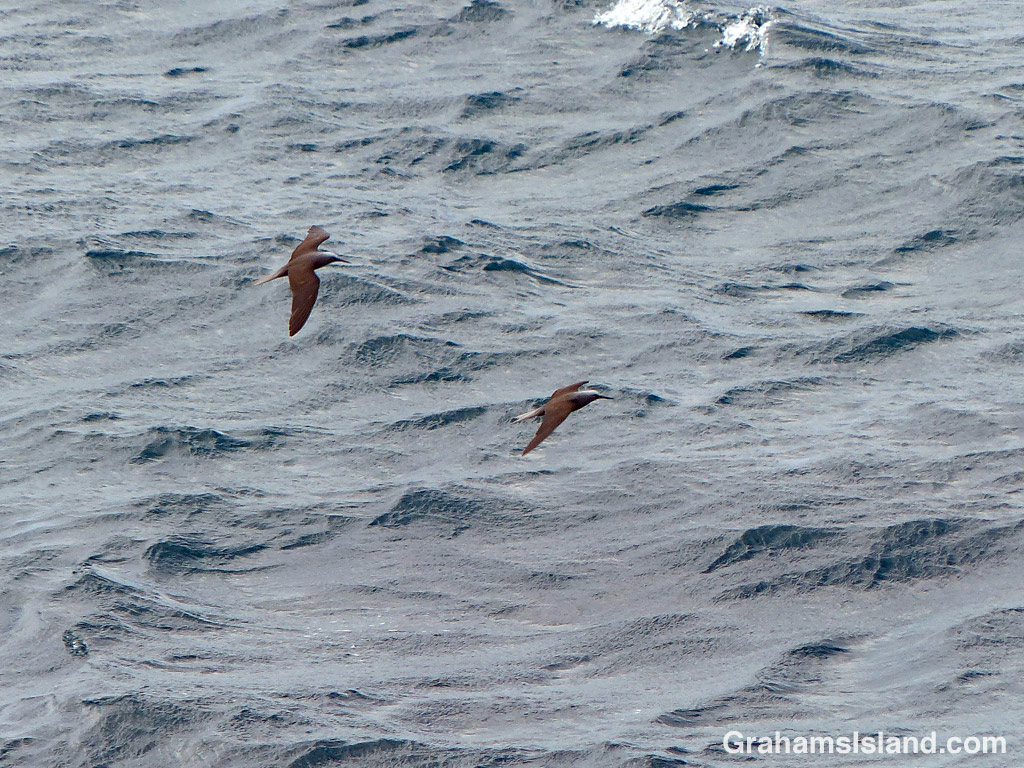
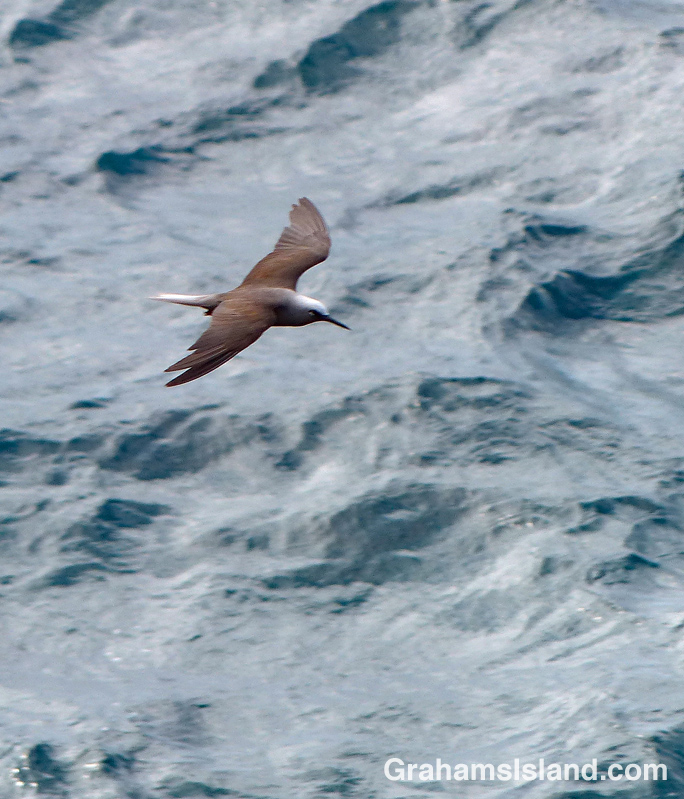
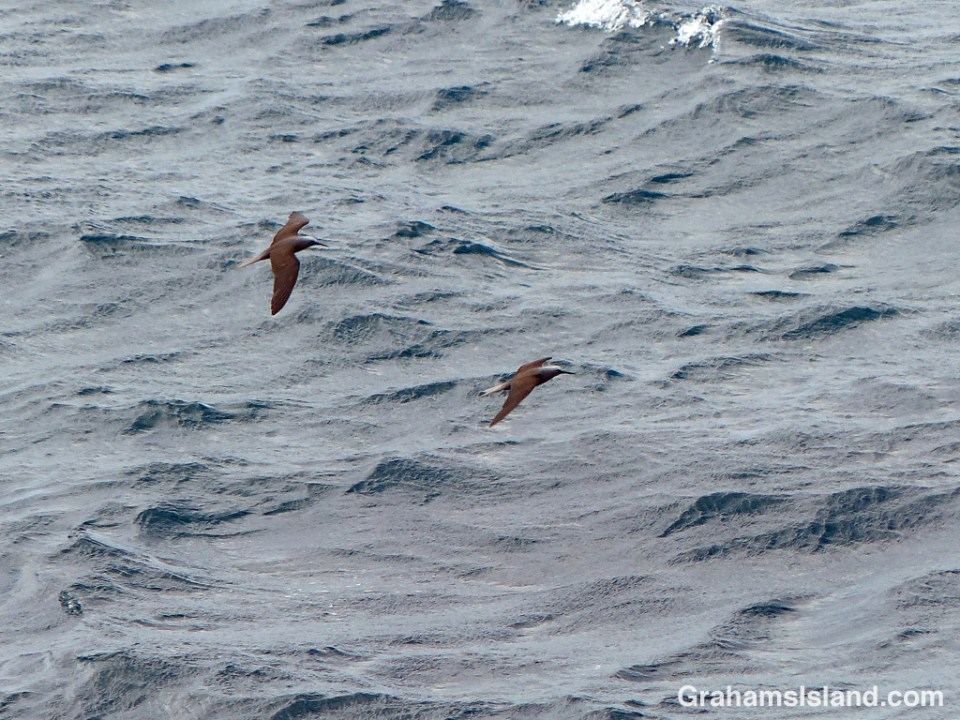
A pair of Hawaiian noddies skin the ocean.A Hawaiian noddy flies over the ocean.

Photographing birds is always a challenge for me, especially when they’re in flight. Hawaiian noddies are tricky because they tend to skim the water as they fly along the coast. When I do see them, they’re usually as close as they’re going to get and, by the time I have my camera organized, the best I can hope for is a blurry photo of some tail feathers.

What was unusual on this day was that, while I saw the noddy in about the same relative position as I had other times, it was higher up, dipping below the cliff and then climbing up again. As it was heading into the wind, it was making slow progress and I thought I had a chance. But each time I was about to get the bird in shot and in focus, it would slide away again. However, each time it reappeared, it got closer to where I was.

Where I was standing, the cliff dipped toward me, and when the bird swooped in to that recess (still evading my camera) I felt sure I would be able to capture it when it flew out again. I was ready, I was focused, but no bird. I was pretty sure it hadn’t sneaked by, out of sight. Then I realized that the chances were I’d stumbled on the bird’s roost. I couldn’t see the cliff face so I waited and a few minutes later two noddies flew out, circled around, and returned to the cliff.

Eventually, four birds came out, and while they looked a similar size, I suspect two of them were chicks that were about ready for independent life. It was still a challenge getting the birds in the frame, and I didn’t help myself by switching my focus from one bird to thinking I could get all four in shot, and back again.

In the end, I was happy to have a few decent photos and more happy to have had the time just watching them circling and swooping, dipping and diving, before swinging back to their roost.

African silverbill

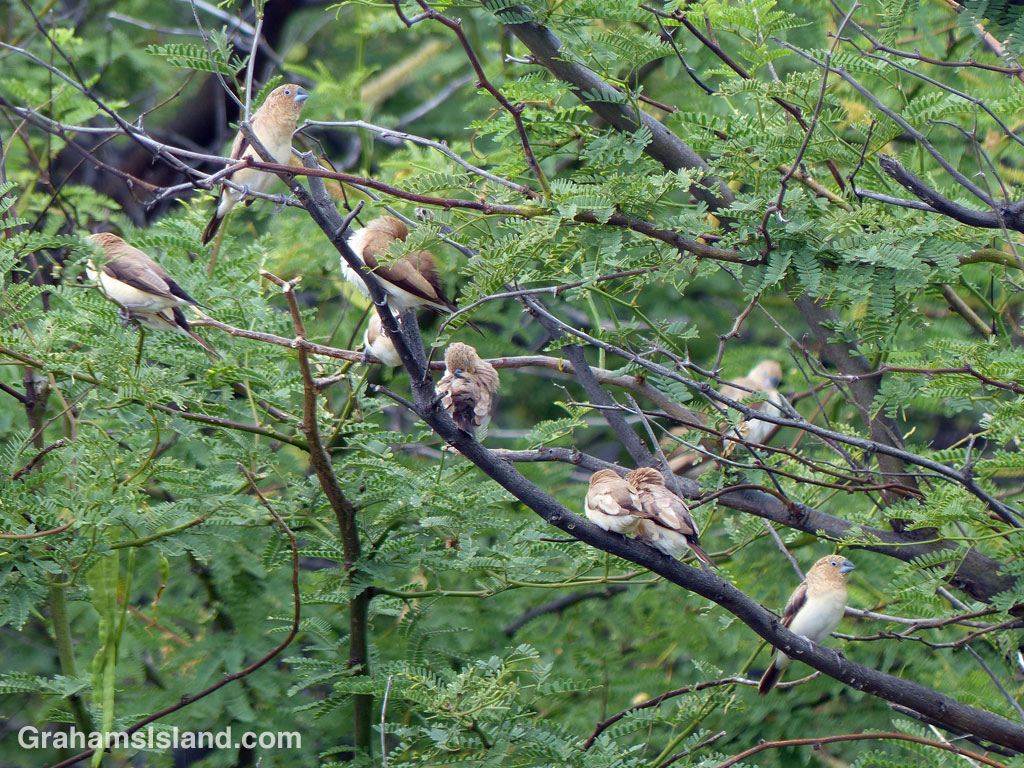
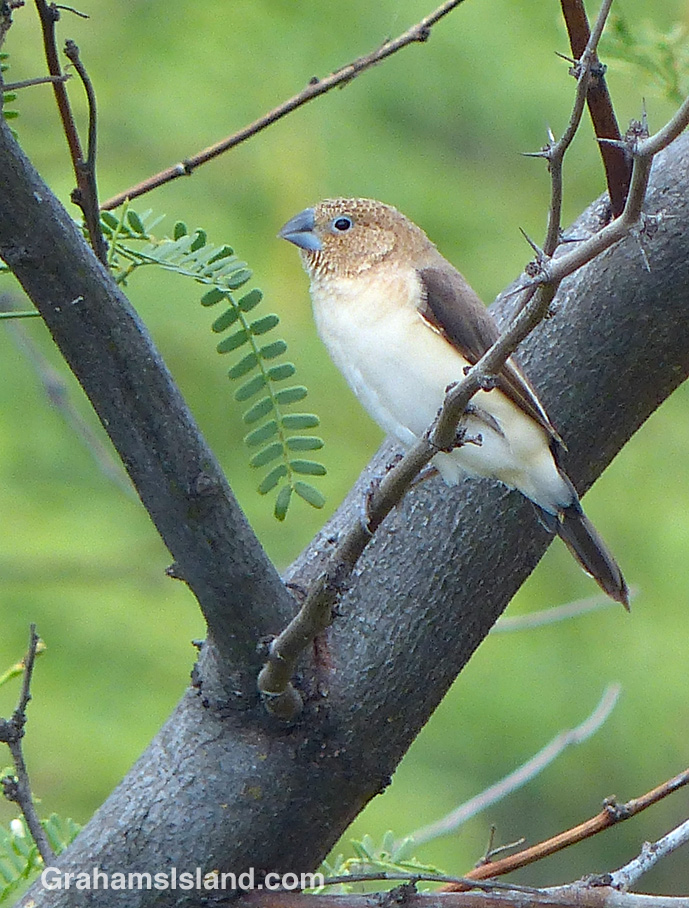
African Silverbills gather on a branchAn African Silverbill perches on a branch

Small flocks of African silverbills can often be seen, flitting from tree to tree, on the dry side of the Big Island. Sometimes they’ll be mixed in with other birds such as nutmeg mannikins, but this group was all silverbills.


Pacific golden-plover

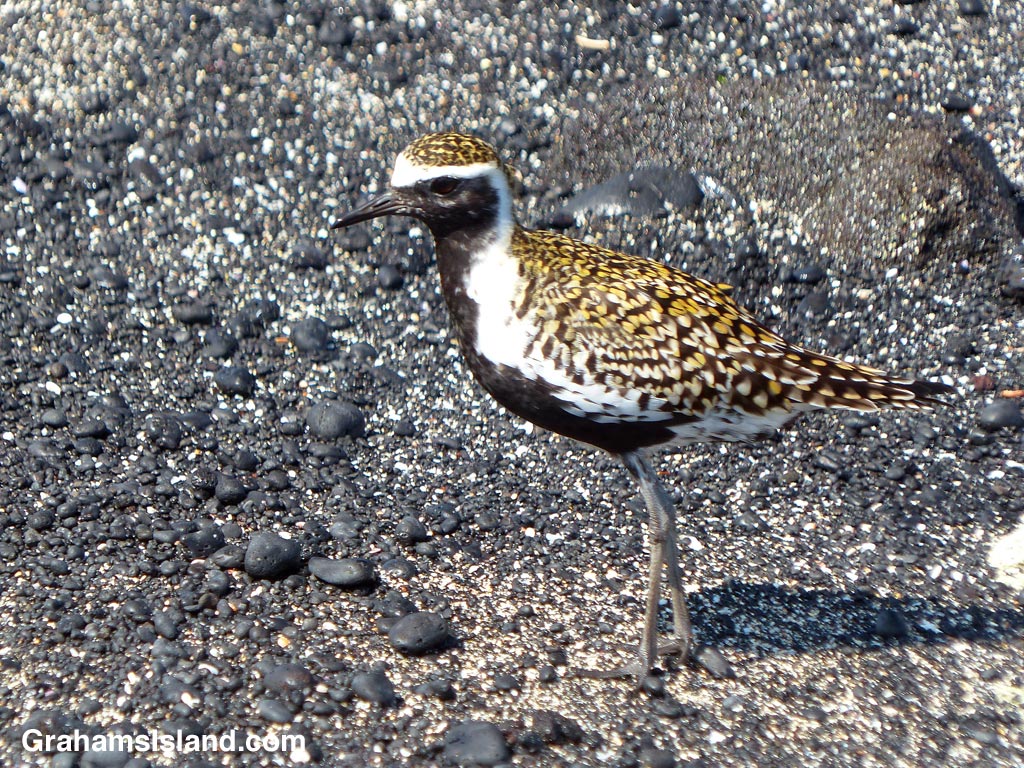
A Pacific Golden Plover with summer plumage.

A while ago I did a week’s worth of posts in response to a WordPress photo challenge on the theme of ‘evanescent.’ I thought I’d take a similar approach to this week’s theme, ‘transient,’ which is basically a synonym of evanescent.

Migrating birds are transient, in that they spend time in one area where they breed before moving to regular wintering grounds. The Pacific golden-plover is one such bird. After wintering in Hawaii, these birds fly north to spend May, June, and July at breeding grounds in the Arctic. Not only that, but this is one bird that dresses for the occasion! Normally, a mostly brown bird with flecks of yellow (as seen here), its summer plumage takes on this splendid black and white frontage.

Hawai‘i ‘amakihi

A Hawaii Amakihi about to feed on mamane flowers.A Hawaii Amakihi about to feed on mamane flowers.

‘Amakihi are endemic honeycreepers and the different islands have slightly different versions of the bird. The Hawai‘i ‘amakihi is very similar to the Maui ‘amakihi, but the O‘ahu and Kaua‘i birds have more noticeable differences. They’re one native bird that has adapted relatively well to changing habitat and introduced diseases including avian malaria.

This one was feeding from bright yellow māmane flowers at the Palila Forest Discovery Trail on the southwest slope of Mauna Kea.


Cattle and egrets

A cow chats with two cattle egrets.

I’m not sure one could call cows and cattle egrets friends. When cows graze, cattle egrets snaffle bugs stirred up in that process, but I don’t know of anything the egrets do for the cows in return.

However, this photo has a friendly feel to it. I picture the cow saying, ‘So you can fly, right? Could you teach me how?’ The egrets look suitably nonplussed at the suggestion.

Feel free to suggest your own caption in the comments.

Red-billed leiothrix

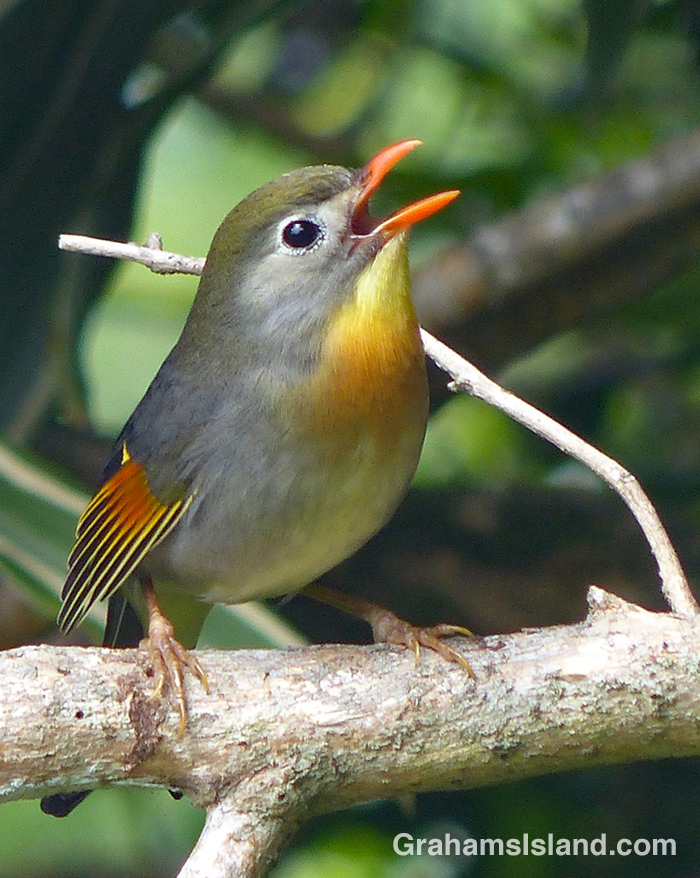
A Red-billed Leiothrix sings on a branchA Red-billed Leiothrix sings on a branch
This is the last of my series of posts in response to this week’s WordPress photo challenge on the theme of ‘evanescent.’

Picture the scene: I’m sitting quietly in my living room when a small shape flits past a window accompanied by a harsh chittering. I jump up, grab my camera and rush outside. As I do so, I turn the camera on, adjust settings and figure out the best place to intercept the bird that just flew by. I go around the house and sure enough, the sound is loud. And there it is, in the hedge. I raise the camera, but its gone. Over there now. I move, refocus. There it is again. I snap a photo. Gone again. I do this a couple more times, and then it goes quiet. There’s no more movement. The bird’s moved on.

Now repeat this scene, a couple of times a week and you have my experience with the red-billed leiothrix. It’s such a beautiful bird, but all my efforts had produced was a collection of photos of bits of wing, disembodied beaks, barely discernable blurry shapes, or just bare branches and leaves. The jittery, hyperactive birds were evanescent, quickly disappearing from sight time after time.

So imagine my surprise when this one showed up. It was one of a pair. The other one, true to its kind, instantly disappeared into a bush. But this one appeared not to have read the leiothrix operation manual. It stayed on this branch, in full view, for a couple of minutes. True, it wasn’t ever exactly stationary, it’s head going from side to side every two seconds. And it called out continuously, probably wanting to know why its partner was skulking in the bush. Somewhere the message must have got through because the bird joined its partner and the two of them, true to form, flitted off from branch to branch, through the hedge and disappeared from view.