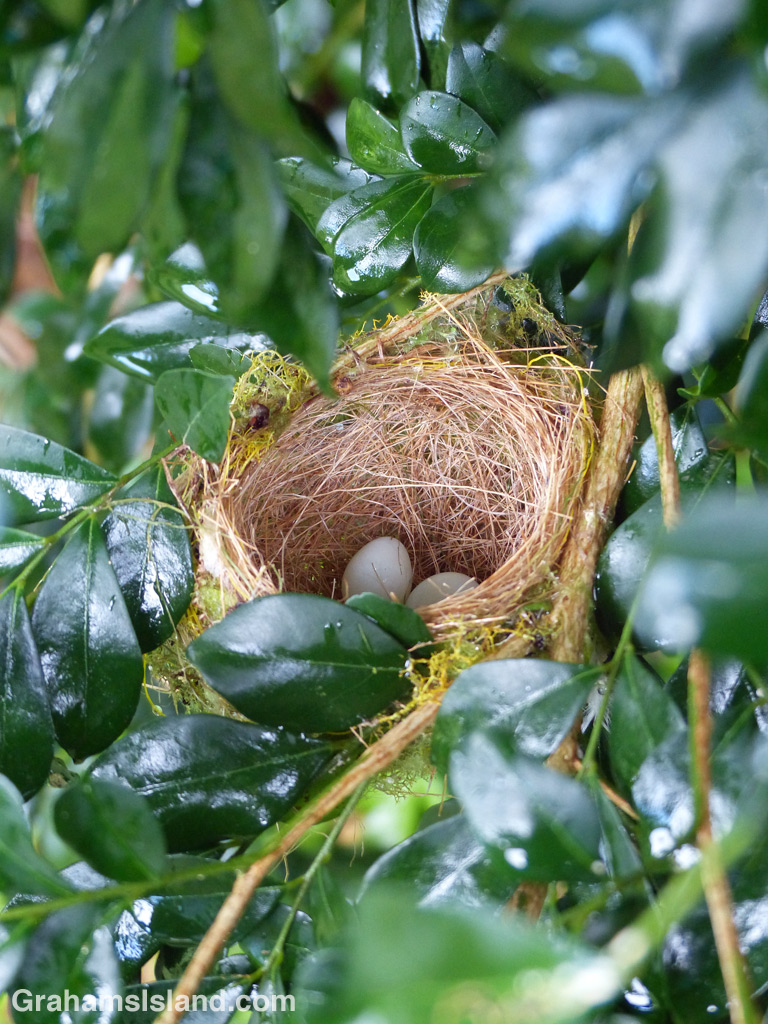
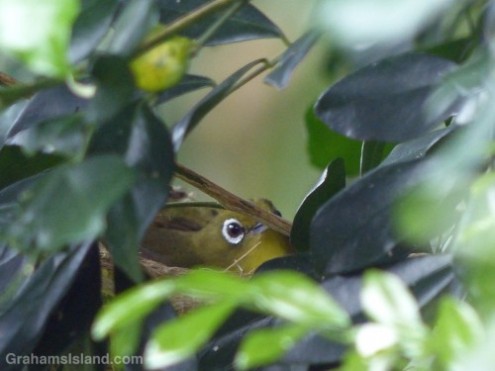
A Japanese white-eye sits on a pair of eggs in a nest in a mock orange tree. The bird was introduced to Hawaii in 1929 for insect control. It’s now quite common and is considered an invasive species. It carries avian parasites which harm native birds and also spreads seeds from invasive plants.
Rock pigeons (also known as rock doves) congregate on the cliff sides of the Kohala coast. These took off in a flurry, circled round, then settled down again.
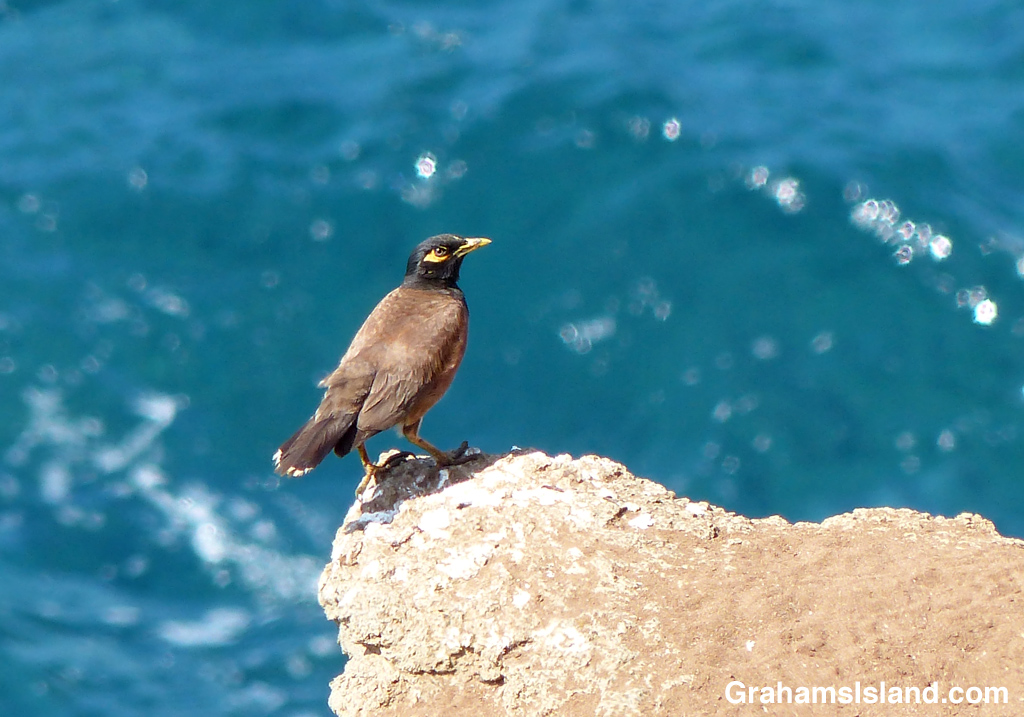
The mynah bird was introduced to Hawaii in 1866 to deal with the cutworm moth, an agricultural pest. The birds were successful in their task and promptly went on to thrive, becoming something of a pest themselves. I like them because they always look grumpy.
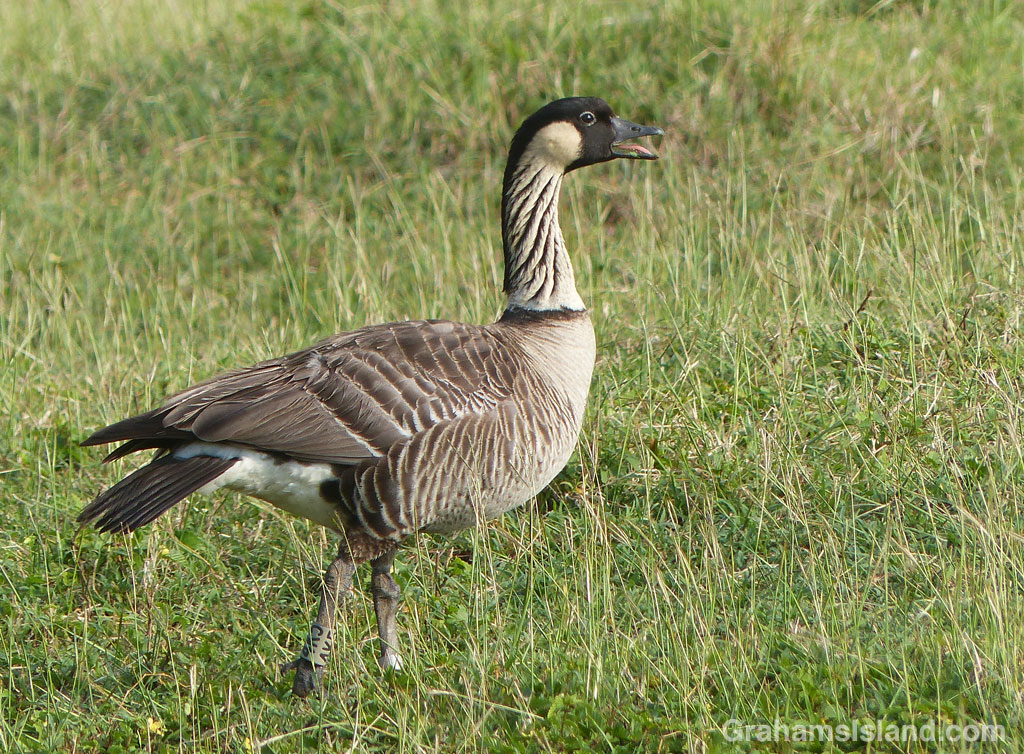
The Nene, or Hawaiian goose, is the official state bird and endemic to the islands. It’s also an endangered species, with numbers currently estimated at around 2,500. I was surprised, and lucky, to see a small group puttering about in the corner of a local cow pasture.
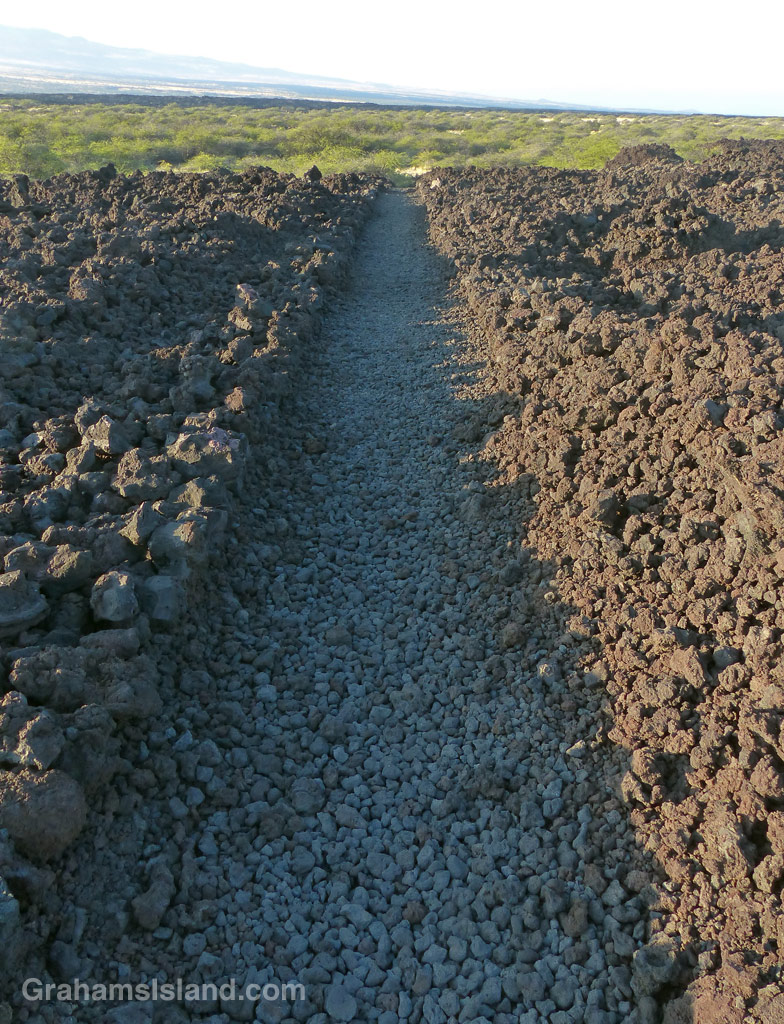
The King’s Trail makes a straight shot to the south of Keawaiki.
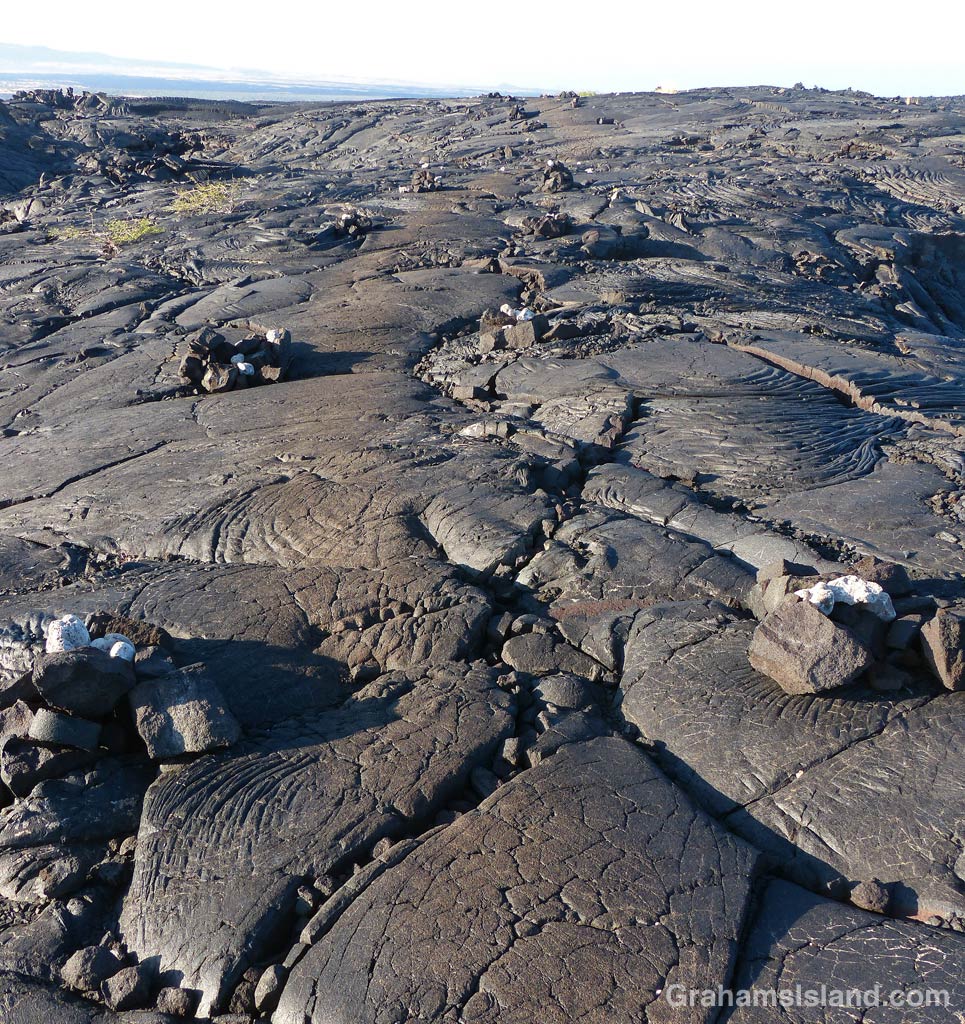
The trail is marked by cairns and, in places, the worn surface stands out from the surrounding lava.
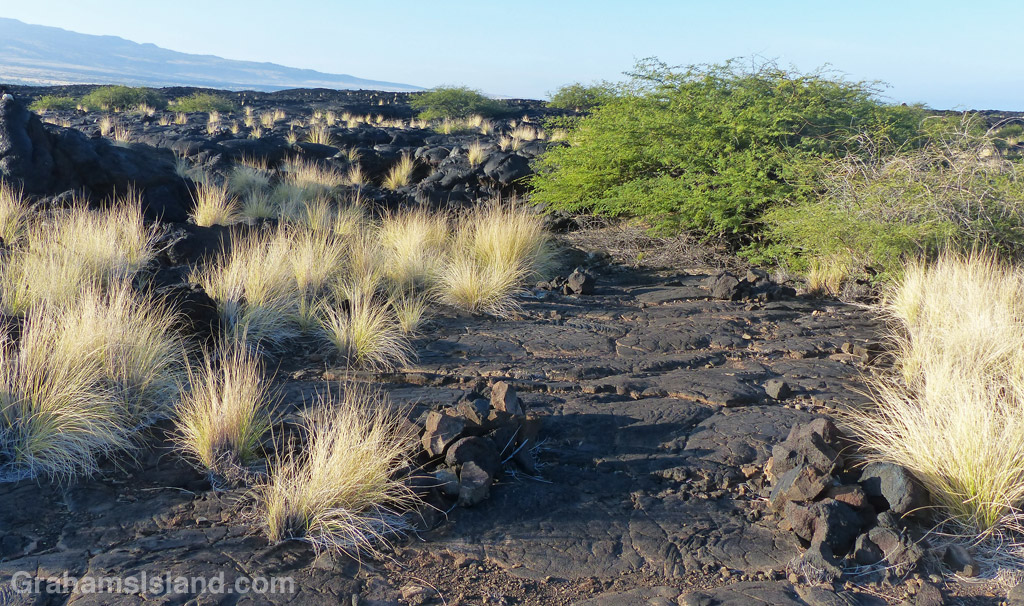
The trail takes a turn.
This hike is the first half of a loop from inland of Keawaiki Bay, south on the old King’s Trail to Kiholo, returning along the coast.
I was on the trail before 8 a.m. because the lava fields become very hot as the day wears on. The trail started out dead straight, with rock wall sides, until it reached a scrubby tree growing in the path. I figured it would pick up again on the other side, but this marked the boundary of the lava flow from Mauna Loa’s 1859 eruption, which destroyed fishponds and a village on the coast near here.
Instead, the trail wound over and around hummocks of pahoehoe lava and the way was marked mostly by cairns. Pahoehoe lava tends to be fairly smooth and rounded and is relatively easy to walk on, but still requires attention. It’s a matter of a moment’s inattention to end up jamming a foot into a crack and turning an ankle or worse. It’s also very easy to spot the next cairn, wander in its direction, then suddenly realize you don’t see any more because the trail has veered off to avoid some hole ahead or take advantage of easier going.
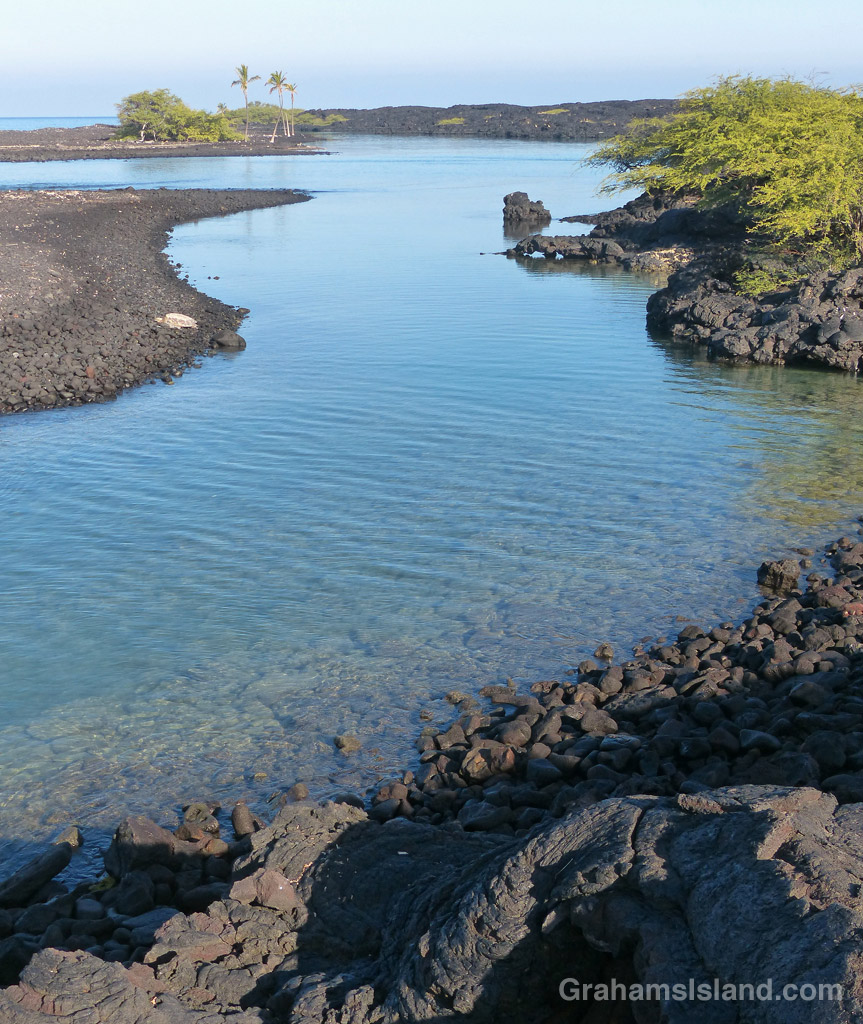
The tranquil waters of Kiholo Bay.
This is a stark landscape, unrelenting lava with occasional shrubs and tufts of fountain grass. But I like the history of the trail, its connection to the early days of Hawaii.
The distance to Kiholo is a little under 3 miles and I was plenty hot by the time I got there. But at Kiholo there’s shade to be found and the opportunity for a swim. I’ve snorkeled at Kiholo before, but it’s not the greatest. Freshwater springs make the water cloudy and cool.
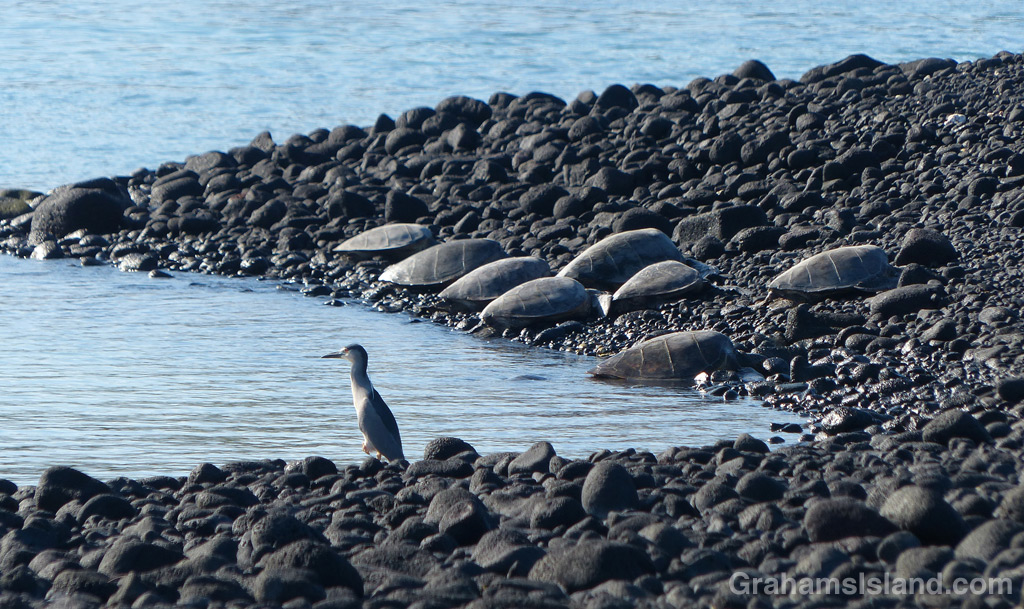
There’s a blue Kiholo Bay Fisheries Management Area sign where the coast trail almost doubles back on the one I’d arrived on. This lightly marked trail winds around a bay rich with wildlife, most notably green sea turtles. Usually they’re hauled out on the spit that forms the outer part of the bay. This day was no exception. A cluster of 8 turtles had lumped ashore near the tip of the spit, watched over by a guardian heron. Others were scattered in ones and twos up the inside of the spit. I hiked down the length of the spit enjoying the welcome sea breeze and taking photos, making sure not to disturb the turtles. Then it was time to head north again. (For the return hike, click here)
For more info about this, and other hikes on the Big Island, go to bigislandhikes.com. (The hike is listed as Kiholo to Keawaiki, starting from the south.)
A heron stands watch while green sea turtles rest on shore at Kiholo Bay.
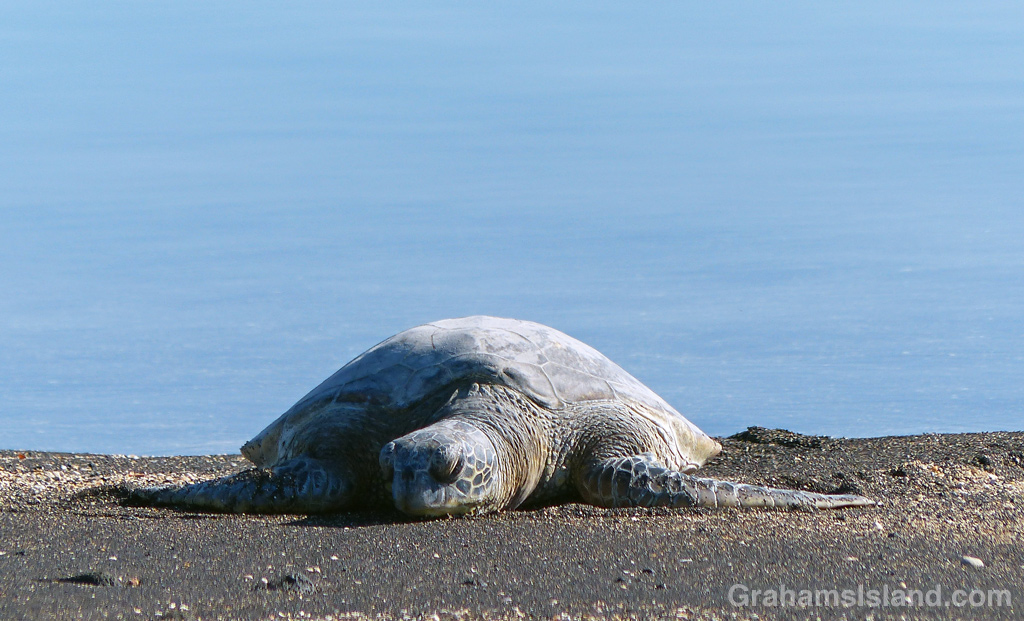
Green sea turtle resting on the shore at Kiholo Bay.
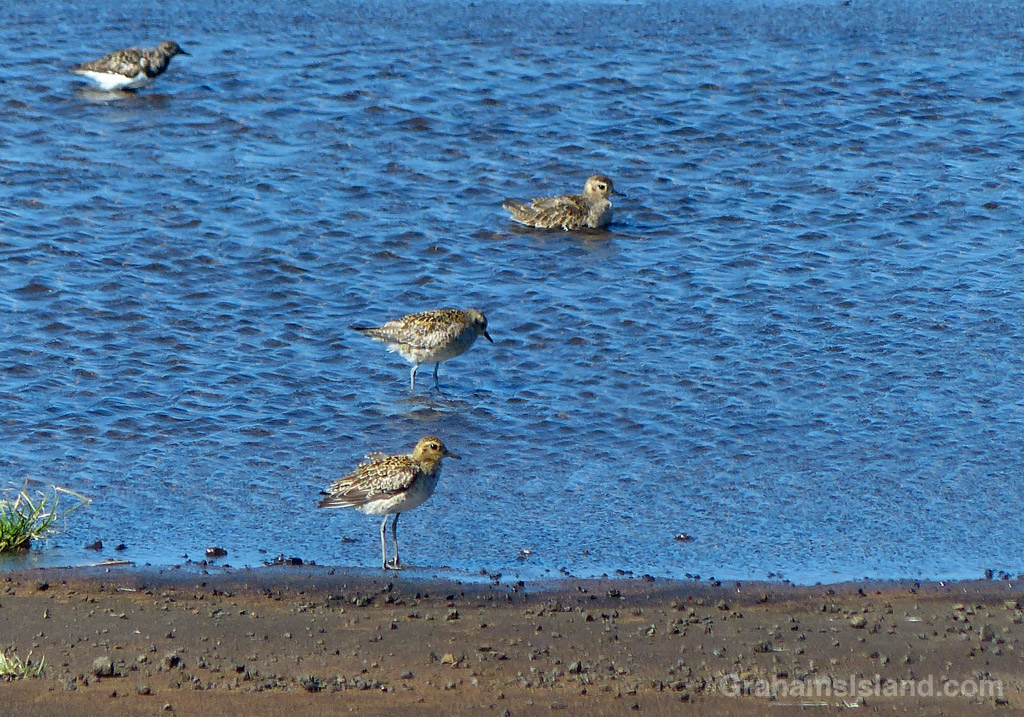
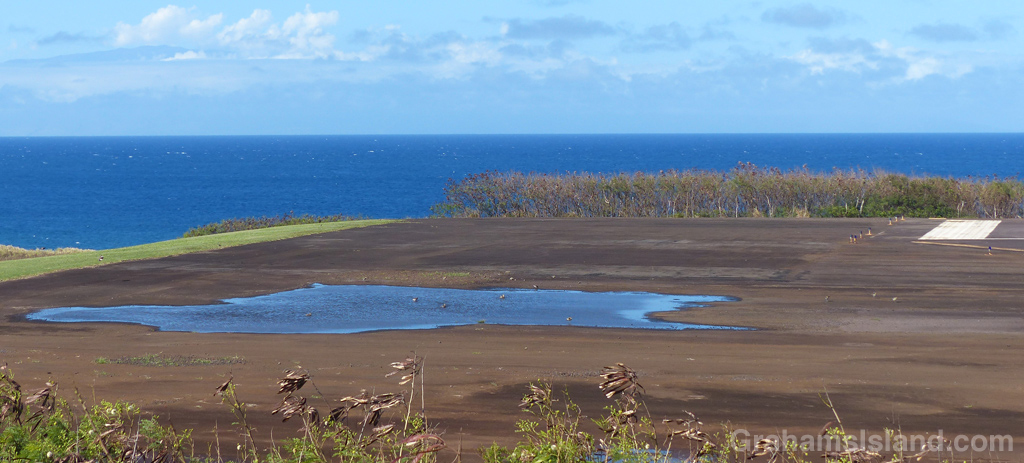
Pacific Golden Plovers (Pluvialis fulva) enjoying the water. In the winter, these birds migrate from Alaska to Hawaii where the bird is known as the Kolea. And the water? Sadly, not some tranquil mountain lake or forest pond. Instead, it’s a dip in the ground near the end of the runway of Upolu airport. Nice view though.




 Graham's Island