Two Step is a popular snorkeling spot, next door to Pu’uhonua o Hōnaunau National Historical Park, otherwise known as Place of Refuge. It gets its name from one of the entry points to the water, where two flat lava ledges make it easy to get in and out. Well, fairly easy; there’s usually a crowd gathered around the steps so it can be a bit of a scrum. Also, small sea urchins sometimes lurk in hollows in the steps.
Once it the water, there’s room to roam. I like to swim the length of the bay and out a little bit, to where I can look down the coral slopes leading to the sandy floor of the bay.
Posted in response to Becky’s April Squares challenge theme of ‘Top.’ See more responses here.
I’ve seen sharks when I go snorkeling, but this was the only time I’ve seen a shark from shore. I couldn’t identify it from just the fin and tip of the tail, except to rule out whitetip and blacktip reef sharks. Likely candidates would include gray, tiger, hammerhead, and Galapagos sharks.
Posted in response to Becky’s April Squares challenge theme of ‘Top.’ See more responses here.
This is the third and final part of a three-part description of a hike along the Puna Coast Trail in Hawaii Volcanoes National Park (See part 1 here, part 2 here).
The last part of the trail before ʻĀpua Point crosses over the only stretch of ʻaʻā lava on the trail which, as can be seen in the second photo, is markedly more rough and jagged than pahoehoe lava. This ʻaʻā is part of a 1969 flow from the same eruption at Mana Ulu that produced the pahoehoe lava that most of the trail passes over. The Mauna Ulu eruption lasted from 1969 to 1974.
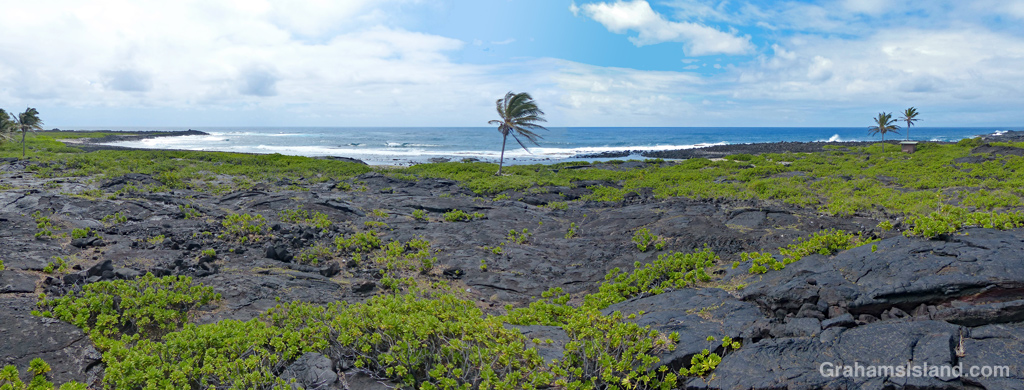
ʻĀpua Point is like a little oasis in a bleak landscape. Flows from the Mauna Ulu eruption reached the ocean on either side of the point, but the point itself was spared. The top photo is a panoramic view of the coast, stitched together (not well) from two photos, to show the view from ʻĀpua Point’s outhouse – actually a composting toilet. This toilet also represents the sum total of the facilities for anyone thinking of camping there.
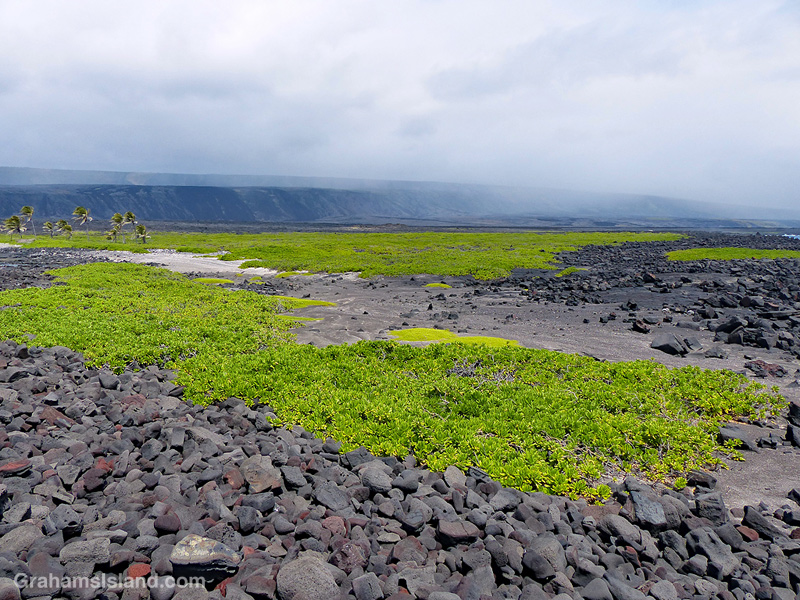
ʻĀpua Point itself is a rocky coastline jutting into the ocean. But behind this wall of rock, a sandier area hosts fields of naupaka, sea purslane, and other plant life, as seen in the third photo. Also in the background of this photo, a passing shower runs along Hōlei Pali. As I mentioned in part one of this description, the trail can be hot, wet, and windy, but for my hike, I saw moderate breezes, some overcast skies, and just a few spritzing showers.
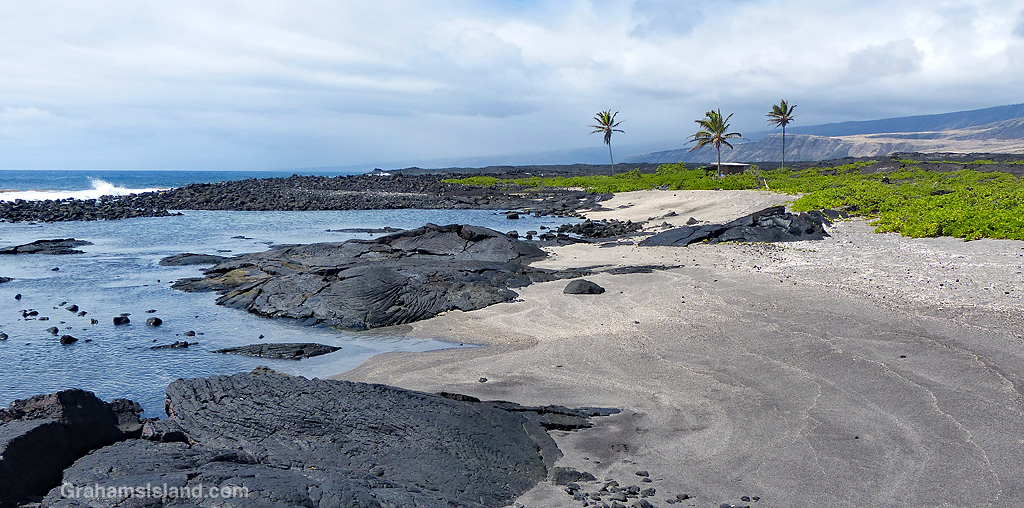
Swimming in the ocean along this coast is very dangerous because of high surf and strong currents. But at ʻĀpua Point there are shallow pools, suitable for soaking, that are protected from the surf by a border of rocks. There are also a few small sandy beaches such as the ones in the photo below.
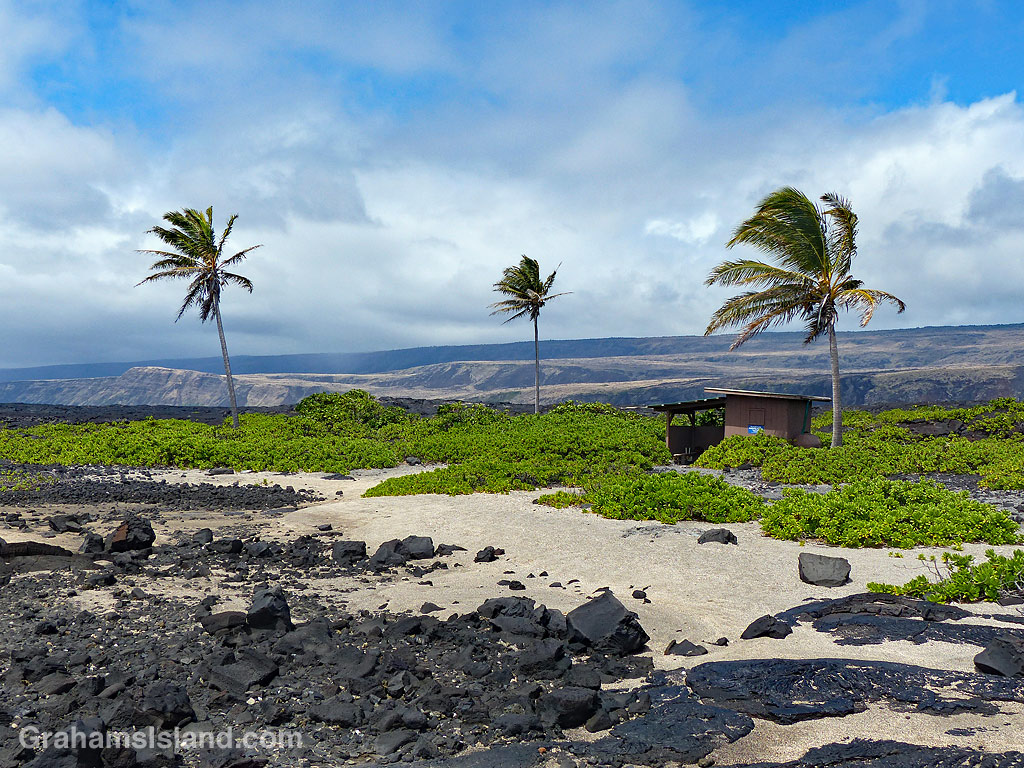
Besides the composting toilet, there is one other structure on ʻĀpua Point. It’s a small shed with an open covered area beside it, surrounded by naupaka and a few palm trees. This covered area represents pretty much the only shade to be found on the entire hike. The shed is used by the Hawksbill Sea Turtle Recovery Project, which monitors and protects endangered hawksbill turtles which use this area for nesting. I believe the nesting season runs from May to September, so I might have to return sometime after that.
And speaking of returning, from here it was time to turn around and hike the 6.6 miles back to the car. The hike took me about 3 hours each way with, of course, numerous stops for photography and just to enjoy the views.
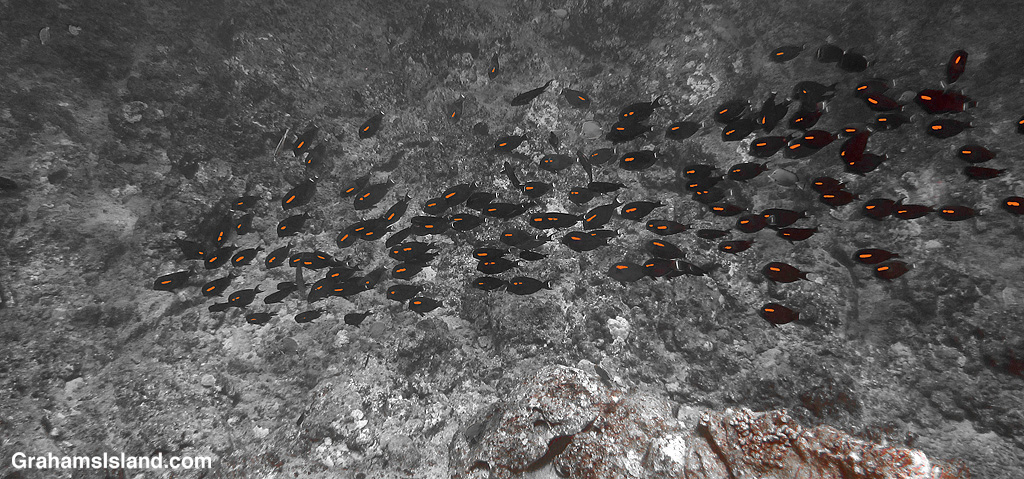
This week’s Friendly Friday challenge theme is ‘Re-imagine Orange.’ See more responses here.
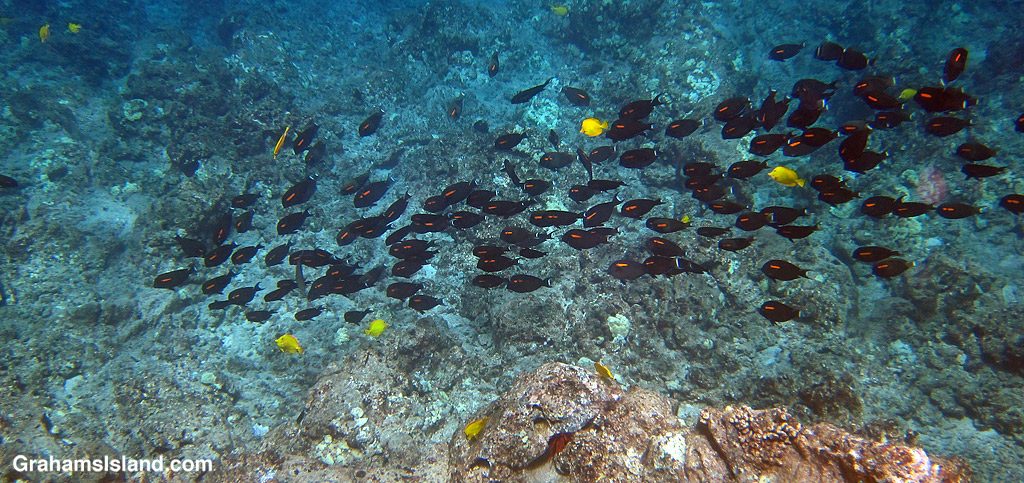
A shoal of orangeband surgeonfish is fun to see with their orange bands making them easy to identify and follow. For the purpose of this challenge, I took the photo below, desaturated the other colors, then boosted the orange to emphasize their defining feature. These changes virtually eliminated the other fish, particularly the yellow tang which went from bright focal points to almost invisible.
Lately, the gloom and doom enveloping the country has been matched by conditions in the water (not that I can access it anymore since all beach parks are closed). A series of swells and high winds has churned things up so that visibility is a hit and miss proposition.
So it was a joy to encounter this small turtle coming directly toward me one day, in a patch of relatively clear water. I took a couple of photos, and this one captured the moment it slid past before easing away into deeper waters.
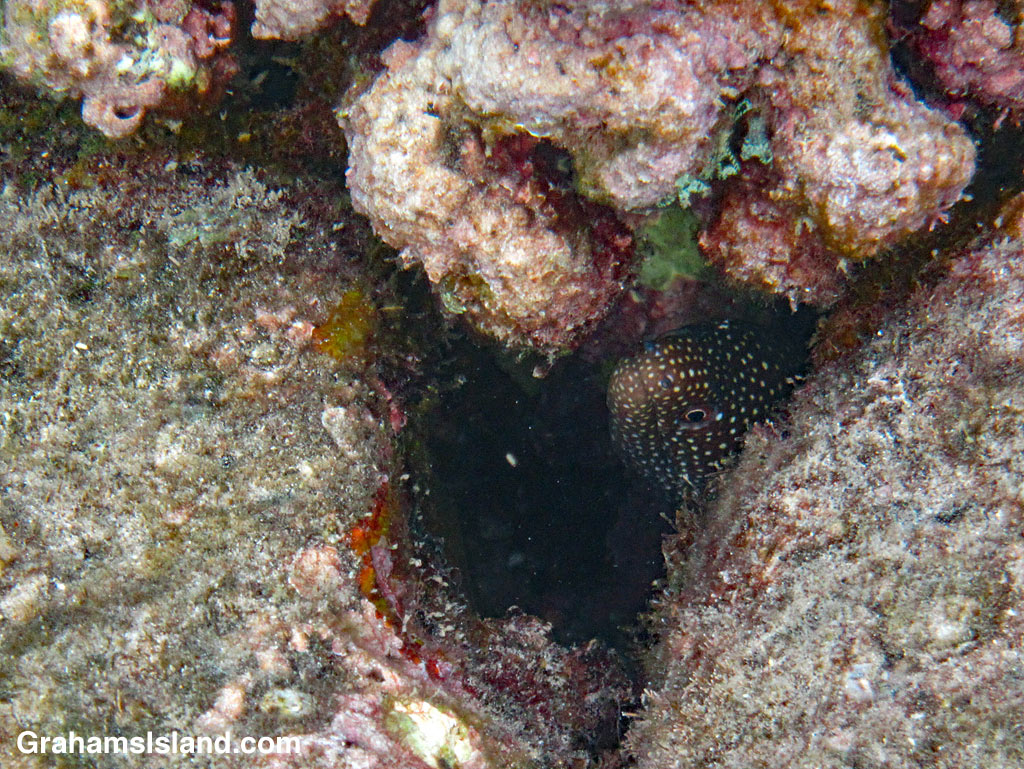
A small whitemouth moray eel peeks out from its hideaway in the rocks. It’s astonishing how even quite big eels can disappear into a crack that I can’t even see.
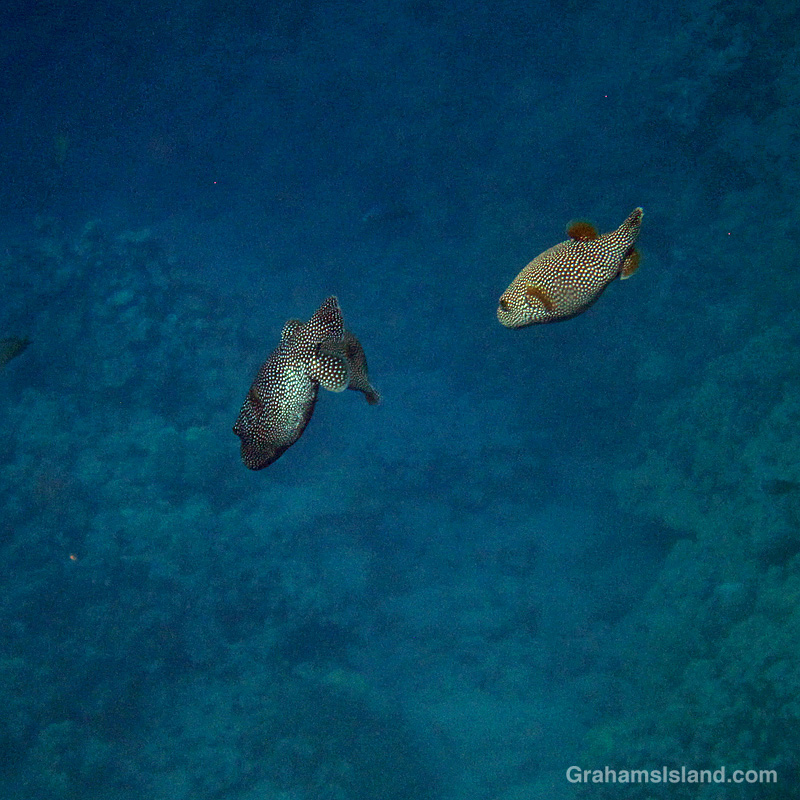
Usually, I see spotted pufferfish swimming alone, but these three spent some time together as a group. Also unusual was that they were swimming up in the water where they caught the sunlight.





 Graham's Island