Category Archives: Photo Challenges

Pu’u Wa’awa’a goat

A goat stands on the steep sides of Puu Waawaa on the Big Island of Hawaii

The theme of this week’s WordPress photo challenge is ‘Glow,’ so I thought I’d use that as my cue for the week’s posts.

First up is a goat clinging to the precipitous side of Pu’u Wa’awa’a. I particularly like how the goat is looking at me, but casts a crisp, more profiled shadow in the early morning light.

On the downside, there must have been a dozen or so goats in the area and, between their avid grazing and scampering about on the exposed slopes, they contribute greatly to erosion. My time watching them was accompanied by the constant sound of small rocks tumbling down gullies and puffs of dust and dirt churned up by their hooves.
Gargantuan blenny

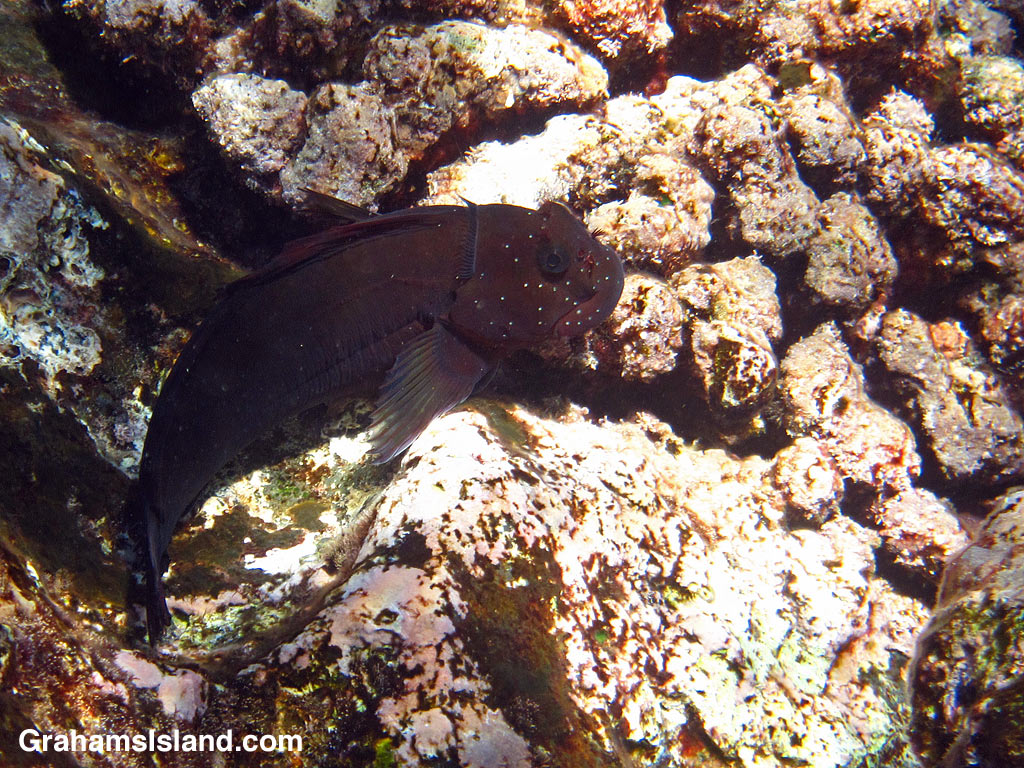
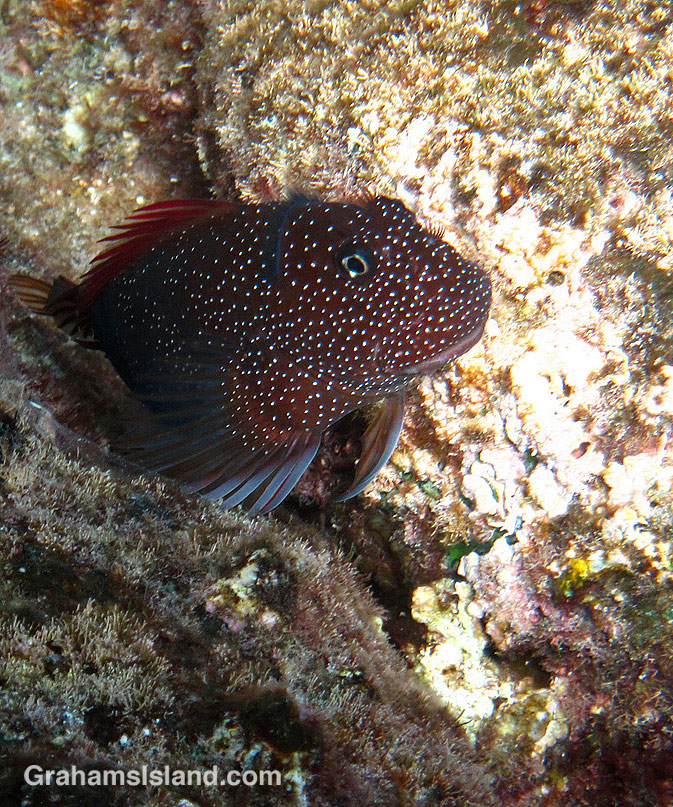
A Gargantuan Blenny rests on a patch of coralA Gargantuan Blenny rests between rocks.

This week’s WordPress photo challenge is on the theme of scale. The idea is to “experiment with placement and scale to show how big (or small) you can feel in a photo.”

These photos don’t do that. It’s not the image that speaks to scale, it’s the name. I mean, this isn’t a big blenny, or a huge blenny, or even a giant blenny. This is a gargantuan blenny. I feel like I should type the word in all caps – GARGANTUAN – to do it justice.

The photos were taken on different days, but in the same area, and it’s probably the same fish. The bright spots are more numerous toward the front and really catch the light in the second photo.

And just how big is this blenny? Typically, they top out at about 7 inches long and this fish was probably about that, but in blenny-world, 7 inches is, well, GARGANTUAN.

Kilauea Iki Crater trail

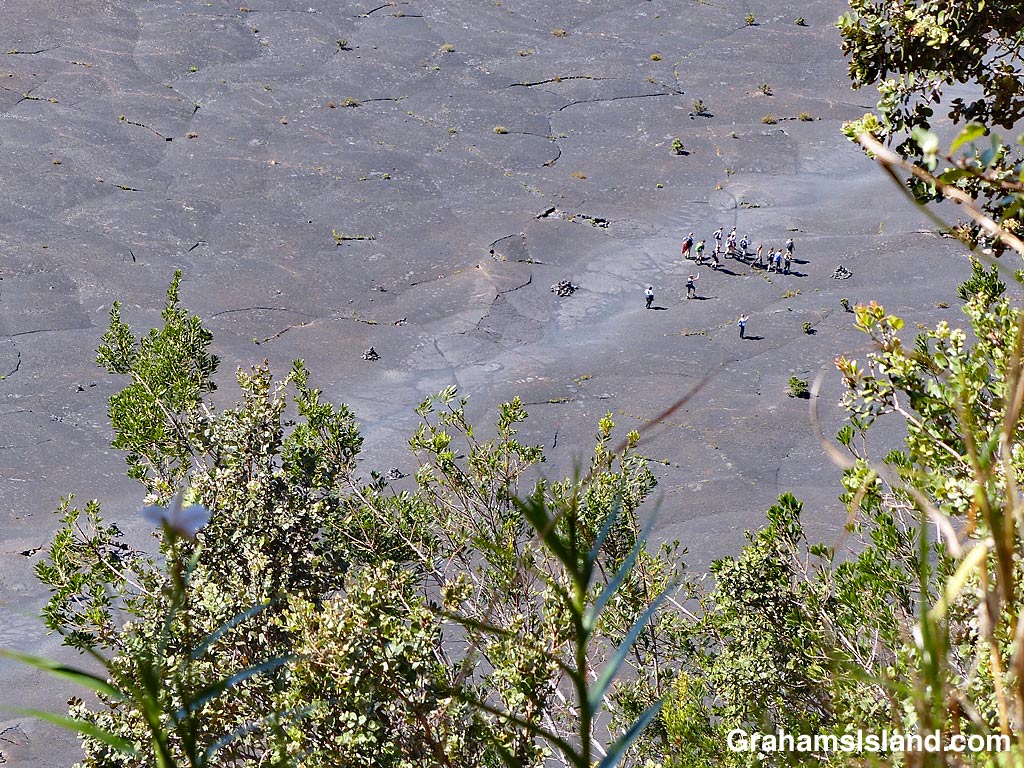
A group of people, looking very small, walk the trail across Kilauea Iki Craterfloor.A group of people, looking very small, walk the trail across Kilauea Iki Craterfloor.

These views of the trail across Kilauea Iki Crater, taken from the rim of the crater, give some idea of the scale of Kilauea Volcano.

Above, a group of people, looking very small, walk the trail across the crater floor.

To the left, smoke and gases from the active vent in Halema’uma’u Crater can be seen. Halema’uma’u Crater is part of the Kilauea Caldera which is much, much bigger than Kilauea Iki Crater. And, yes, that same group is still visible on the trail in this second photo, along with several others hiking the trail.

For more information about Hawaii Volcanoes National Park, go to nps.gov/havo/. For more information about Kilauea Volcano and it’s eruptions, go to hvo.wr.usgs.gov/kilauea/history/main.html.

Stick insect

A stick Insect rests on a truck tire

One thing I like about macro photography is that, sometimes, something in the photo gives a twist to the scale of things. This stick insect could be any size, but the tire tread suggests it’s fairly small. Except the tread looks so big and imposing, perhaps it’s a tire on one of those huge earth moving machines, which would make the stick insect a formidable size.

In fact, it’s just a truck tire and if the insect doesn’t move, it will become even more closely acquainted with the treads.

View from Pu’u Wa’awa’a bench

This bench is one of two on the summit of Puu Waawaa, and this is the view looking north toward the coast and the Kohala mountains.

Benches are the friend of pedestrians everywhere. One nice feature of the hike up Pu’u Wa’awa’a is that there are several benches where one can not only rest, but also enjoy spectacular views – if the weather cooperates. This bench is one of two on the summit and this is the view looking north toward the coast and the Kohala mountains.

Better Days: Old Pu’u Wa’awa’a blockhouse

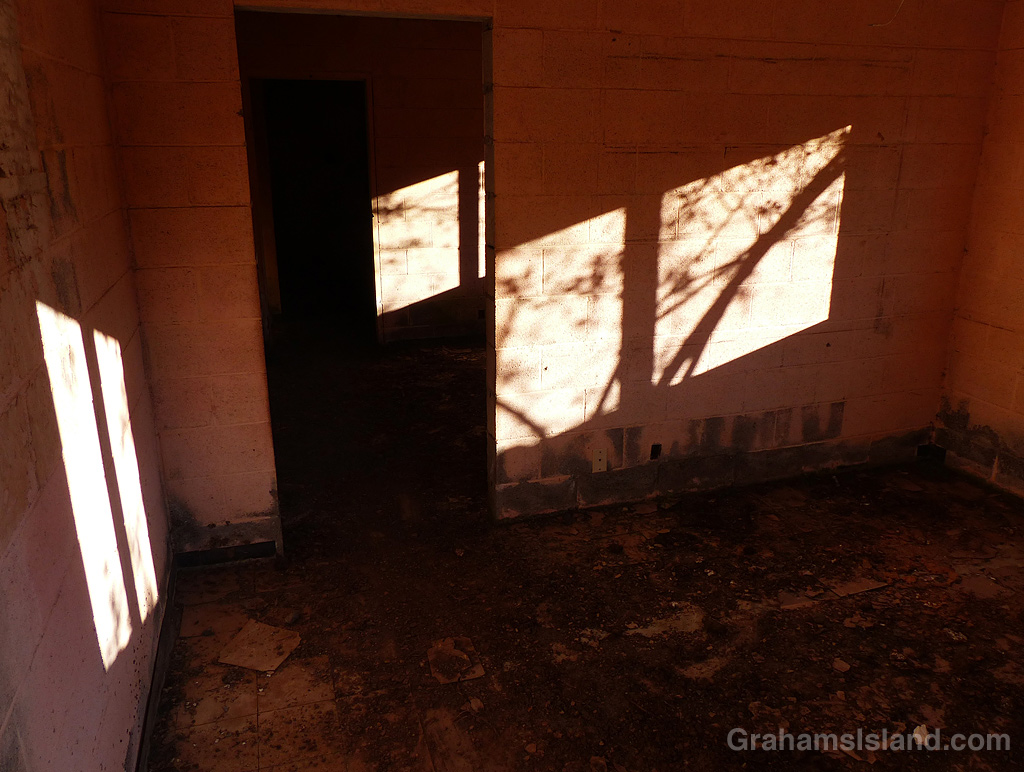
The interior of an old building on the Pu’u Wa’awa’a trail.

A few days ago I posted (here) about the view from an old blockhouse on the Pu’u Wa’awa’a trail. Today, I’m taking a look inside. As I mentioned before, the building is now a shelter for livestock with assorted detritus on the floor, but light through the empty windows still casts a bright image on the painted walls.

For more information about Pu’u Wa’awa’a and its trails, go to puuwaawaa.org.