
A long-tailed blue butterfly feeds as it makes its way along a kiawe flower.

A long-tailed blue butterfly feeds as it makes its way along a kiawe flower.

Sometimes you have to dig deep to get to the good stuff!
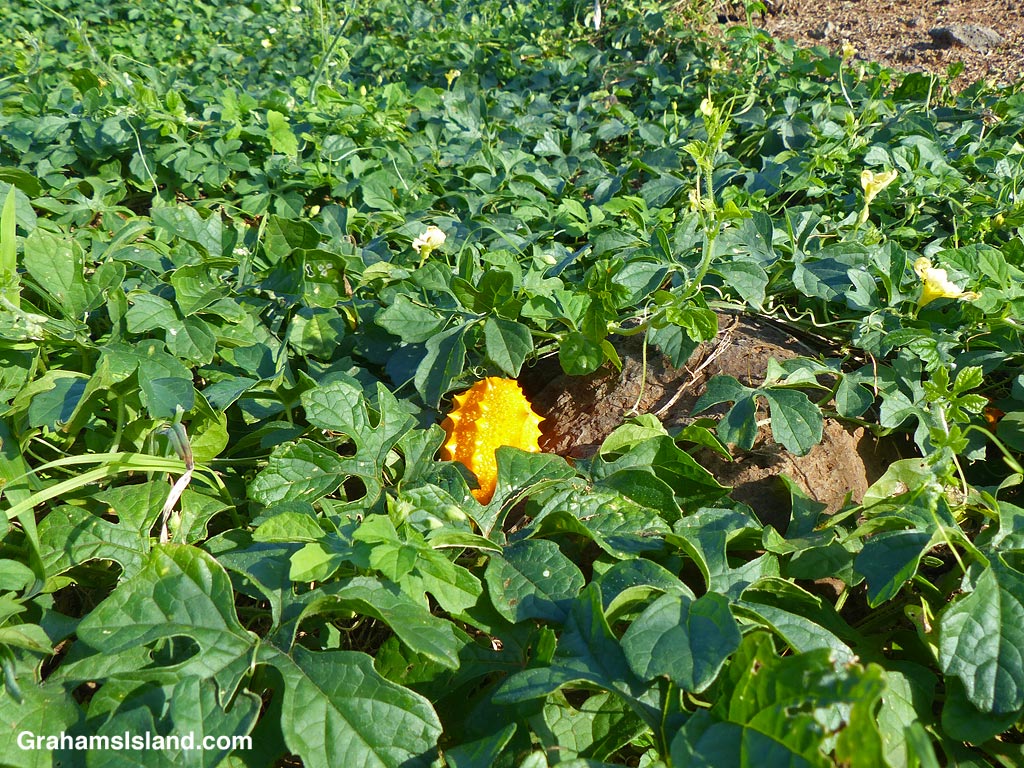
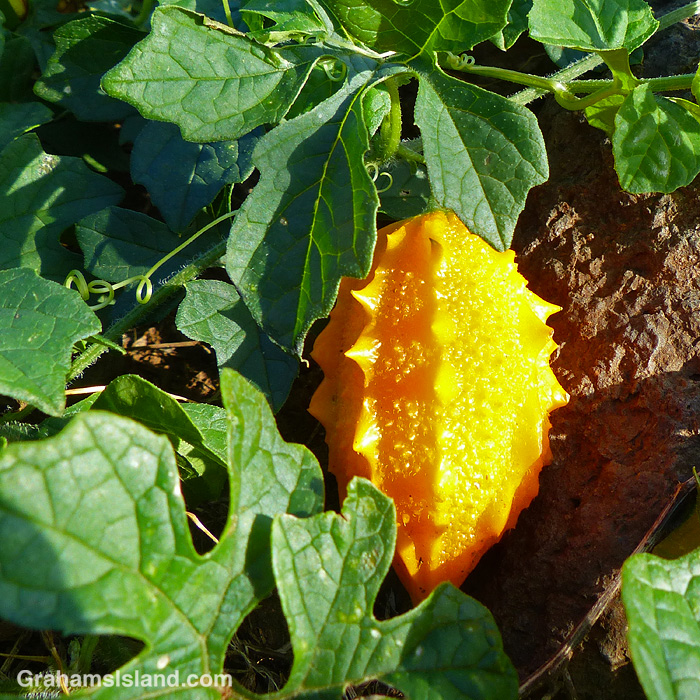
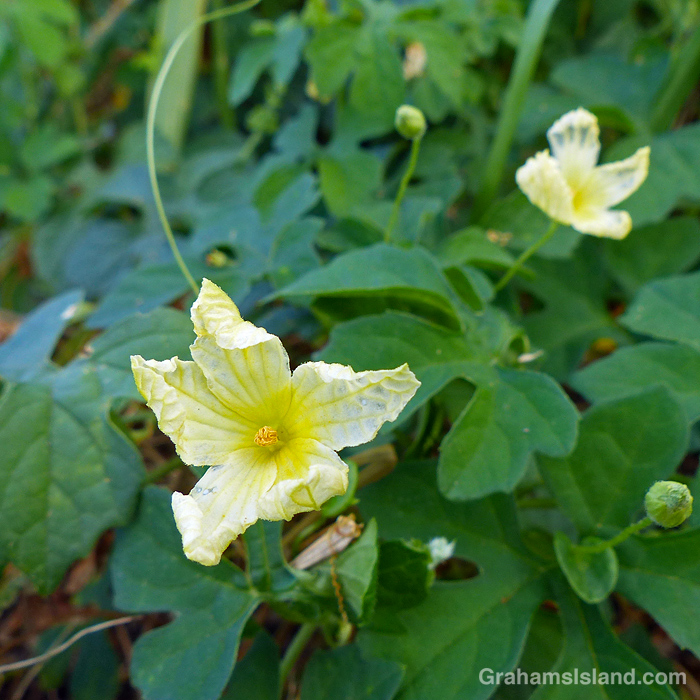
Bitter melon (Momordica charantia) hails from Africa in the distant past, but has spread across the globe. The small flowers are a delicate shade of yellow and are followed by somewhat spiky fruits. These are widely used in cooking, particularly in Asia, but only when the fruit is green. The ripe orange fruits are not edible.


Akia (Wikstroemia uva-ursi) is an endemic plant that’s quite rare in the wild, but is used quite a bit in landscaping here. The shrub, which grows to three or four feet high, is hardy, drought-tolerant, and not prone to pest problems. Its distinctive oval leaves, clusters of yellow flowers, and red or orange fruits add visual interest.
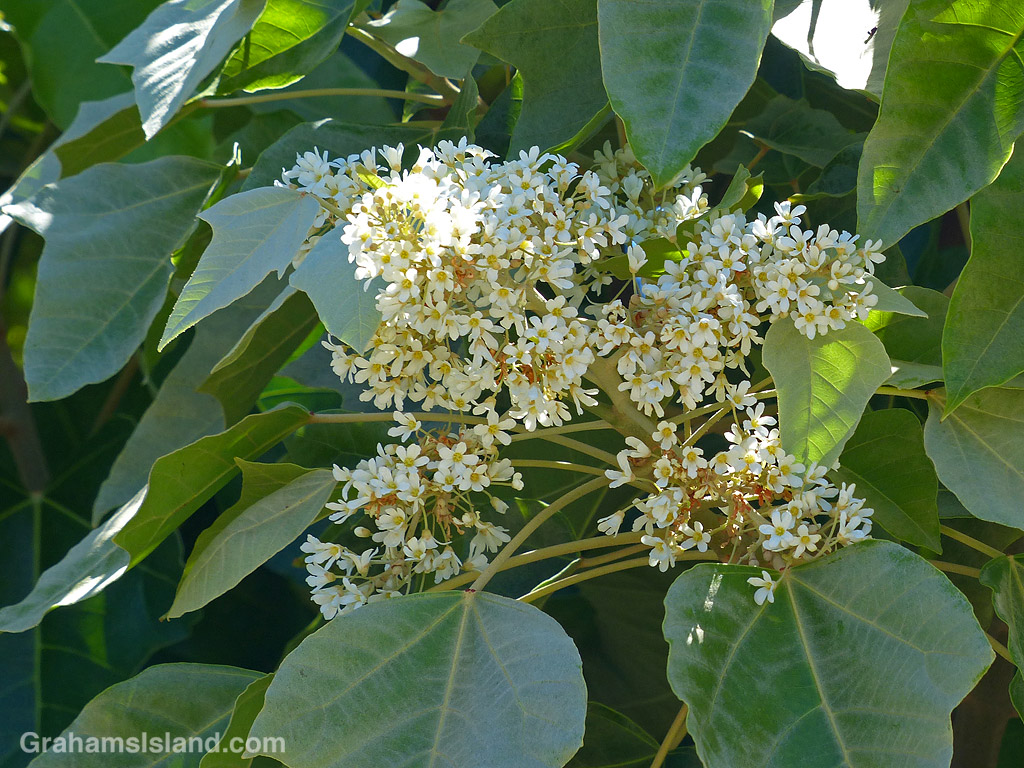
This week’s Sunday Stills challenge theme is ‘Leaves and Trees.’ See more responses here.
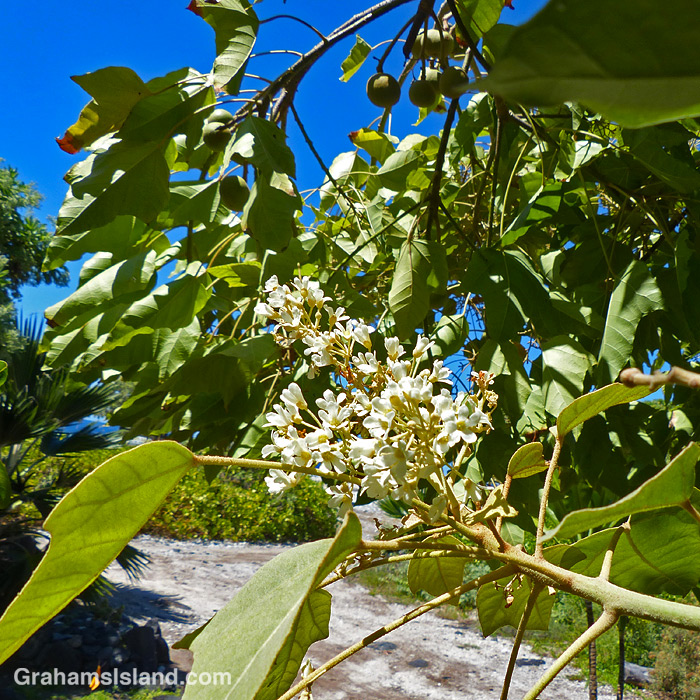
Candlenut (Aleurites moluccana) is known as Kukui in Hawaii. It’s a canoe plant, brought to Hawaii by the early Polynesian settlers. The tree can grow to around 60 feet tall but is usually shorter. Large clusters of small white flowers are followed by round nuts, which can be seen at the top of the second photo.
The tree had many uses. Oil was extracted from the nuts for various uses and the nuts themselves were burned for lighting, hence the name. Roasted nuts are edible and were used for flavoring. Raw nuts are a potent laxative. The plants had several other uses, both decorative and medicinal.
Because of this versatility and cultural background, Kukui was named the state tree of Hawaii in 1959, replacing the coconut palm. It’s the only state to have a non-indigenous state tree.

I saw a this passion vine butterfly flitting from one colorful flower to another to feed. The purple zinnias are particularly striking, especially when viewed from above.


Barleria repens has a variety of names including Coral Creeper and Creeping Barleria. This gives some idea of the kind of plant, though it can also grow as a rounded shrub and a vine. What got my attention was the pale purple anthers standing out against the otherwise red flower.




 Graham's Island