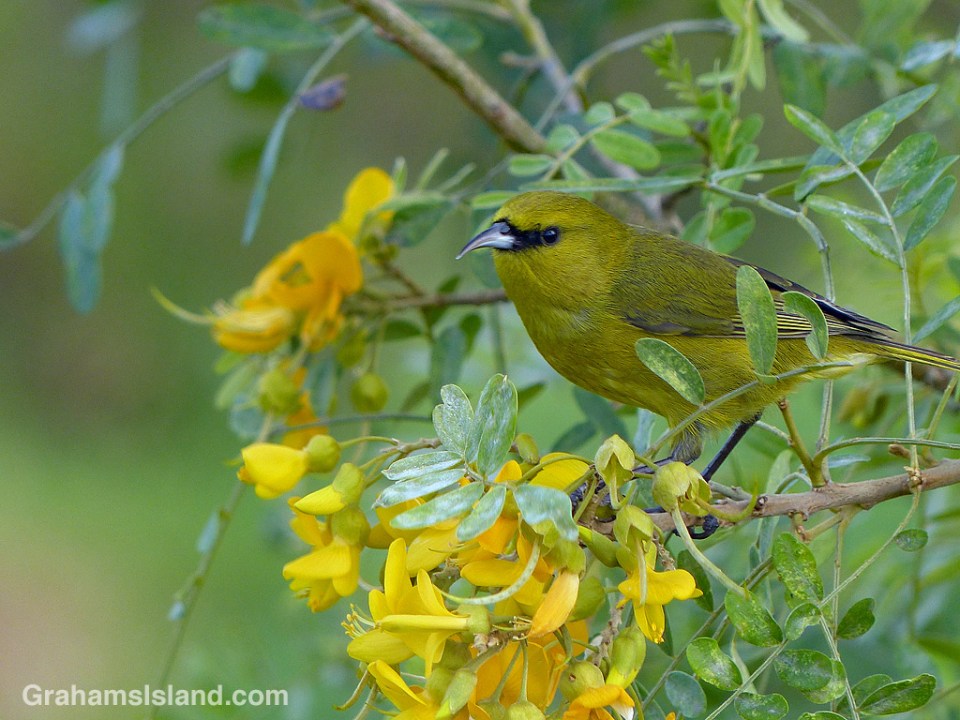
This Hawaii ‘amakihi, one of Hawaii’s native honeycreepers, was feeding on mamane flowers near the top of Pu’u Wa’awa’a.
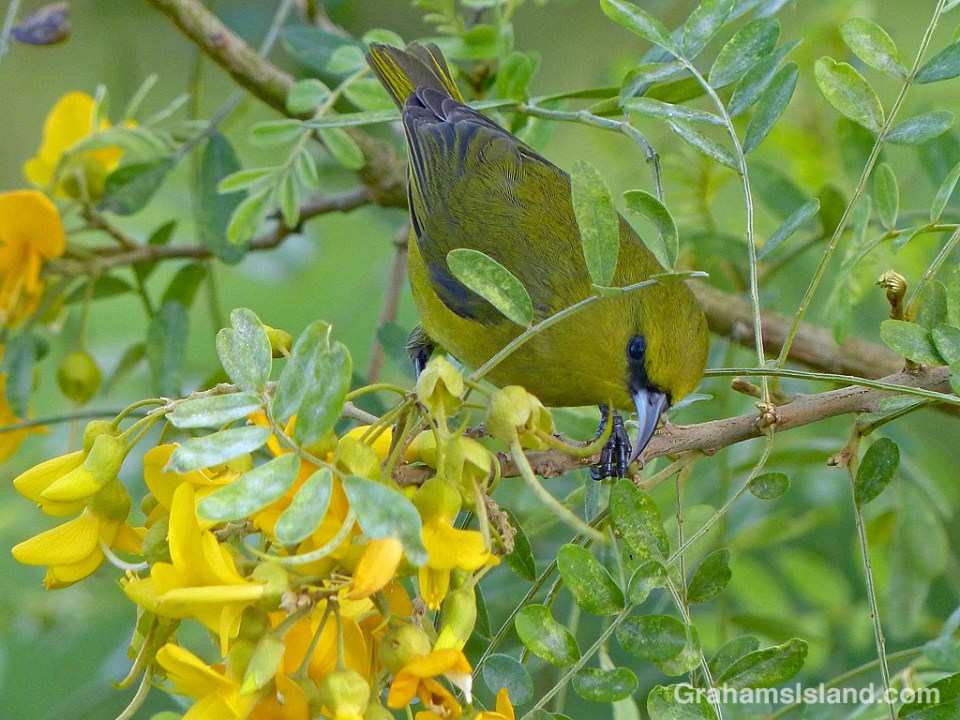

This Hawaii ‘amakihi, one of Hawaii’s native honeycreepers, was feeding on mamane flowers near the top of Pu’u Wa’awa’a.

 Osmoxylon lineare is also commonly known as miagos bush. It hails from the Philippines and grows to about six feet high. This plant is interesting for its spiky foliage and because the distinctive creamy-white flowers and dark fruits can be seen on the same plant at the same time.
I saw this one at Hawaii Tropical Botanical Garden. I visit there a few times a year, but this was the first time I’d seen this plant blooming, which is why I like going at different times. There’s always something new to see.
For more information about Hawaii Tropical Botanical Garden, go to htbg.com.

Guzmania ‘Limones’ is a colorful bromeliad with an interesting form. It’s native to Central and South America. Guzmanias only flower once and then die, but the bloom lasts a long time, and before they die, they usually produce pups.
This one was at Hawaii Tropical Botanical Garden. For more information about Hawaii Tropical Botanical Garden, go to htbg.com.
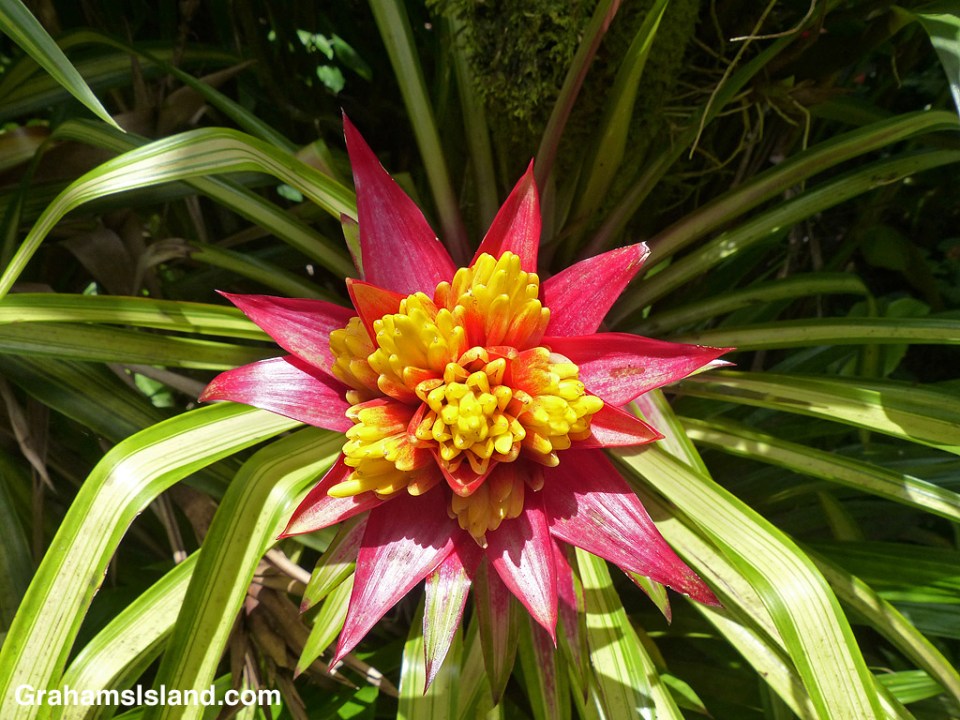
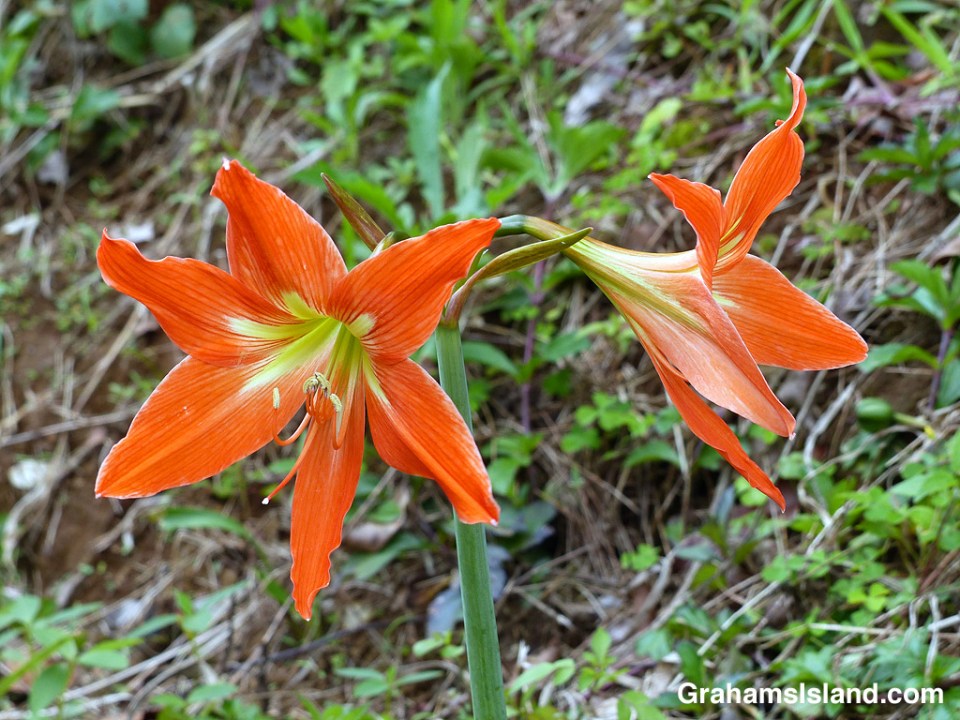
I like how these bright and cheerful flowers grow on the roadsides of the Big Island. Back in Washington State I used to grow them as annuals in my garden.
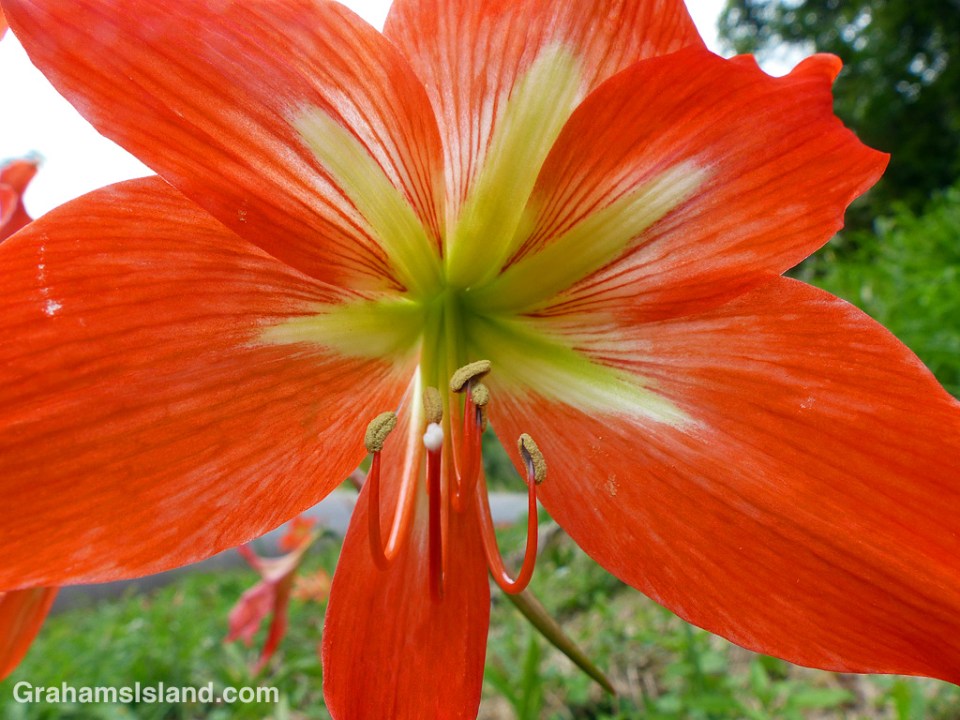

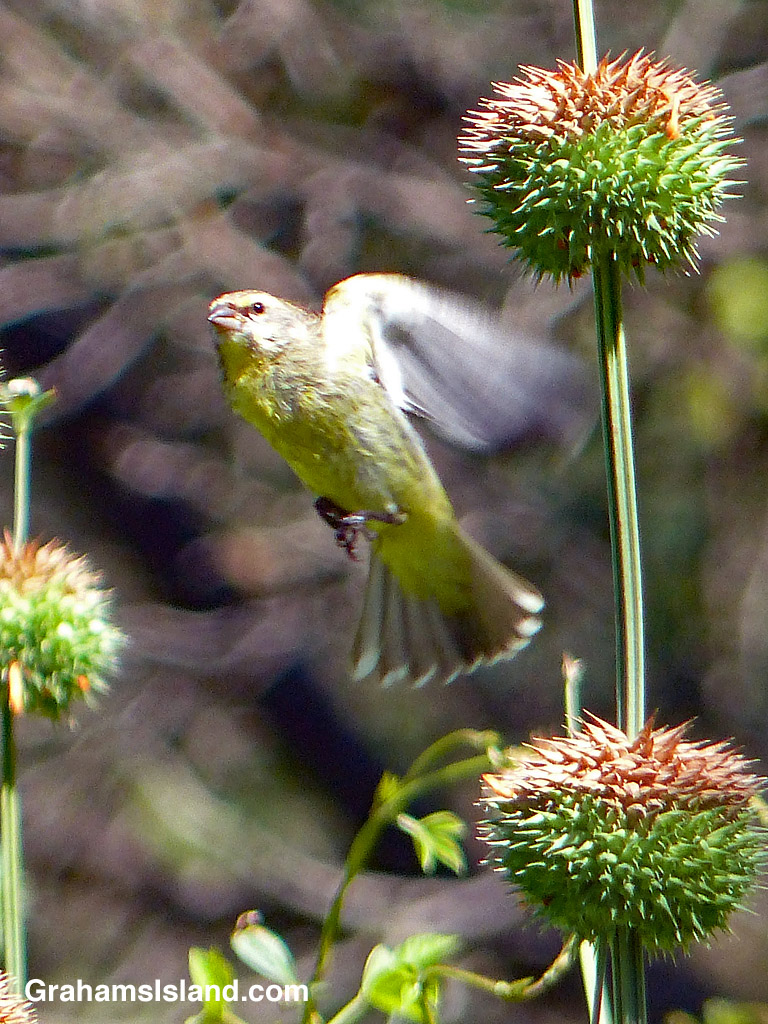 A yellow-fronted canary perches on a Leonotis leonurus plant before taking off again. Leonotis leonurus is also known as lion’s tail, lion’s ear or wild dagga. it’s native to South Africa.
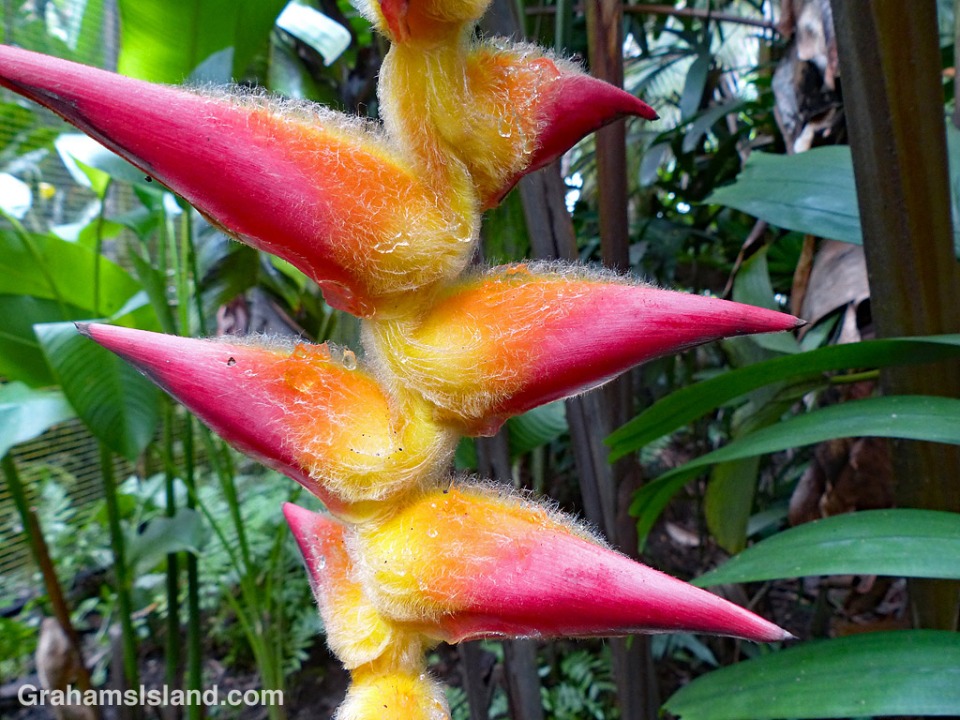
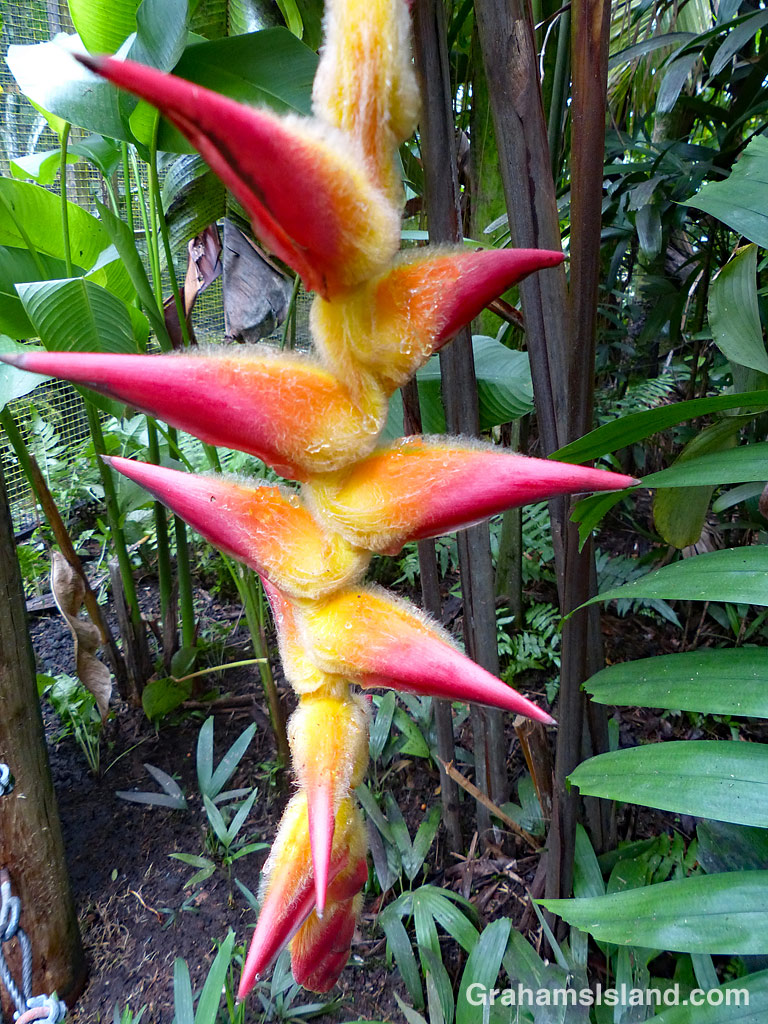 Let’s face it, heliconias are weird looking. Long hanging flowers, bit sticking out all over, neon colors. This heliconia is Heliconia caribaea X Bihai ‘bubblegum’ and it’s notable, not just for the bright pink, yellow and orange, but for the soft, downy texture on the flower.
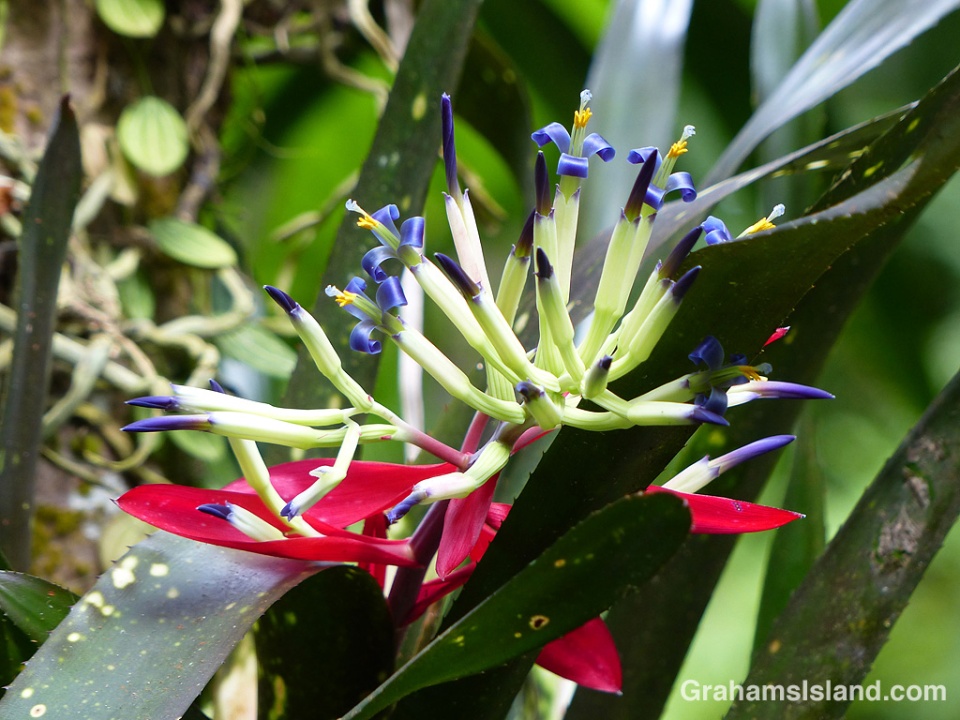
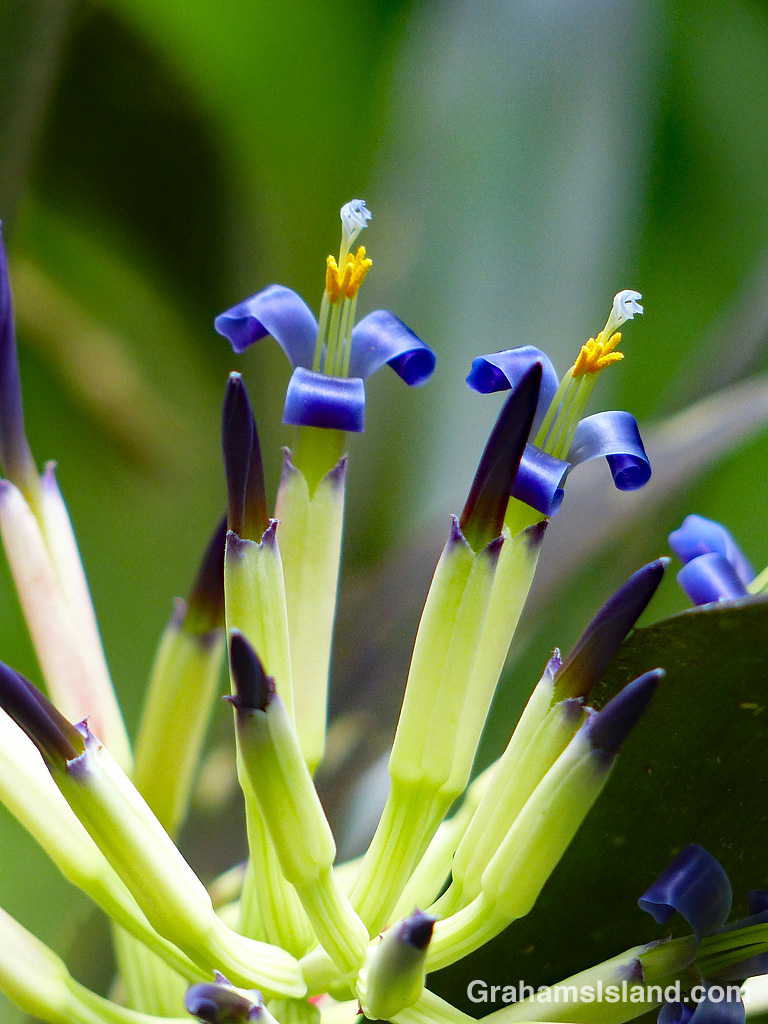 I took these photos on a recent visit to Hawaii Tropical Botanical Garden. The plant looked somewhat familiar to me, but I couldn’t put a name to it. After rummaging through the garden’s plant database, I finally identified it as billbergia nutans. That name sounded even more familiar and a quick check revealed it was a plant I grew in my (tropical) garden in Washington State. There, it was an annual or one to be overwintered indoors. Here, it grows year-round.
Billbergia nutans is native to South America. It’s commonly known as queens tears or friendship plant, the latter because it is an easy plant to split and share. It’s an epiphytic bromeliad, meaning it is shallow rooted and gets most of its moisture and nutrients from the air and from rainfall through the leaves and flowers.
For more information about Hawaii Tropical Botanical Garden, go to htbg.com.

This week’s Sunday Stills challenge theme is ‘Thankful.’ (See more responses here.) I mulled a few options but decided to plump for this photo. It’s a vireya rhododendron at Hawaii Tropical Botanical Garden and I chose this for two reasons. First is that I’m thankful to be able to visit the gardens on a regular basis. There’s always something new to see there. I can happily spend an hour or two wandering around, peering into flowers, and snapping photos of geckos clambering over this, that, and the other.
The second reason is that I feel fortunate to see gorgeous flowers, such as this vireya rhododendron, on a frequent basis. Some I find in a garden setting and some are just blooming roadside. There’s so much variety on the Big Island that a drive of just a few miles can take me to a different climate zone and a whole new world of plants and animals.
For more information about Hawaii Tropical Botanical Garden, go to htbg.com.
 Graham's Island