
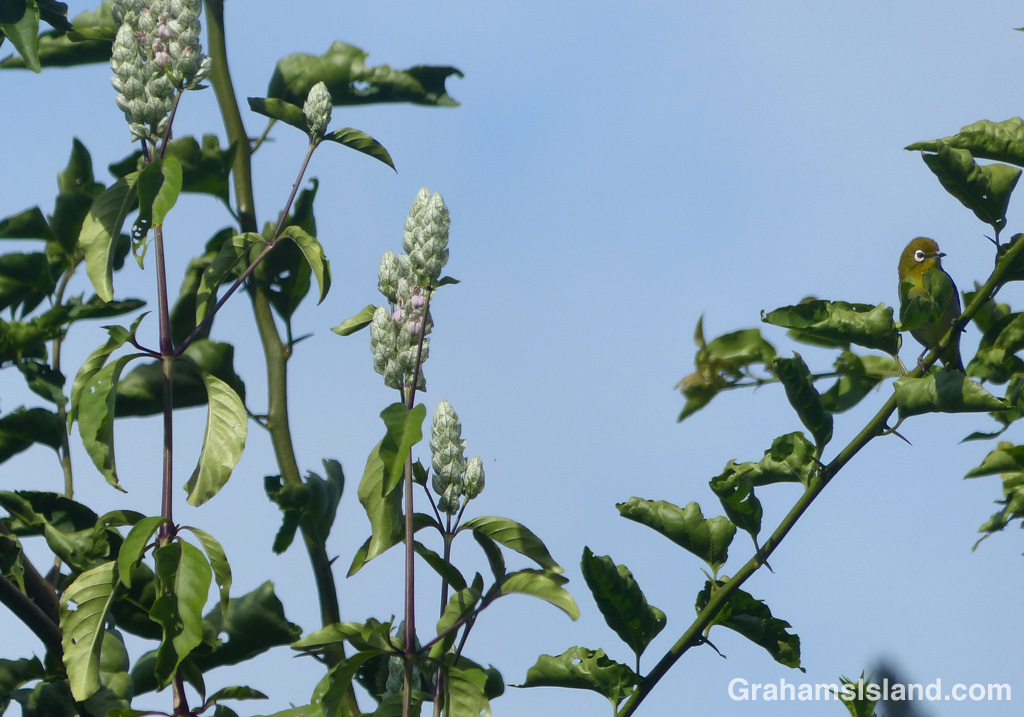
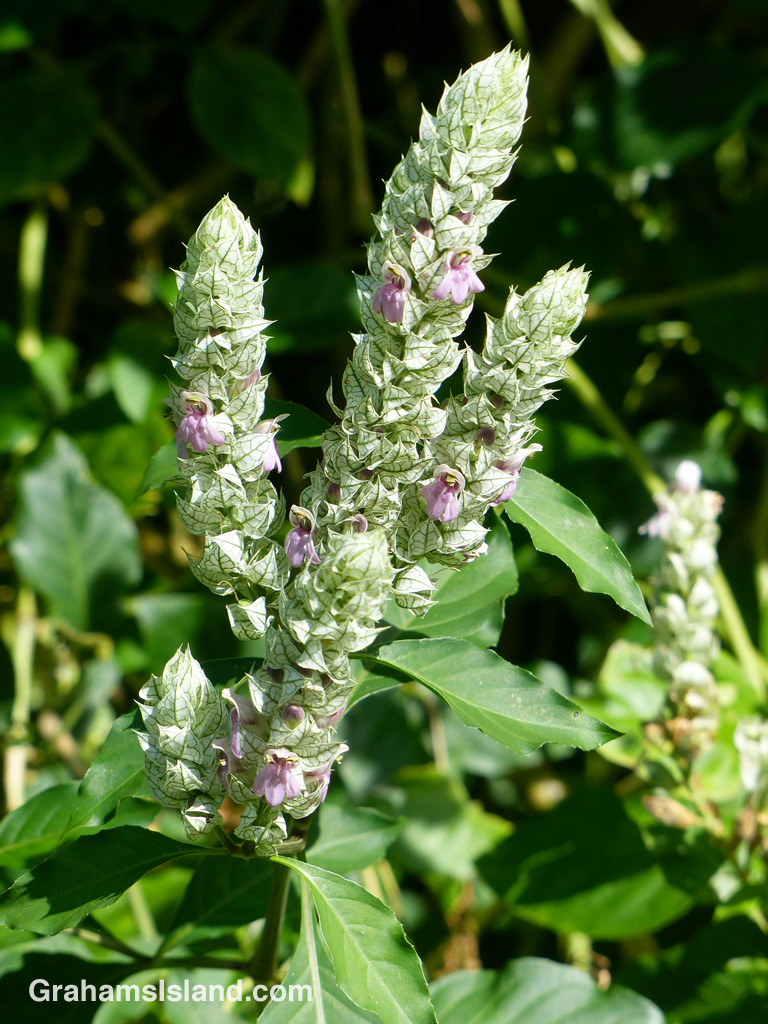
Squirrel’s tail (Justicia betonica) is a fairly common plant on the Big Island. It can grow into a quite large shrub with pink flowers on distinctive stalks. This one offered a handy perch for a Japanese white-eye.
Category Archives: Plants
Morinda citrifolia
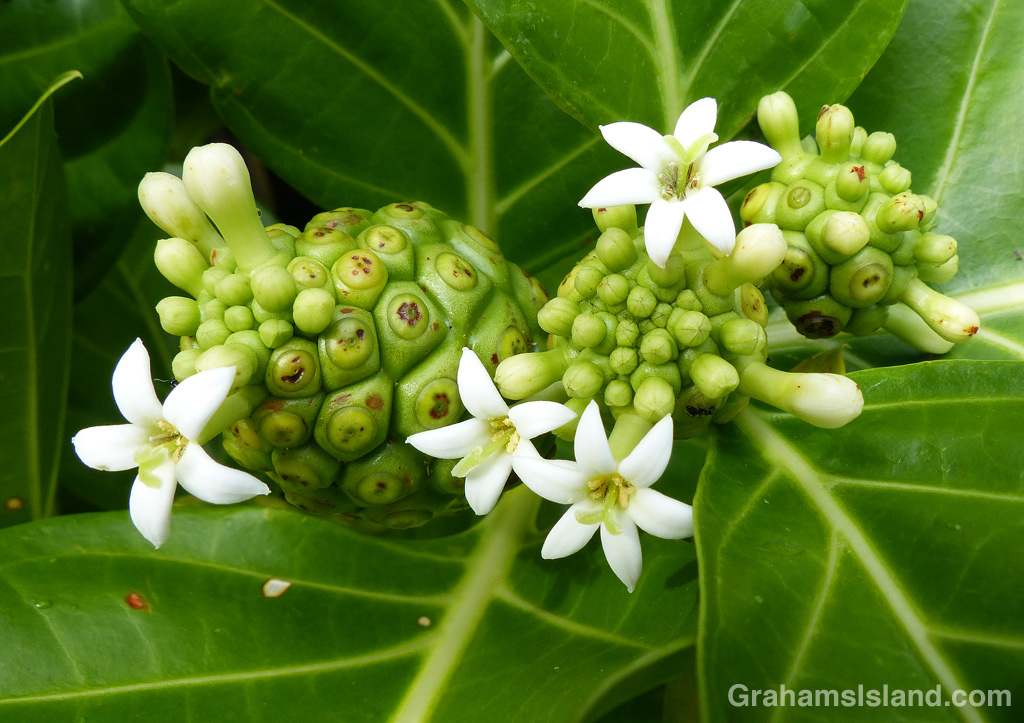

Morinda citrifolia is also known as Noni or Indian Mulberry. The flowers generally have 5 lobes, but this can vary, as this plant shows. The flowers emerge from what will become the fruit, which will end up white or yellowish.
The fruit is edible and used for medicinal purposes, but usually in a juiced form. There’s a good reason for this. As is noted on Wildlife of Hawaii’s plant page, “The ripe, white fruit has a nauseatingly bad smell, very much like fresh vomit mixed with rancid garbage. Avoid smelling it if you have a weak stomach.” Duly noted!
This plant was next to one of the Golden Ponds of Keawaiki.
Growth in the lava
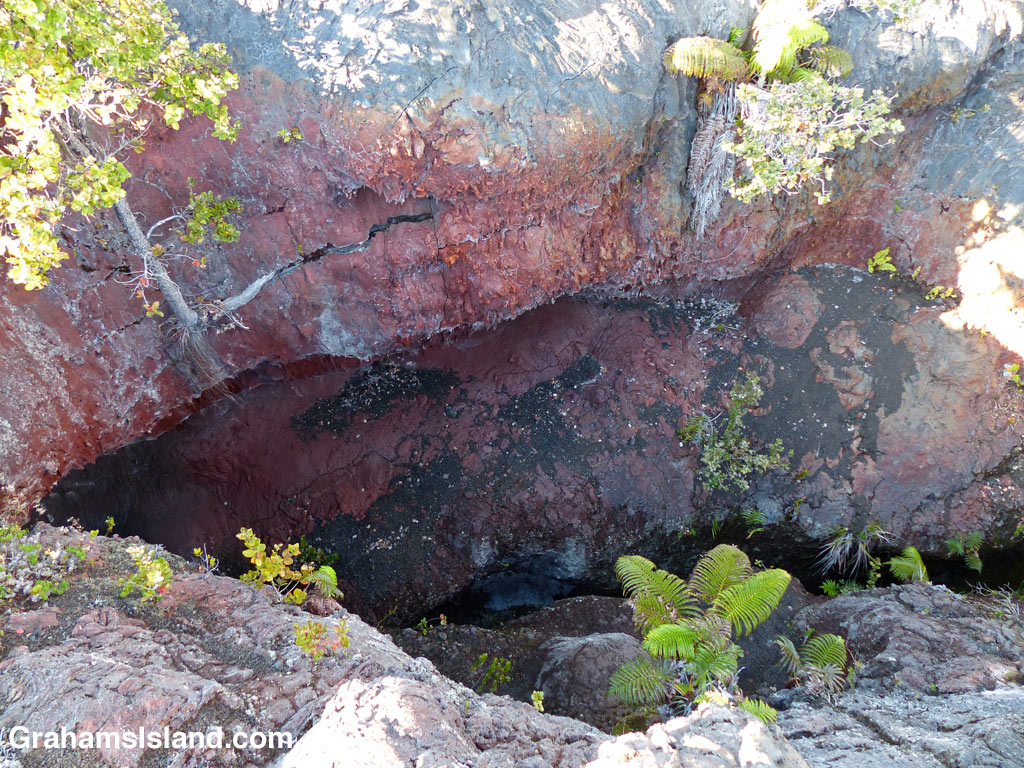
In May of 1969, a series of earthquakes opened a large fissure alongside Chain of Craters Road in Hawaii Volcanoes National Park. This was the beginning of what is known as the Mauna Ulu eruption. For five years, lava poured forth in a series of eruptions. Chain of Craters Road, completed only a few years earlier, was buried for several miles. Landmarks along the road were destroyed or irrevocably altered. A swathe of forest disappeared in flame.
When the eruptions finally ceased, life soon began to reappear on the barren lava landscape. In this photo, vegetation has reclaimed a section of the original 1969 fissure. Roots are anchored in cool, moist cracks in the lava. The tree on the left is particularly striking. Having started out in a crack on a vertical face, it has reached up to the light and is going strong. I like to think it shows how resilient nature can be.
For more information about Hawaii Volcanoes National Park, go to nps.gov/havo/. For more information about Kilauea Volcano and it’s eruptions, go to hvo.wr.usgs.gov/kilauea/history/main.html.
Hibiscus tiliaceus
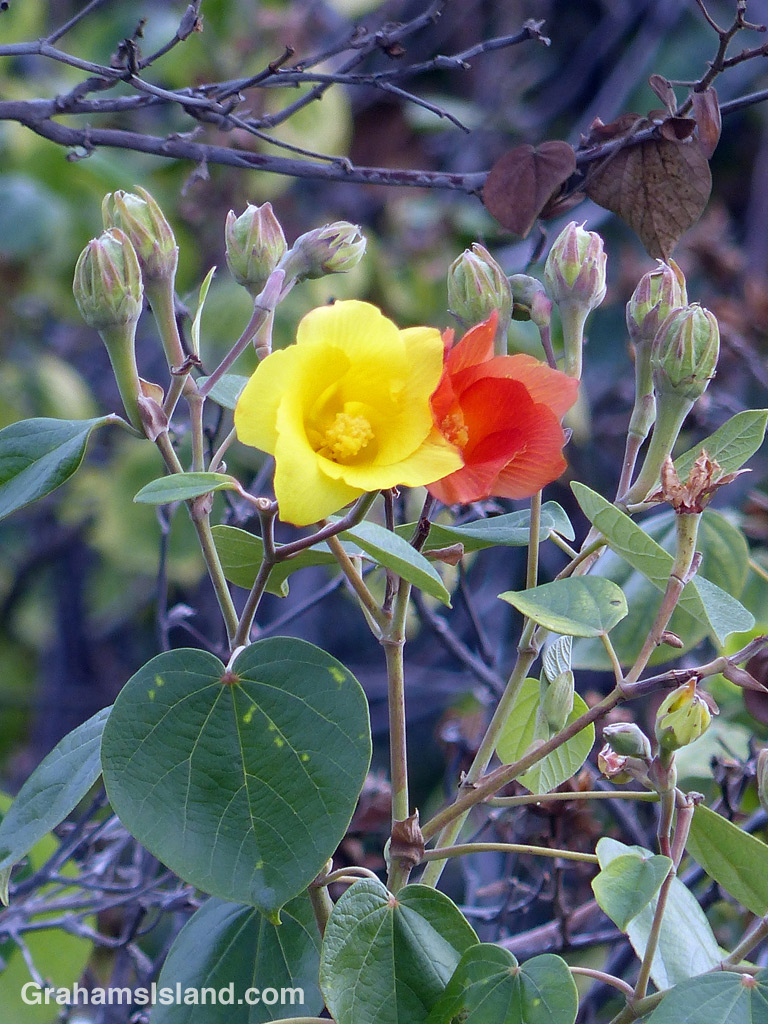
Hibiscus tiliaceus is called hau here. This large shrub was growing at the Golden Ponds of Keawaiki, which is a little oasis in a wasteland of lava. The different colored flowers, on the same plant, occur because the flowers only last for a day. They start out yellow and turn to red or orange as the day progresses.
The path to Thurston Lava Tube
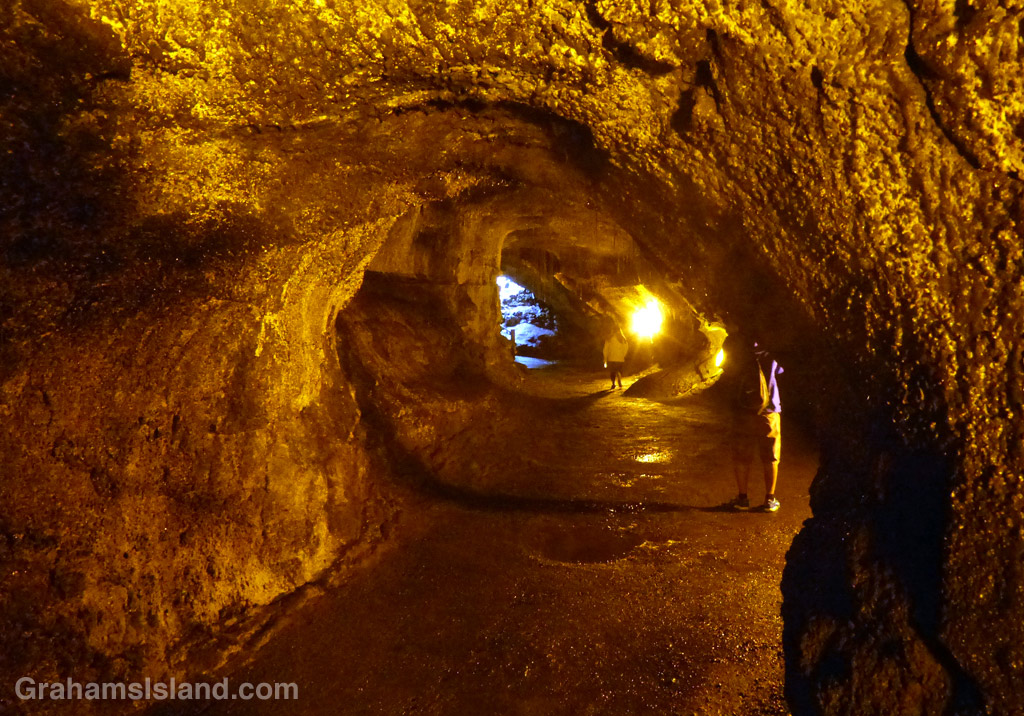

Thurston Lava Tube is one of the more visited spots in Hawaii Volcanoes National Park. It might not be as compelling as Puapoo Lava Tube, but it’s not far from the road and easily accessed. I tend to visit it whenever I’m in the park.
One thing I like about Thurston is the path to and through the tube. It starts with a drop into dense tropical forest, features a bridge leading to the maw of the tube, and then wiggles through the damp and the eerily lit interior until reaching the light at the other end.

Pinkhead smartweed

This cheerful, but somewhat weedy plant grows along roadsides. It’s particularly striking on Saddle Road where it adds color to the otherwise lava-rich landscape. Also, I like the name. It sounds like the not-too-bright son of a moneyed family on the east coast.
Jackfruit

I must have driven by this tree a hundred times, but one day, I was on foot and finally noticed the huge fruits of the jackfruit tree. Jackfruits are relatives of breadfruit and their fruit can grow as large as 3 feet in length and weigh up to 40 pounds. These weren’t that big, but still striking, once I finally noticed them.
Signs: Without authorization
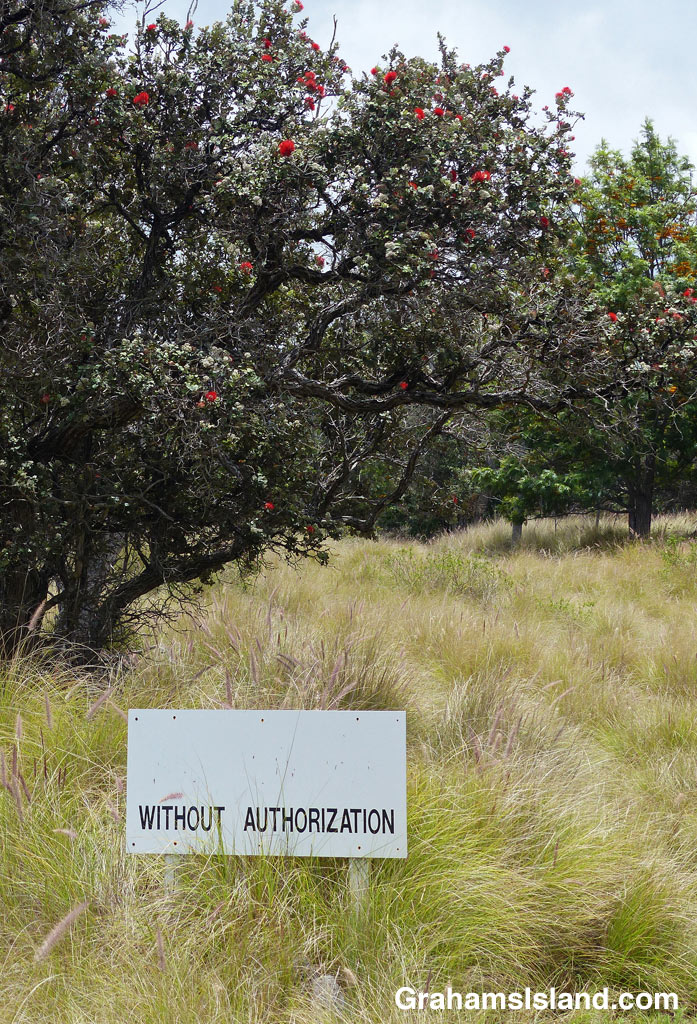
I assume this was once a no admittance sign, but I like this sign the way it is. Perhaps these are unauthorized ohia trees growing rogue.

