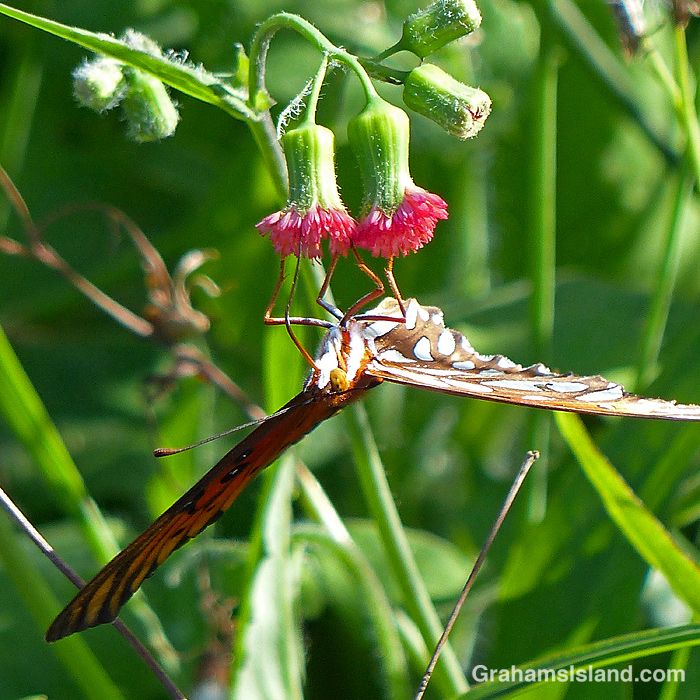
A passion vine butterfly hangs upside down while sampling the good things on offer from a tasselflower.
Posted in response to Becky’s January Squares challenge theme of ‘Up.’ See more responses here.

A passion vine butterfly hangs upside down while sampling the good things on offer from a tasselflower.
Posted in response to Becky’s January Squares challenge theme of ‘Up.’ See more responses here.

A bee forages on an ohia lehua flower.
Posted in response to Becky’s January Squares challenge theme of ‘Up.’ See more responses here.
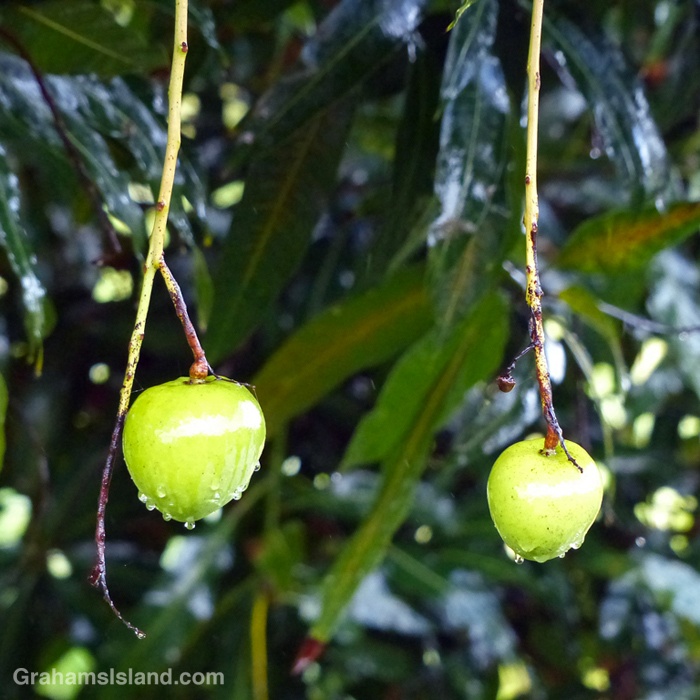
A drupe is a fruit with a single stone or pit at its center. The fruits of mango trees are drupes, such as these two dripping with water after a hard rain.
Posted in response to Becky’s January Squares challenge theme of ‘Up.’ See more responses here.

The sixth year of this blog starts with a photo I took to isolate a bird of paradise flower against the blue sky. But when I looked at it, my first thought was that it looked like some kind of Soviet emblem from the days of the Cold War, possibly something associated with the space race or armaments.
The only thing that rules that out is that the flower is far too colorful for that kind of thing. Perhaps the version below would be more appropriate. Onward comrades to Year 7.

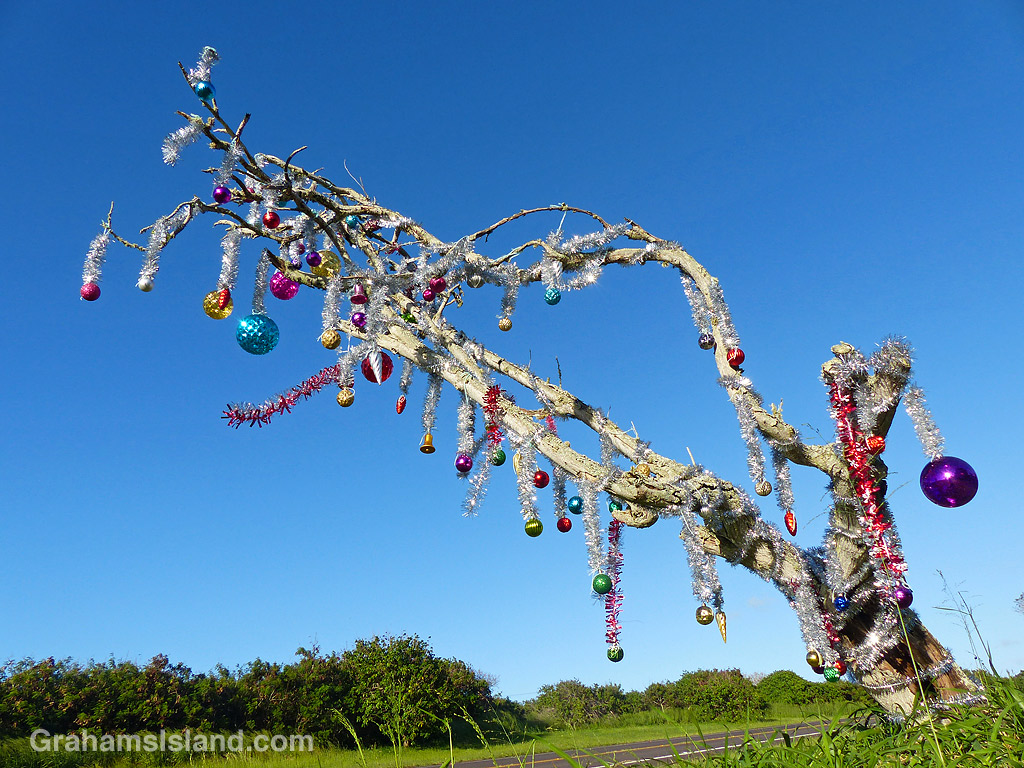
A week or so ago, I saw a small group of people decorating this dead tree alongside the main highway a couple of miles shy of Hawi. Lavished with tinsel and ornaments, it might be this tree’s last hurrah in the world, but what a way to go!

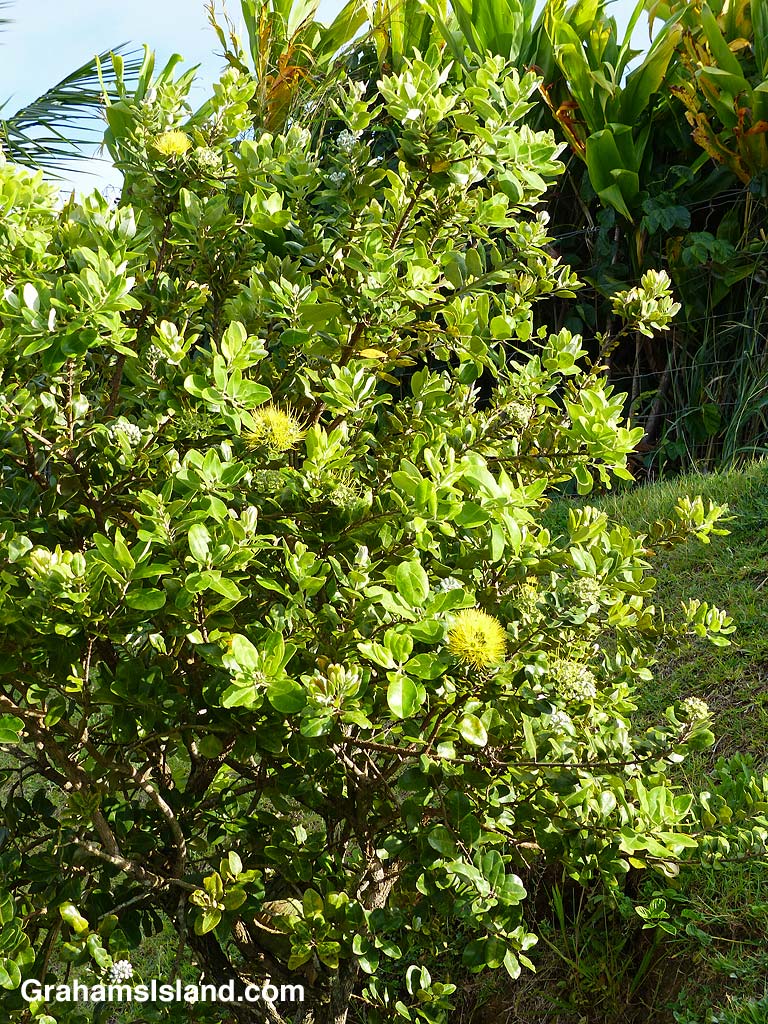
Golden penda (Xanthostemon chrysanthus) is a member of the myrtle family and native to Queensland, Australia. Though it can grow to 50 feet high, it’s generally kept more compact in domestic gardens, where it’s grown for its showy yellow flowers.
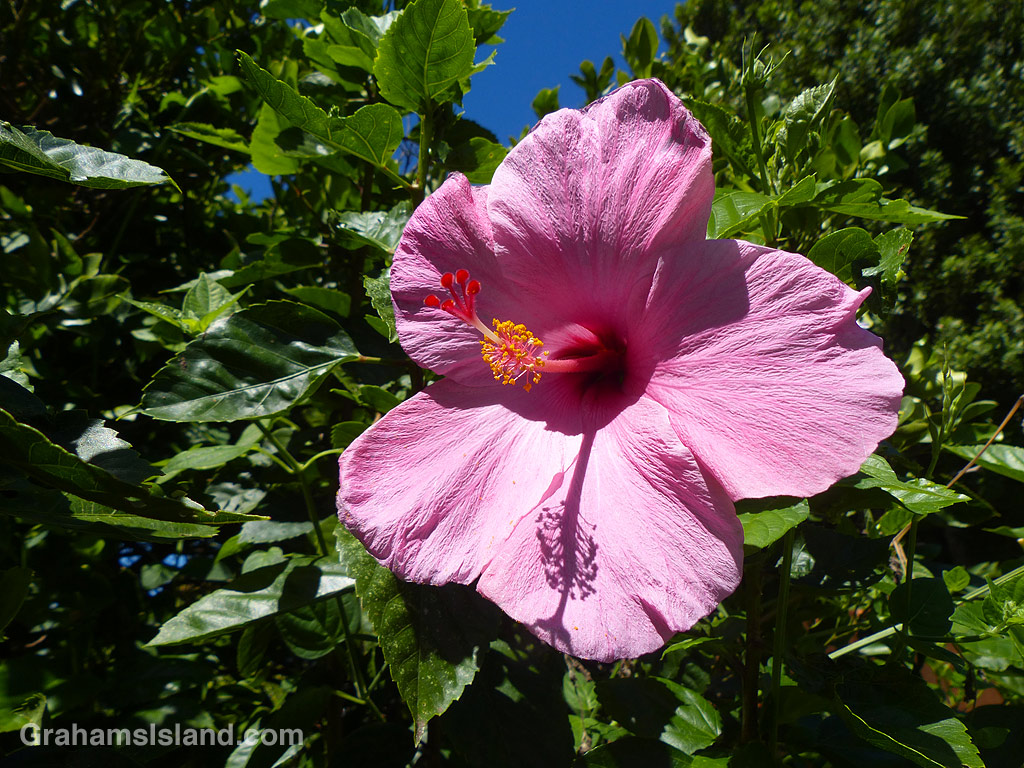
I labeled this hibiscus pink, but when I looked at it again it seemed more purple. Mauve perhaps? Whatever the color it’s a striking flower.
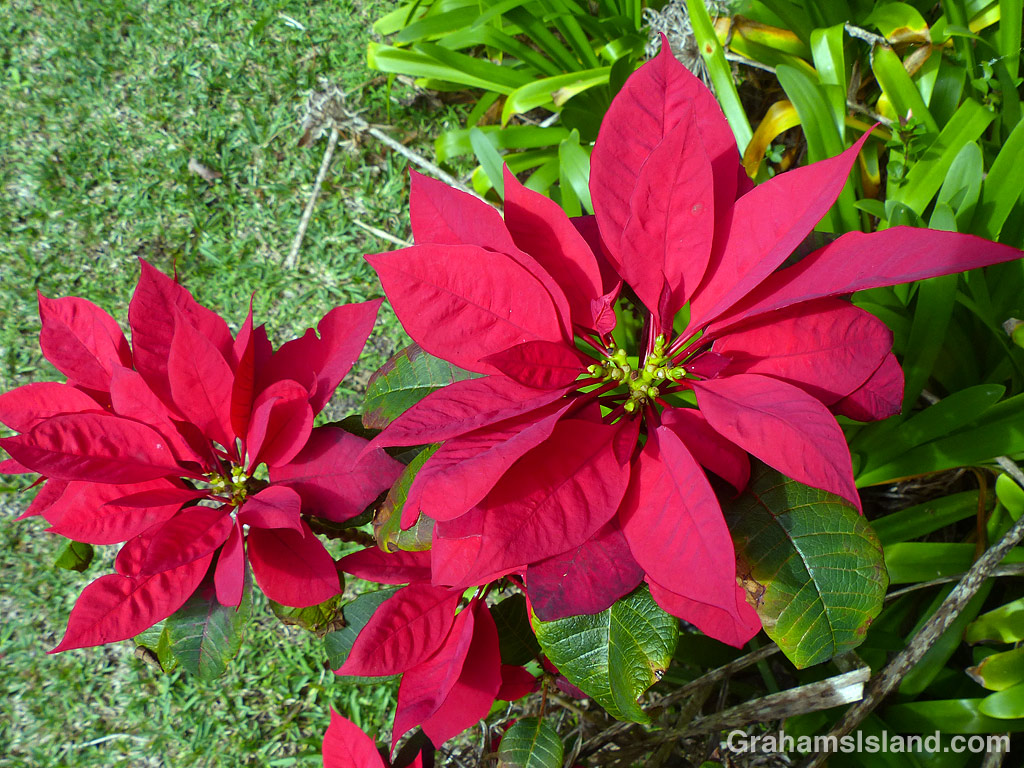
This week’s Friendly Friday challenge theme is ‘Red and Green.’ See more responses here.
Poinsettias (Euphorbia pulcherrima) have been associated with Christmas for centuries in Mexico and Central America, where the plant hails from. The plant was introduced to the United States in the 1800s, but it wasn’t until the last century that the Christmas link really took off. This was mostly due to savvy marketing tactics by the Ecke family, which had a monopoly on the poinsettia market thanks to their discovery of a secret grafting method which produced a denser plant and wasn’t duplicated until the 1990s.
The red ‘flowers’ are actually bracts, which hold the fairly insignificant flowers. On the Big Island, their brilliant displays are quite common on the west side of the island, where they can be seen as bushes and trees.

