Kiholo Bay sits midway between Kailua Kona and Kawaihae on the west side of the Big Island. There are two main access points to the bay. One is via a gravel road south of the Kiholo Scenic Overlook on the main highway. This road takes you down to Kiholo State Park Reserve where there’s a campground and access to the beaches. I usually go that way, but on my last visit I wanted to try the hike from the main road.
There’s an unmarked parking area north of the scenic overlook. From there it’s about a mile to the coast, along a dirt and gravel road. This passes through scrubby trees where it’s likely goats will be encountered. They’re abundant in this area. The private property alongside the road is well marked, as is the public trail through to the beach. This trail comes out near a funky building decorated with things the tide washed in.
I headed to the right, along the beach towards Wainanali’i lagoon. There are a couple of houses along here, a palm-circled pool, and usually a canoe or two under the trees. Beyond the houses, a small bridge traverses a channel which connects the ocean to Wainanali’i fish pond. This is believed to have been built by King Kamehameha I, as part of an extensive fish collection and farming operation in the bay.
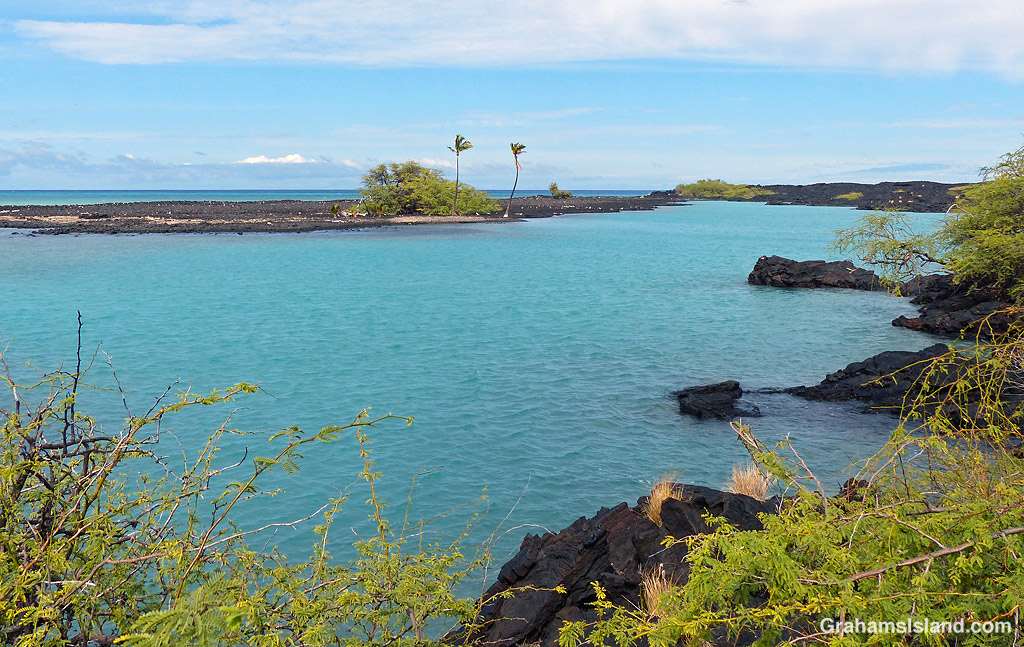
A bit farther along, a blue Kiholo Bay Fisheries Management Area sign marks where the trail forks. To the right, inland, it follows the old King’s Trail to Keawaiki. To the left, it hugs the shoreline heading north alongside Wainanali’i lagoon (top photo). The trail is loosely marked with white coral and/or cairns, but it’s not vital to follow them. I stick to the shoreline.
The lagoon is the remnant of a much larger fishpond, which was around 2 miles across and protected by a 20-foot wide lava rock wall. Much of it was destroyed by a lava flow from Mauna Loa’s 1859 eruption. Today, the lagoon is a prime area for seeing green turtles. They haul out on a rocky island marking the mouth of the lagoon and on the spit that separates it from the ocean. This is where they rest so it’s important not to get too close and disturb them. I also usually see turtles in the water. They putter along the edge in blue-green water, which can give them a wavy appearance. Small fish are abundant here and are often seen.
Once at the head of the lagoon I watched humpback whales splashing and slapping offshore. It’s possible to walk down the spit (not disturbing the turtles), and if it’s calm you can wade or swim across the lagoon entrance back to the trail. Following the coast northwards will take you to Keawaiki, but I retraced my steps until I got back to where I first reached the coast. Then I carried on along the beach.
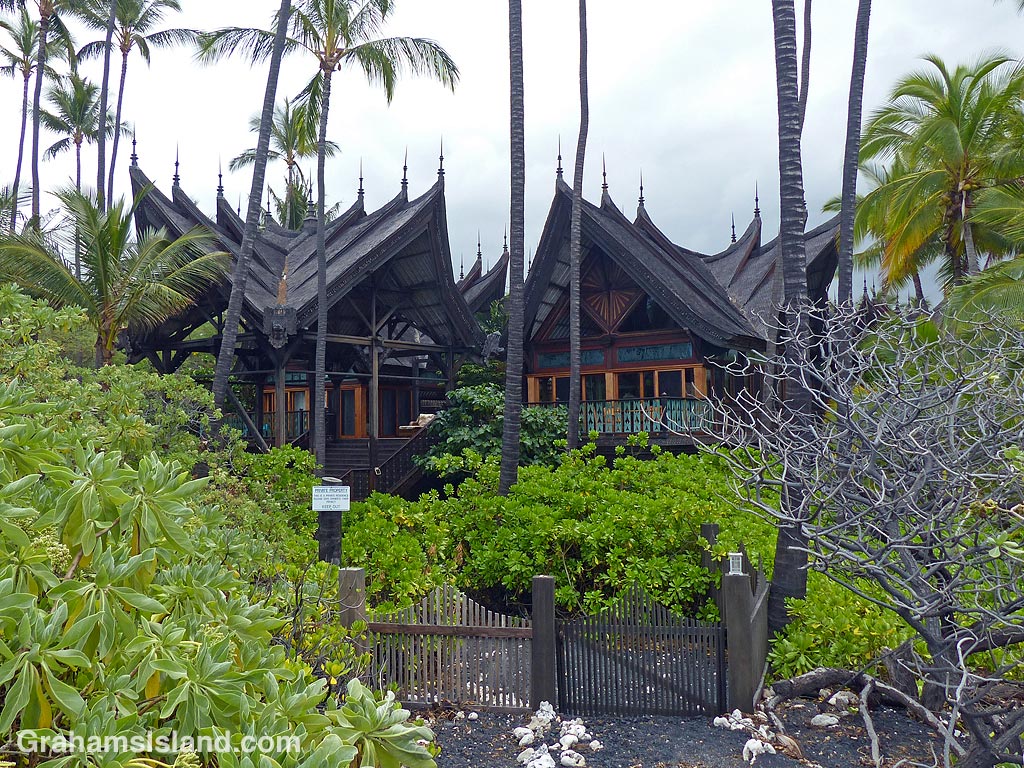
The waves were rolling in, good news for surfers. The beach here is sandy and vegetation borders it. If the tide’s in a bit of paddling is required. On the other side of this, some private houses border the beach including the Bali House and a sprawling, yellow structure. Farther along is the parking area for Kiholo State Park Reserve, back in the trees, followed by the Loretta Lynn house and the campground.
Here, along with several places along the walk, a fair number of birds can be seen including black-crowned night herons, wandering tattlers, Pacific golden plovers, yellow-billed cardinals, and northern mockingbirds.
The southern end of the park is marked by Waia’elepi anchialine pool. Anchialine pools form in volcanic rock and are connected underground to the ocean. The water is brackish, but the pools can be home to a wide variety of species. I saw goats drinking here as well as a variety of birds and insects flying about.
From there, I headed back to the car on the gravel road which parallels the coast and connects to the trail I came down on. My walk was about 5 or 6 miles, but I took more than 4 hours to cover that distance since I do tend to stop a lot!
For more walks worldwide, see Jo’s Monday Walks. Also posted in response to the current Friendly Friday challenge theme of ‘On The Way.’ See more responses here.
This week’s Sunday Stills challenge theme is ‘Color Challenge: Rosy Red.’ See more responses here.
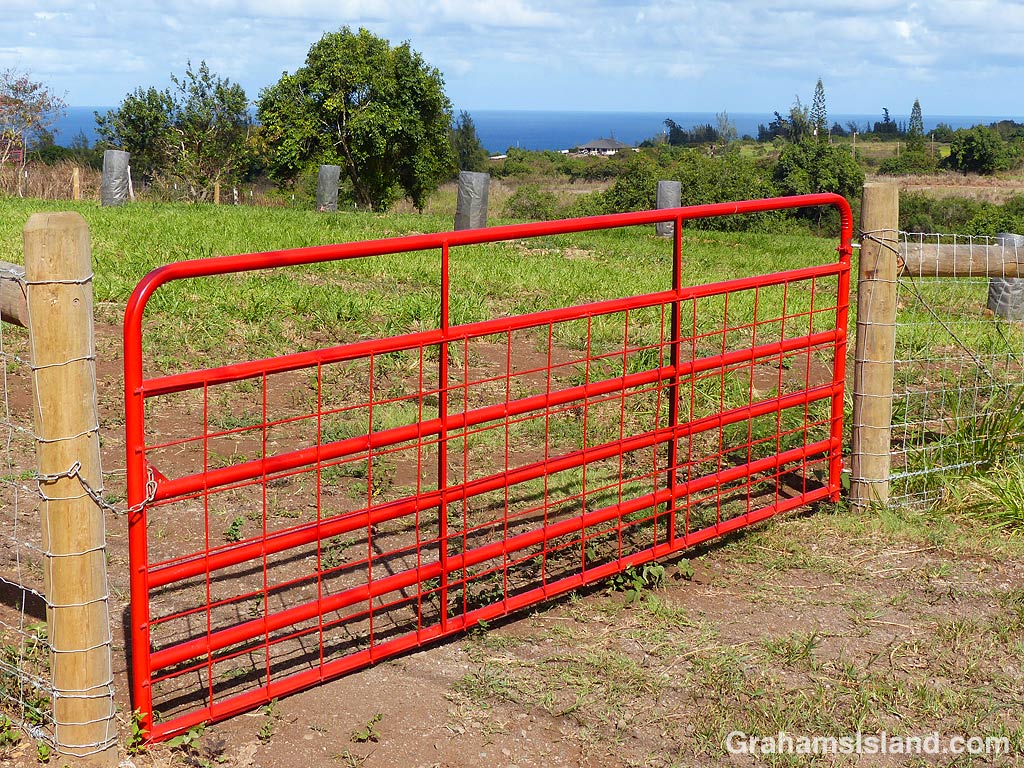
The top photo is a very red gate at the entrance to a newly fenced field. The grey cylinders are protection for something planted inside, possibly macadamia nut trees.
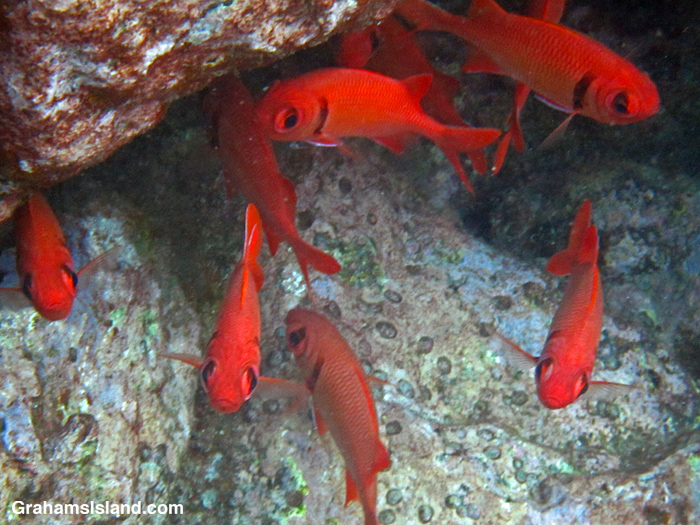
The middle photo shows a group of soldierfishes, mostly pearly soldierfishes, though one or two might be the very similar bigscale soldierfishes.
Finally, the third photo shows the brilliant blossoms of a royal poinciana tree.
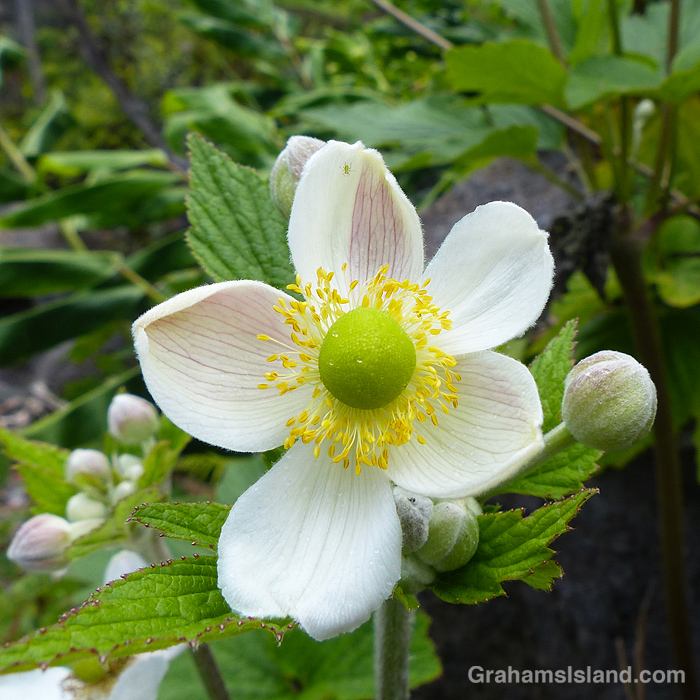
Japanese anemone (Anemone hupehensis) is a native of China and Taiwan. This one was growing on the edge of Halemaʻumaʻu Crater, where the current eruption of Kilauea Volcano is taking place.
This week’s Sunday Stills challenge theme is ‘Fallen.’ (See more responses here.) Usually I respond to these challenges with a single subject, but this month I’m taking a different approach, so here are some ‘fallen’ images.
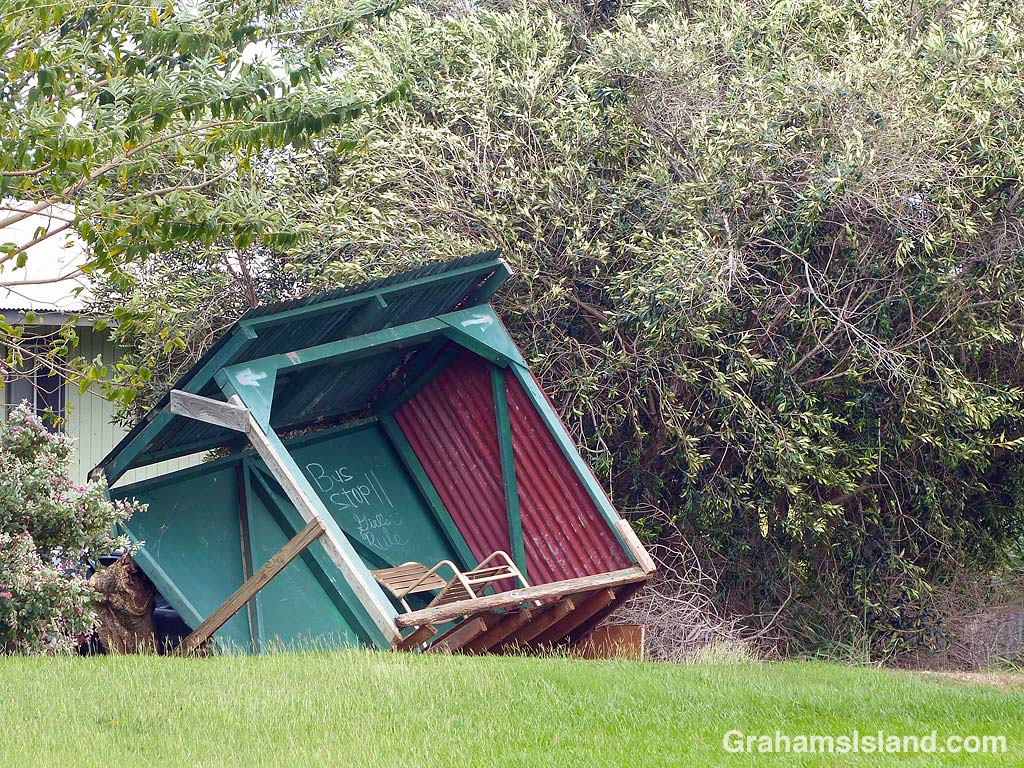
The top photo, taken earlier this week, is of a bus shelter that had fallen off its base. It got that way thanks to some strong westerly winds that blew here for a couple of days.
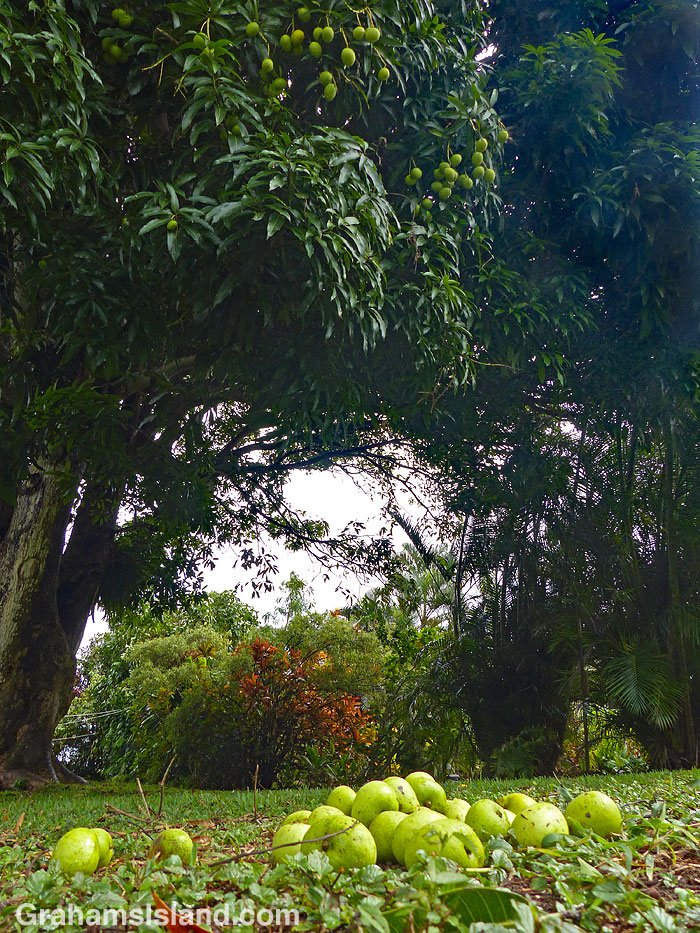
The second photo also owes its origins to those winds. The mango tree in the yard has another batch of fruit and the wind dislodged a fair number. Pigs and chickens got some of the fallen fruit, but I was still able to gather a considerable number in good condition. However, as the photo shows, there are still more on the tree.
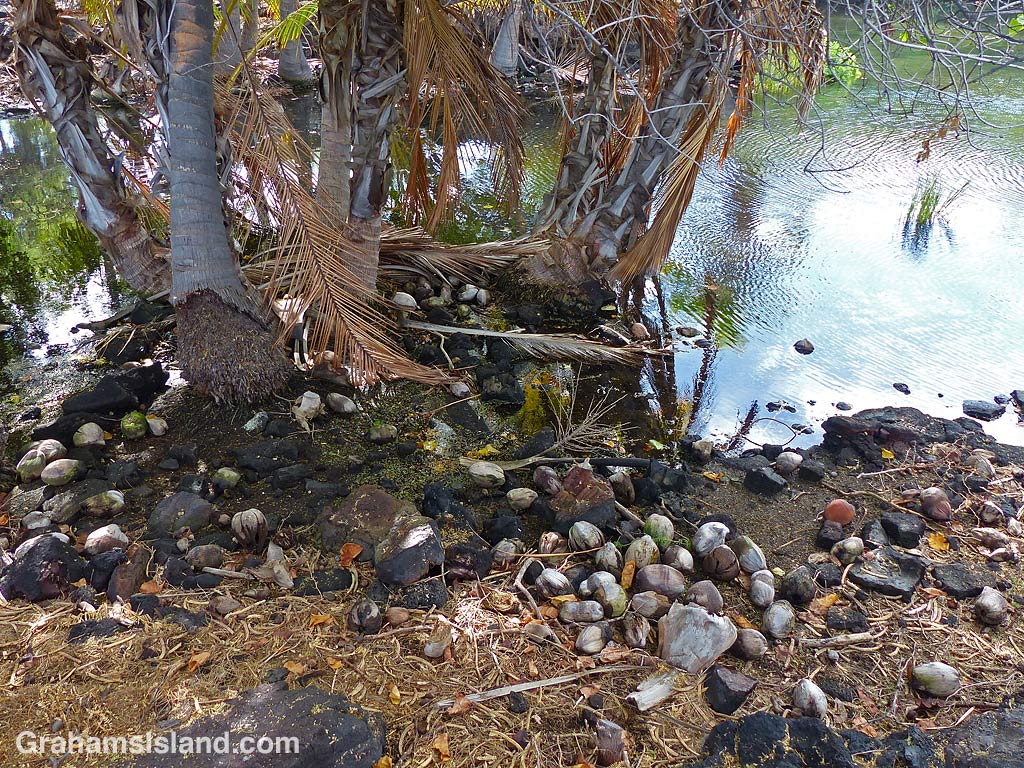
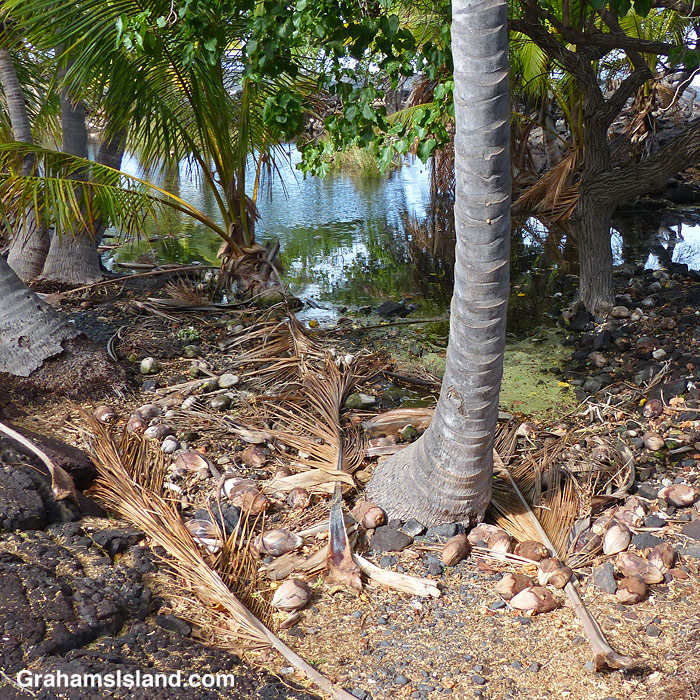
The third photo shows fallen coconuts at Kiholo. While a lot of coconuts are harvested, there are also many that simply fall off the tree and either rot, or sprout to start another palm. Coconuts were brought to Hawaii by the ancient Polynesians, but they might also have arrived naturally as they’re capable of drifting large distances across the ocean, and then sprouting on making landfall.
Astelia Menziesiana is an endemic plant that can grow as an epiphyte, as in this photo, or in the ground. It does best in cool temperatures, which is where these plants were found at around 6,000 feet in the area between Mauna Loa and Mauna Kea, but can also grow in warmer temperatures. Plants are either male or female and both have flowers, but only the female produce berries.
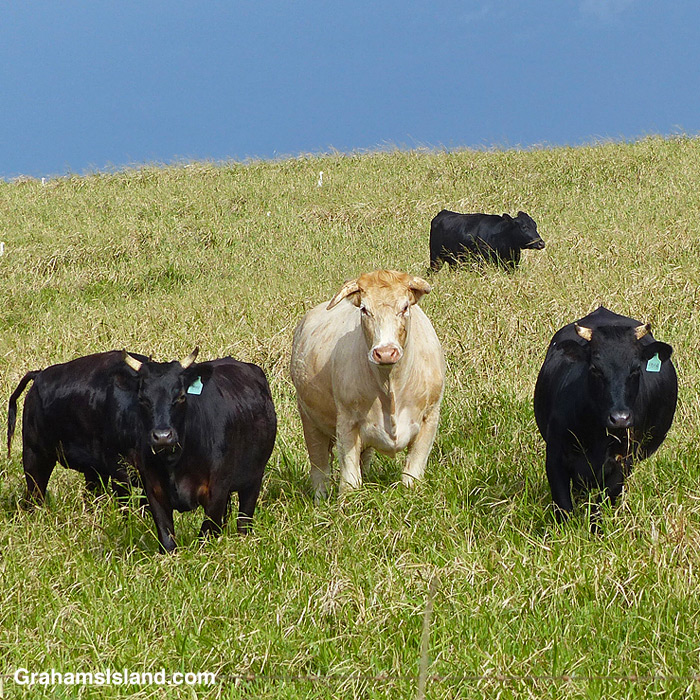
There are dairy cows and beef cattle here. Some are bigger than others.
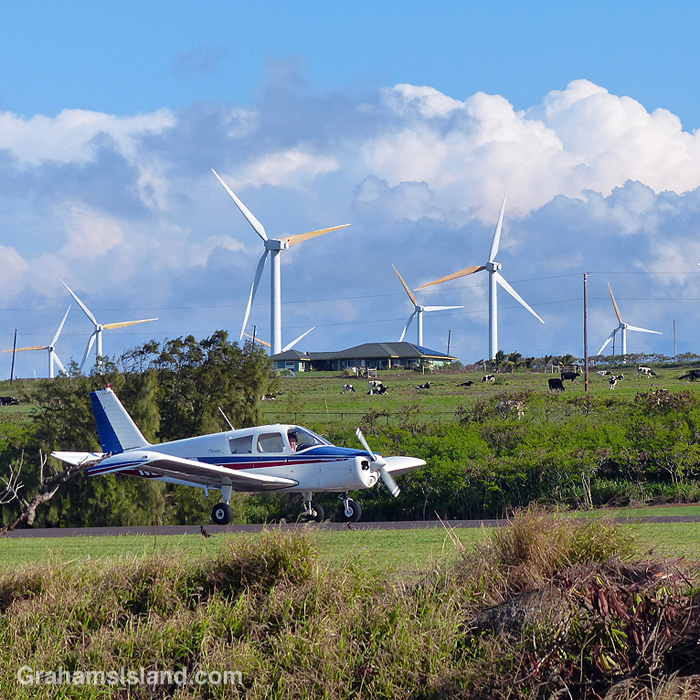
I often see sheep or cows on the road. These were trotting past the wind farm.
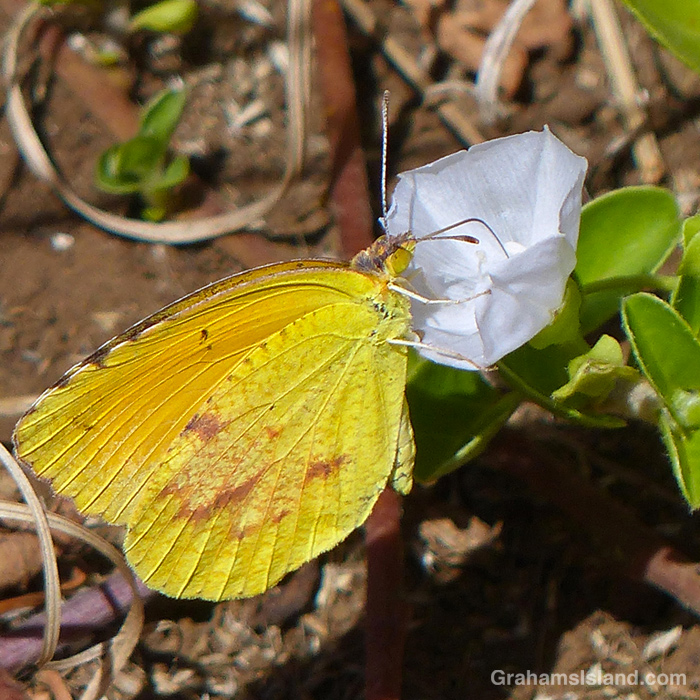
A sleepy orange butterfly on the flower of a native Jacquemontia sandwicensis vine.
A pair of nenes walk along the road outside the airport fence.
The newest addition to the landscape is this alien-looking sugar cane harvester.
Horse riders on the road along the coast.
Upolu is a good place to watch the sunset.
The view from Mo’okini Heiau towards a cloud-covered Maui.
A view of Maui from the top of the road to Upolu Airport.
This week’s Sunday Stills challenge theme is ‘Your Favorite Landscape.’ See more responses here.
When I think of the landscape at Upolu, it includes both the ocean that borders it and the skies above. They are, in my mind, integral to the place. But here, I’ve focussed on the land, a relatively small area of a few square miles where I walk most days. It’s rural, agricultural, and coastal. It’s historic and modern. It’s also a place I never return from feeling disappointed. There’s always something of note that I see or that happens when I’m there.
Also posted in response to Becky’s January Squares challenge theme of ‘Up.’ See more responses here.
I’m a big fan of movie director Peter Weir and I’m a big fan of his 2003 movie Master and Commander: The Far Side of the World (and I’m not just saying that so Russell Crowe doesn’t lash out at me on Twitter).
In the movie, there’s a scene of burials at sea where a standard prayer for the times is used. It features the words, “We therefore commit his body to the deep, to be turned into corruption.” These days, we think of corruption as being about perfidious politicians, crooked cops, bent businessmen. But another definition is that used in the prayer: the process by which dead organic matter separates into simpler substances.
But how to illustrate that? A photo of a compost bin is an obvious option, but I don’t currently have one. Then I saw this scene when I went down to Kiholo last week and thought it fit the bill. An array of downed coconuts, palm fronds, and other organic matter, which in due course will break down and return to the earth.
Posted in response to Becky’s January Squares challenge theme of ‘Up.’ See more responses here.