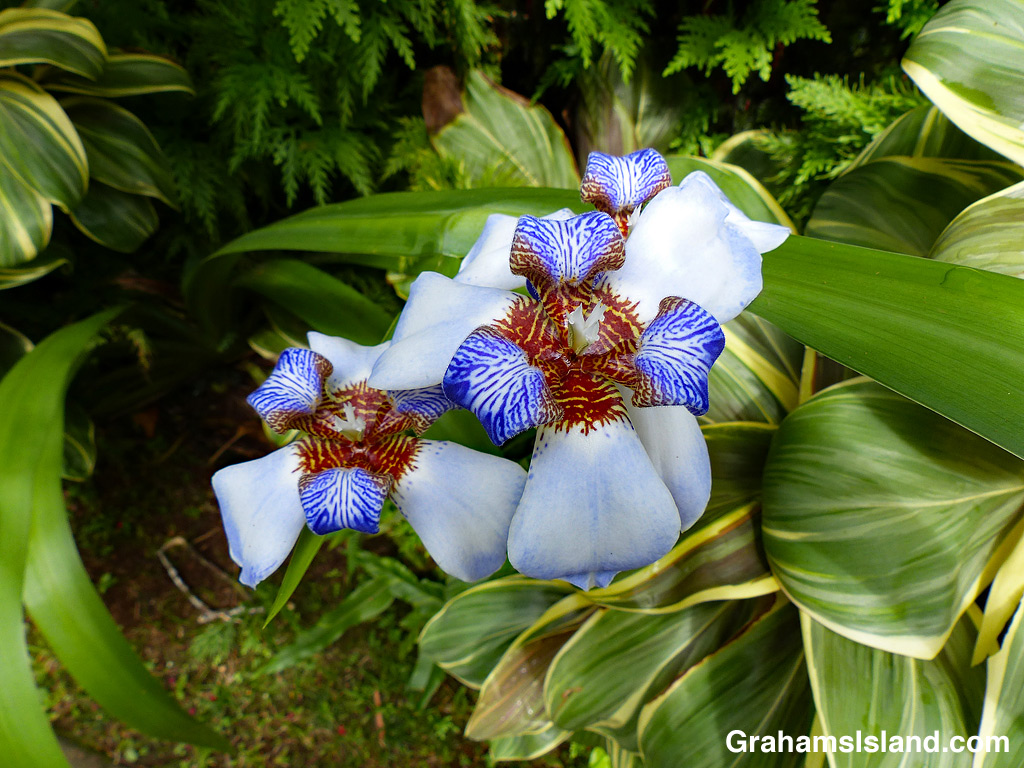
The intricate patterns of a walking iris flower stand out against a backdrop of green.

The intricate patterns of a walking iris flower stand out against a backdrop of green.
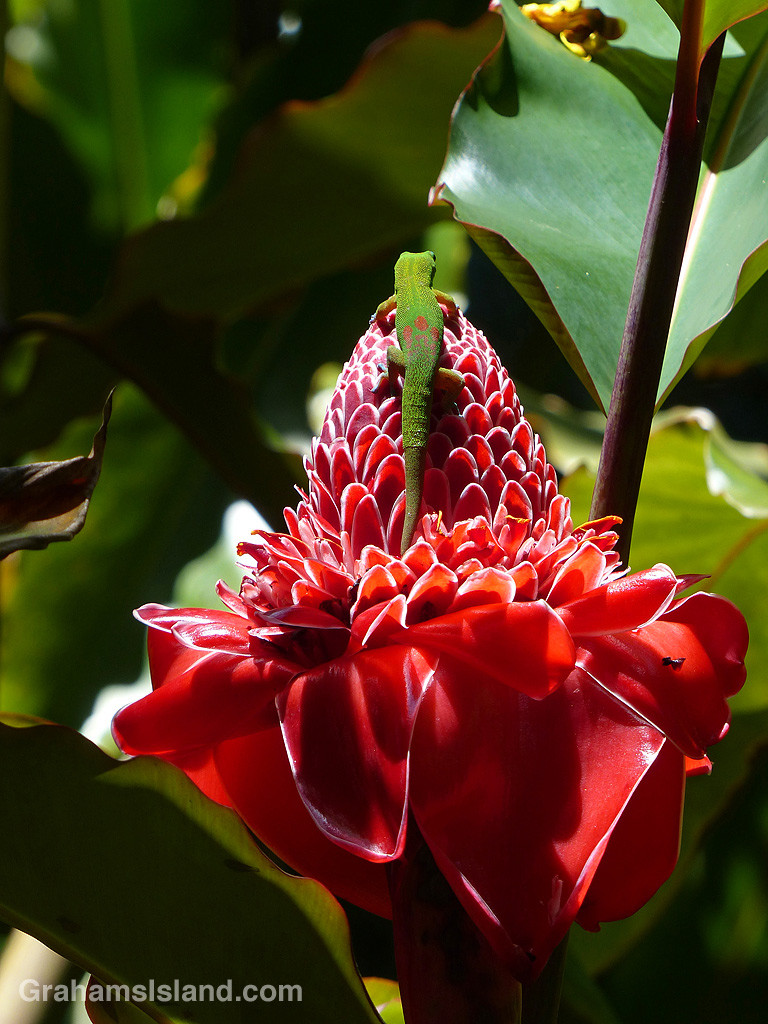
There is no Sunday Stills challenge this week (or next), but the theme was going to be ‘Something Red or Green or Both!’ so I thought I’d go with the photo I had picked out for that anyway.
So here’s a very green (with red markings) gold dust day gecko resting atop a very red torch ginger surrounded by green foliage. It looks like the gecko has been in the wars judging from the rings around its tail, which suggest it has lost it a few times. The most recent regrowth is the lower brown part, which will ultimately take on a matching green color once it’s fully grown.
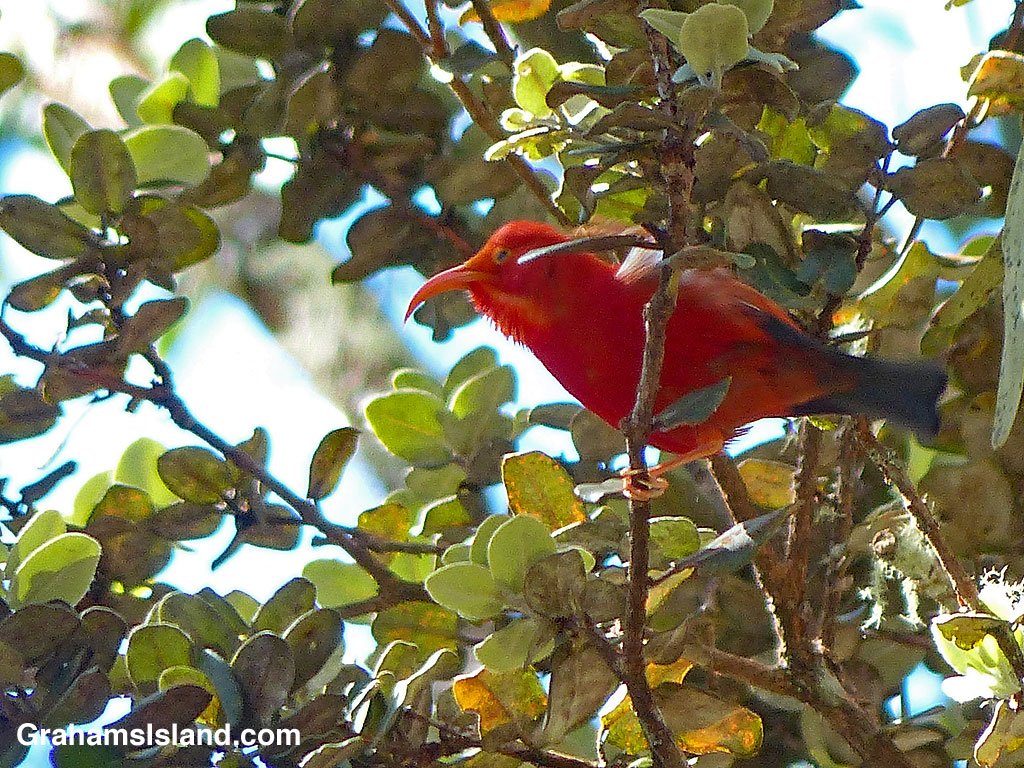
I saw this I’iwi (Drepanis coccinea) on a trail off of Saddle Road, between Mauna Kea and Mauna Loa. These bright red birds are native Hawaiian honeycreepers and in the old days, the feathers of the birds were collected to make cloaks for Hawaiian royalty.
The curved bill is suited for feeding on native lobelias, but a decline in those plants has seen the I’iwi adapt to feeding on other native plants including ʻōhiʻa lehua, māmane, and ohelo.
While the numbers of I’iwi are still fairly good, particularly on the Big Island and Maui, they have suffered, like other birds, from loss of habitat. In addition, They are susceptible to avian malaria, spread by mosquitoes. Consequently, I’iwi are doing better at higher elevations, such as where this photo was taken at around 6,000 feet.


On a recent foray into Hawi to get photos for last week’s Sunday Stills challenge (here), I took these photos of the Kohala Welcome Center. This is the place to get information about North Kohala for visitors en route to Kapaau and Pololu, which marks the end of the highway.
On this particular evening, the welcome center was illuminated by its Christmas display and a full moon, which also highlighted the palm trees that tower over that location.
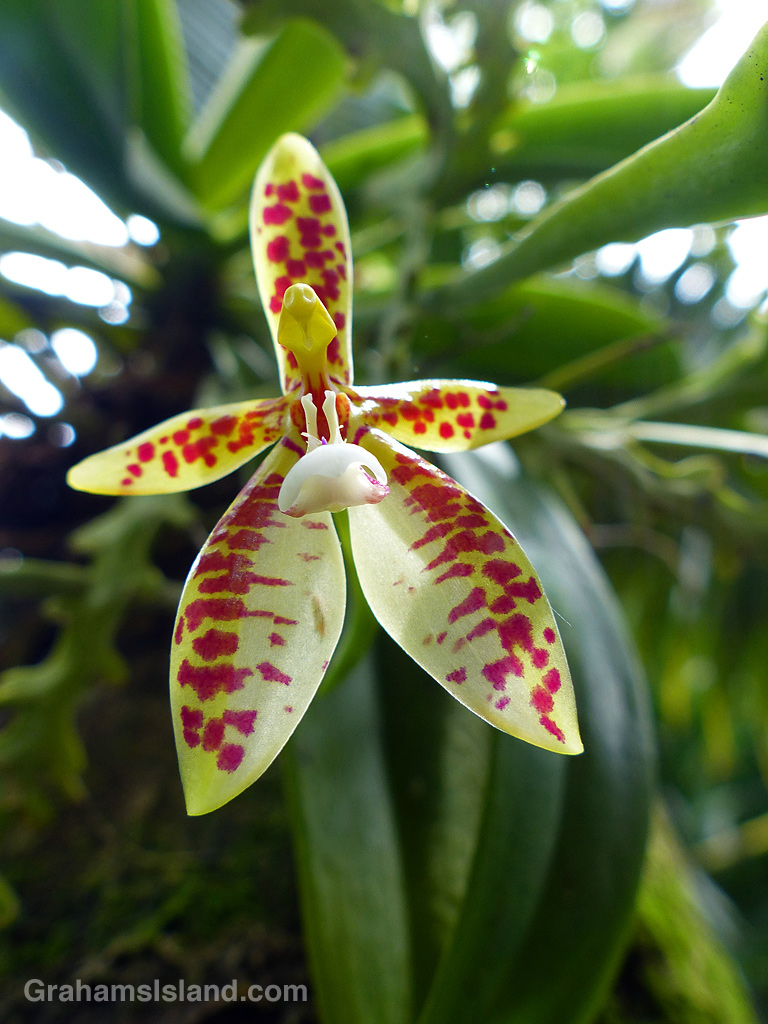
This phalaenopsis orchid comes from Southeast Asia. This one was at Hawaii Tropical Botanical Garden. For more information about Hawaii Tropical Botanical Garden, go to htbg.com.

This week’s Sunday Stills challenge theme is ‘Holiday Decor.’ See more offerings here.
This theme forced me outside after dark, something of a rarity these days. As usual, when I walked into Hawi, I thought, ‘I should do this more often.’
Here are a couple of the downtown buildings illuminated for the season. In truth, this was pretty much it for holiday trappings, but it’s still a good deal more than at my house!
Also posted, belatedly, in response to the last Friendly Friday challenge theme of 2019, ‘Christmas Preparations.’ See more responses here.

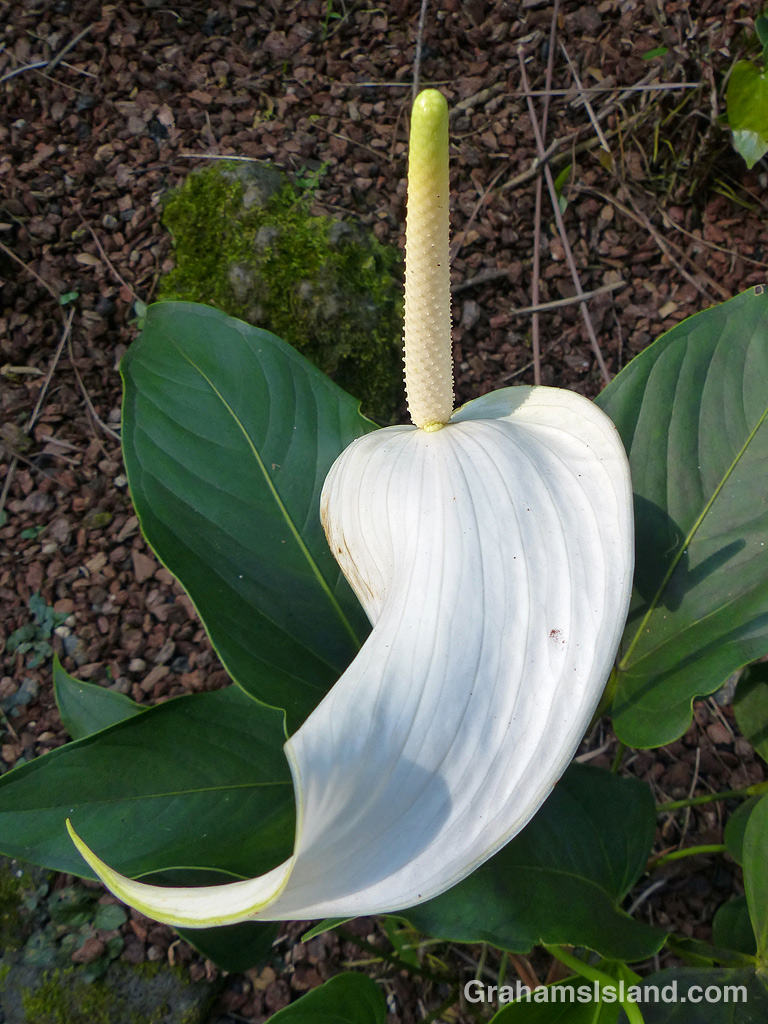
An exotic-looking white lady anthurium at Hawaii Tropical Botanical Garden. For more information about Hawaii Tropical Botanical Garden, go to htbg.com.
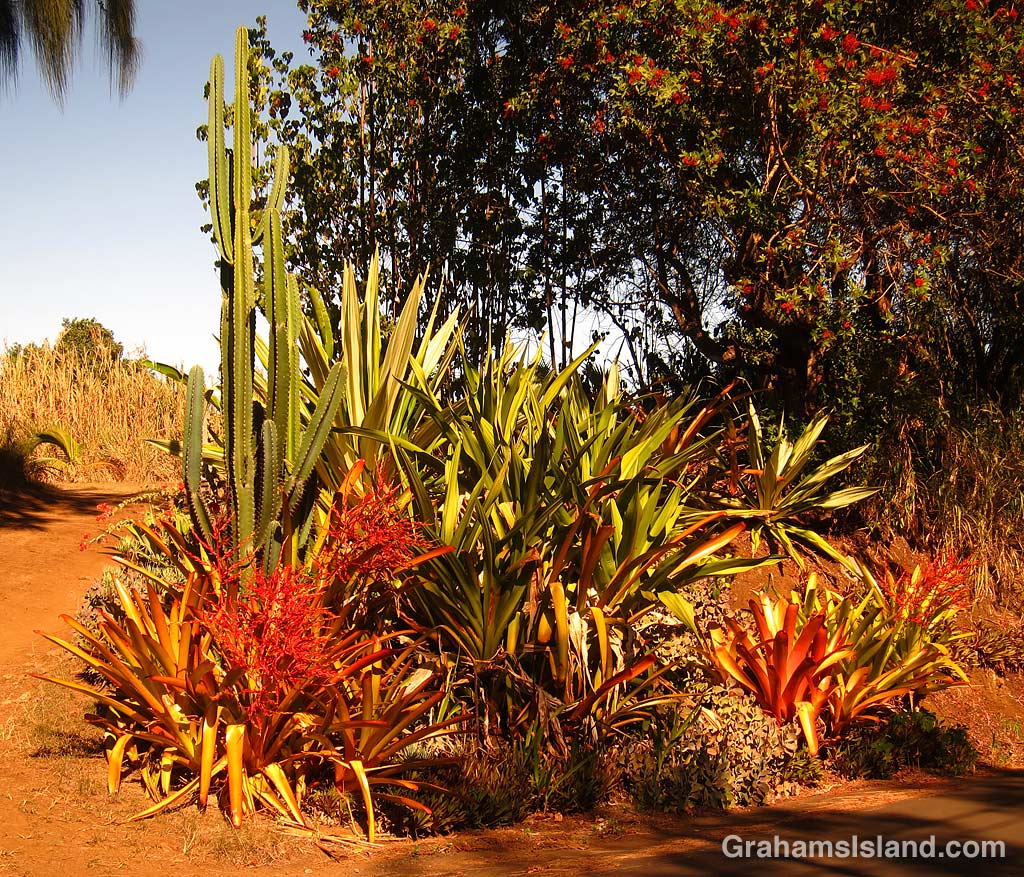
This is the entrance to Lokahi Garden Sanctuary. It’s on a narrow road with trees on both sides so there’s only a short time when the sun hits these plants. I’ve driven by many times when it was dark or in the shade. Other times, when the sun was right, I didn’t have my camera. But I really wanted to get a photo of the plantings with the sun on them.
On this day I had my camera, stopped the car, and took a couple of photos. I’m glad I did because shortly after this, a tall, purple banner was placed in the center of the plants. Depending on one’s point of view, this banner is either lovely or a garish eyesore. It certainly removed my desire to take any more photos.
The sanctuary itself is a great spot. For more information about Lokahi Garden Sanctuary, go to https://lokahigardensanctuary.com/.

