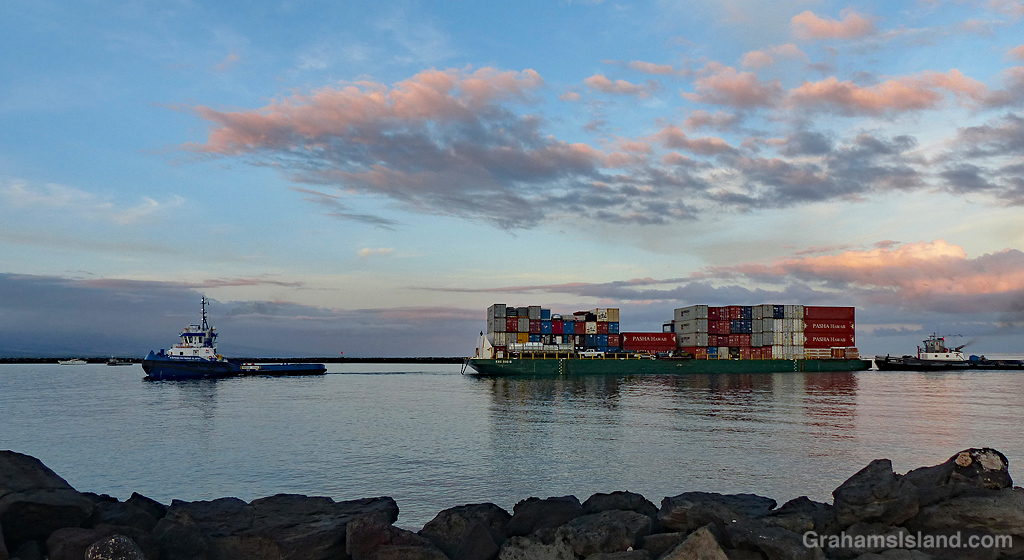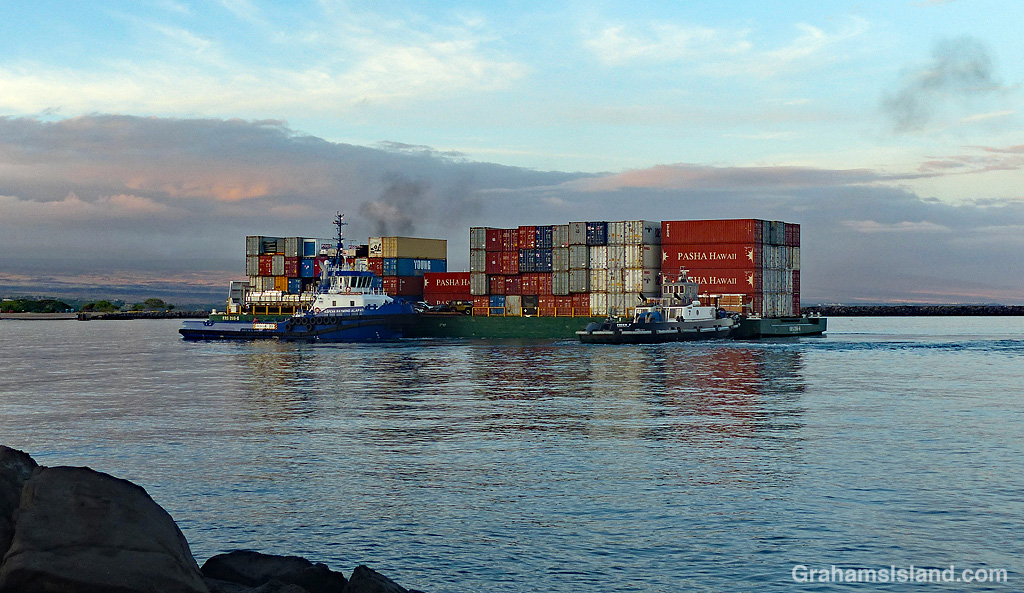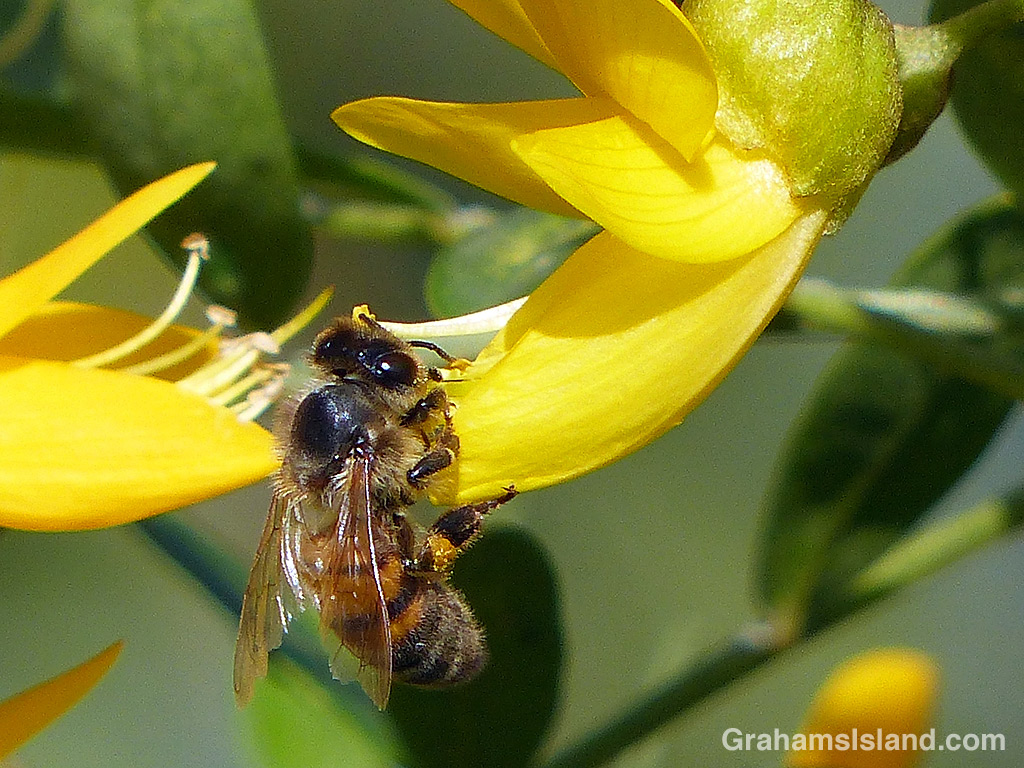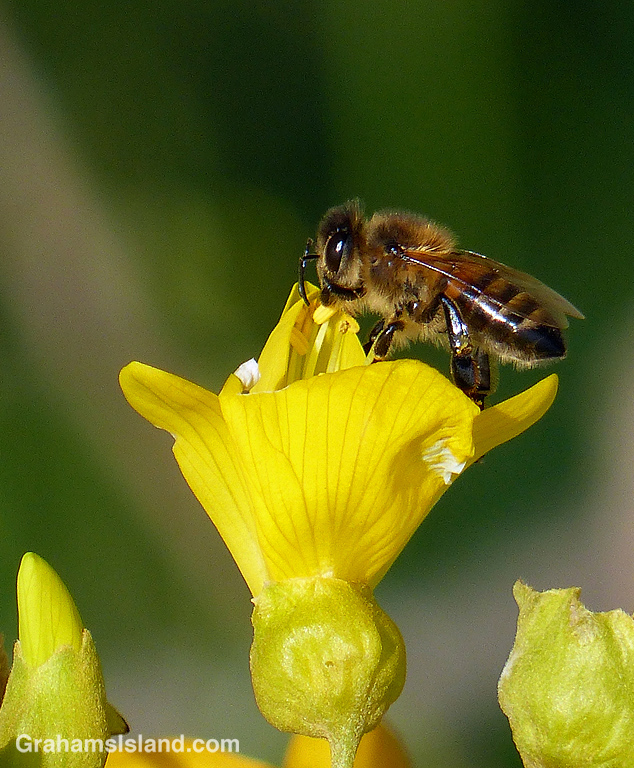
A recent sunset in North Kohala.

A recent sunset in North Kohala.

This old tractor now graces a small park area in a gated development in North Kohala.
Posted in response to this week’s Sunday Stills challenge on the theme of ‘Vintage.’ See more responses here.

Kekaha Kai State Park, north of Kailua Kona, is a pretty park with some excellent beaches. It’s also right under the flight path for aircraft heading to Kona International Airport (officially known as Ellison Onizuka Kona International Airport at Keahole).
What this means is that a steady stream of jets, on final approach to the airport, pass overhead, and not that far overhead either. It’s not the quietest park in the state.
While most of the aircraft are operated by the usual airlines, a few military planes pepper the skies. This one is a C-17 Globemaster, a military transport plane. It was arriving from Oahu, delivering firefighting equipment for the military’s Pohakuloa Training Area.


At the end of Highway 270, on the northern tip of the island, is Pololu Valley. There’s a trail down to the beach there and, at the other end of the beach, another trail leading up to a bench that overlooks Honokāne Nui valley.
Not far beyond the bench, the trail was destroyed by an earthquake in 2006. It’s still possible to descend to the valley, but the trail goes straight down a steep slope and ropes are in place to make this possible. There are no guarantees that these ropes are in good condition and the slope certainly isn’t. If you do descend this section, the trail passes through varied vegetation and ultimately leads down to a rocky beach at the mouth of Honokāne Nui valley.
Beyond Honokāne Nui, there’s another trail that continues over the next hill and down into Honokāne Iki valley. That valley opens up to this beautiful little bay, which is quite protected and, at low tide, has a nice sandy beach. Be aware though that this is private land and in use on a regular basis.

There are many varieties of phalaenopsis orchids on show at Hawaii Tropical Botanical Garden. This one is Phalaenopsis (ChianXen Queen x Diamond Beauty).
There are so many orchid hybrids, with subtle variations, that it can be difficult to identify them. However, at the garden, I’ve found that if I root around at the base of the plant I often find a name tag sticking out of the dirt, and when it comes to identification I’ll take all the help I can get.
For more information about Hawaii Tropical Botanical Garden, go to htbg.com.

Costus curvibracteatus is also known as orange tulip ginger and hails from Costa Rica and Panama. In these photos, the overlapping red parts are the bracts and the longer orange tubular forms, emerging from between the bracts, are the flowers. However the bracts can also be orange, and the flowers a similar length as the bracts.
The plant was being explored by a gold dust day gecko, which was likely searching for something sweet or possibly seeking water trapped in the bracts.
This one was at Hawaii Tropical Botanical Garden. For more information about Hawaii Tropical Botanical Garden, go to htbg.com.


Toward the end of a hike along the coast, I came across this turtle feeding in a shallow tidal area. There was good grazing to be had, but the problem was that the ledge was continually swept by incoming waves.
The turtle would swim in and access the ledge from the shore side (on the right in the top photo). Then he lumped forward to where the good grazing was and buried his head in it.
Waves would surge in and sluice over him (below). Sometimes, the receding wave had enough oomph that it would wash the turtle over the front edge of the ledge. Then he’d swim around and start over again.


This Hawaii ‘amakihi, one of Hawaii’s native honeycreepers, was feeding on mamane flowers near the top of Pu’u Wa’awa’a.