In Hawaii, a pu’u is a hill. These are old cinder cones that dot the landscape from the coast to the top of Mauna Loa and Mauna Kea.
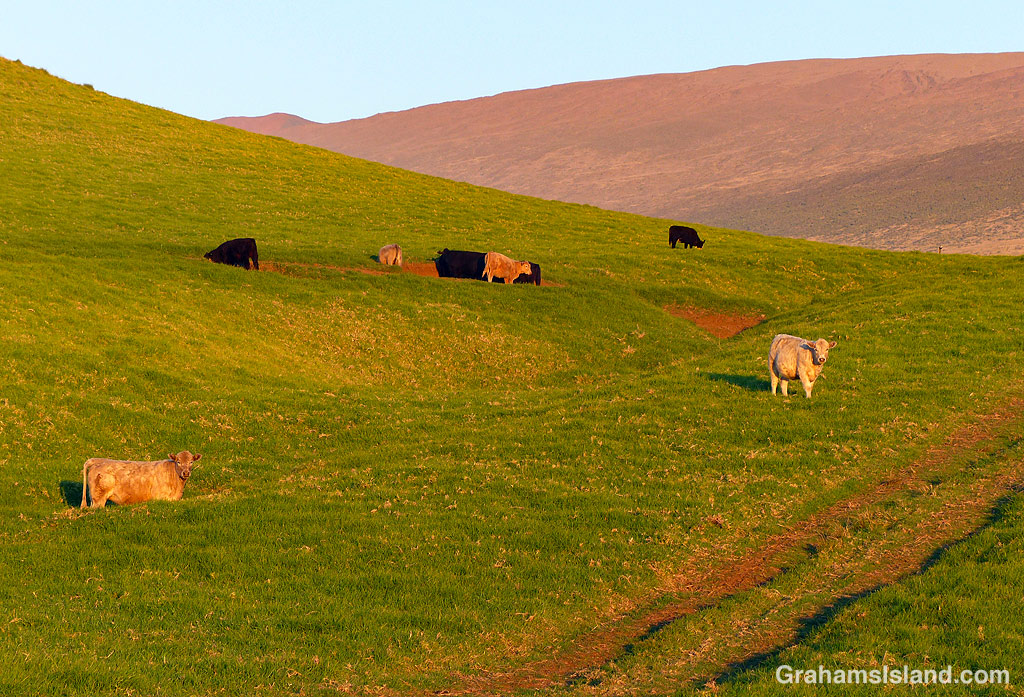
Along Old Saddle Road, the land and it’s pu’us are grass-covered. This pastureland is cattle, horse, and sheep country, with a lot of goats thrown in for good measure. The land is steep and and rough and the grass varied, but the rainfall is heavy enough that there’s a lot of it.
Old Saddle Road is one of my favorite drives on the island, particularly in the early morning (above) and late afternoon (below).
Posted in response to Friendly Friday challenge theme of ‘Splendour in the Grass.’ See more responses here.
A rainbow arcs over a small red and white flag floating in the water. This flag is used in North America to indicate that there’s a diver or divers below and that boats should stay clear.
This week’s Sunday Stills challenge theme is ‘Bodies of Water.’ (See more responses here.) Last Sunday, I posted photos of the Kohala valleys. This week, I’m posting a bit about what goes on in them and elsewhere on the island.
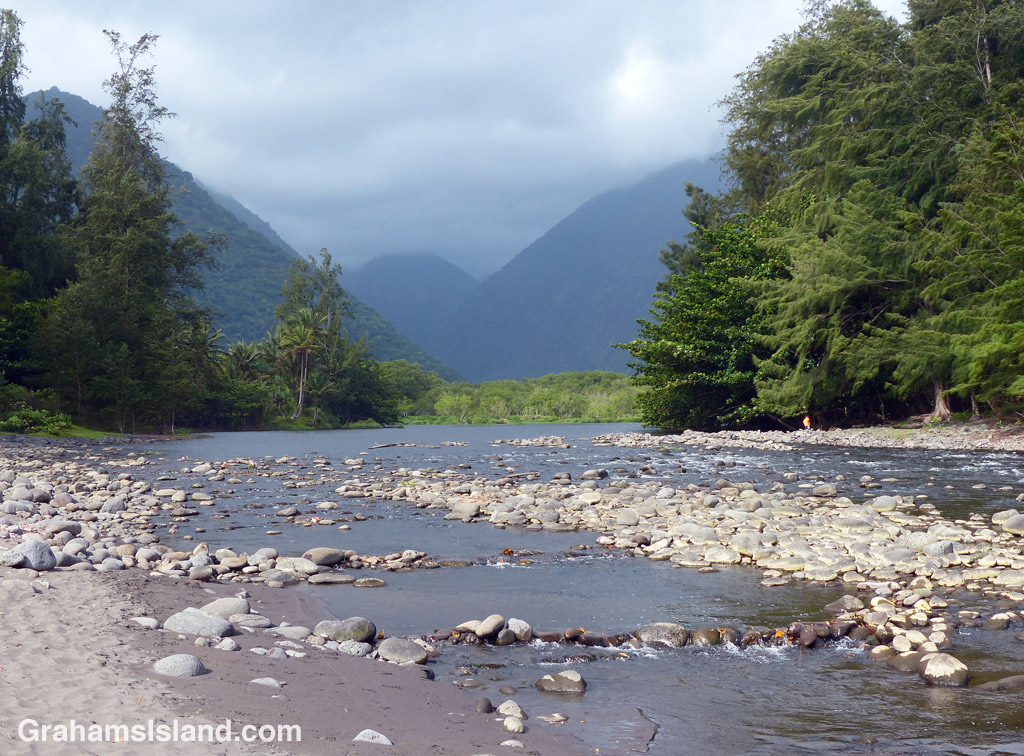
The top photo is shows the mouth of the Waipi’o River looking back toward the cloud shrouded Kohala hills. The river, is fed by water passing over Hi’ilawe Falls and other waterfalls deep in the fingers of the valley. Like all water courses on the Big Island, its flow is greatly increased by the often heavy rainfall.
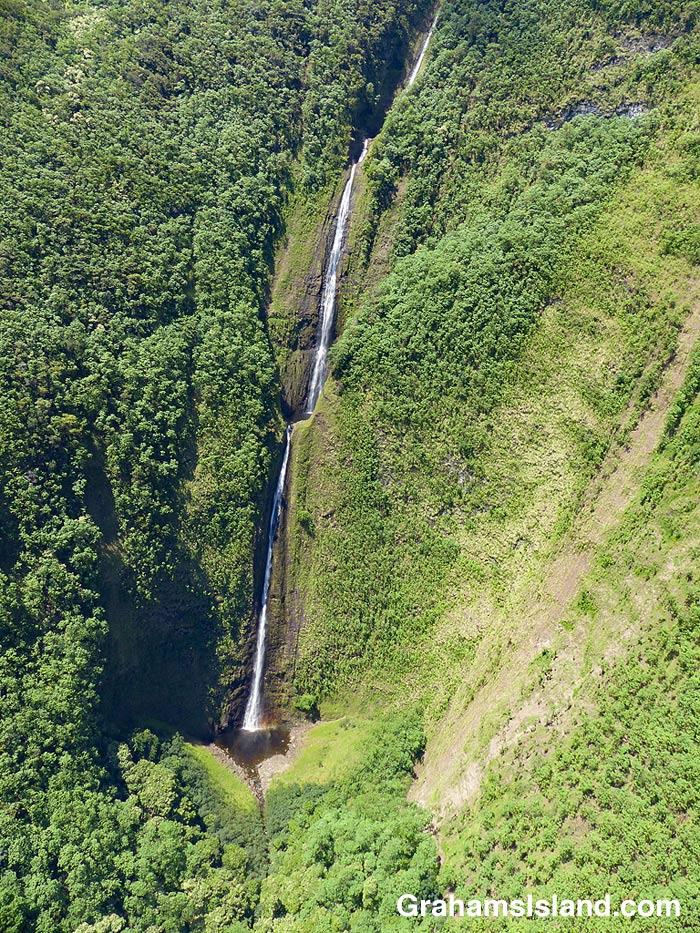
The second photo shows a waterfall, farther down the coast, cascading into a pool at the bottom before flowing out to the ocean. Some of these waterfalls drop more than a thousand feet. Some cascade into valleys, some directly into the ocean. During dry spells, the water flows are greatly reduced and many falls, those that are entirely rain fed, disappear for a while. When rains are heavy, the water flow is so great that some falls blend together to form a sheet of falling water.
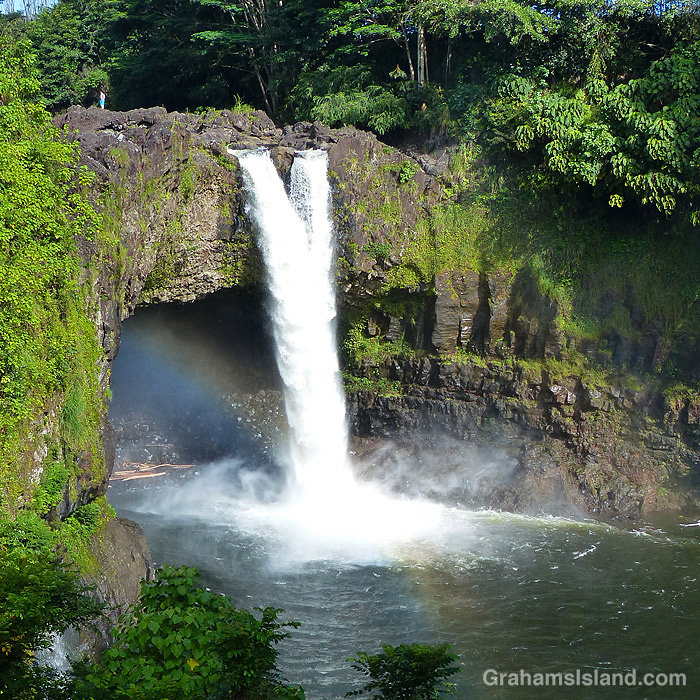
On the east side of the island is Wailuku River, the longest river on the island. This flows down to the ocean in Hilo, and on its way, tumbles over the aptly named Rainbow Falls (third photo). The falls and rainbows are best seen in the early morning. This stretch of the river is very dangerous with flash floods being common. People get swept away here every year.
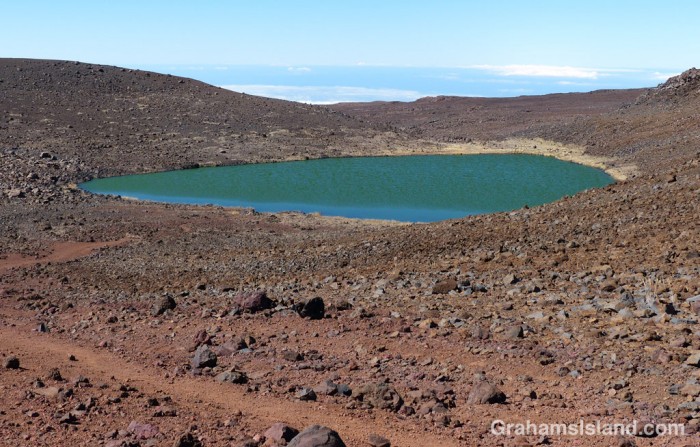
Finally, the bottom photo shows the biggest lake on the island, which can be found at the top of Mauna Kea! Lake Waiau is fed by rainwater and snow melt, mostly in the winter. That it exists at all is something of a mystery. The ground on Mauna Kea is highly permeable, and it’s not fully understood what the layer is beneath Lake Waiau that enables it to retain water. Lake Waiau is not just the biggest lake on the island, it’s the only one. Green Lake, the biggest lake previously, disappeared during Kilauea’s 2018 eruption (photos and story here).
Photographers are encouraged to take advantage of the golden hour shortly after sunrise or shortly before sunset, when the light is soft and golden. Photos taken here during the golden hour showcase the wonders of Hawaii’s beaches, volcanoes, and wildlife.
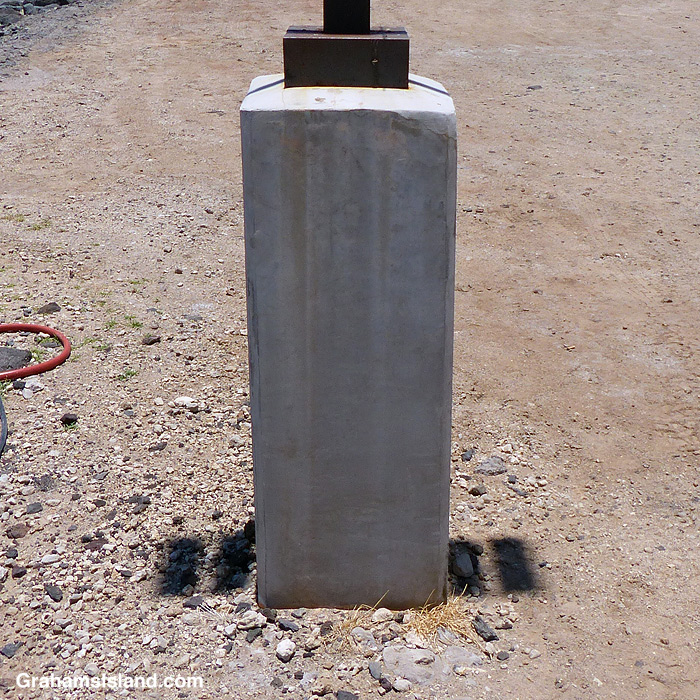
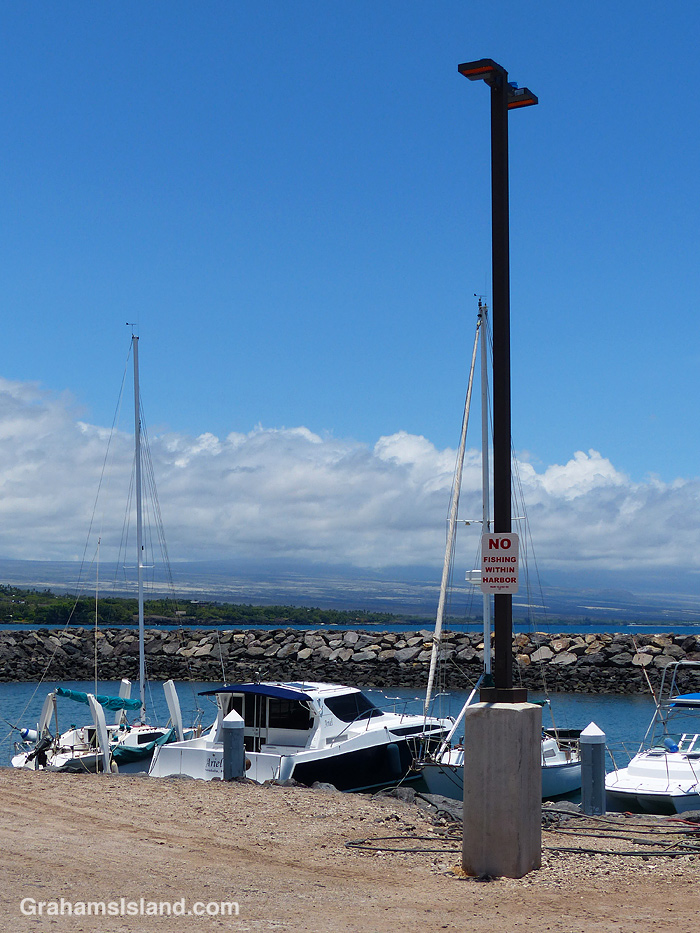
Taking that as my cue, I feature one of the wonders of Hawaii in these photos. No, it’s not concrete lamp bases, which can be found in most, if not all, states. Nor is it the golden hour. But only in Hawaii can you find a concrete lamp base like this one. It’s a sunny day. Those rectangular shadows are from the lights at the top of the lamp pole. But where’s the shadow of the concrete base? There isn’t one, because these photos were taken at Lāhainā Noon.
Lāhainā Noon, a name thought up by the good folks at the Bishop Museum, occurs when the sun is directly overhead on its apparent passage north and then south again, before and after the summer solstice. This phenomenon occurs in places located between the Tropic of Cancer and Tropic of Capricorn. Hawaii is the only U.S. state in tropics and so is the only place in the country to see this.
The timing of Lāhainā Noon varies from place to place, depending on latitude. It occurs twice a year, the first time in May as the sun appears to head north, and then again in July as it dips south again. These photos were taken yesterday in Kawaihae, but where I live in Hawi, Lāhainā Noon occurred two days ago. The last place on the island to experience it will be South Point, the most southerly point in the U.S.A, on July 27.
The bottom photo shows the Sky Gate sculpture in Honolulu. This sculpture, designed by Isamu Noguchi, casts a wavy shadow most of the time, but twice a year, at Lāhainā Noon, the shadow is perfectly round. The sculpture wasn’t particularly well-received initially, but now people visit from all over the world (when that’s possible) to see it do its thing.
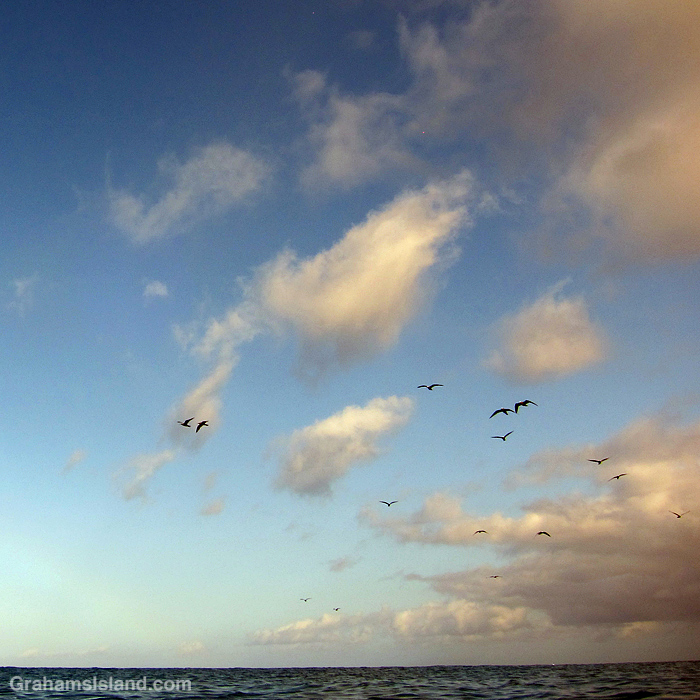
Yesterday, I was processing photos I’d taken over the past few days. When I saw this one, I thought, ‘I could have used that on Sunday,’ when responding to the Sunday Stills challenge theme of ‘Sky’ (more responses here), and Becky’s July Squares challenge theme of ‘Perspective’ (more responses here).
Usually, when I’m in the water, my focus is on spotting fish. But I also look around with my head above water and, one morning, I saw this flock of Hawaiian noddys wheeling back and forth over the ocean. Just after I took this photo, they flew directly overhead before gliding away to the south.
This week’s Friendly Friday challenge theme is ‘Nostalgia.’ See more responses here.
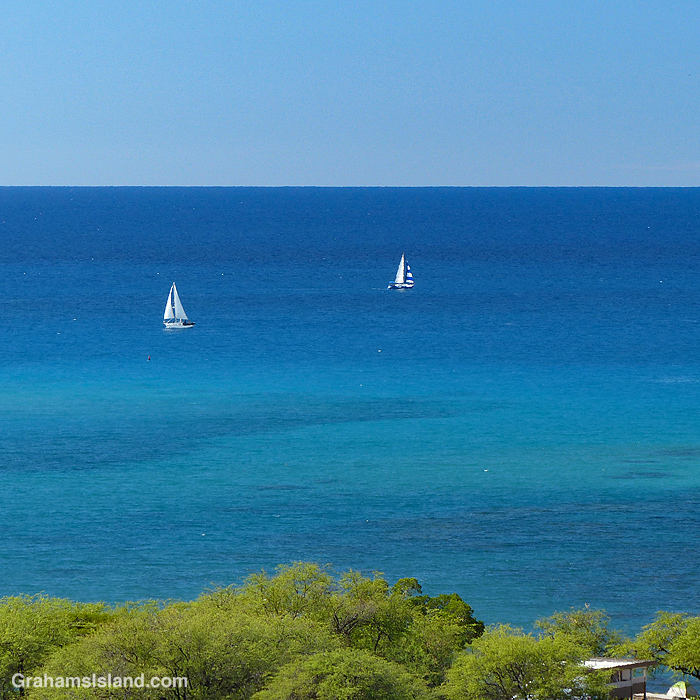
I wasn’t sure I’d have anything for this theme, but this photo does make me somewhat nostalgic for my sailing days. I liked making passages and being out of sight of land, as opposed to sailing in a bay. I enjoyed watchkeeping, navigation, and my world being simplified to boat, water and sky. I saw more in that reduced world than in my usual busy life. Standing night watches, I didn’t just register the dawn. I noticed a glimmer in the east slowly transition to pre-dawn, and then an almost blinding sunrise. The sight of a bird was an event. There were days of no wind when the ocean was glass and it was hard to believe that the nearest solid surface was thousands of feet below.
Now, had I found a photo with a small boat being lashed by waves on a whitecap-riven ocean, my nostalgia would be less pronounced. One trip, I took a photo of the couple I was sailing with. They were on deck, hunched in foul-weather gear, as water sprayed across the deck, looking exactly as that sounds. These moments are inescapable when sailing longer distances. When I was younger, the discomfort was worth the rewards. Now, I don’t look at it the same way. But looking at this photo, it’s easy to imagine how it could be on that perfect trip no one ever experiences.
Also posted in response to Becky’s July Squares challenge theme of ‘Perspective.’ See more responses here.
This week’s Sunday Stills challenge theme is ‘Freedom.’ See more offerings here.
When Terri posts the Sunday Stills challenge themes for the month ahead, I usually check out what’s coming up. That way I can see what photos I have that fit the themes, or come up with ideas for what I could shoot.
When June’s themes were posted, my first thought for this one was of flying. Since the earliest of times, people have looked to the skies, watched birds, and envied their freedom of flight. Of the various birds I see here, the great frigatebird most epitomizes that freedom. These large birds cover great distances, gliding effortlessly across the sky, rarely flapping their wings but using the wind to maximum advantage.
I picked a couple of photos from my archives, expecting to use them since I hand’t seen any frigatebirds for many weeks. But a couple of days later, I saw one, though I didn’t get any good photos. That’s the other thing about these birds: they seem to have a knack for sneaking up on me, so that I usually notice them disappearing into the distance.
Over the next week or two, I saw a few more birds in similar situations. Then, one day, as I neared the coast below Upolu Airport, I saw a frigatebird flying into a strong wind. By the time I had my camera ready, it was again getting smaller. Still, I took photos and as I did so I saw a second bird, then a third. They continued heading east and I carried on down to the coast.
I hadn’t been there more than a couple of minutes when one of the birds shot by in front of me. It was pointing east, but heading north of west riding the stiff northeast trades that were blowing. A second followed, then a third, and a fourth that I hadn’t seen before. I expected them to quickly disappear on the wind, but once over the water, they regrouped and held their position, circling and gliding up and down. Then I noticed them edging back into and across the wind, heading my way. Slowly they came closer, still appearing to make little effort.
Eventually, the four of them passed directly overhead, the lowest maybe 20 feet above me. Almost immediately they turned and slipped back they way they came, only this time they kept going, gliding sideways in the general direction of Maui. I watched until I couldn’t see them anymore. The whole episode probably lasted no more than 15 minutes, but it seemed to last much longer.
I’m not much of a poetry buff, but these birds made me think of the opening lines of a poem called High Flight, written in 1941 by John Gillespie Magee Jr. when he was 19 and a pilot in the Royal Canadian Air Force, stationed in England. They read: Oh! I have slipped the surly bonds of Earth And danced the skies on laughter-silvered wings.
This week’s Sunday Stills challenge theme is ‘Rise/Set.’ See more offerings here.
I decided to go with sunrise and sunset photos taken from more or less the same spot on Kawaihae harborside. Above, a man fishes from the end of the harbor breakwater around sunrise. Below, a fisherman seated on the shoreline at sunset, with the breakwater across the harbor in the background.