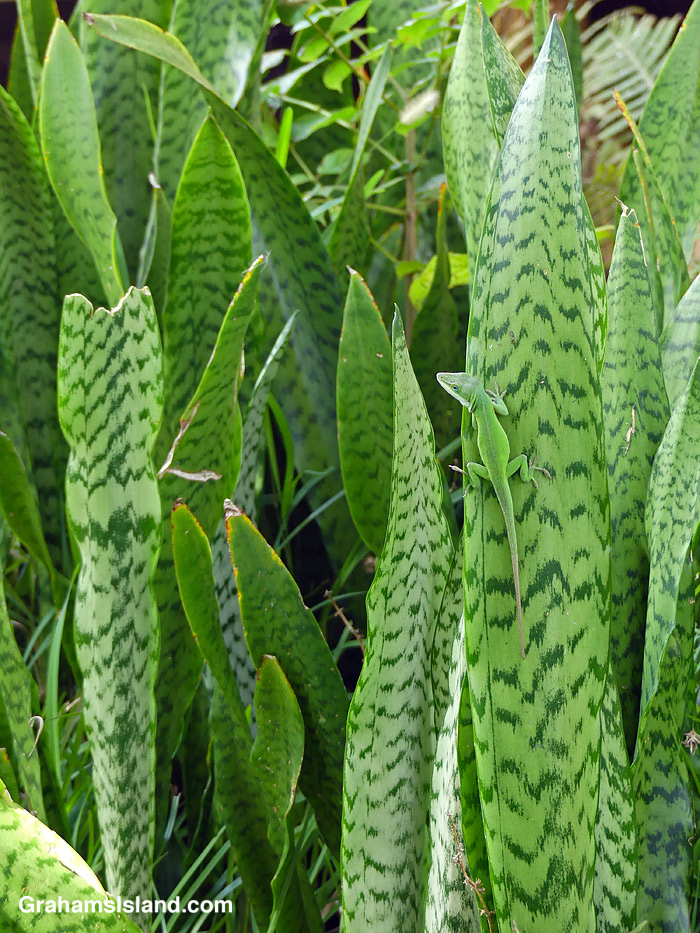
This green anole didn’t exactly stand out while it climbed the leaf of a snake plant (Dracaena trifasciata).

This green anole didn’t exactly stand out while it climbed the leaf of a snake plant (Dracaena trifasciata).

I like taking photos of the different kinds of fish that gather, sometimes in the same general area every day. This group caught my eye for the Bluestripe Snappers with their beautiful blue stripes on yellow bodies.
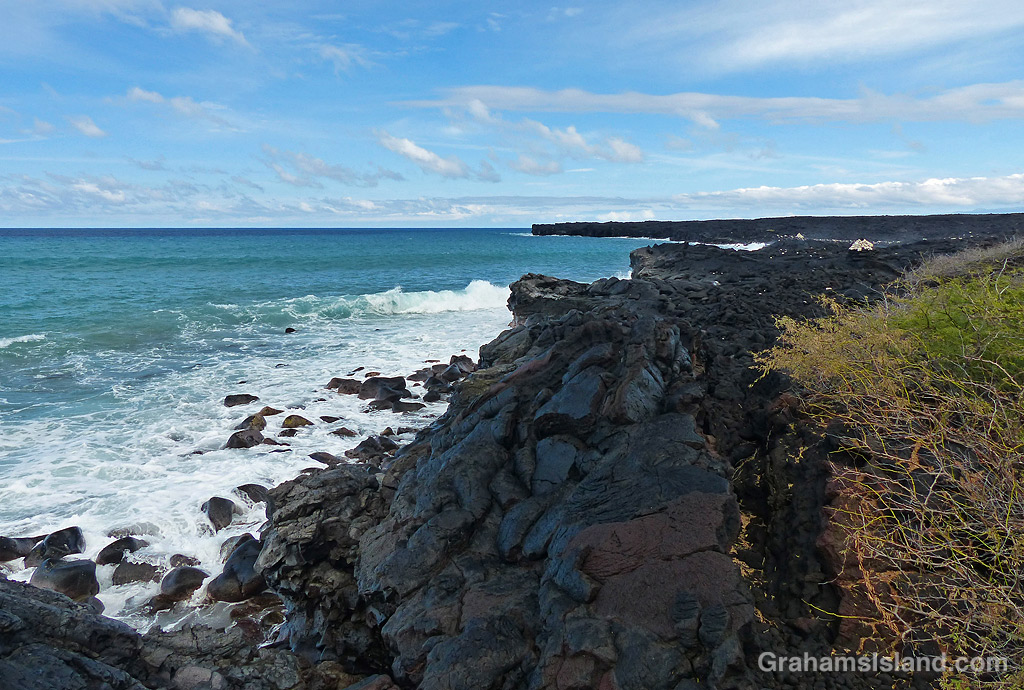
Hawaii isn’t all sandy beaches. There are lots of rocky shores and lava ledges such as this stretch north of Kihilo Bay.

A few days ago, a group of five wild turkeys wandered through the yard. It’s the first time I’ve seen them here. They came up from the abandoned house and were headed towards the highway.

This path took them through the neighbor’s yard, which is the territory of a local rooster. When he saw these strange creatures moving into his domain, he strolled across to investigate. The turkeys seemed mystified by the rooster, though it’s hard to believe they hadn’t seen one before.

They peered down on it, stooped to its level, flapped their wings at it, displayed their feathers. The rooster was unmoved. For his part, he seemed even more baffled than the turkeys, though he also appeared to have decided they were no threat to his territory. He just stared as the turkeys went through their repertoire.
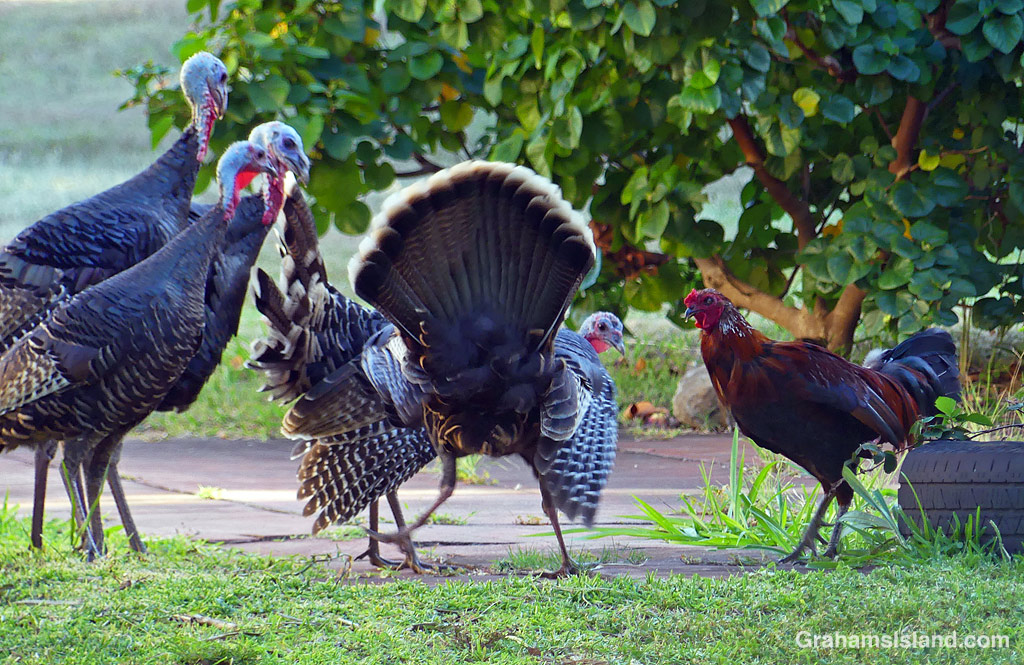
Eventually, they went about their business of pecking for food. From time to time, the turkeys would go through their routine, but the rooster remained unimpressed. Eventually, the six of them wandered off toward the small macadamia nut orchard nearby, the turkeys still displaying, the rooster still off in his own world. The turkeys came back the next day, but haven’t been seen since.

And the headline? Those turkeys just look like aliens, peering down on the strange life form below them, just the way real aliens would probably look at us!


I rarely post for Clare’s Share Your Desktop challenge for the simple reason that I rarely change my desktop. But yesterday, I saw this Whitetip Reef Shark and thought the top image deserved a run on my computer screen.
My first sight of the shark was the second image. I suddenly saw this large shape gliding below me, having snuck up on me from behind! I’d been thinking it had been a long time since I’d seen a shark so I was thrilled to see this one, especially since the water was pretty clear and not too deep. I love the sinuous movement in this second photo! The shark disappeared under a ledge for a short time, but then reemerged and swam up a shallow cliff face and away over the reef, leaving me a very happy swimmer.

During some recent swims, I’ve been lucky enough to see this small Spotted Eagle Ray. It doesn’t tend to hang about, so the encounters have been fleeting, but the ray looks in great condition, which is always good to see.
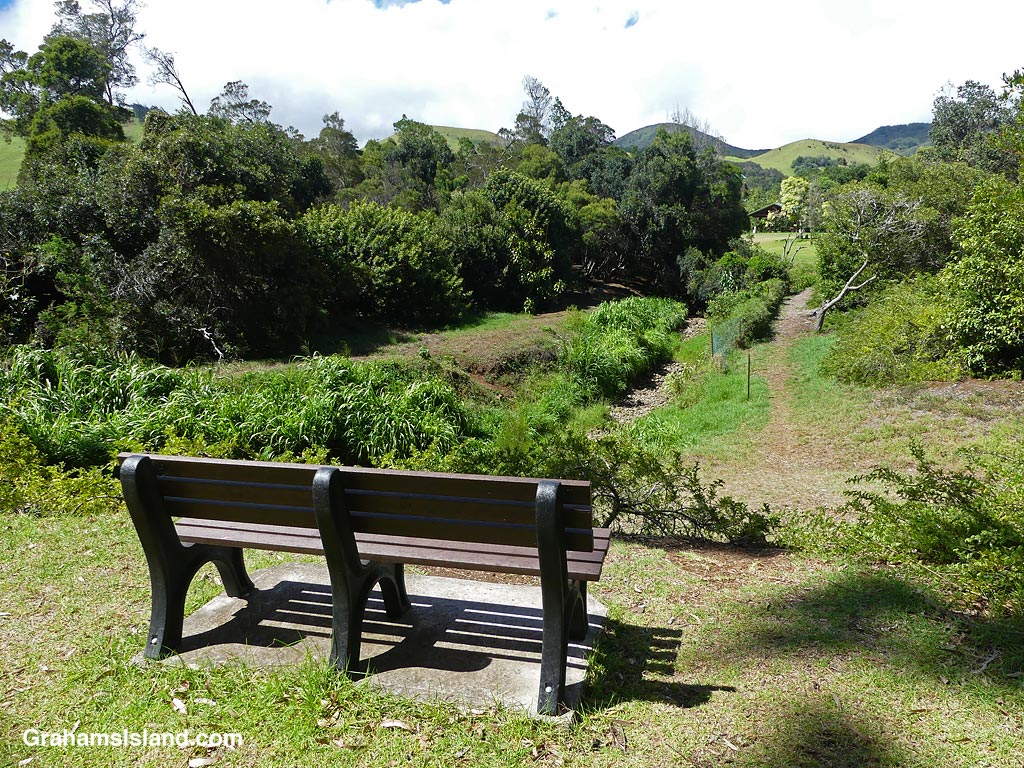
Recently, while waiting to visit my dentist, I walked the trail in the Waimea Nature Park, also known as Ulu La’au. The trail follows the Waikoloa Stream for about a mile from the town center down toward the ocean. It’s a work in progress, with volunteers removing invasive species and planting native and canoe plants in their place.
On my walk, the Waikoloa Stream had water in it, but not much. I think it would be fun to walk there after a heavy rain. But one thing I liked was the abundance of benches, some of which offered nice views of the park, the stream, and the hills surrounding the town.

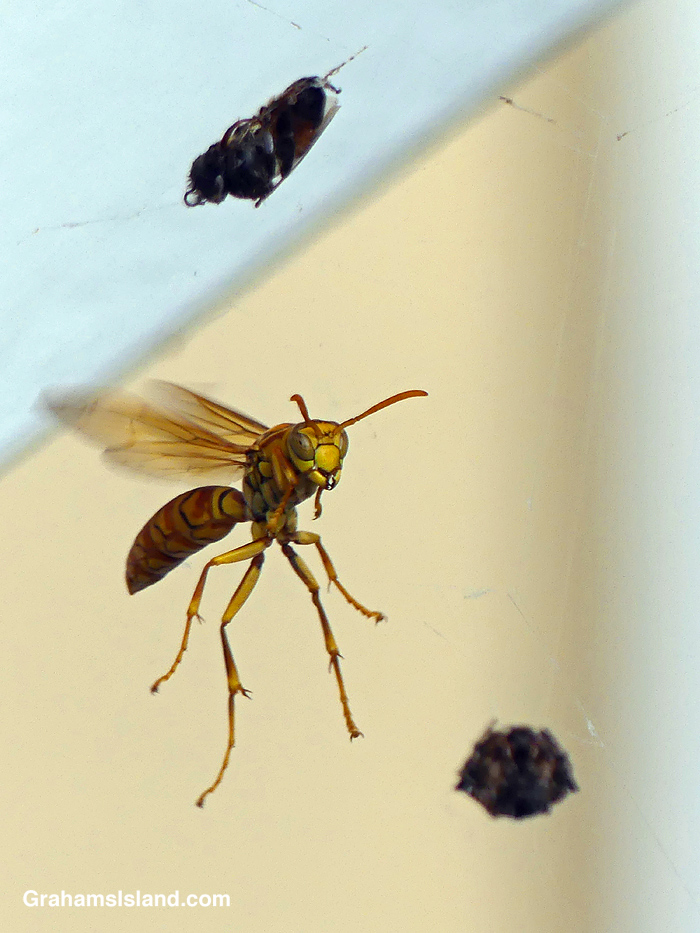
The house where I live is ready for Halloween thanks to the generous numbers of spiders living around it. By the front steps, there’s a small Hawaiian Garden Spider and several crab spiders.
One day, I came home and saw a wasp flying close to the various webs. I thought it was dicing with danger, but soon saw that wasn’t the case. Instead, it would approach a web and bob its head toward the spider. It didn’t seem to be a terribly threatening act, though perhaps it was from the spiders perspective. The wasp didn’t push home an attack, but would instead fly away, settle for a bit, and preen itself.
The garden spider didn’t seemed to be bothered by the attention, but the crab spiders would drop suddenly on a strand of silk, before returning to their web as soon as the wasp moved on. I watched these maneuvers for five or ten minutes before heading inside. No webs were damaged, no spiders hurt, and I still don’t know what was really going on!

