
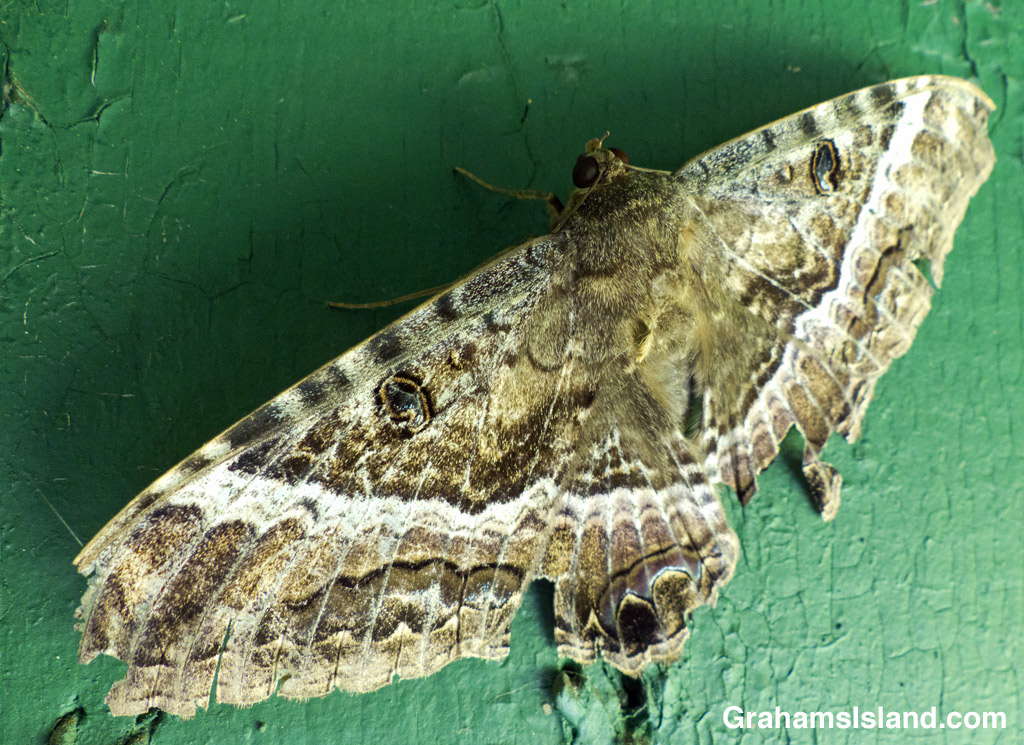
This black witch moth shows the wear and tear of everyday life.
IRONMAN: The thrill of victory, the agony of defeat

Yesterday saw the world championship for the IRONMAN triathlon taking place on the Big Island.
In the top photo, Daniela Ryf of Switzerland powers out of Hawi after the turnaround of the cycling leg. Only another 50+ miles of cycling to go, oh and running a marathon. She went on to win the women’s event in 8 hours, 46 minutes, 46 seconds, a new course record.
The events is not all fun and games however. Below, Tim Reed of Australia looks dejected as he walks his bike back into Hawi after withdrawing from the event. Not sure what the reason was, but the bike looked OK.
For more information about IRONMAN, go to Ironman.com.

Puapo’o lava tube tour


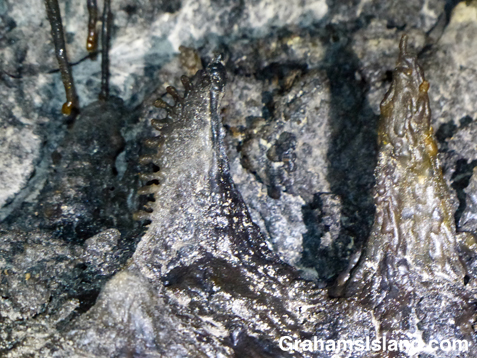
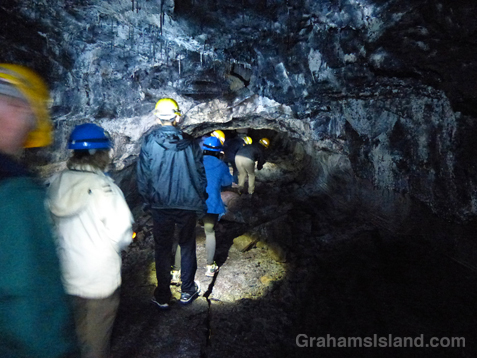
As part of the National Park Service centennial celebration, Hawaii Volcanoes National Park has been offering a guided tour of Puapo’o lava tube. This tour has been offered in the past, but not for several years.
Puapo’o is a pristine lava tube meaning that its rock formations are intact and life in the tube is largely undisturbed. Contrast this with the park’s popular Thurston lava tube, where all the finer lava details have long since been broken off by visitors.
There’s a hike to the tube, which is deep within a forest rich in tree ferns.
The tube entrance is accessed by a ladder and then it’s on into the dark. Whereas Thurston lava tube is well lit and has a mostly flat floor for easy walking, Puapo’o, which is about a mile long, was lit only by our headlamps and rocks littered the tube floor. It’s not a tour for the claustrophobic or nervous.

Those rocks on the floor match recesses in the tube ceiling show where rock falls have happened. A month before, one of our rangers had been leading a tour when there was an earthquake, a common occurrence in the park. The group left the tube, but the next visit found a new rock fall.
We scrambled over rocks, and sat in the dark in a large, amphitheater-like part of the tube. As we progressed, the rangers pointed out different lava formations from lava-sicles to bathtub rings to puapo’os for which the tube is named. And even in this pitch dark place, there is life – moths, crickets, and spiders, one a huntsman and the other a tiny, near invisible thing that builds gossamer webs. Also, living on the tube walls, are unique microbial colonies, which are being studied for medical uses.
Eventually, we scrambled up a rocky slope and out through a narrow opening, back into the forest.
For more information about the Puapo’o lava tube tour, go to nps.gov/havo/planyourvisit/lava-tube-tour.htm.

Bee on fireweed flower

Last week I posted here about the fireweed biocontrol moth, secusio extensa, which has been introduced into Hawaii in an attempt to control the spread of invasive fireweed (Senecio madagascariensis). On that same walk I saw lots of fireweed flowers such as this one, busily being helped to propagate by this bee. Such is the battlefield.
Happy gray chub

I watched a small shoal of gray chubs going back and forth in shallow water and was pleased to get a photo of this happy fish. To me, it looks like it might be about to break into a song and dance routine.
In my attempts to identify what I see in the water, I use John P. Hoover’s book The Ultimate Guide to Hawaiian Reef Fishes, Sea Turtles, Dolphins, Whales, and Seals. His website is hawaiisfishes.com.
Hawaiian blue butterfly
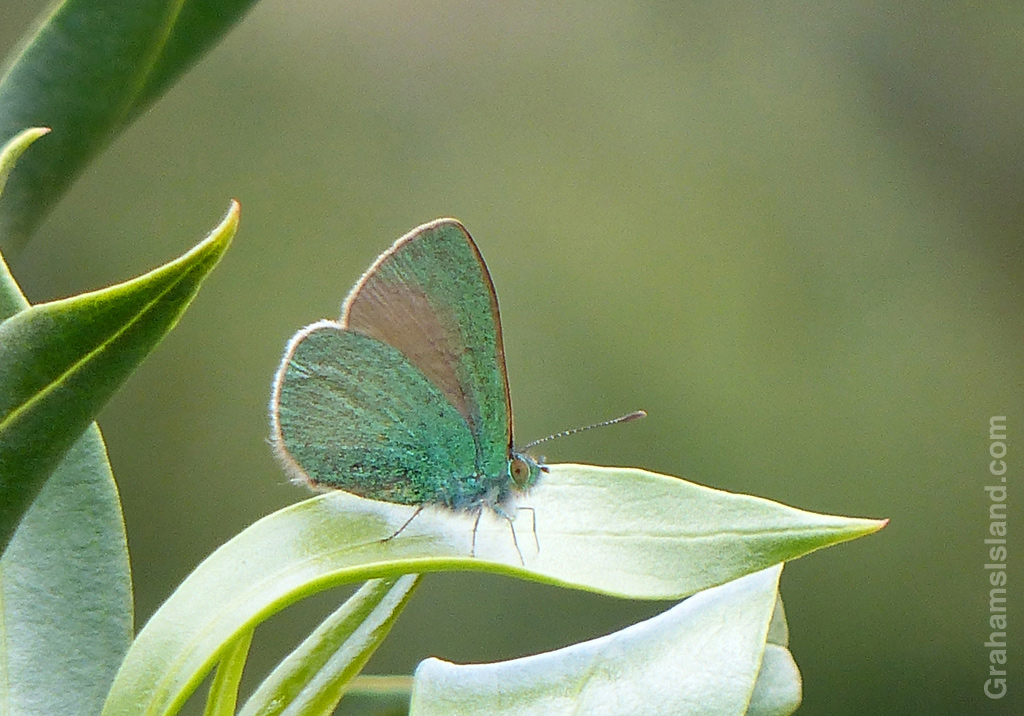
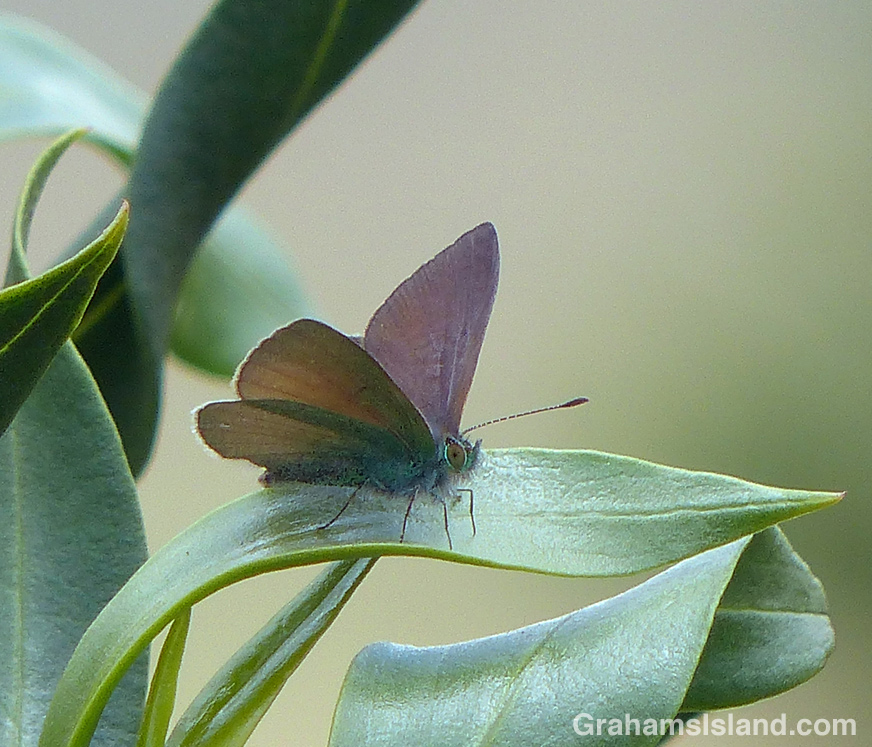
The Hawaiian Blue butterfly (Udara blackburni) is also known as Blackburn’s Blue butterfly, Blackburn’s Little Blue butterfly, and the Koa butterfly. It is one of two butterflies that are endemic to Hawaii (the other is the Kamehameha butterfly). The caterpillars feed on Acacias, including Koa leaves, hence one of the names. It’s a small butterfly, only an inch or so long, but quite striking.
Rainbow from the water
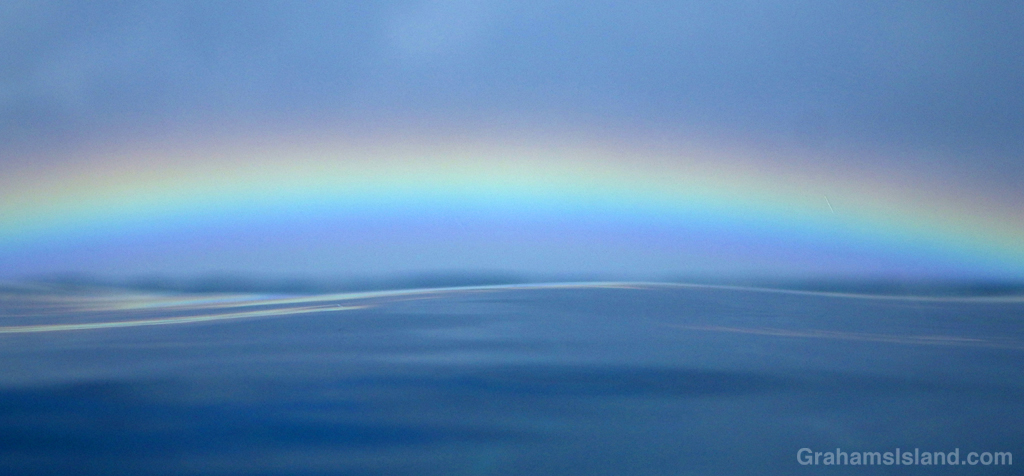
A low rainbow seen over a tranquil sea.
Abstracts: Rocks in blue water
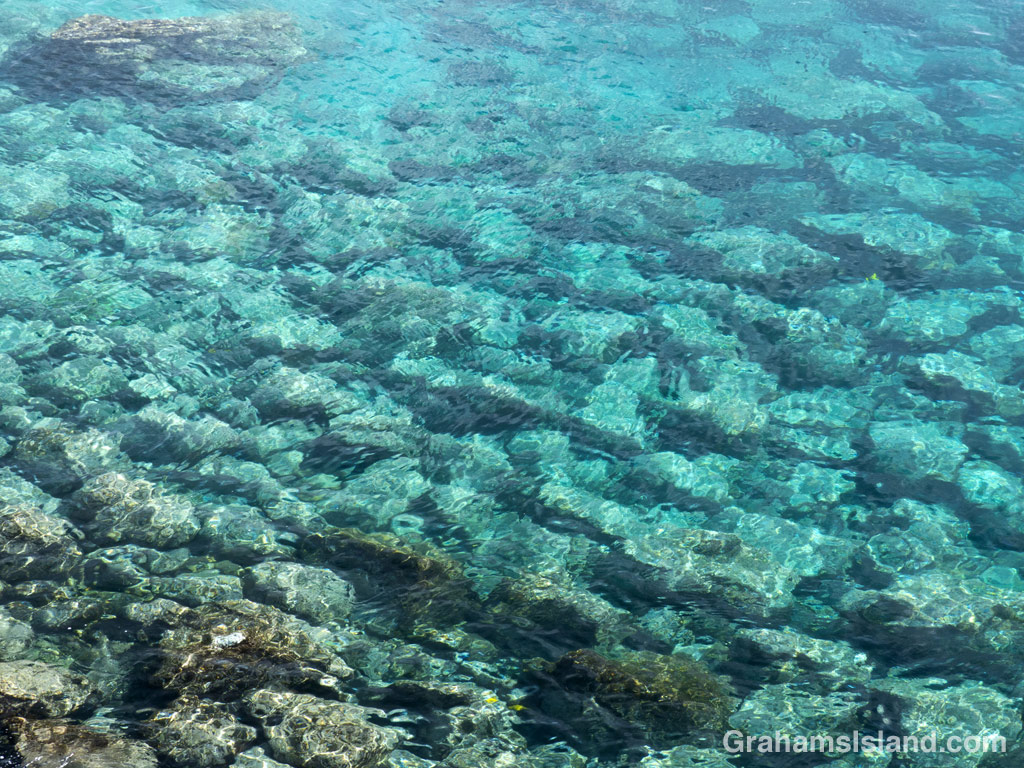
Looking down onto clear blue waters close to shore.

