
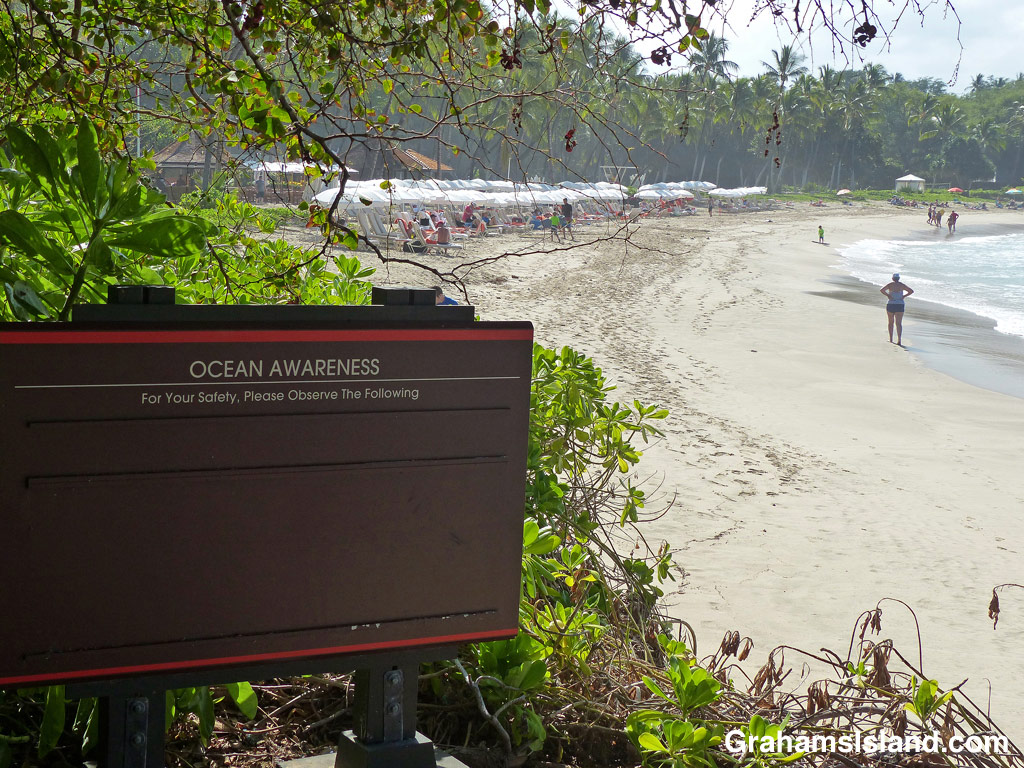
Usually, beach resorts have warnings about anything and everything that might pose a risk to patrons, that and expose the resort to any kind of liability. But on this day, all bets were off.
Northern Cardinal
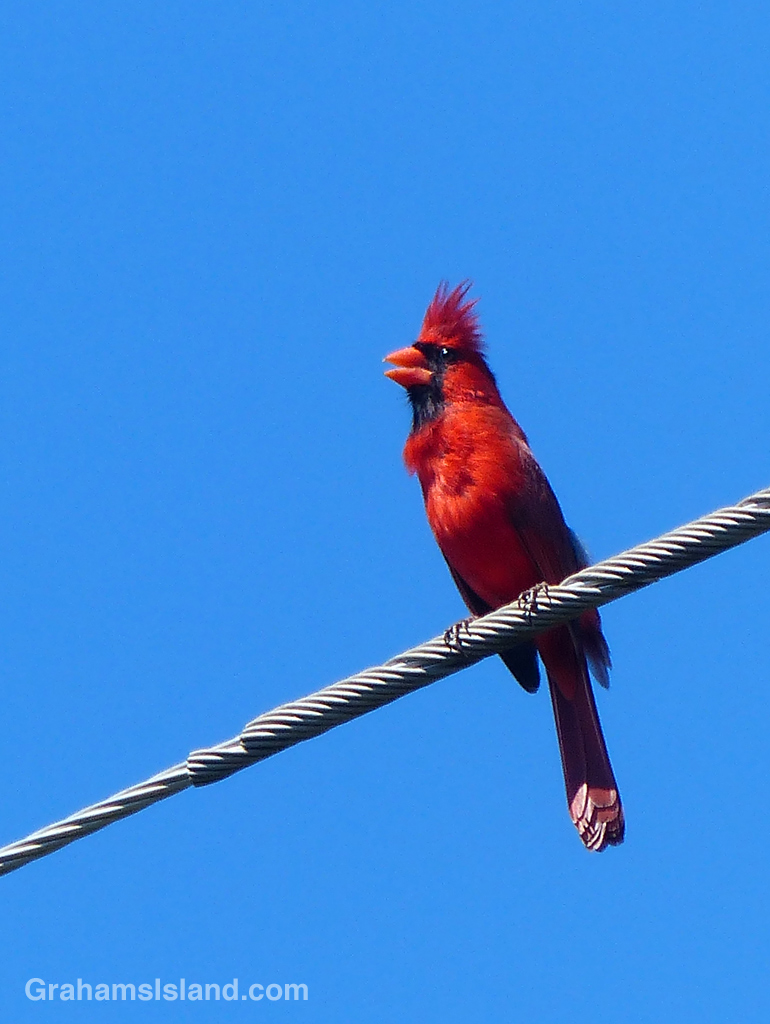
Northern cardinals are an easy bird to identify, especially the males, which are a vibrant red. They are also distinctive in their calls, which are loud and varied. I know this because the pair that live near the house are among the first birds to rise and, around five in the morning, their calls cut through the relative quiet like tsunami warning sirens.
Chinese rose beetle

This is a Chinese rose beetle shortly after I evicted it from the house. They usually get in the house attached to laundry that was hanging on a line, towels being a particular favorite. Identifying this bug helped explain the condition of the hedge behind the house, where the leaves are so perforated they look like lace.
Hualalai from the water
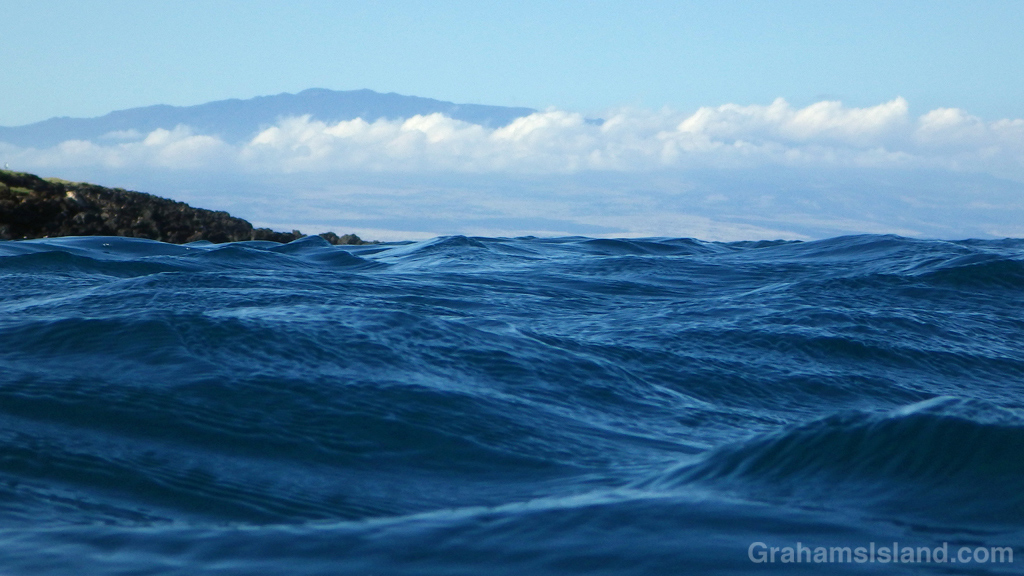
I like the different perspective when seeing things from the water, in this case Hualalai, the third most active volcano on the Big Island after Kilauea and Mauna Loa.
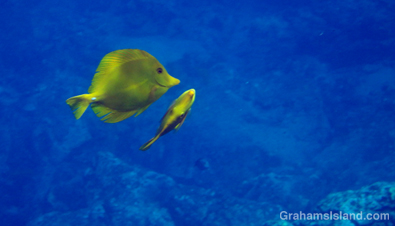
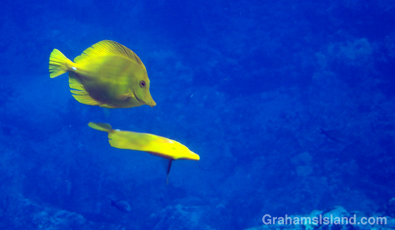
Yellow tang-o
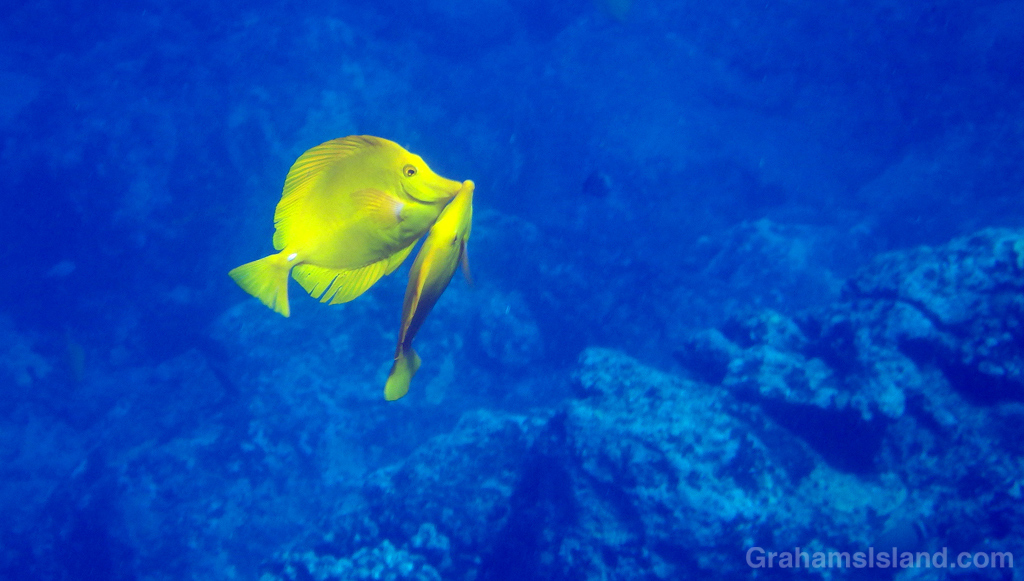
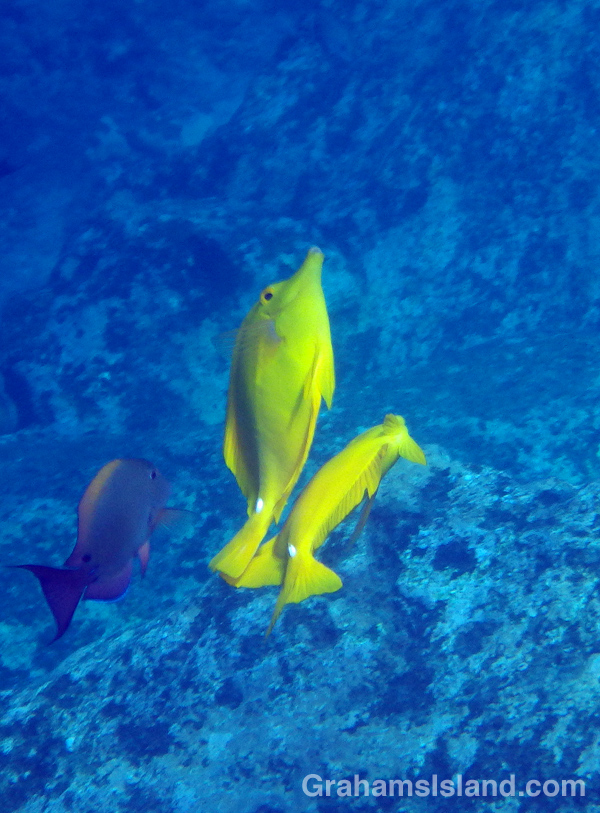
Yellow tang are the most easily identifiable fish, both in and out of the water. Their bright yellow schools, cruising the shallows, are easily seen from shore. In the water, they stand out, especially when the sun catches them.
I watched this pair as they performed what I assumed was some kind of mating dance. They shimmied up and around, dancing apart and then coming together again with the most delicate and touching moves.
In my attempts to identify what I see in the water, I use John P. Hoover’s book The Ultimate Guide to Hawaiian Reef Fishes, Sea Turtles, Dolphins, Whales, and Seals. His website is hawaiisfishes.com.
Abstract: Maui
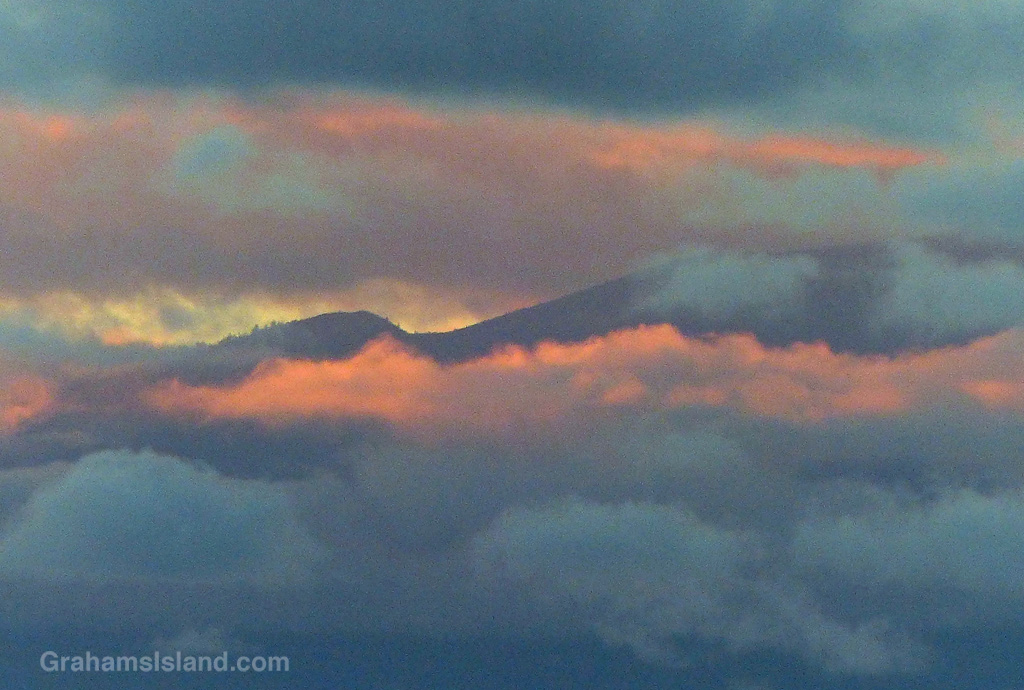
The hills of Maui seen through evening clouds.
Green bottle fly
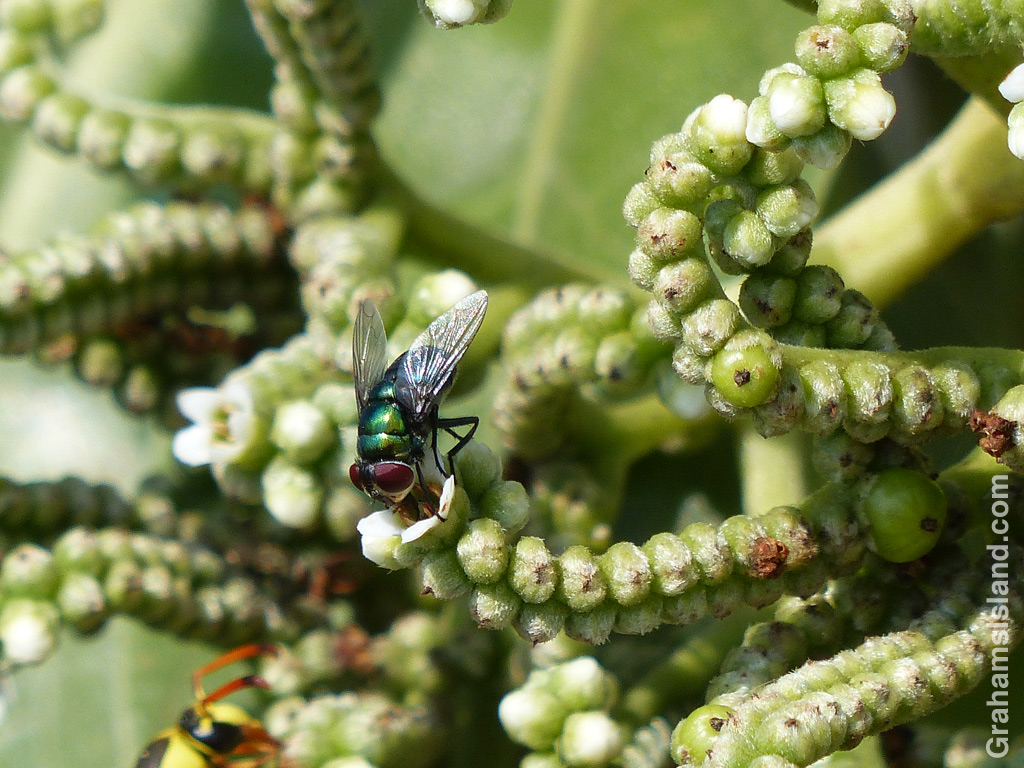
A green bottle fly, Lucilia sericata, checks out a flower on a tree heliotrope (Heliotropium foertherianum).
Octopus
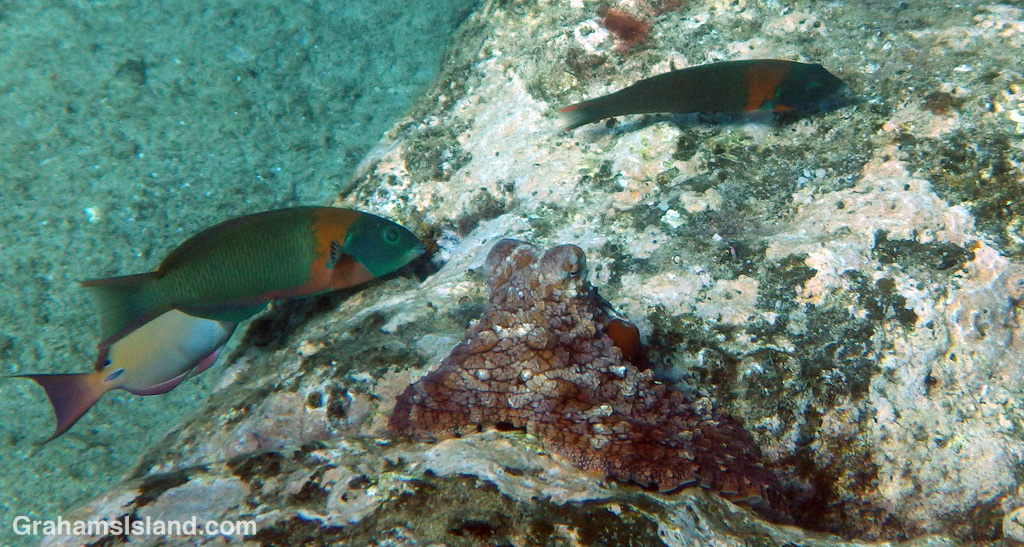
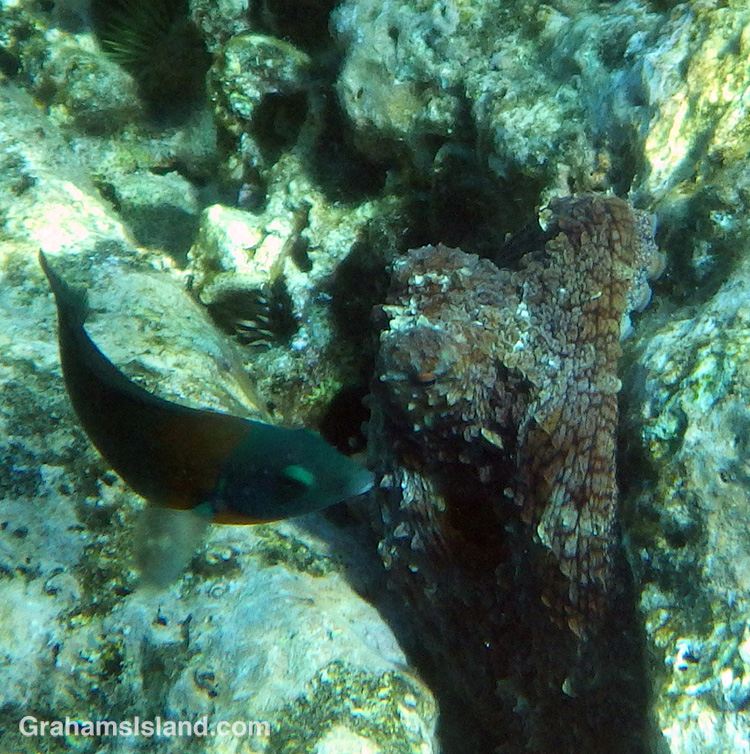 It’s exciting to see an octopus. They’re extremely hard to spot. If it’s not moving, chances are I won’t see it at all. The reason for this is that the octopus is a master of changing color and texture to match its background.
I’ve been lucky enough to see quite a few, once three in one swim. But sometimes there are weeks between sightings. As for photos, the good news is that when I spot an octopus it rarely moves, meaning I have time to get a photo. The bad news is that they blend in so well I invariably end up with offerings where I have to say something like, “It’s right there, near that coral. No, that’s not a rock.”
On this occasion, I spotted movement just before the octopus dipped into a crack in the rock and changed color. We then began a little pas de deux. When I drifted away, the octopus eased up onto the rock. If I closed in again, it slipped back into the crack. The nice thing, from my point of view, was that when it was on the rock it stood out about as well as it was ever going to against a fairly plain background.
I believe this is a day octopus. They’re active during the day and one most commonly seen around here. The passing fish are saddle wrasse.
In my attempts to identify what I see in the water, I use John P. Hoover’s book The Ultimate Guide to Hawaiian Reef Fishes, Sea Turtles, Dolphins, Whales, and Seals. His website is hawaiisfishes.com.

