
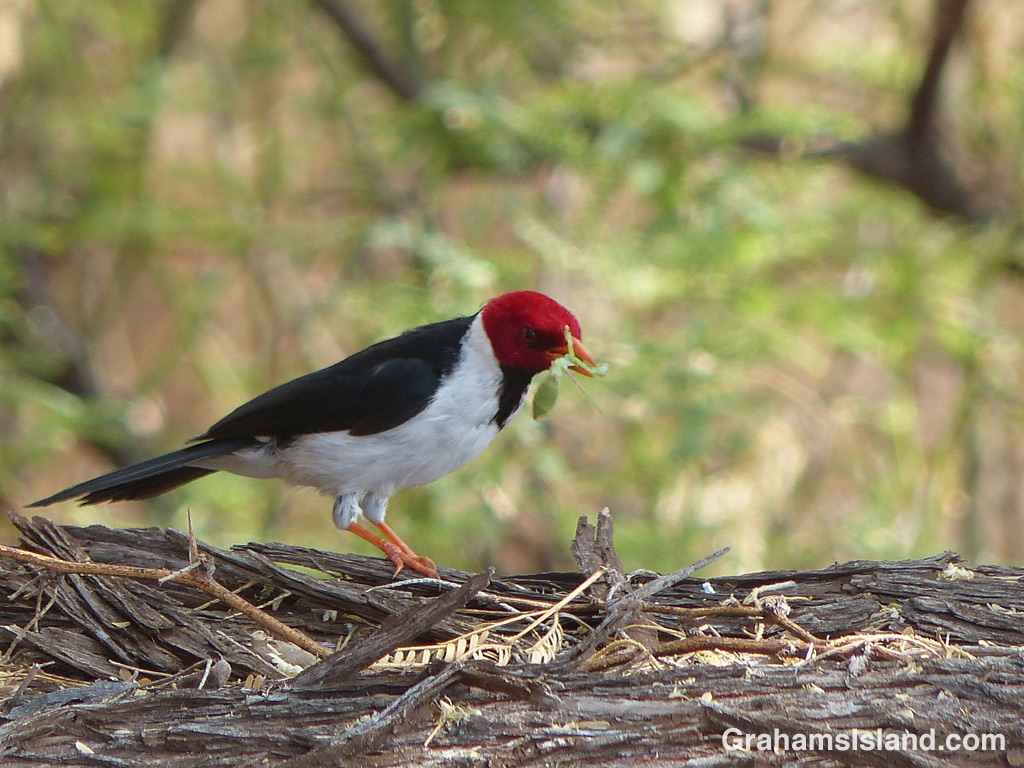
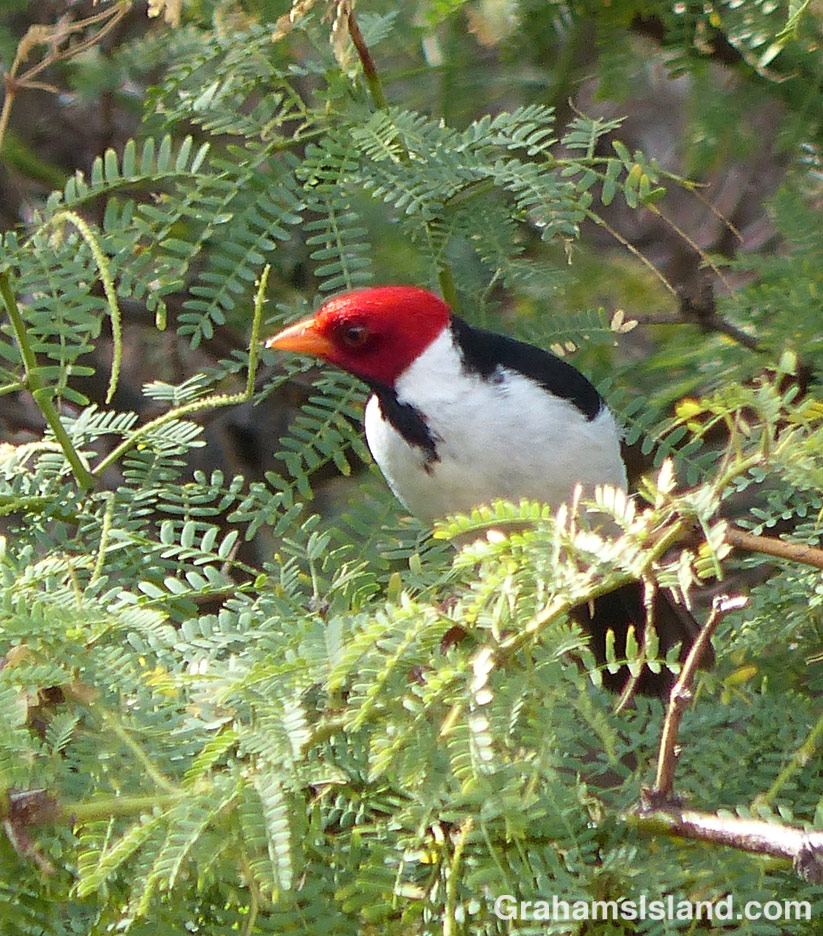
 A South American bird, the yellow-billed cardinal was introduced to Hawaii and is quite common on the Big Island. I saw these two birds flitting through a stand of kiawes. The bird in the top photo was working hard on the bit of foliage in its beak. I assumed this was something for a nest, but didn’t see where the bird went. The second bird just hung out in the trees, possibly keeping watch.
Anoles on wire

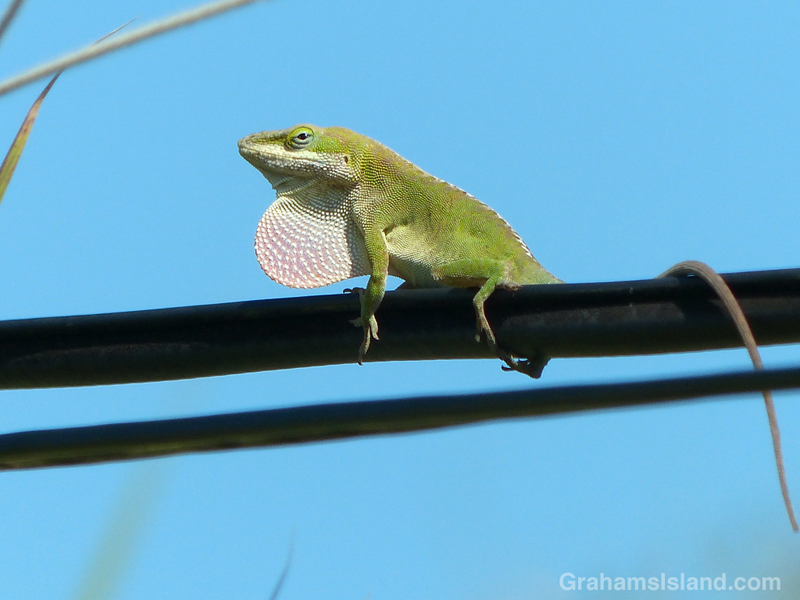 There’s something of a daily ritual here involving the green anoles who live under the roof. Each morning two or three small anoles will head out on the cable wire and jump off into the cane grass. I call it the anole commute.
On this particular morning, a large green anole was out on the wire first. When one of the smaller ones approached, the big anole got agitated as anoles are wont to do. He began his ritual of head bobbing and puffing out his dewlap. The little fellow came on, sliding to the side of the wire. Suddenly it jumped onto the nearby telephone wire, scooted past, and leapt into the cane grass. The big anole spun around, but too late. He continued to extend his dewlap for a while to let any watchers, including me, know that this was his territory and he was not to be messed with. Point taken.
For more information about green anoles, go to en.wikipedia.org/wiki/Carolina_anole.
Coconut palm
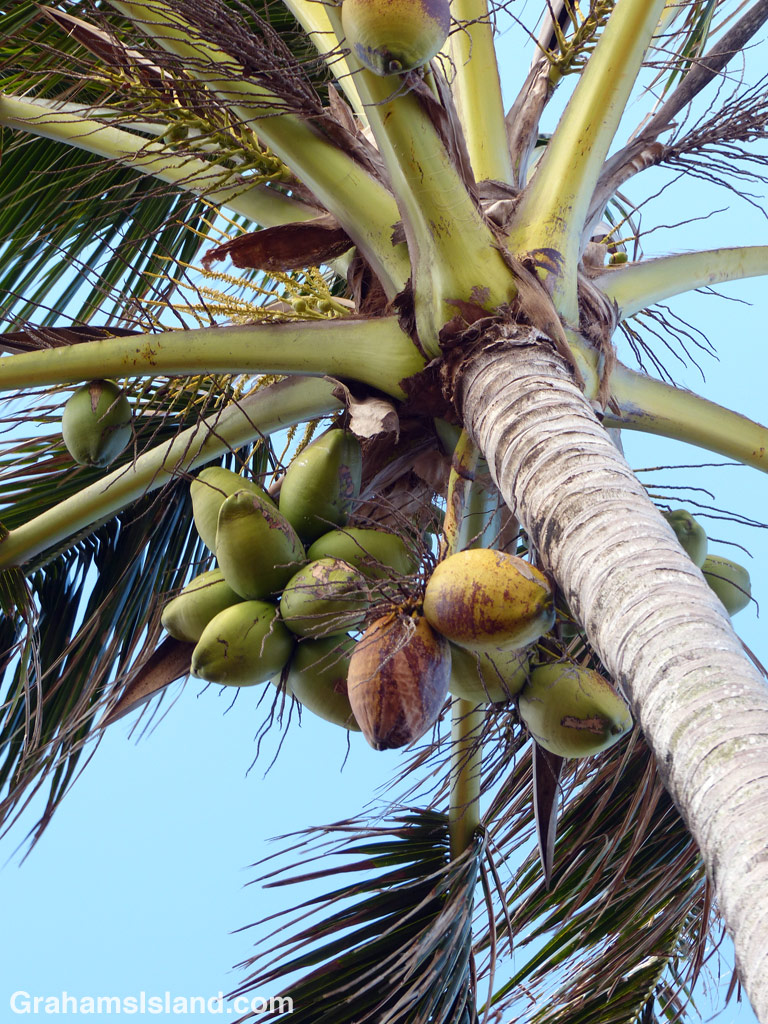
A coconut palm, the quintessential tropical plant. Not a tree to picnic beneath for obvious reasons.
Abstracts: A reflective grasshopper
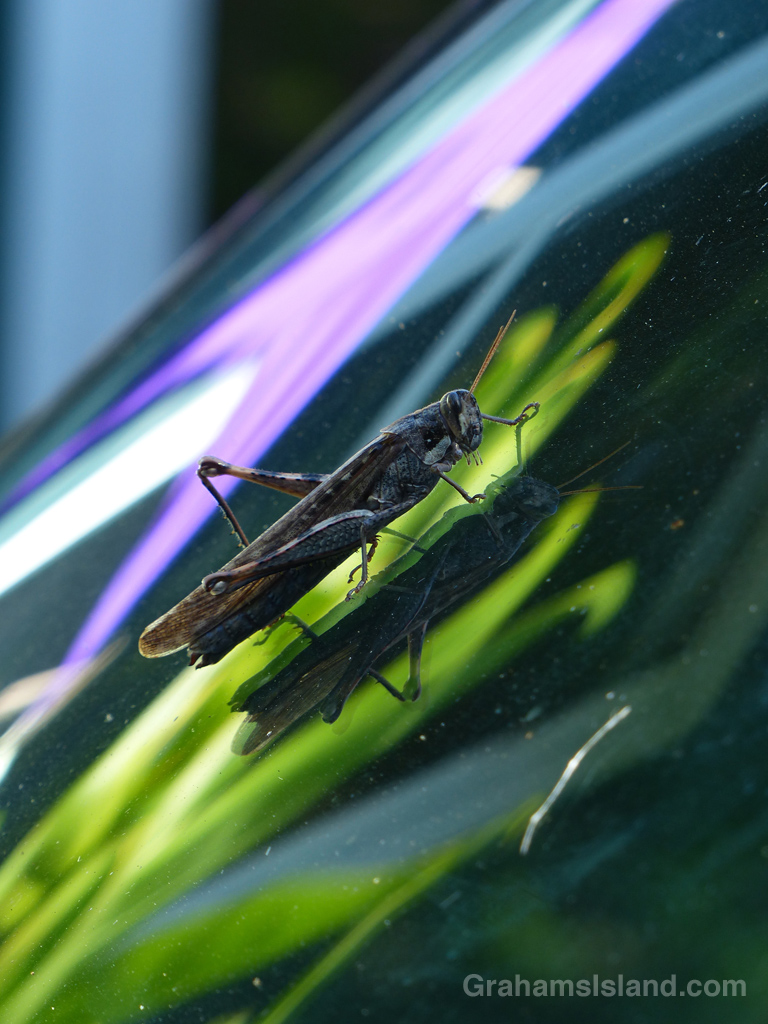
I found this grasshopper cautiously climbing the slick surface of my truck’s windshield. I like the grasshopper’s reflection, as well as those of the truck’s surroundings.
Mourning gecko
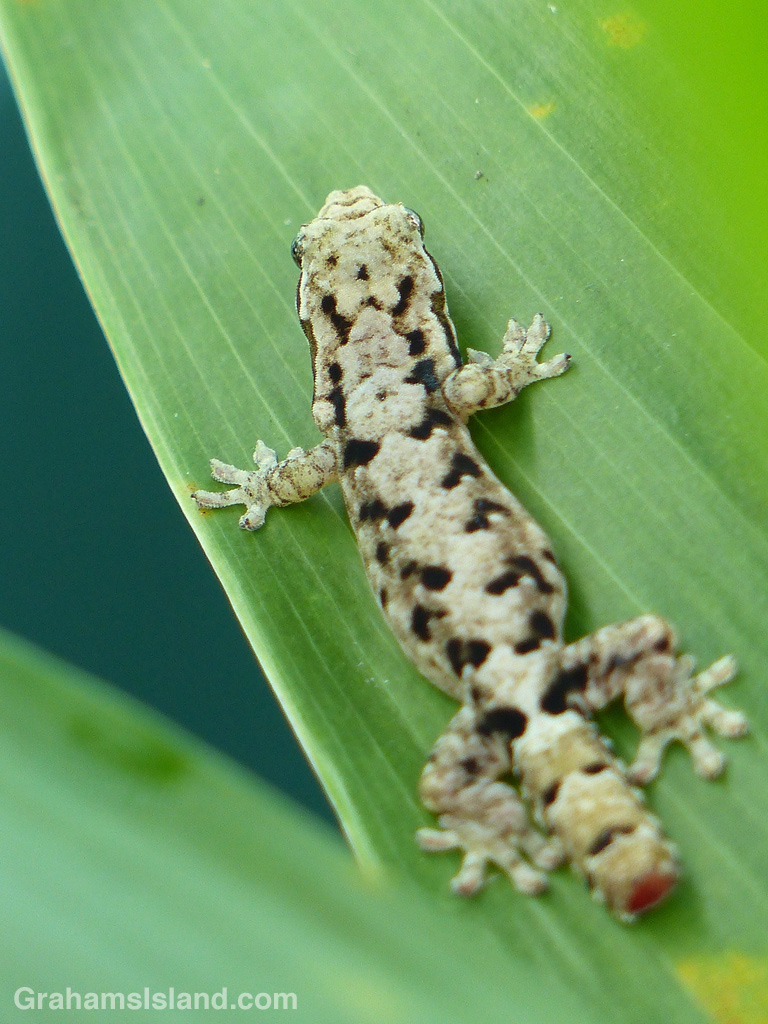
Mourning geckos are nocturnal so it’s a bit unusual to see one, especially an adult, out and about in daylight. That this one was sporting a still raw stump of a tail suggests it was ousted from its daytime resting place, losing its tail in the process. I say ‘its’ tail, but I could confidently say ‘her’ tail, since mourning geckos are an all-female species, reproducing through parthenogenesis.
For more information about geckos, go to geckoweb.org.
Juvenile threadfin jack

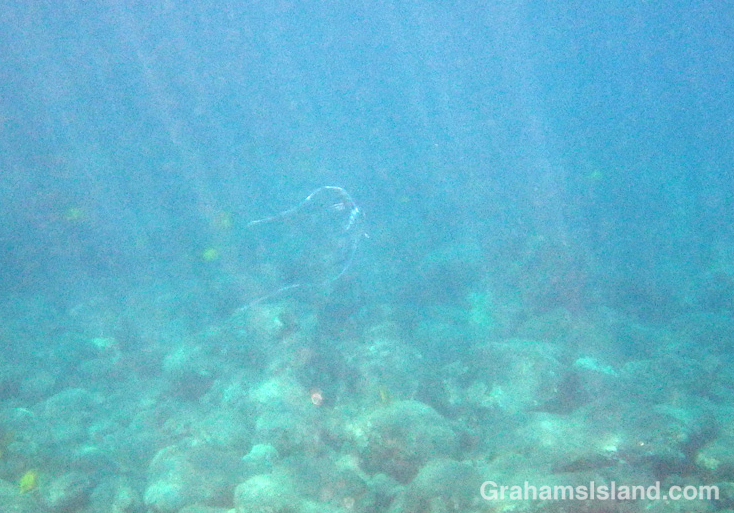
This little diamond-shaped fish is probably my favorite to see on the reef. The first time I saw one I thought it was a jellyfish, shimmering along with its long filaments wavering behind it. I got a little closer and realized it was actually an extraordinary fish.
The juvenile gives no hint of what it will look like as an adult. It grows to four feet in length, becomes stocky, loses the filaments entirely, and ends up looking like a nightclub bouncer.
It’s always a thrill to see one of these, its little tail thrashing back and forth, hauling the long filaments behind it as it putters through the water.
In my attempts to identify what I see in the water, I use John P. Hoover’s book The Ultimate Guide to Hawaiian Reef Fishes, Sea Turtles, Dolphins, Whales, and Seals. His website is hawaiisfishes.com.
Better Days: Tree house?

More of a shed than a house, but the tree is definitely winning.
Puako Petroglyph Archaeological Preserve


Petroglyphs can be found at many places around the Big Island. The most extensive display is the Pu’u Loa field at Hawaii Volcanoes National Park, but the Puako Petroglyph Archaeological Preserve also has numerous examples. More than 2,000 petroglyphs, dating back hundreds of years, have been identified. Not all are visible from the area where visitors can go.
Somewhat weirdly, the field is found on the north edge of Mauna Lani resort. This means that in order to see these examples of ancient Hawaiian history and culture, it’s necessary to drive through a swathe of condos and golf courses.
The bulk of the petroglyphs are found at the end of a hot, half-mile trail, bordered by kiawe trees, which are notorious for their long, sturdy, footwear-penetrating thorns. It’s an easy hike and well worth a visit if you have any sort of interest in the history of the island.


