Tag Archives: Beaches

Mahai’ula Beach

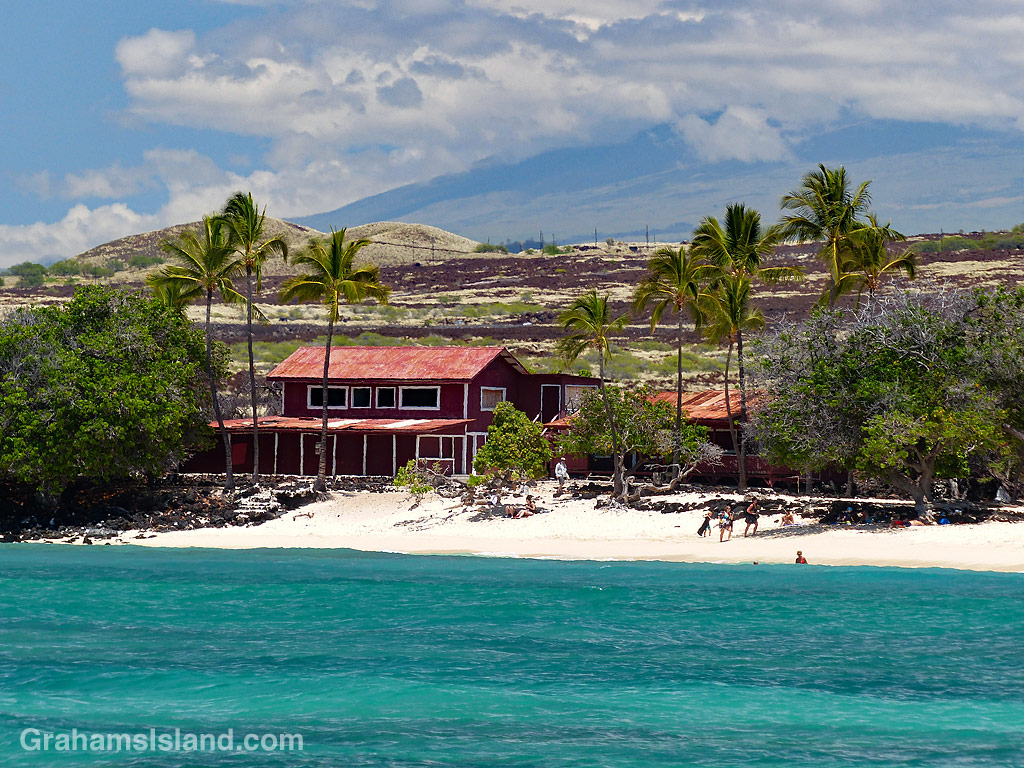
This week’s Sunday Stills challenge theme is ‘Warmth.’ (See more offerings here.) Picture yourself stretched out on this beach. Imagine the sun warming the sand, warming you. Perhaps it’s time for a dip in the clear, turquoise waters. After you emerge, the sun quickly dries you. Time to retreat to the shade of the trees lining the beach, a cool beverage at your side, a book in hand (put that phone away). Repeat as necessary.

This is Mahai’ula Beach, one of the beaches at Kekaha Kai Park. The old house, in the top photo, was built in 1880 by John Kaelemakule, a successful fisherman and businessman. After he died in 1936, the property was sold to the Magoon family who owned the land until 1993. It’s now owned by the state of Hawaii.

Monk seal pup update

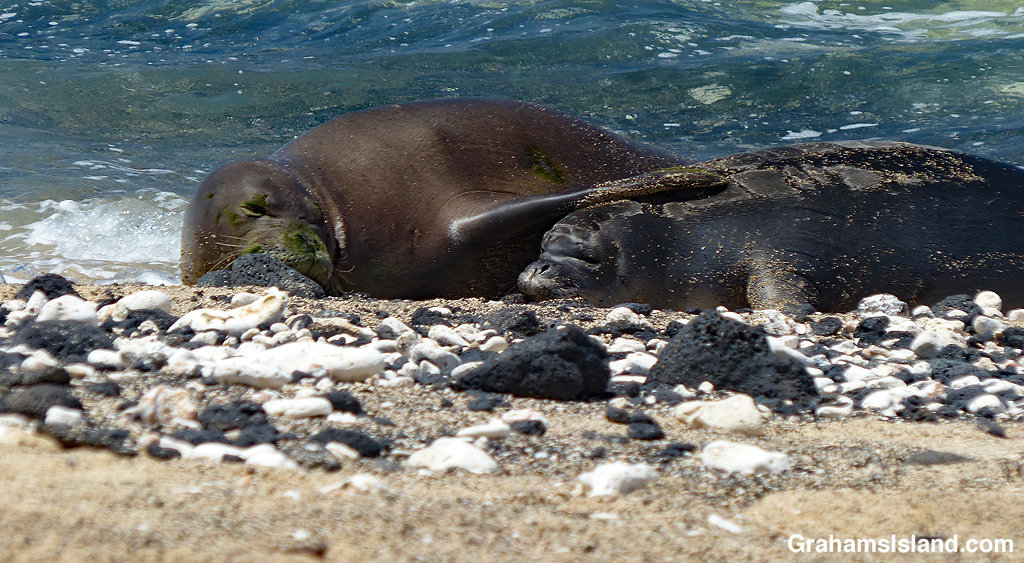
A few weeks back, I posted (here) about a new monk seal pup that had recently been born on the Big Island. I’m happy to report that the mother and pup both continue to do well.

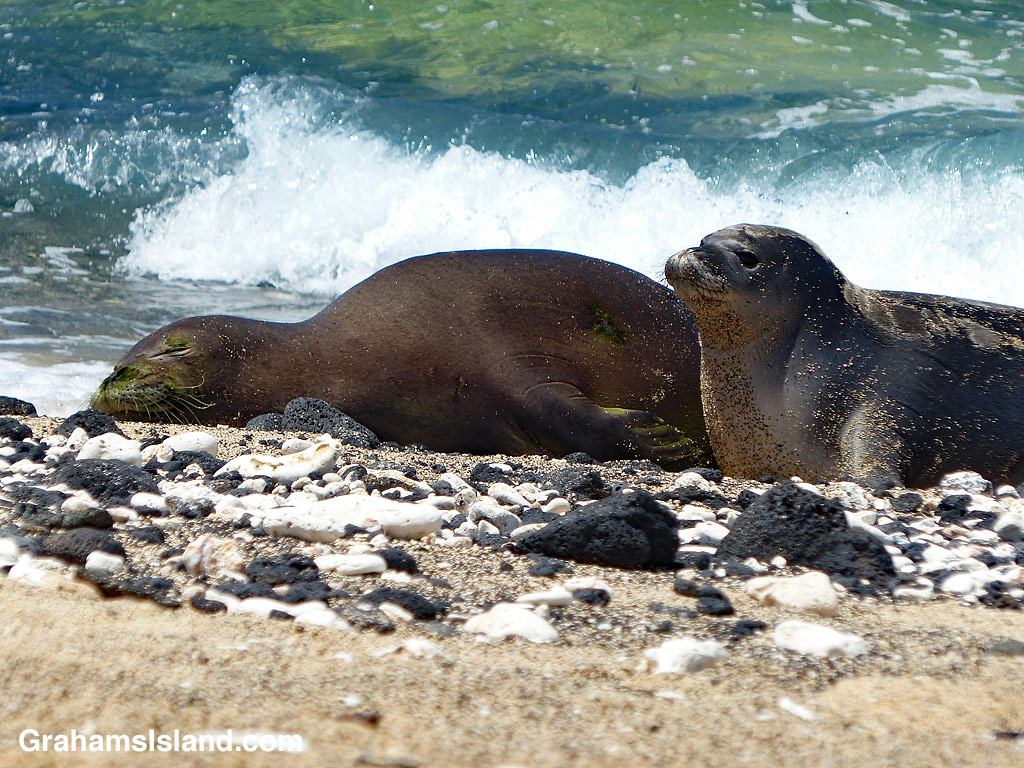
The pup is now about six weeks old and is much closer in size to his mother than he was in the previous post. It’s likely that his mother, RA20, will soon leave him to fend for himself. She has lost a lot of weight and is also looking quite green on her head and flippers, so she will head out to feed and then to molt.

The pup’s sister, Manu’iwa, has been a regular visitor to the area, but the mother is very protective and drives her away. Once the mother leaves, it’s likely that the two siblings will spend some time together in the area. Eventually, the new pup will head out on his own and make his own way.

Manu’iwa has had a very good first year, which is often a very testing time for a new monk seal. Hopefully, the new pup will be equally successful and be another step toward boosting the endangered monk seal population to more sustainable levels.

I’m posting this in response to this week’s Friendly Friday challenge on the theme of ‘Posing.’ (More responses here.) The top photo in particular could easily have the caption, ‘That’s my boy.’

Kekaha Kai beaches

Some of the beaches in Kekaha Kai park. The most popular is Makalawena, which requires a bit of a hike but offers several stretches of sparsely populated golden sand. The swimming is decent at many of these beaches unless there’s onshore swell. The biggest drawback to them is that the road in is very rough and directly overhead is the flight path approaching the airport.

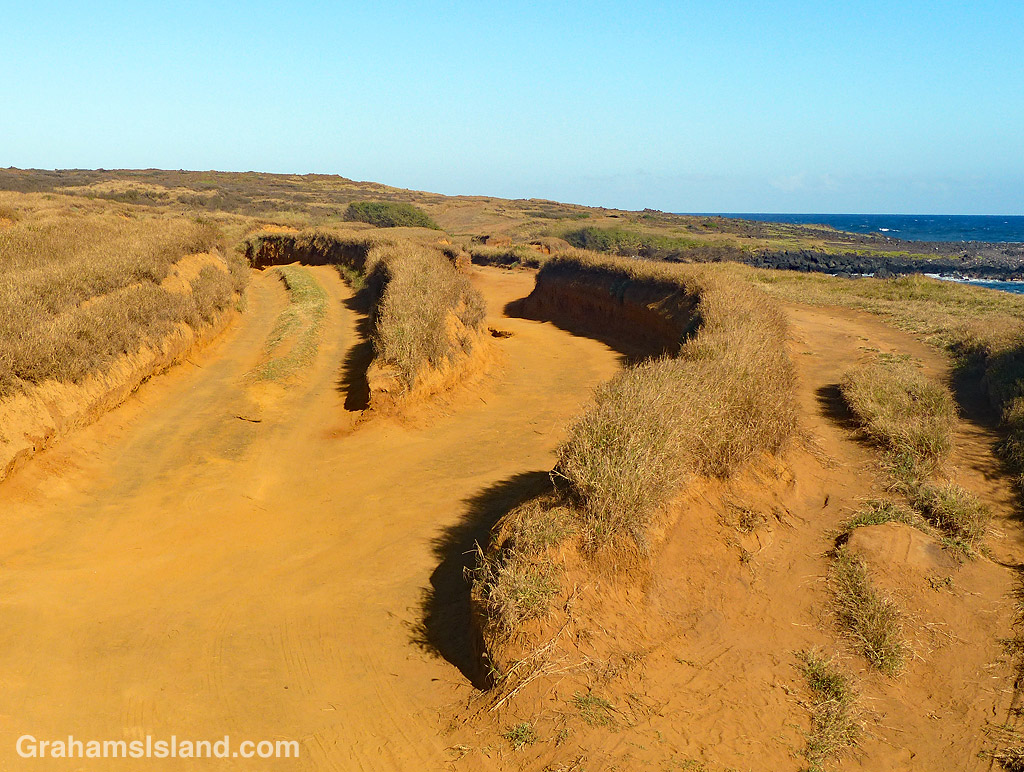
Sunken roads near South Point

Sunken roads near South Point

Not far from South Point, the most southerly tip of the Big Island and the United States, is a green sand beach, which I’ve posted about here.

The beach is 2.5 miles from the parking lot and, if you don’t want to walk, locals will drive you there ($20 is the current fee I think) in an assortment of trucks of dubious-looking pedigree. One problem with this practice is that it has generated a warren of deep, rutted routes in the sandy soil. Erosion is a problem. Sand is swept into the ocean when it rains and when the wind blows, both of which happen often and in strength.

The county is looking into ways to mitigate these problems, which could include regulating these unofficial taxis or banning them altogether. However, before anything happens, studies will be needed along with public forums to discuss the issue. These will result in an unacceptable proposal that requires further consideration. It’s entirely possible that, by the time action is taken, South Point will no longer be the most southerly tip of either the Big Island or the United States.

Pohoiki revisited

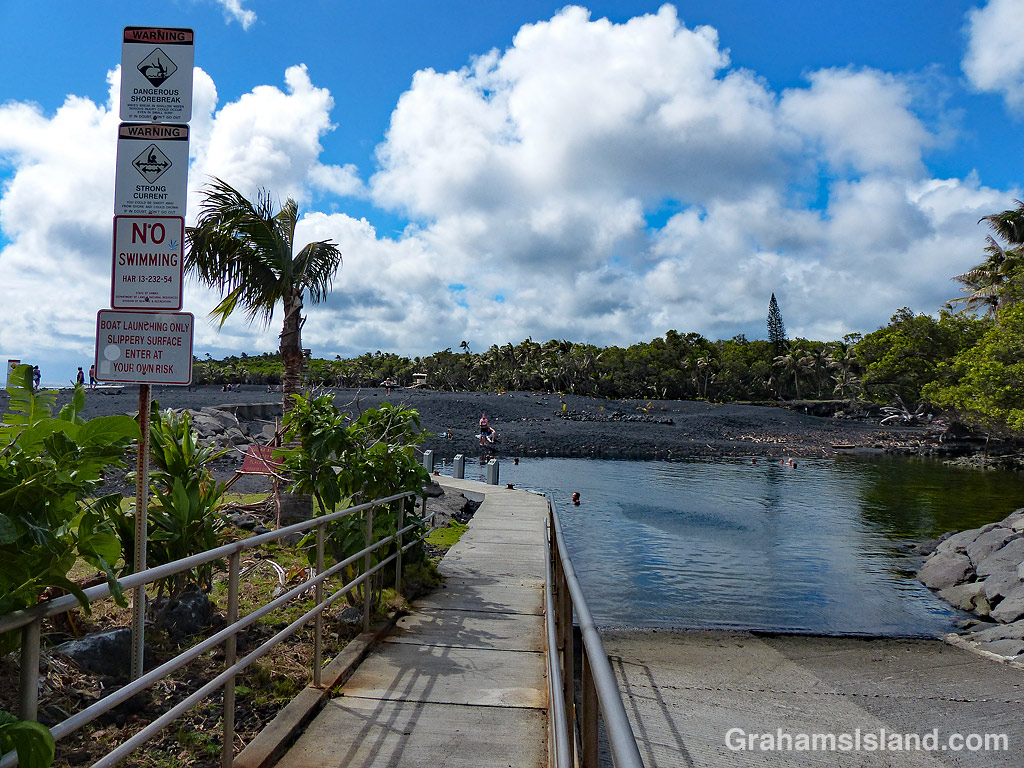
Pohoiki boatramp

Pohoiki breakwater markerIt’s been a while since I was last at Pohoiki, also known as Isaac Hale Beach Park. One reason for this is that it’s about as far away from where I live as is possible on the island. But back in July 2016, I went down there at an ungodly hour to board a boat and go see lava flowing into the ocean. I wrote about that trip here and here. At the park were restrooms, picnic tables, and a boat launch ramp protected by a small breakwater.

Last year, Pohoiki was in the news because it was where the flow from the 2018 Kilauea eruption finally ground to a halt, about 100 yards short of the boat ramp. A few days ago, I decided to revisit the park and see the changes that had taken place.

Driving into the park, the cooled lava flow could be seen, stretching down the side of the grassy picnic area (bottom photo). But what I really wanted to see was the boat ramp and the black sand beach at the bottom of the park. They did not disappoint.

The boat ramp, previously used to launch quite large boats, including the lava tour catamaran of 2016, now leads to a small lagoon (top photo). (Note the signs on the left of the photo.) This lagoon is perfect for swimming or sailing model boats, but as a boat launch ramp it has one big drawback. There’s now a long, deep, curve of black sand separating the ramp from the ocean (photo below). This beach began forming during the eruption, but I was surprised by how substantial it was. It’s rocky in places and the sand is quite coarse, but it is unquestionably a beach and it looks like it’s here to stay.

An indication of the beach’s substance can be seen in the second photo. The red triangle on a pole marked the end of the breakwater. Now it’s deep in sand. The breakwater is still there, but almost entirely buried.

The beach was formed by lava pouring into the ocean. Some of it solidified into large chunks, but a lot was quickly broken into smaller pieces and fine sand. (In the postings about my 2016 trip, one of the photos shows a black sand beach forming at the base of the flow.) A good deal of this sand was carried a short way down the coast to form this new beach.

I don’t have a good photo of the park before these changes, but the local newspaper has an aerial view here that shows the features I’ve mentioned. In that photo, the boat ramp, breakwater, and rocky shore can be seen at the bottom. Top left is the restrooms building that is also top left in the bottom photo here. The paths and picnic tables can also be seen.

I’d expect that on my next visit, all these new features that I’ve mentioned will still be there, but there is one caveat. If there’s a new eruption in this area, then everything could change. It’s one of the facts of life of living near an active volcano.

Posted in response to this week’s Friendly Friday challenge on the theme of ‘Revisited.’ See more responses here. Tomorrow, I’ll post a few more photos in response to the Sunday Stills photo challenge.
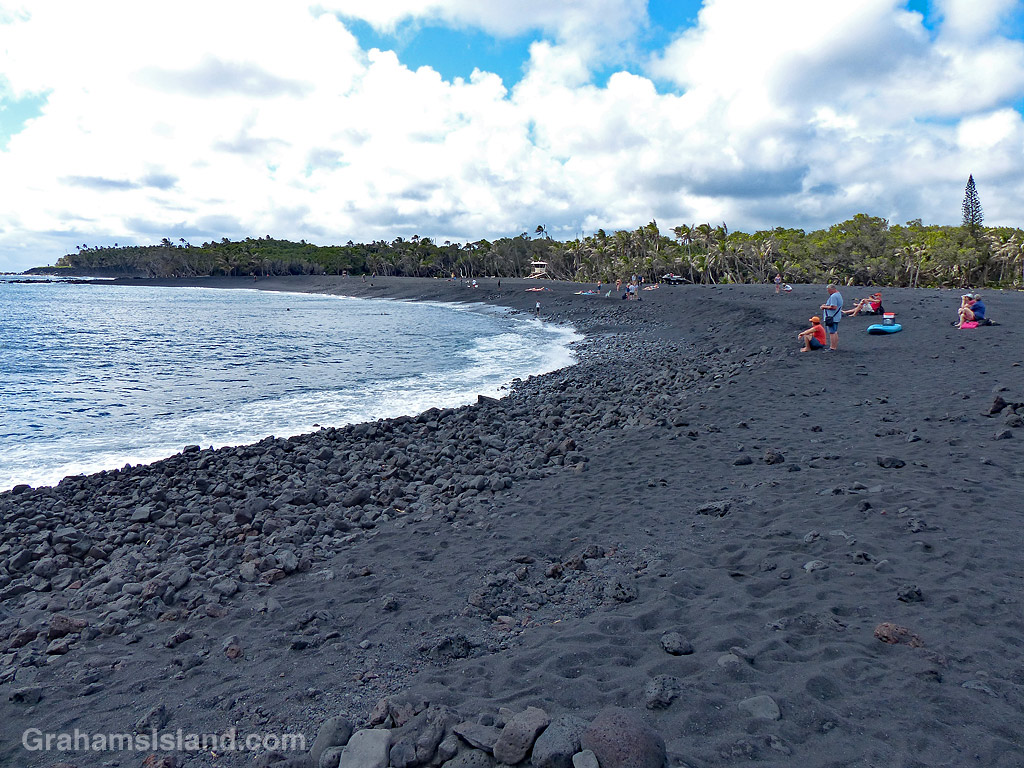
Pohoiki beach

Pohoiki picnic area

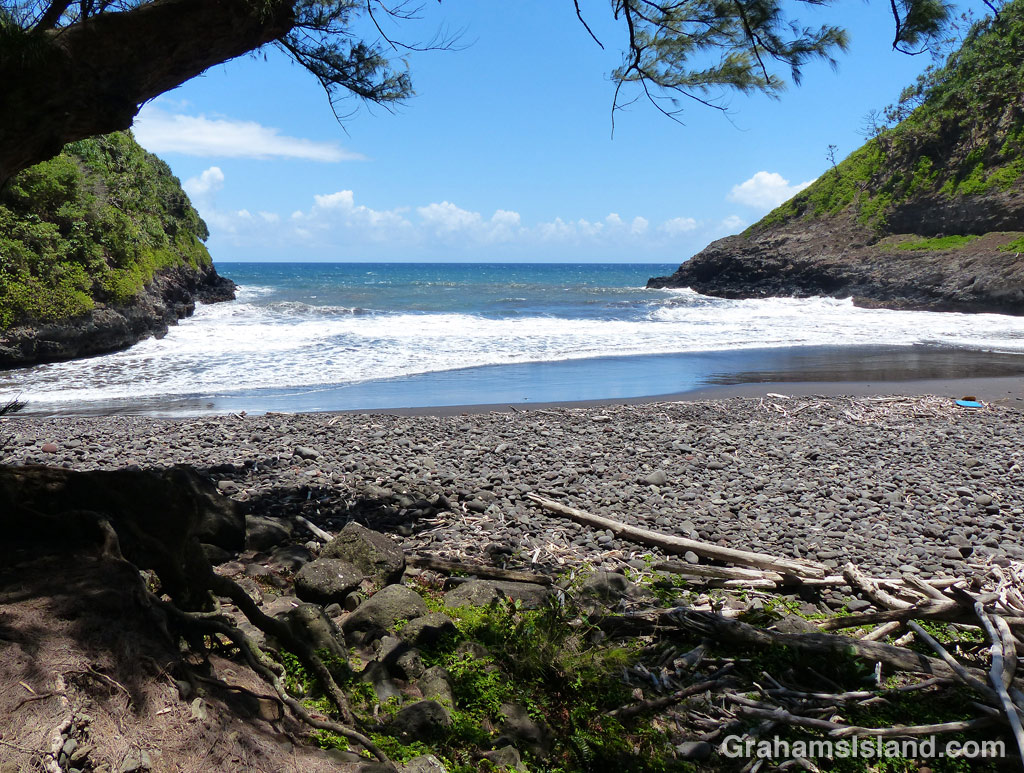
The mouth of Honokāne Iki valley

The mouth of Honokane Iki Valley

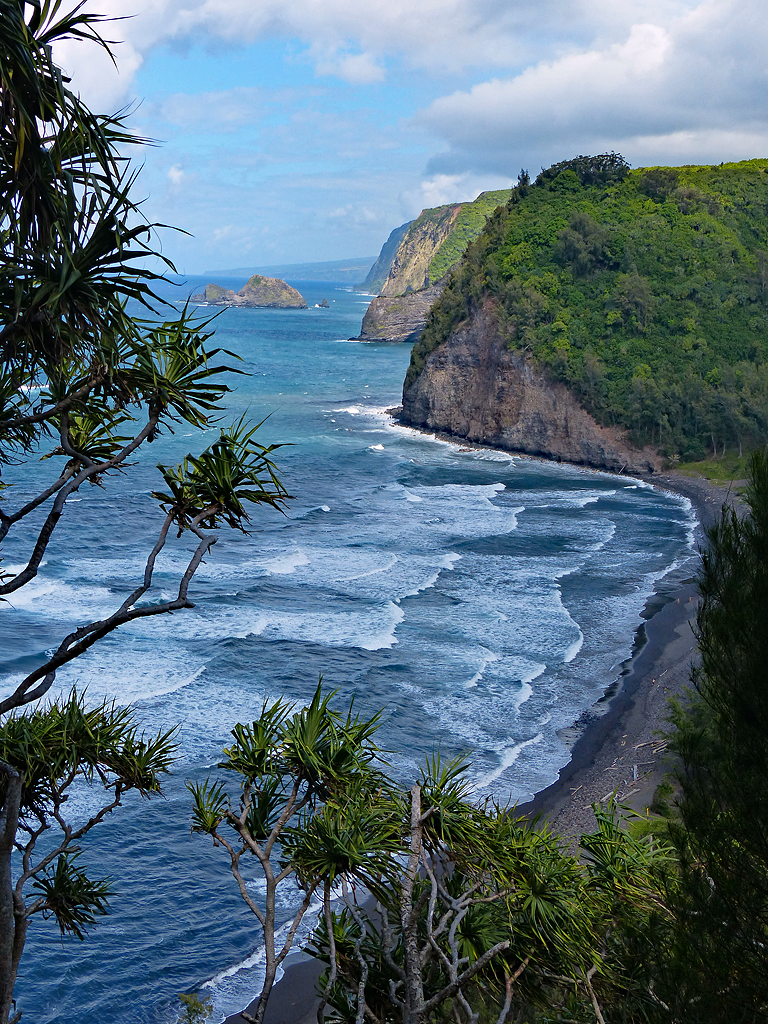
At the end of Highway 270, on the northern tip of the island, is Pololu Valley. There’s a trail down to the beach there and, at the other end of the beach, another trail leading up to a bench that overlooks Honokāne Nui valley.

Not far beyond the bench, the trail was destroyed by an earthquake in 2006. It’s still possible to descend to the valley, but the trail goes straight down a steep slope and ropes are in place to make this possible. There are no guarantees that these ropes are in good condition and the slope certainly isn’t. If you do descend this section, the trail passes through varied vegetation and ultimately leads down to a rocky beach at the mouth of Honokāne Nui valley.

Beyond Honokāne Nui, there’s another trail that continues over the next hill and down into Honokāne Iki valley. That valley opens up to this beautiful little bay, which is quite protected and, at low tide, has a nice sandy beach. Be aware though that this is private land and in use on a regular basis.

Army supply ship

Army LSV in Kawaihae Harbor

Army LSV supply shipThis is the ship that brings military troops and supplies from Oahu to Kawaihae Harbor en route to Pōhakuloa Training Area (PTA). I often see the ship going back and forth off the Big Island and had always assumed it to be a Navy vessel because, well, it’s a ship. But no, this is an Army LSV (Landing Ship, Vehicle) where they drop the ramp and roll the vehicles on or off.

These activities coexist with commercial shipping, pleasure craft, and locals enjoying the splendid beach and calm waters of the harbor, where I understand the snorkeling is pretty good. Got to try it out sometime soon.

Three green turtles and a passenger

Three green turtles

It’s not unusual to see green turtles hauled out on shore. Sandy beaches are prime resting spots, but these three chose this rocky bay, only a few hundred yards from some of the best beaches on the island. Perhaps they valued quiet over easy access.

The middle one of the three had gained a passenger that I didn’t notice until I processed the photos, an a’ama crab, making the most of its excellent vantage point.

Green turtle and A'ama crab