
A bee forages on a thistle flower.

A bee forages on a thistle flower.
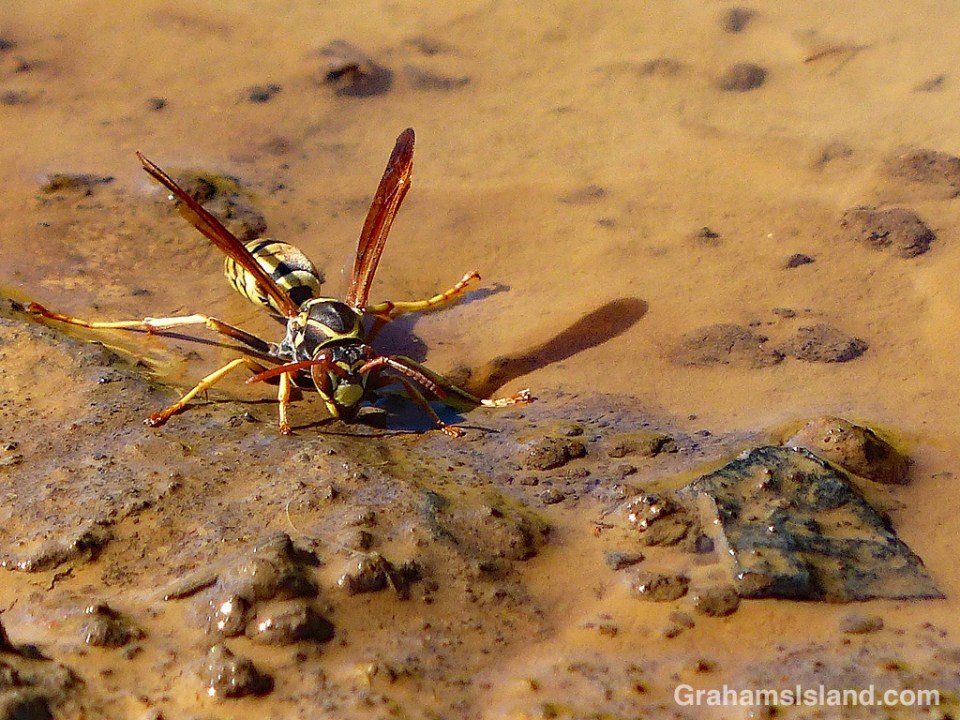
A paper wasp drinks from a mud puddle.
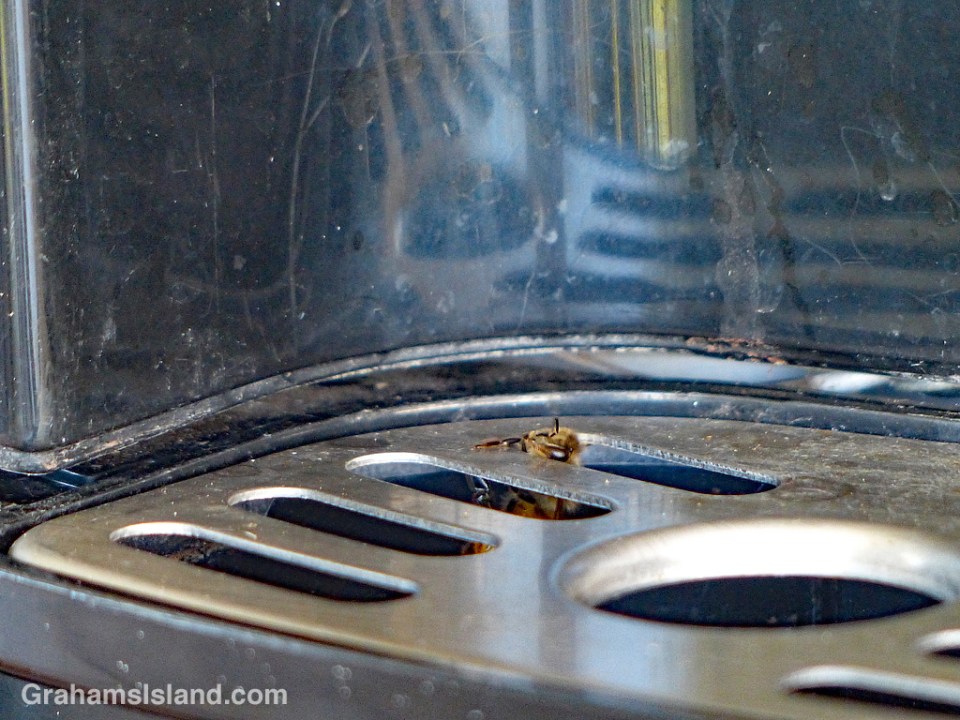
I noticed this bee one day, buzzing around this water cooler and then disappearing into the spill tray. Since then, I’ve seen it, or other similar bees, making the same journey to gather water from the tray and then, presumably, head back to the hive. Getting into the tray was the easy bit. Getting out tended to be more of a struggle.

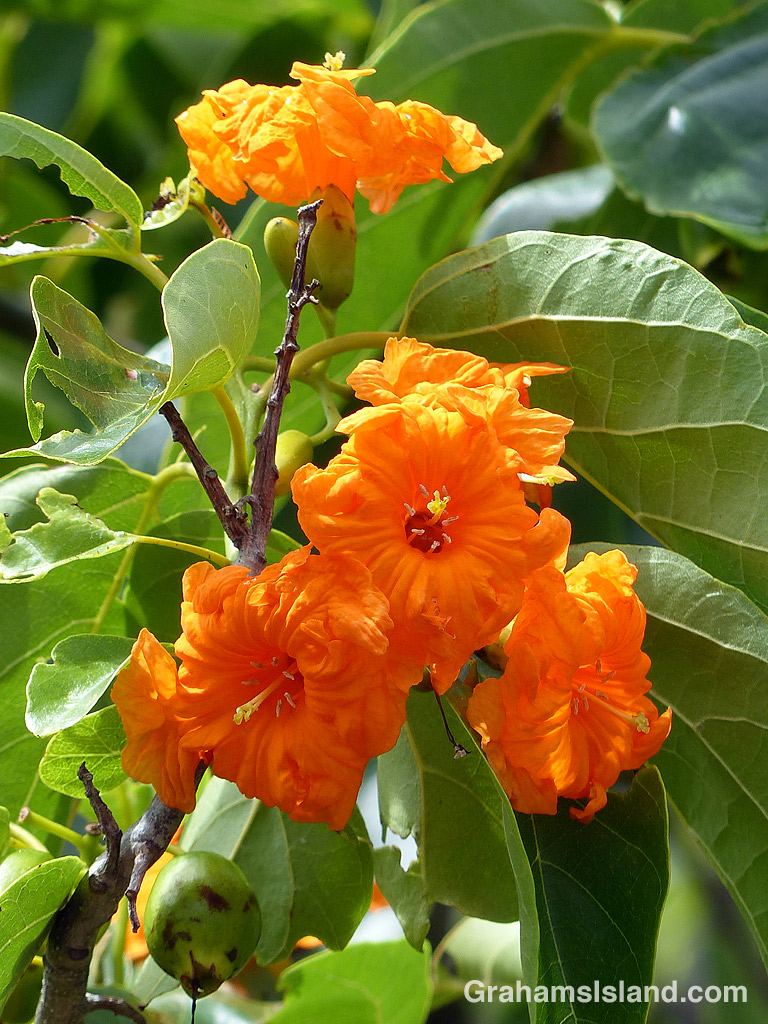 Kou (Cordia subcordata) is an indigenous tree that was also brought over by Polynesian settlers. It was highly prized for its wood, which was used to make bowls and other containers.
The flowers are beautiful, too. Less than two inches across, they grow in clumps, which are sometimes hidden by the shiny green leaves. The flowers are followed by small, round green fruits (seen in the photos to the left and below) which harden to a dark brown and contain white seeds.
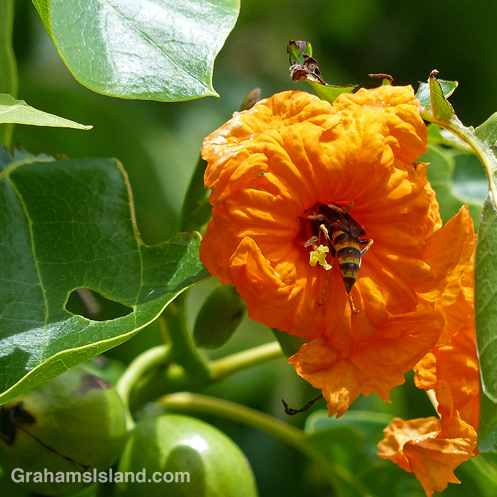
The flowers on this tree were popular with a variety of insects including a honey bee, above, and a paper wasp (Polistes exclamans), below.


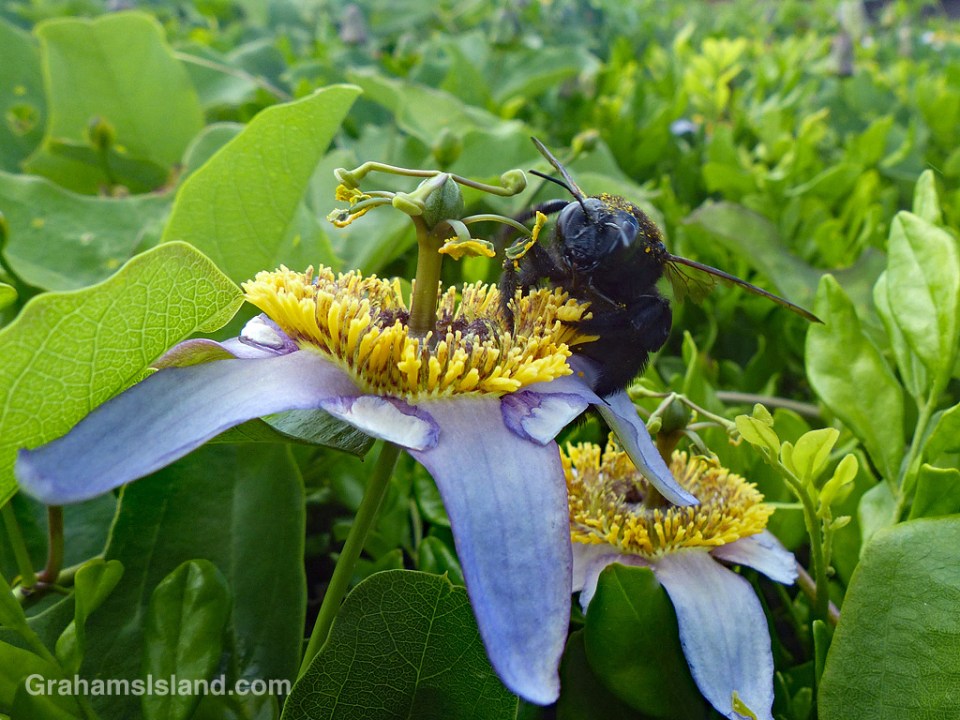
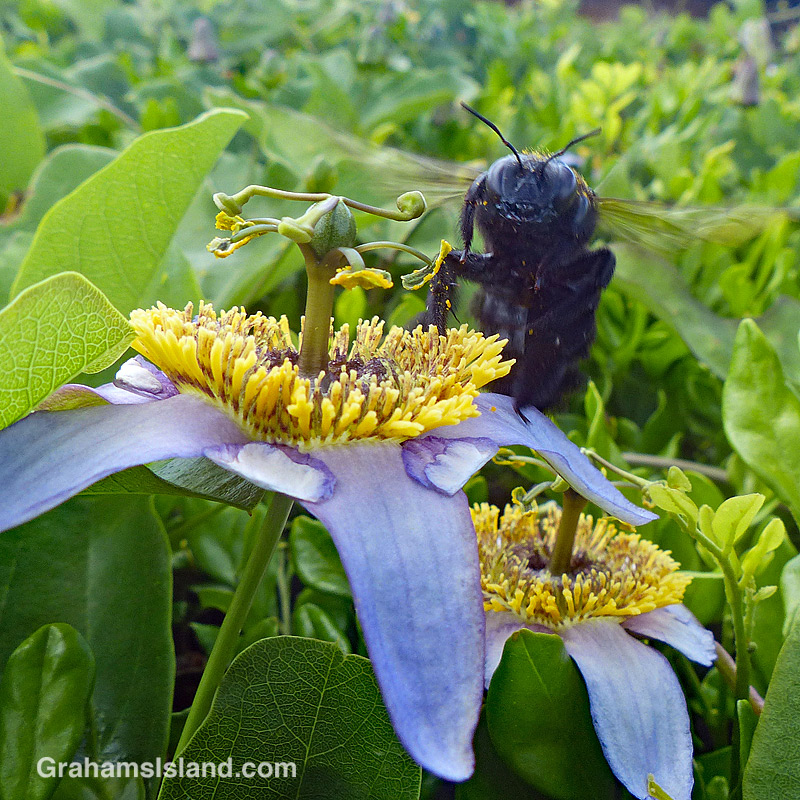 The Sonoran carpenter bee (Xylocopa sonorina) was first recorded in Hawaii around 1874. This black bee is a female. Males are golden orange in color and smaller than the female.
These bees get their name because the females tunnel into wood to create cavities in which to lay eggs and raise their young. The entrance to a nest is usually a neat, half-inch diameter hole in the wood. In the wild, the bees make nests in dead branches or tree stumps, but around human habitation they’ll bore into fence posts, rails, and roof eves. Because of this tunneling habit, these bees are sometimes considered pests, but the damage they cause is far outweighed by their importance as pollinators.
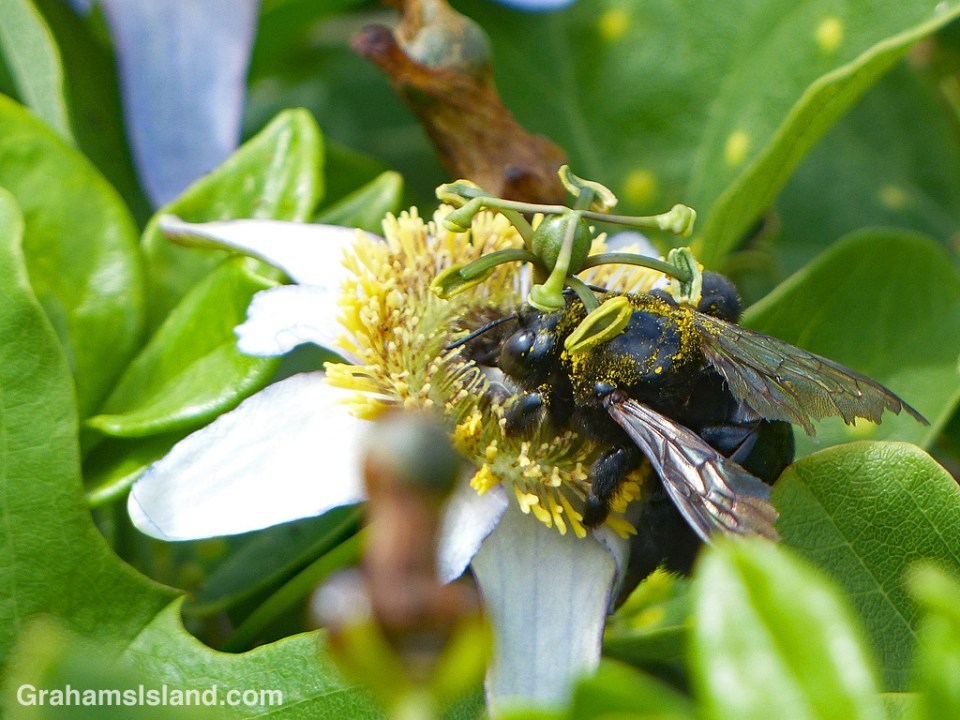
In Hawaii, passion fruits are one of the many fruits and vegetables pollinated by carpenter bees. The bottom photo shows how the bee’s size helps it pollinate the passion fruit’s large flower. It also shows how battered this poor bee’s wings have become. She was still able to get airborne though.
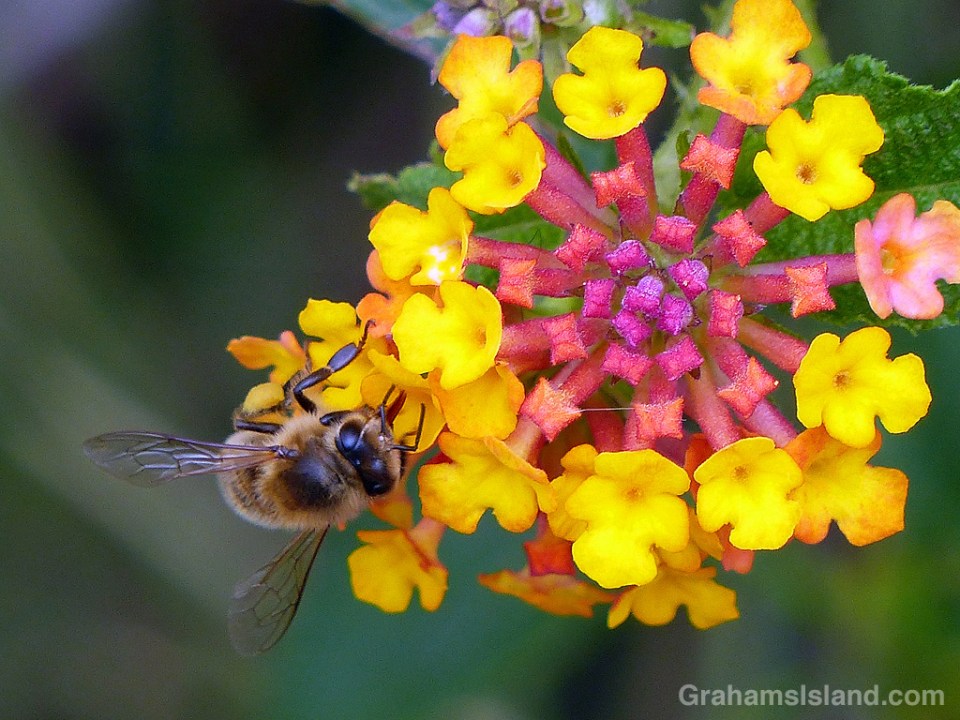
Lantana is such a colorful flower – pink and purple, yellow and orange (and invasive here, but let’s not talk about that). Curiously, it doesn’t seem all that popular with bugs, at least by my observations. But at certain times I see butterflies very interested and on this occasion, several bees were going from bloom to bloom.
Posted in response to this week’s Sunday Stills challenge on the theme of ‘Macro-Photography of Anything.’ See more responses here.
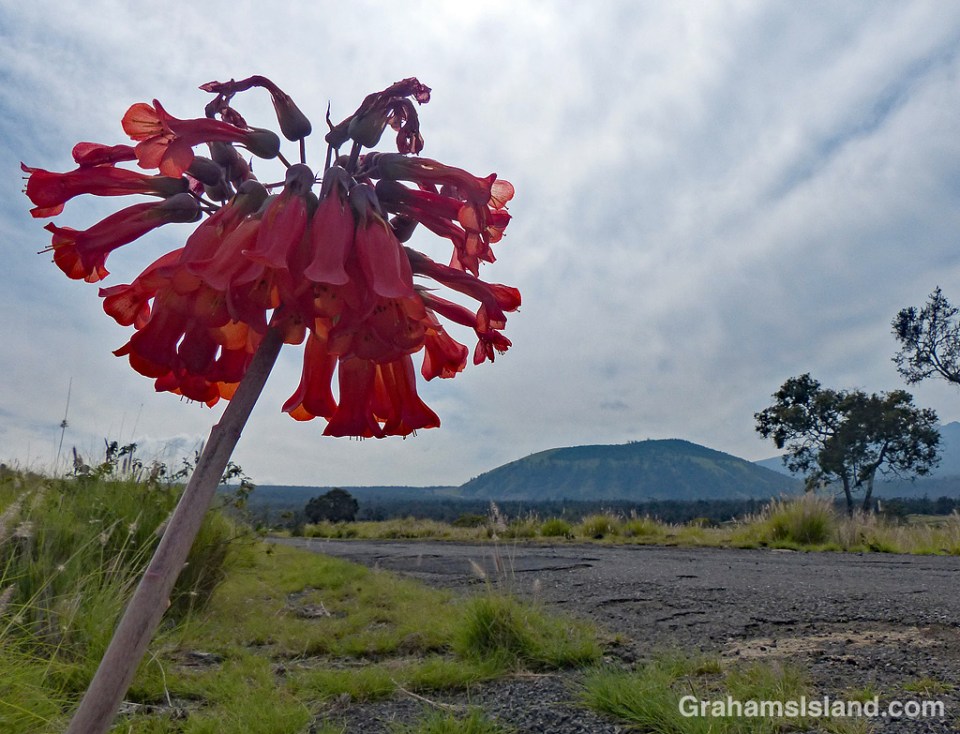
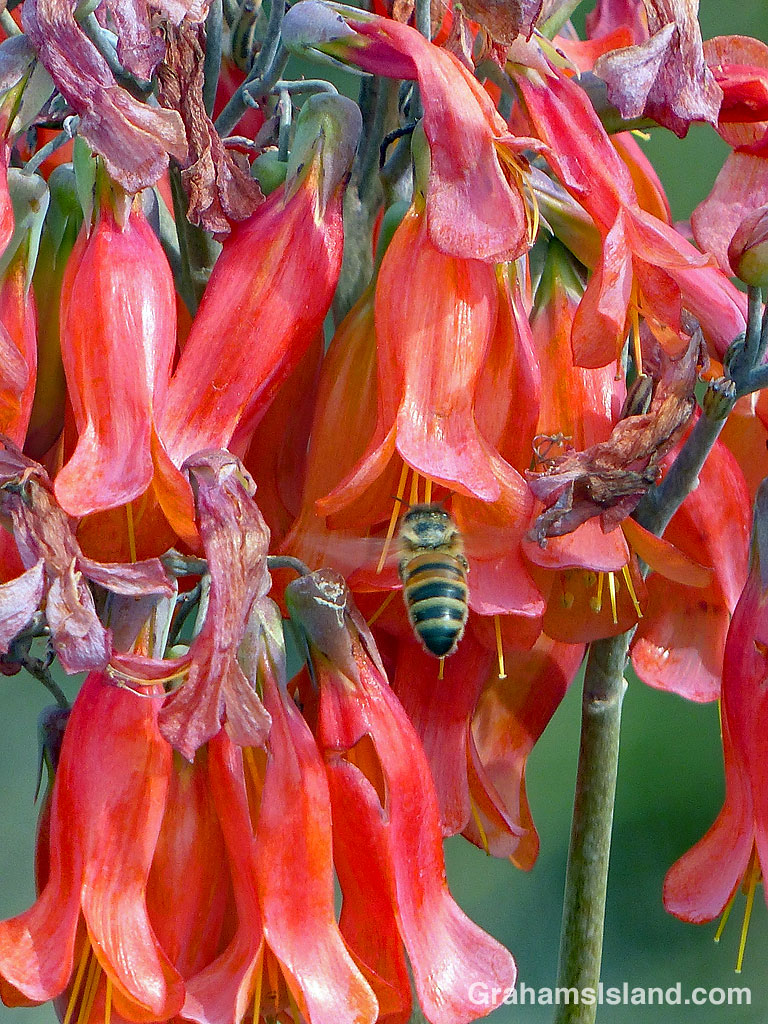 This bryophyllum is probably bryophyllum x houghtonii, but there are several similar looking varieties of bryophyllum. Their common names are telling, however. Bryophyllum x houghtonii is known as ‘hybrid mother-of-millions.’ Common names for other bryophyllums include ‘mother-of-millions,’ ‘prolific mother-of-millions,’ and ‘mother-of-thousands.’
Such names make it no surprise that bryophyllums are invasive. They’re also poisonous to both livestock and humans, which is problematic since these photos were taken at Pu’u Wa’awa’a, in an area occupied by sheep and cattle.
For more information about Pu’u Wa’awa’a and its trails, go to puuwaawaa.org.
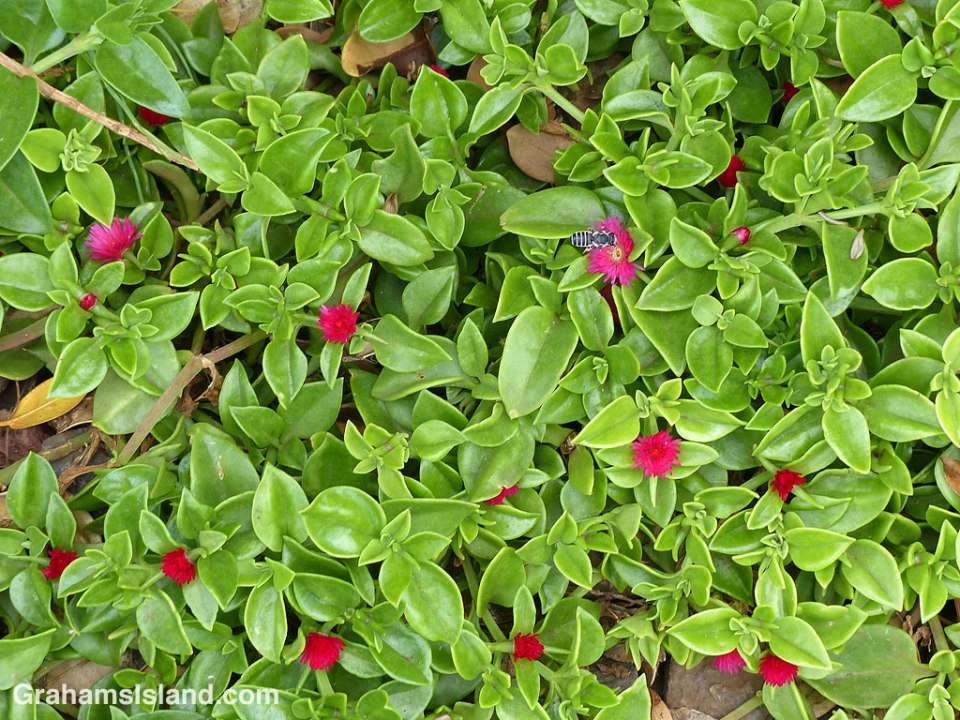
The bright red to magenta flowers of the ornamental ground cover Aptenia cordifolia stand out against its green leaves. The plant is also known as heartleaf iceplant, baby sun rose, and rock rose. Adding further contrast is a black and white leafcutter bee.
 Graham's Island