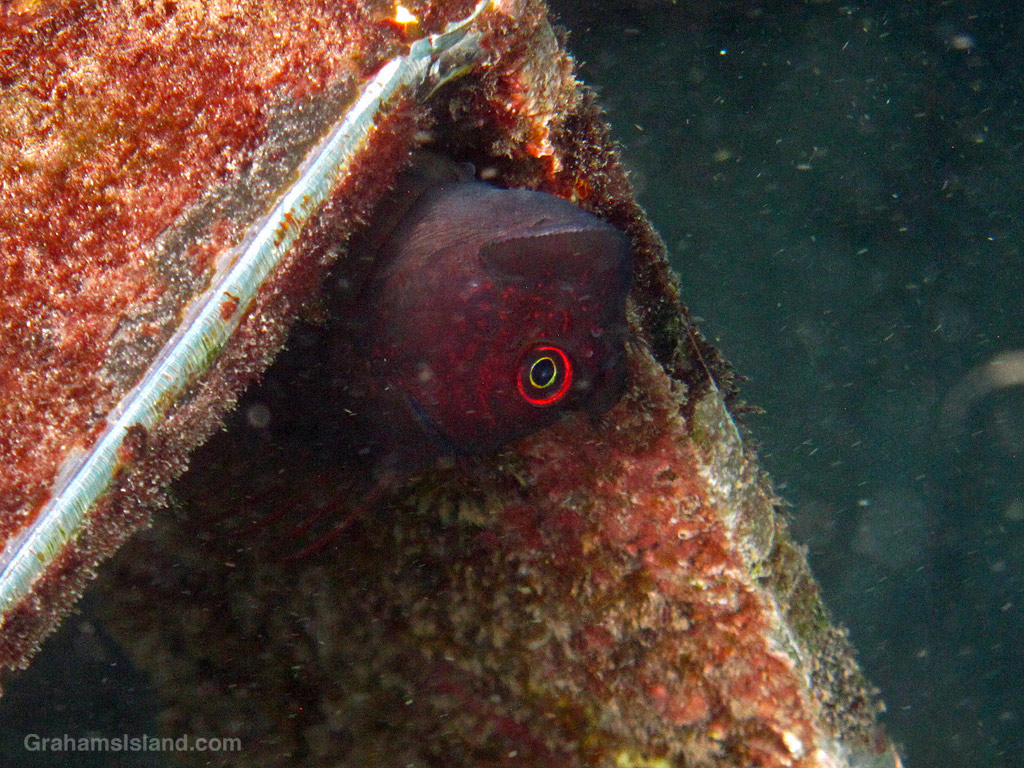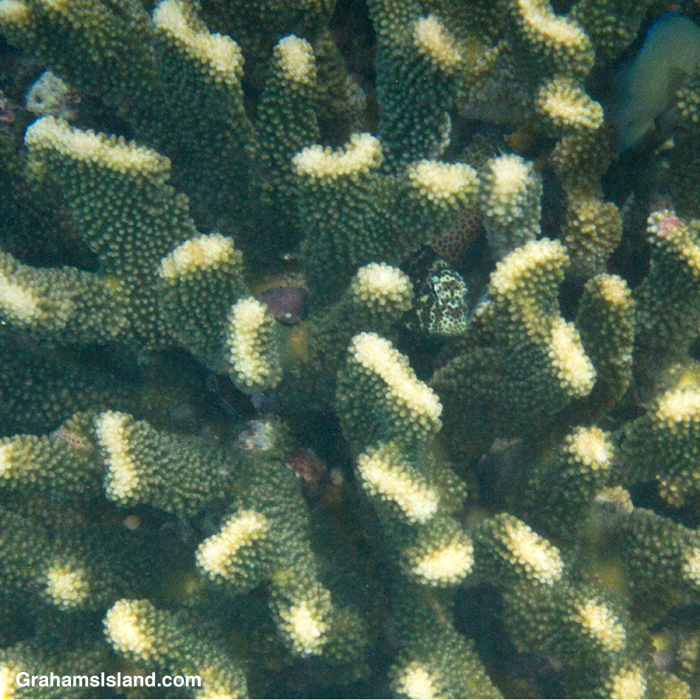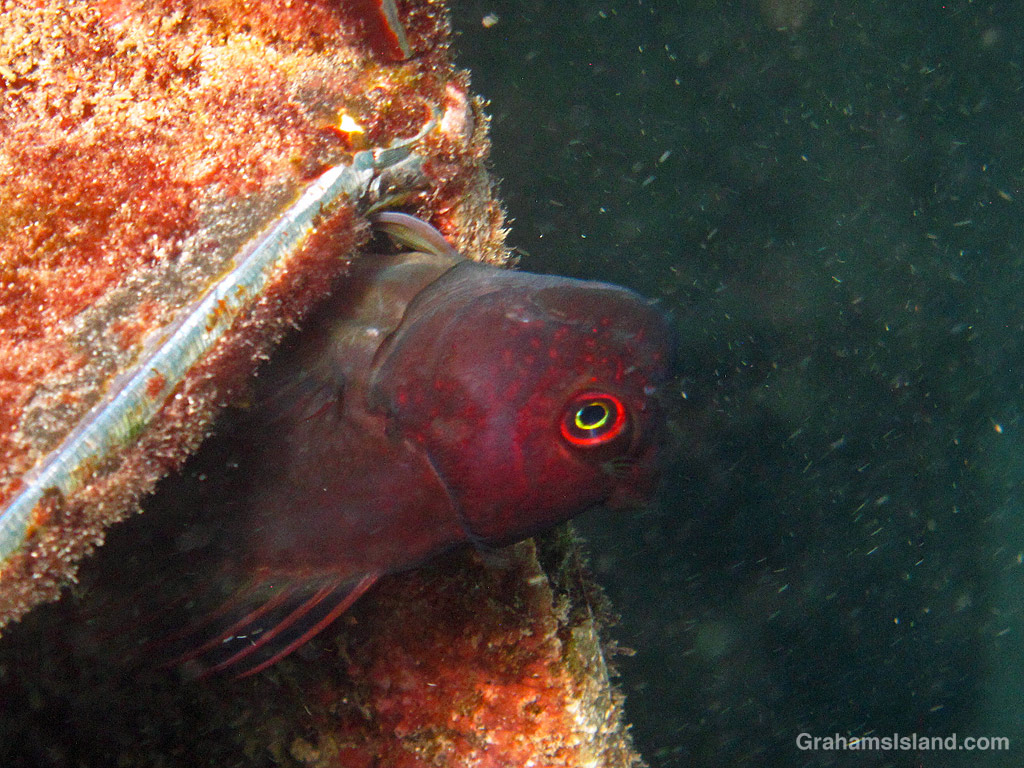
I took this photo of a head of Cauliflower Coral because I was happy about how healthy it looked. Then I saw that I was being watched. This Spotted Coral Blenny was wedged into the coral head, as they do, clearly waiting for me to move on.
Well, it is the last of the month, so time for me to move forward into June and for the blenny to go about his business.
Posted for Becky’s Squares: Move Forward, Reconstruct, Renew, and/or are Burgeoning. See more responses here.
These are a couple of fish that spend a good deal of their time sitting, stationary, on coral or rocks. The similarity ends there.
The hawkfish is a predator, waiting for small fish or crustaceans to come within range. The blenny feeds solely on living coral. And while this blenny is probably an adult at about 6 inches long, the hawkfish can grow to twice that size.
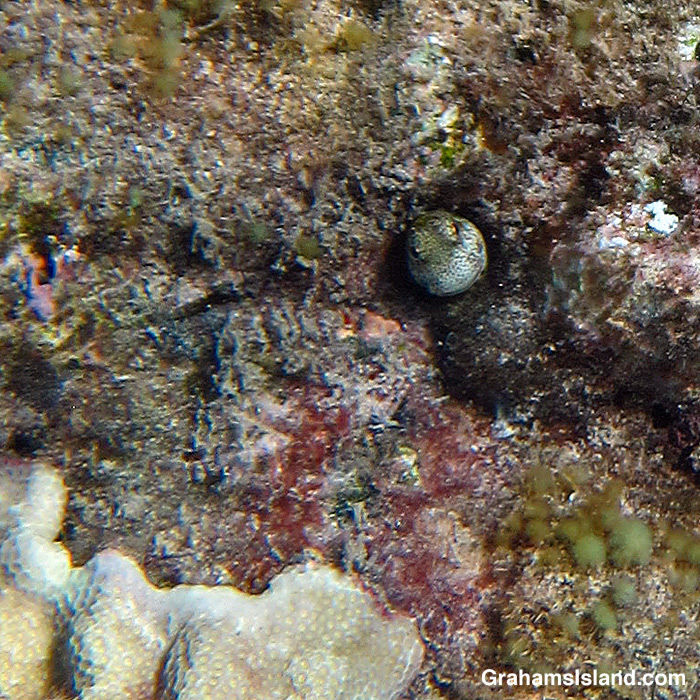
I spotted this little blenny out in the open, but as I raised my camera it shot away into its hole in the rock. I was impressed by its lightning speed, but more so by its ability to back into its hole at that speed.
I think this is probably a Bullethead Blenny, though it’s hard to make that determination from this photo.
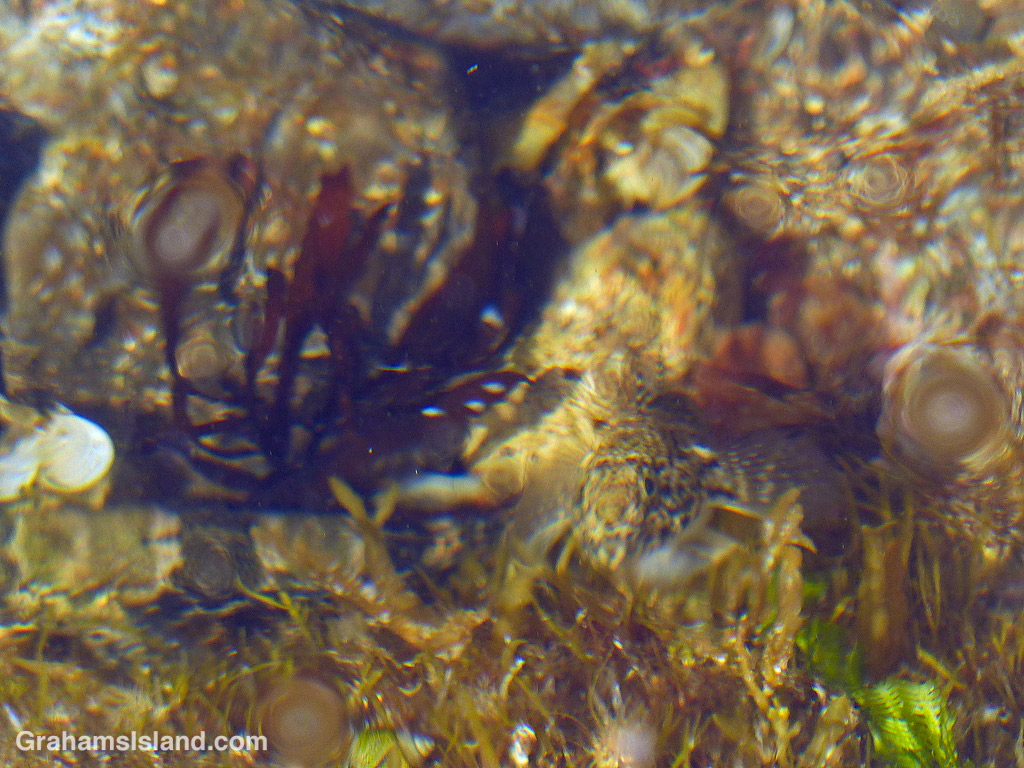
Yes, there is a fish in each of these photos! The endemic Strasburg’s Blenny is less than two inches long and is easily overlooked. It tends to move about in short, sharp bursts, blends in well when it settles, and is almost undetectable when it backs into its hole. That’s where the blenny is in the top photo.
In the second photo, it’s lying out in the open, but blending in rather well. Can you spot it?
Today marks the start of the last week of this month’s Becky’s Squares challenge theme of ‘Odd.’ See more responses here. The ocean is full of oddities so I thought I’d include a few here.
Above: A Manta Ray encounter is always something special, but there’s no getting away from their odd appearance. This one has the added wrinkle of one of its cephalic flaps being damaged.
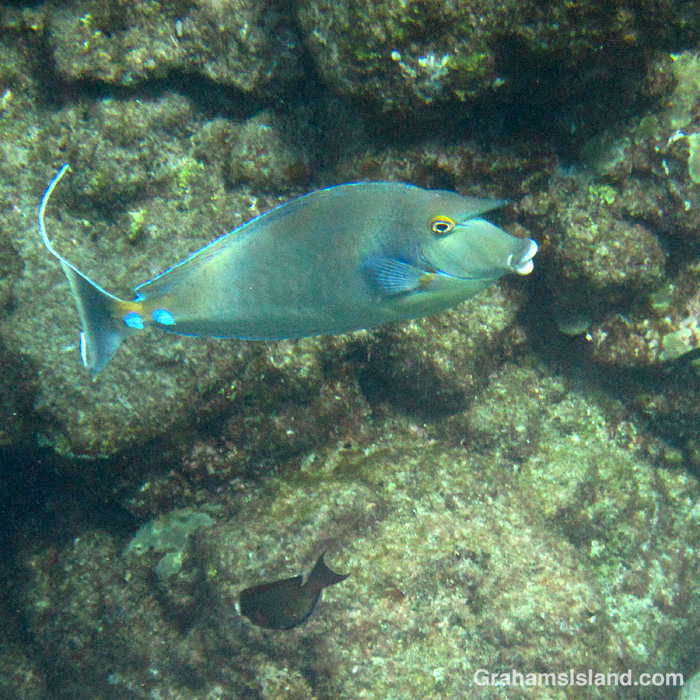
Top left: Bluespine Unicornfishes not only have a horn protruding from their foreheads, they have dayglow blue scalpels at the base of the tail and an array of expressions that are mostly odd.
Top right: Who knows how many scorpionfishes I’ve swum past? Masters of disguise, I could stare at a spot where one is perched and not see it. Even when I do see one, it’s not always clear that it’s not just a rock, as this Titan Scorpionfish illustrates.
Bottom left: Nudibranches are inherently odd looking, and this Clumpy Nudibrach is no exception. It suggests to me some top chef’s idea of an exotic entrée, but one that keeps sliding off the plate!
Bottom right: Blennies are indisputably odd, but absolutely endearing. The Hawaiian Zebra Blenny is no exception and, in addition, has an uncanny ability to launch itself into the next tidepool if someone disturbs it.
I encountered this Gosline’s fang blenny recently while snorkeling. It seemed to be curious about me, swimming in my direction and then turning away. Perhaps it was thinking about taking a bite out of me, because that’s what these fish do. They bear a resemblance to juvenile Hawaiian cleaner wrasses, which clean larger fish. These blennies use this similarity to sneak in and take a bite out of the bigger fish.
And what about the name? These blennies have fangs on their lower jaws that they use to bite the inside of the mouth of any predator that grabs them. It’s usually enough to cause the predator to spit them out.
In November, I posted the photo below, showing a gargantuan blenny resting in a recess in some rocks. The top photo, taken at the end of December, shows a gargantuan blenny in the exact same spot. It’s probably the same fish and this is part of its territory.
But astute observers will note that the fish now looks completely different. That’s because it’s the start of blenny spawning season and this male has changed into its nuptial colors for the occasion. He looks rather dashing, I think.
Posted in response to Becky’s January Squares challenge theme of ‘Up.’ See more responses here.