
I saw a this passion vine butterfly flitting from one colorful flower to another to feed. The purple zinnias are particularly striking, especially when viewed from above.


I saw a this passion vine butterfly flitting from one colorful flower to another to feed. The purple zinnias are particularly striking, especially when viewed from above.
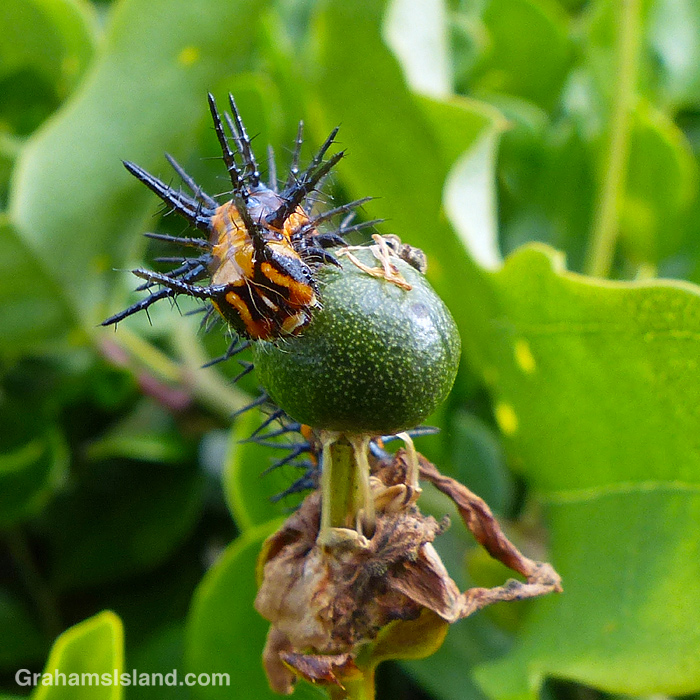
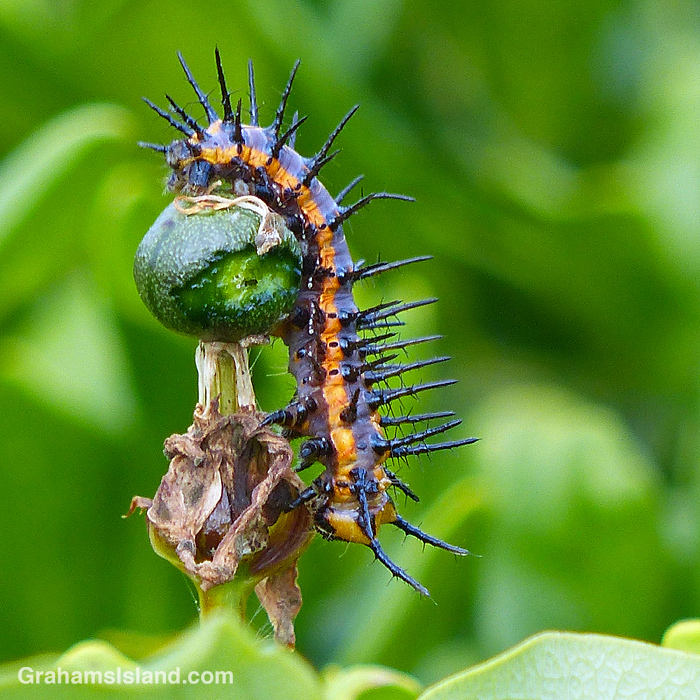
This is a caterpillar with a message and the message is ‘Back off.’ This is illustrated by the orange and black coloring and black spikes, which in this case conveys that these caterpillars are poisonous. Fortunately, I wasn’t hungry at the time so no harm done. Passion vine butterfly caterpillars, on the other hand, seem to be permanently hungry. Whenever I see them they’re munching leaves like old time video game characters.
Posted in response to Becky’s October Squares challenge theme of ‘Past Squares – Spiky.’ See more responses here.


I often see fiery skipper butterflies on what I know as ice plants. I thought the different color flowers were just variations within the plant but, while they’re members of the same family (Aizoaceae), they’re different plants. At the top is an Aptenia haeckeliana with its yellow flower. To the left is an Aptenia cordifolia with a magenta flower.
It’s a different butterfly on the two flowers, but both are fiery skippers.

I found this black witch moth on the lawn and took the opportunity to get a few photos of its gorgeous patterns and coloring.
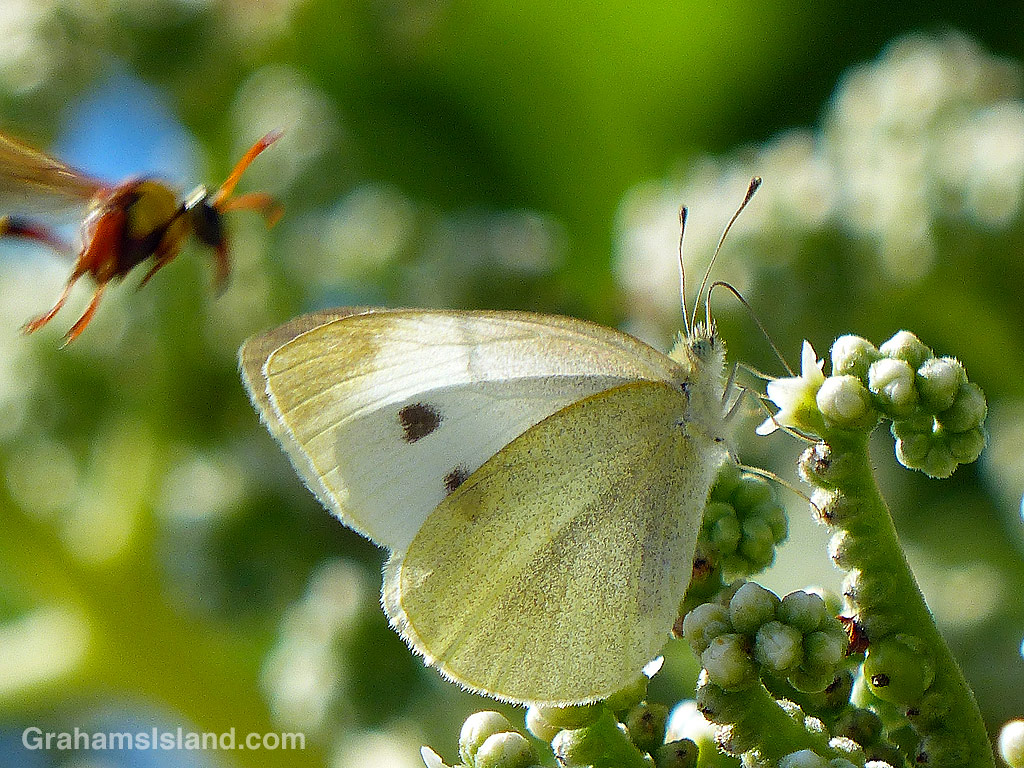
This cabbage butterfly was enjoying a feed on a tree heliotrope, apparently unaware that company was imminent.
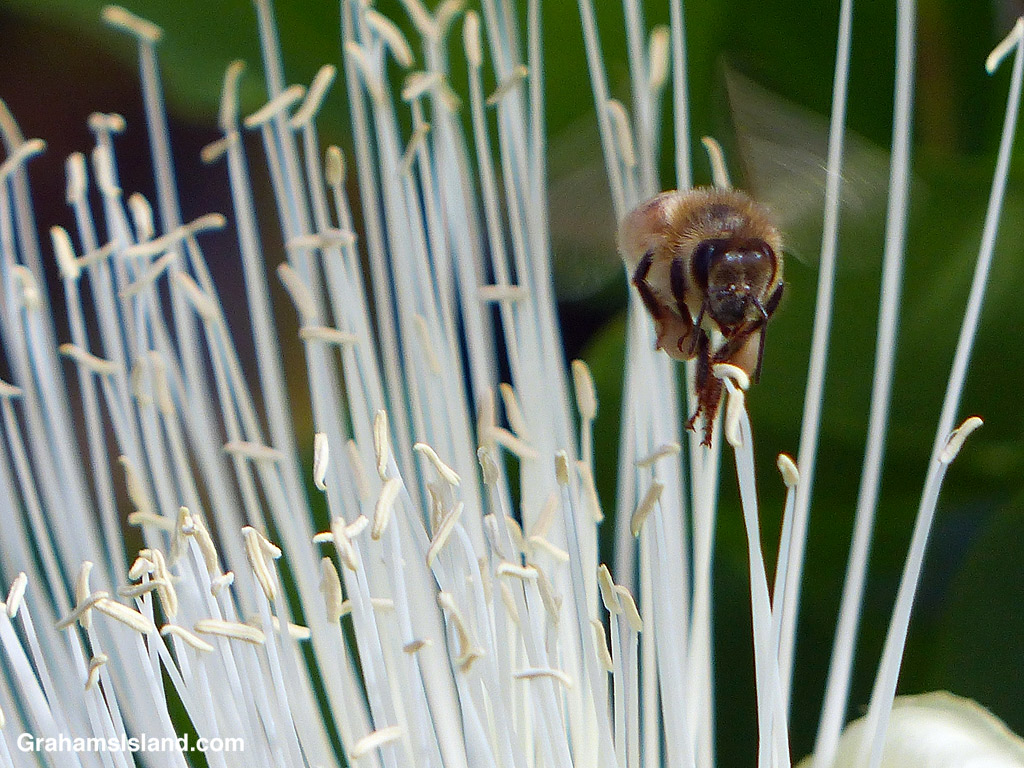
This week’s Sunday Stills challenge theme is ‘Summer Bugs.’ (See more responses here.) To the best of my knowledge, Hawaii’s bugs are pretty much the same year-round. Here are some of them.
The top photo shows a bee showing impressive balance on a maiapilo flower.
Next up, clockwise from top left: Getting down to eye level with a juvenile praying mantis. A painted lady butterfly on a kiawe tree. A katydid wondering what it’s done to deserve this much attention. A seven-spotted lady beetle being watched.
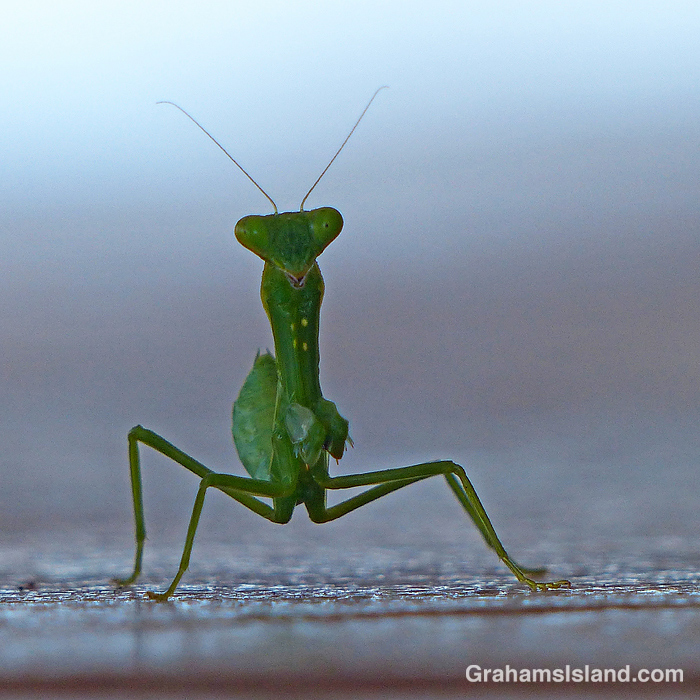
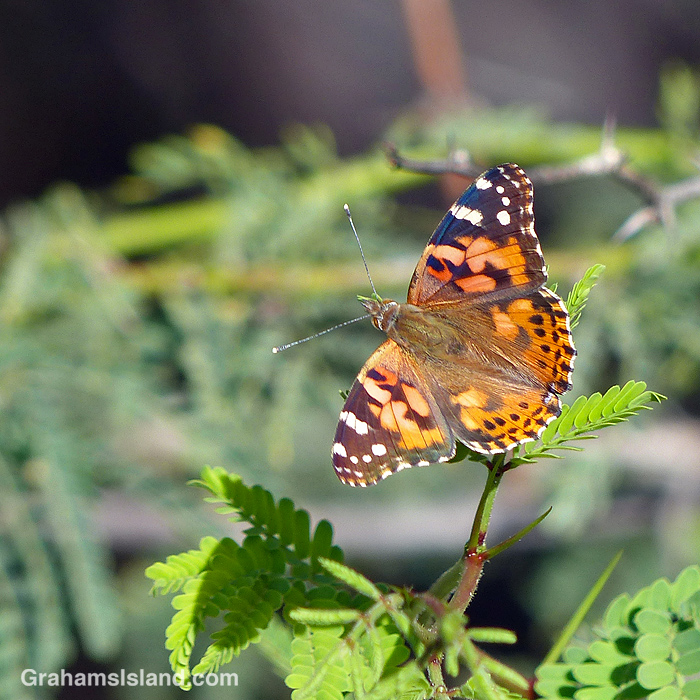
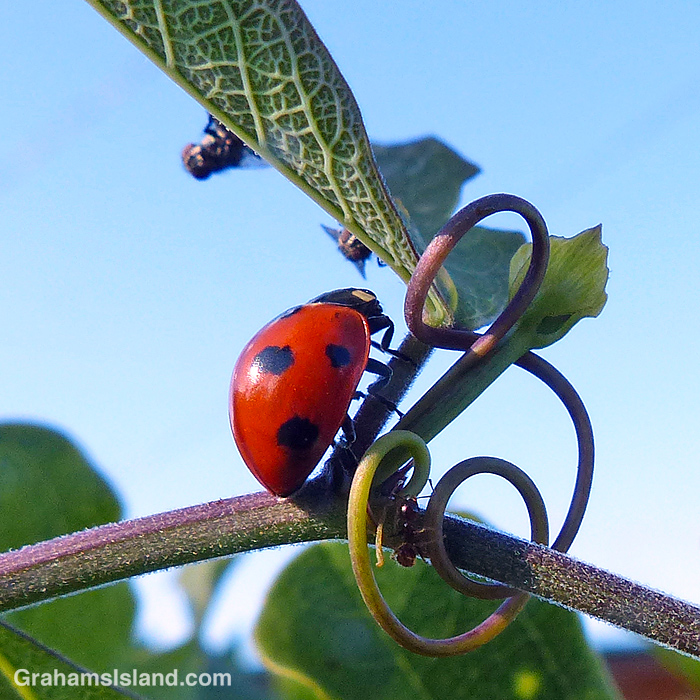
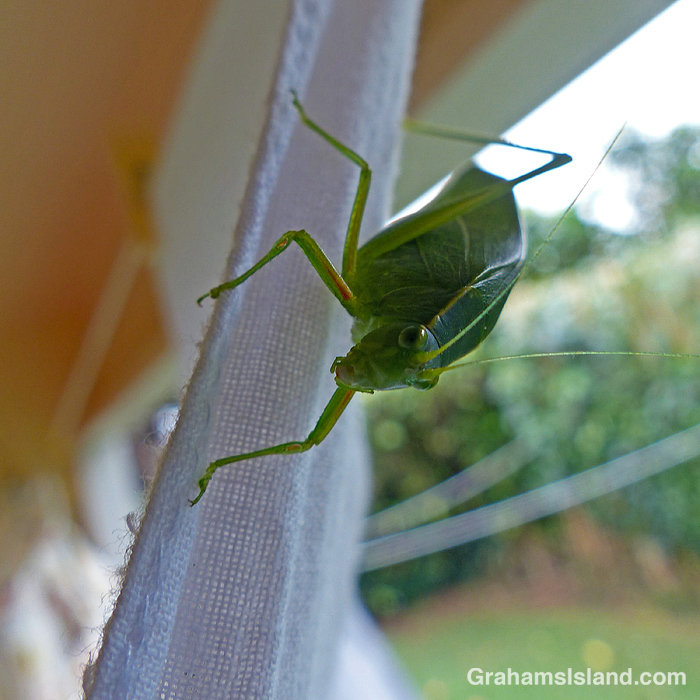
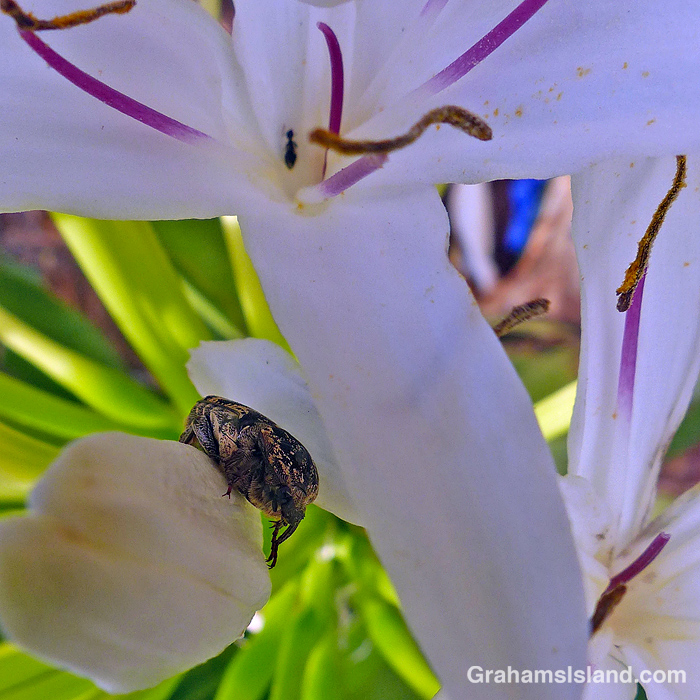
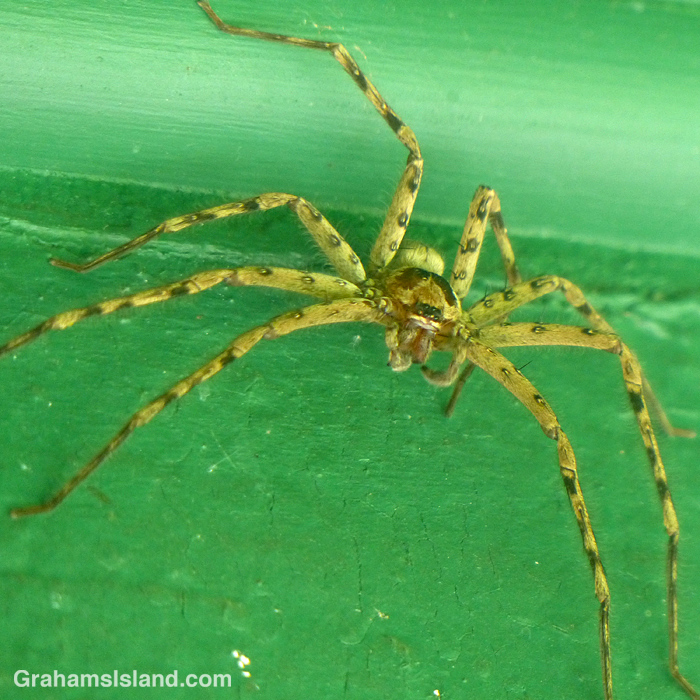
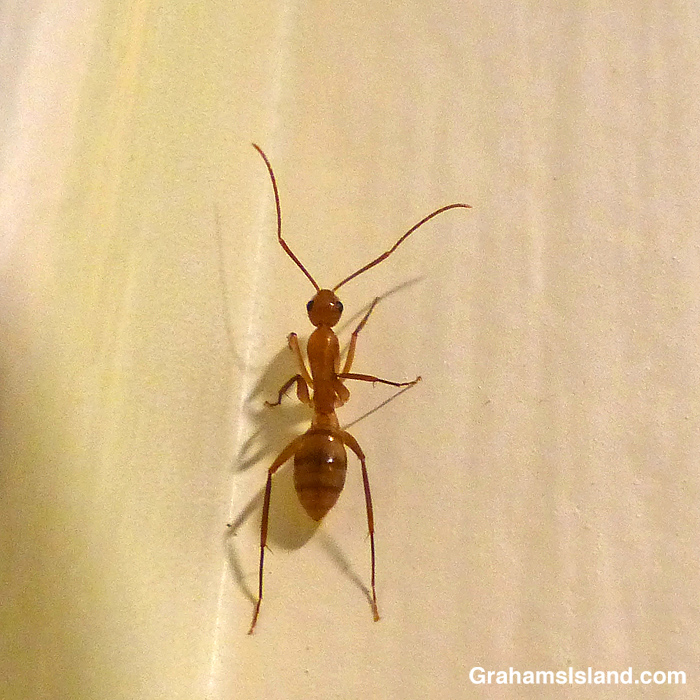
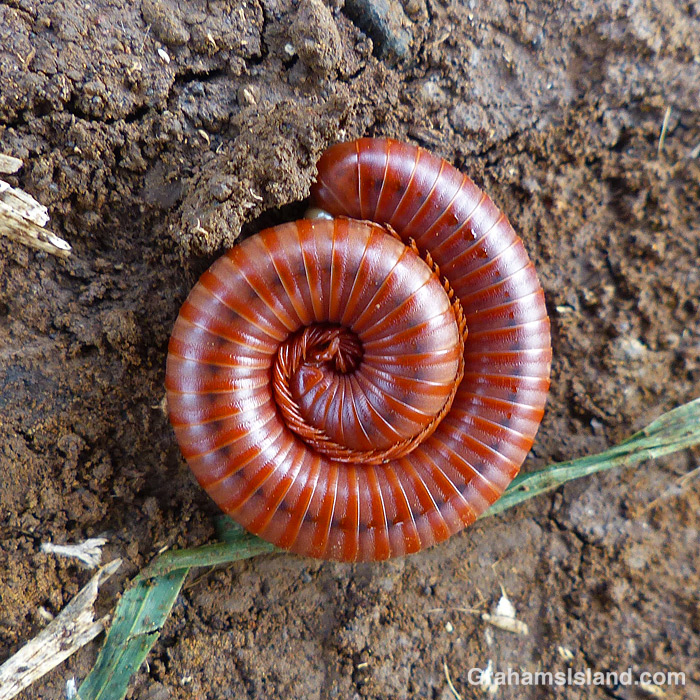
The final gallery: Top left: A mango flower beetle explores a spider lily. Top right: A watchful cane spider wondering if it should run, very fast, away. Bottom left: A Hawaiian carpenter ant (Camponotus variegatus), one of too many that have taken up residence in the house. Bottom right: A rusty millipede deciding that it’s all too much!
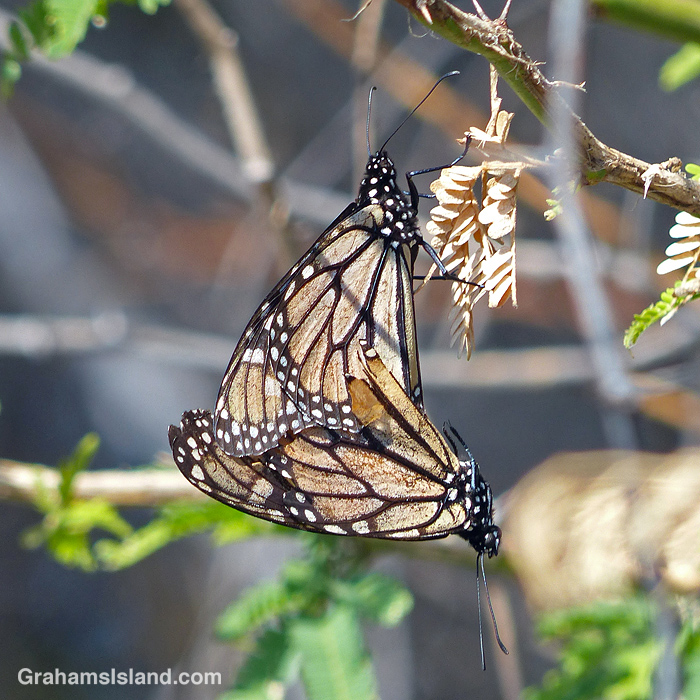
A pair of monarch butterflies mating on a kiawe tree.
Posted in response to Becky’s July Squares challenge theme of ‘Trees.’ See more responses here.


Naio (Myoporum sandwicense) is an endemic plant that has a variety of forms, from ground cover to tree. The flower color can also vary quite a bit. I’ve seen pinkish purple blooms previously, but these flowers, on a shrubby plant, were all white. Naio used to be common in Hawaii, but now is much less so. It’s known as false sandalwood because the heartwood of the tree form smells similar to true sandalwood.
The butterfly in the top photo is a Western Pygmy Blue butterfly. a native of the Americas, it was first seen in Hawaii in 1978.
 Graham's Island