Tag Archives: Butterflies and Moths

Smaller lantana butterfly

Smaller Lantana Butterfly

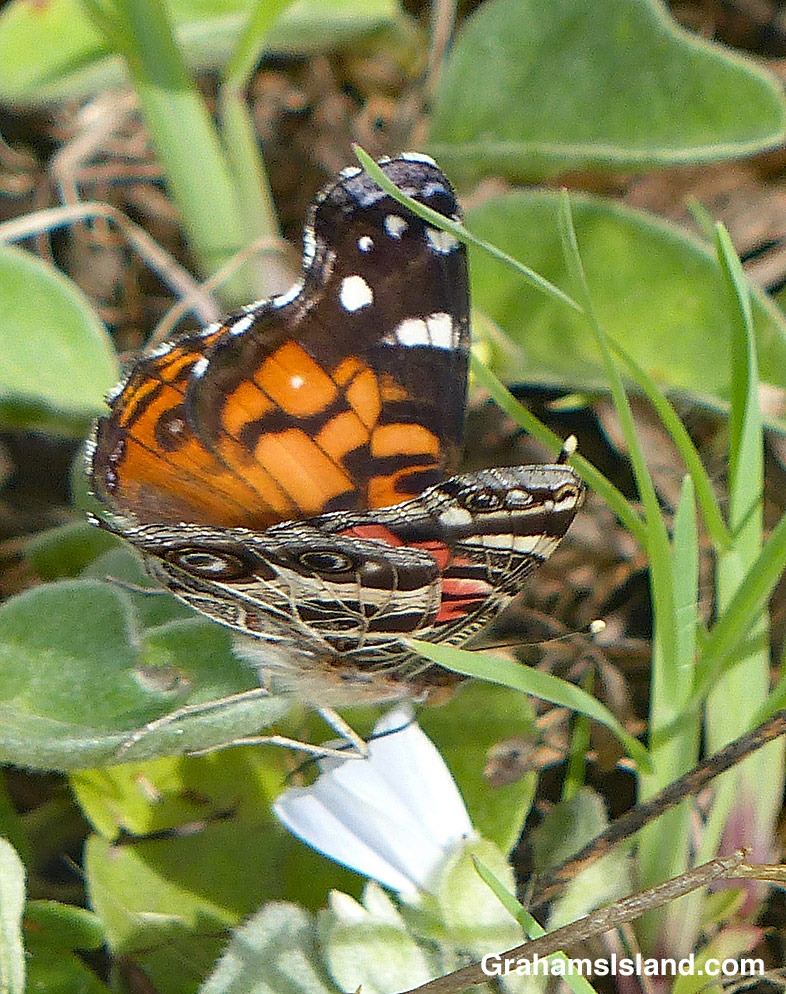
The smaller lantana butterfly, also known as the lantana scrub-hairstreak (Strymon bazochii), was introduced to Hawaii in 1902 to control lantana species. I don’t believe it has been terribly successful in that regard, but it has managed to establish itself in Hawaii. At least it hasn’t turned out to be a deadly scourge like the mongoose and several other species. For that we can be grateful.


Lesser grass blue butterflies

Lesser grass blue butterflies

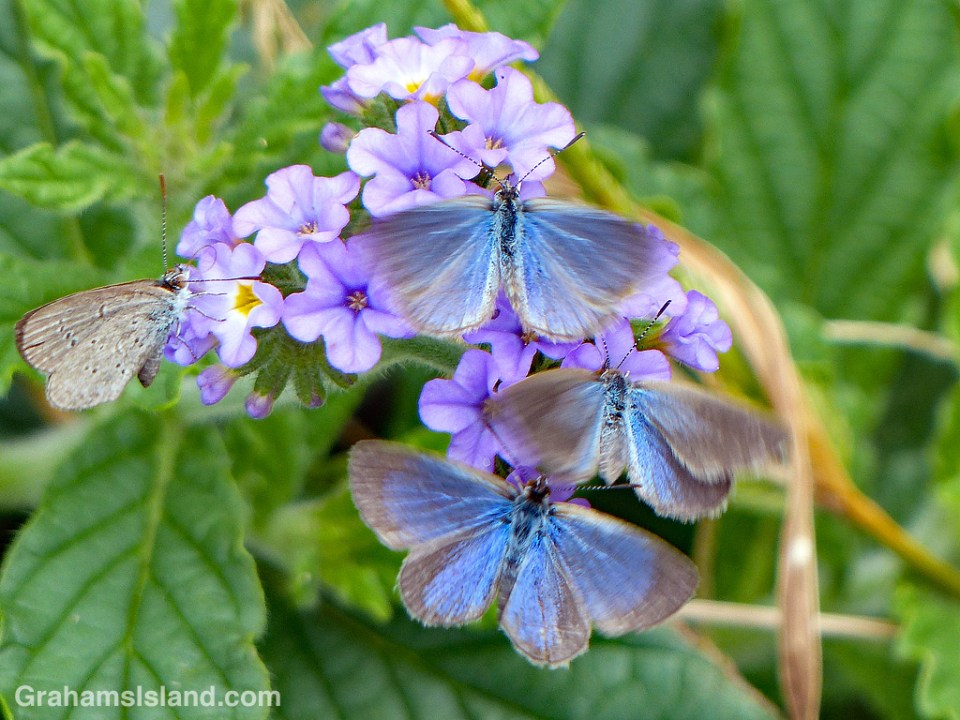
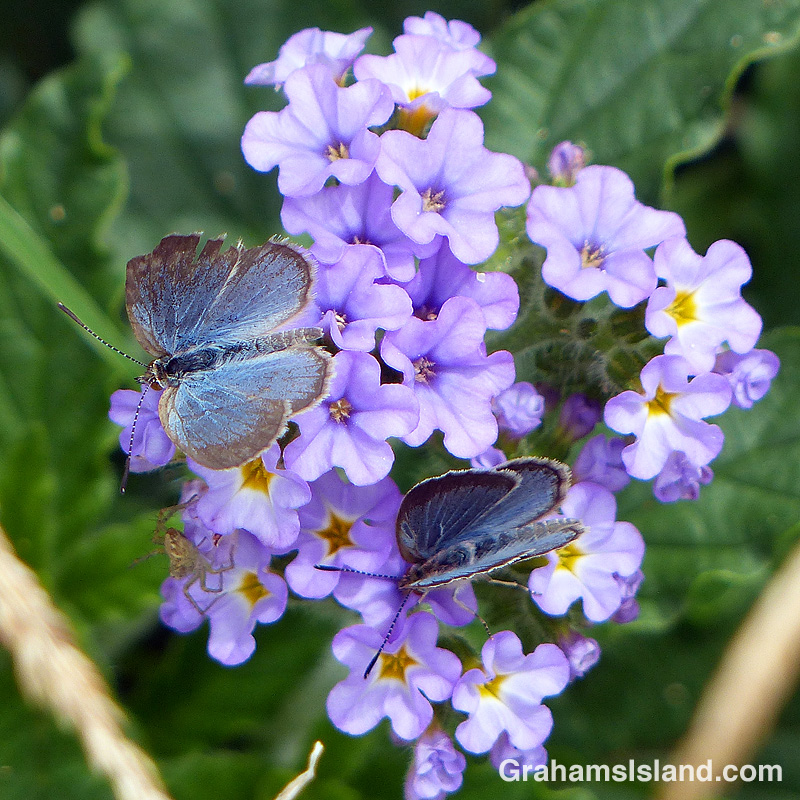
Lesser grass blue butterflies and a spiderThe lesser grass blue butterfly (Zizina otis) was first seen in Hawaii on Oahu in 2008 (for an article, or most of an article, about the find, click here). They’re now well established on the Big Island as well.

Lesser grass blues are very small, with a wingspan no more than ¾-inch. With wings folded up they’re the size of a small fingernail. They also fly close to the ground, within a foot or two.

Lately, I’ve been seeing them in large numbers on these blue heliotrope (Heliotropium amplexicaule) flowers. When I say ‘seeing them,’ what I mean is that when I walk past a patch of these flowers, a host of lesser grass blues will flutter up from the flowers, dance around in a tizzy for a few moments, and then settle back down again. When they do this, it’s like blue confetti being thrown (a few inches) into the air.

I’ve tried to capture this image with my camera, but haven’t been able to (and I’ve taken LOTS of photos). The butterflies are so small, I’m tall, and the effect is fleeting. But the top photo gives an idea of what’s going on, with three lesser grass blues homing in on the small blue heliotrope flowers while a fourth has already found a spot.

It wasn’t until I processed the photos at home that I noticed the spider in the second photo. I don’t know what it made of all the butterfly activity. I hope they weren’t its prey.

Indomitable melipotis moth

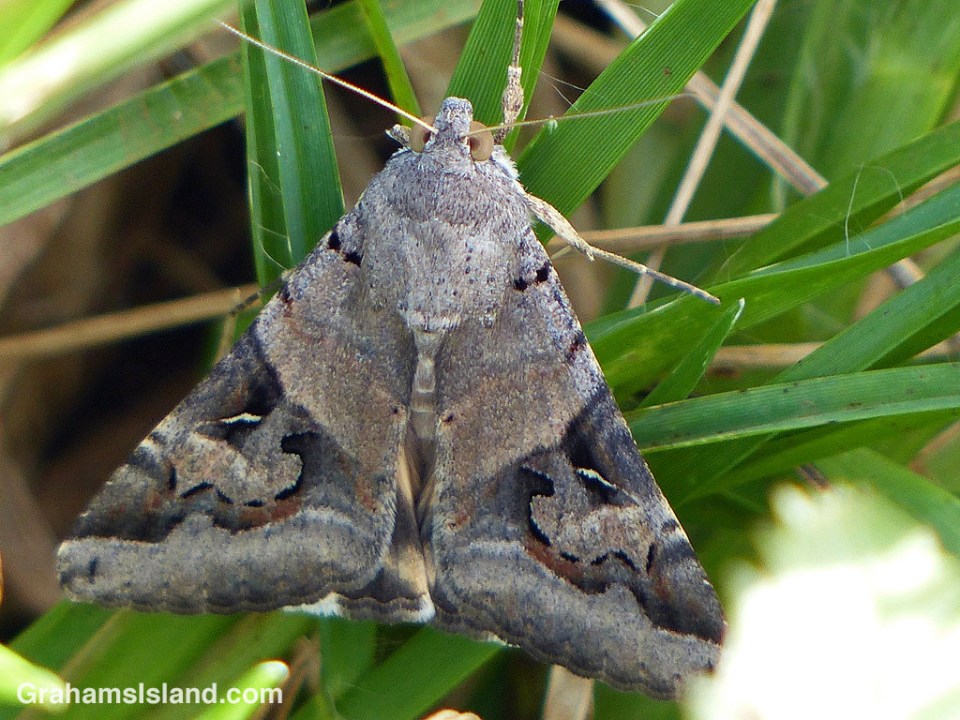
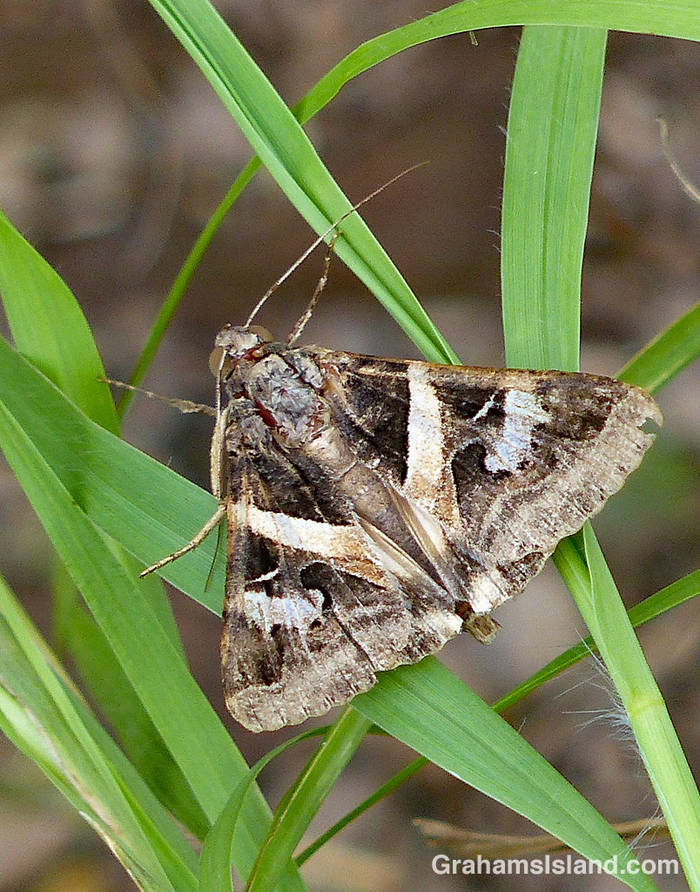
Indomitable Melipotis Moth female

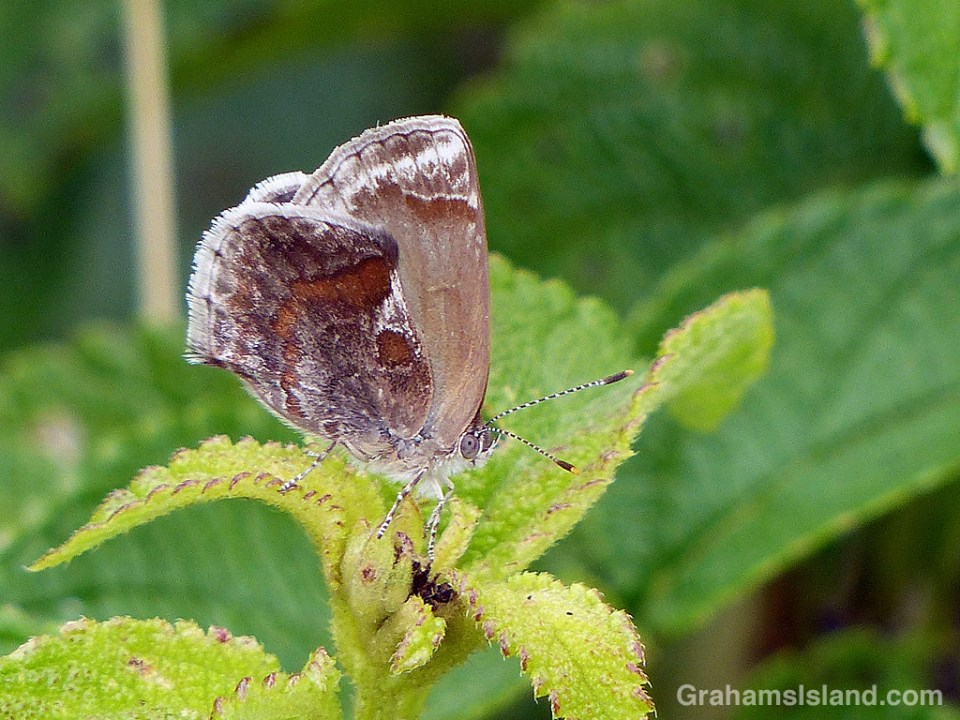
Indomitable Melipotis Moth male (700)Two photos of indomitable melipotis (Melipotis indomita) moths, a female above and a male below. This species is common across the southern United States, but many sources do not include Hawaii in its range. However, it was first recorded here in 1969 according to this paper (https://scholarspace.manoa.hawaii.edu/handle/10125/11031) published in 1974.

Caterpillars of the moth were first found on kiawe trees but soon after turned up on defoliated monkeypod trees, hence it also being known as the monkeypod moth, because of its fondness for shrubs and trees of the legume family. They’re certainly quite common up here on the northern tip of the Big Island as I see them often when I’m out and about.

Many thanks to Daniel at whatsthatbug.com for help with the identification. For his detailed information about the moth, see https://www.whatsthatbug.com/2018/05/01/indomitable-melipotis-moth-from-hawaii/.

Large orange sulphur butterflies mating

Large Orange Sulphur Butterflies mating

While on a hike south of Pu’uhonua o Hōnaunau National Historical Park, I saw this pair of large orange sulphur butterflies. They were flying around, joined together, before settling on this seed pod. I assume they were mating, though this discrete view is the only one I had of them.

To see what was going on on the other side would have involved thrashing around in some nasty-looking brush. This would have added to the usual assortment of lacerations that I seem to acquire on a daily basis, and would undoubtedly have caused the butterflies to take to the air again. So I let them be.

Monarch butterfly on a tasselflower

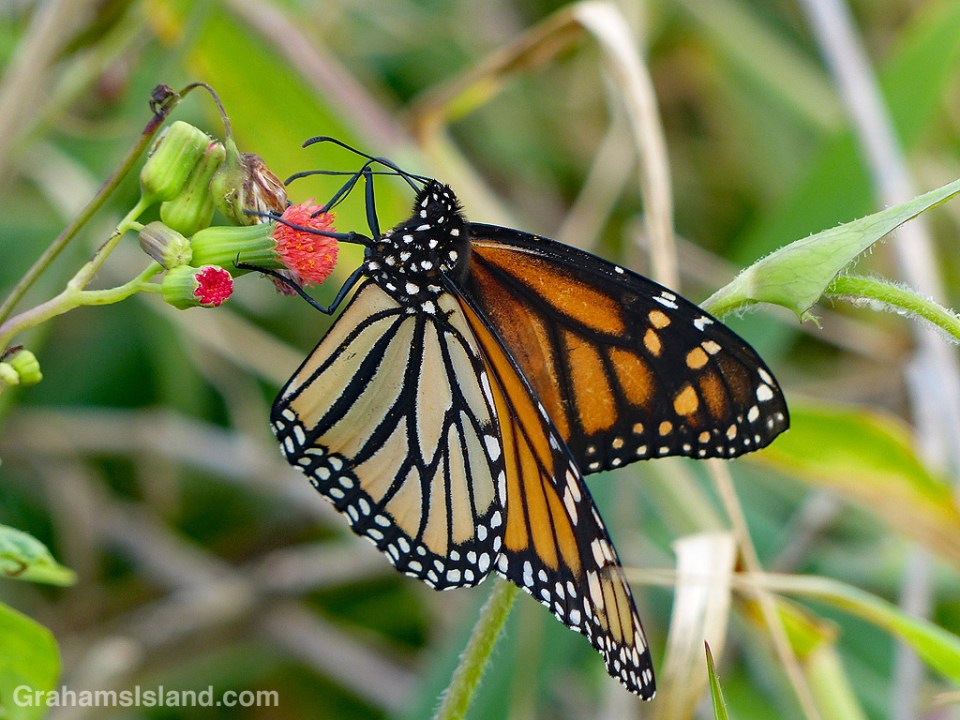
Monarch butterfly on tasselflower

I like getting out and about and, when I do, I’m constantly on the lookout for everything from insects to whales. When I go for a walk, I usually say something along the lines of, ‘I’ll be back in an hour, unless I see a bug or a butterfly.’

This was one of those days. Turtles in the bay, a giant African land snail oozing across a dirt road, and this monarch butterfly doing the rounds of the tasselflowers. A good walk indeed.

Posted in response to this week’s WordPress Photo Challenge ‘Place in the world.’


American painted lady butterfly

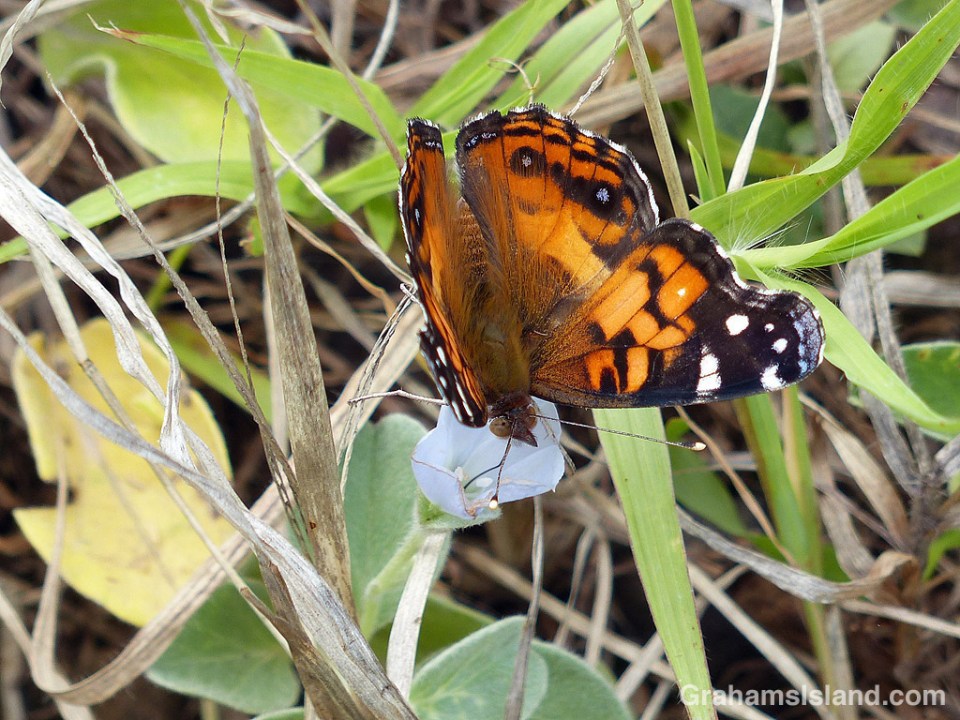
American Painted Lady Butterfly feeding

American Painted Lady ButterflyA while back, I posted photos of a painted lady butterfly (Vanessa cardui) here. The American painted lady butterfly (Vanessa virginiensis) is similar, but with some noticeable differences.

On the upper-side, the American painted lady markings are more pronounced on both the forewings and hindwings. On the underside, the same is true, with the American painted lady’s color standing out more. In addition, the hindwings have two large circles as opposed to the four smaller circles of the painted lady.

The American painted lady is also known as simply American lady or painted beauty. Alternative names for the painted lady butterfly are cosmopolite or cosmopolitan.

Kealia beach

Kealia Beach

I’d rather be at the beach, though I’m not one for stretching out on the sand and slowly broiling. I much prefer a beach like Kealia, north of Ho’okena, where the mix of sand and lava attracts tide pool dwellers and the birds that feed on them.

It was here, also, that I first saw butterflies, such as the large orange sulphur (Phoebis agarithe) below, drinking from the sand. I subsequently learned that butterflies can’t drink from open water, but get moisture from dew on plants, wet sand, earth and mud. In addition, drinking from these sources allows butterflies to obtain needed salts and minerals.

I learn something new every day. Now, if only I could remember these things.

Posted in response to this week’s WordPress Photo Challenge, ‘I’d rather be…

Large Orange Sulphur Butterfly on sand